Augmented and virtual reality generate excitement as demonstrations, but plenty of AR/VR projects fail to deliver lasting business value because they were built around the novelty of the technology rather than a genuine problem it solves better than existing tools. A capable AR VR application development company needs to help clients distinguish between a genuinely useful application and an impressive but ultimately forgettable demo.
Where AR/VR Genuinely Outperforms Traditional Tools
Product Visualization in Retail
Letting customers see how furniture would look in their actual room, or how a product would appear before purchasing, directly reduces purchase hesitation and returns — a use case where AR solves a real, previously unsolved problem rather than adding novelty for its own sake.
Training and Simulation
VR-based training for scenarios that are expensive, dangerous, or impractical to replicate in real life — equipment operation, emergency response, complex procedures — allows repeated, realistic practice without real-world risk or cost.
Remote Assistance and Field Support
AR overlays that let a remote expert guide an on-site technician through a repair or procedure, seeing exactly what they see, can reduce downtime and travel costs significantly compared to dispatching an expert in person for every issue.
Real Estate and Architectural Visualization
Virtual walkthroughs of properties or architectural designs before construction lets clients and buyers experience a space realistically, catching design issues or making decisions earlier than physical models would allow.
Why Many AR/VR Projects Underdeliver
Building the Technology Before Identifying the Problem
Some AR/VR projects start with "we should have an AR feature" rather than "this specific problem would genuinely be solved better with AR" — leading to technically impressive but practically unused features.
Underestimating Hardware and Performance Constraints
AR and VR applications have significant performance requirements, and poorly optimized experiences — laggy tracking, uncomfortable frame rates — actively damage user trust rather than impressing them.
Ignoring Accessibility and Adoption Barriers
VR in particular requires specific hardware many users don't own, which limits reach unless the use case justifies asking users to acquire that hardware, or the application is designed for a controlled environment where hardware is provided.
What Proper AR/VR Development Should Include
Clear Problem-First Justification
A genuine business case for why AR/VR specifically solves this problem better than a simpler alternative — video, a standard app interface, or a physical demonstration.
Performance Optimization
Careful attention to frame rates, tracking accuracy, and device performance, since a poorly performing AR/VR experience undermines the entire value proposition regardless of the concept's quality.
Realistic Deployment Planning
Understanding what hardware the target users actually have or would be willing to acquire, and designing the application's scope around that reality.
What to Look for in an AR/VR Development Partner
- Willingness to push back on AR/VR use cases that don't genuinely justify the technology
- Experience with performance optimization specific to immersive applications
- A clear plan for hardware and deployment realities, not just the application itself
- Examples of AR/VR projects that solved a measurable business problem, not just demos
Jayshree Technosoft's AR/VR Development Experience
Jayshree Technosoft builds AR and VR applications for retail visualization, training simulation, and remote assistance use cases, evaluating each project for genuine business value before recommending immersive technology over simpler alternatives, following the same structured five-step development process used across all projects.
Build AR/VR That Solves a Real Problem, Not Just a Demo
If you're evaluating whether AR or VR genuinely fits a specific business problem, talk to Jayshree Technosoft for an honest assessment and a development plan built around real value.
Recent Articles
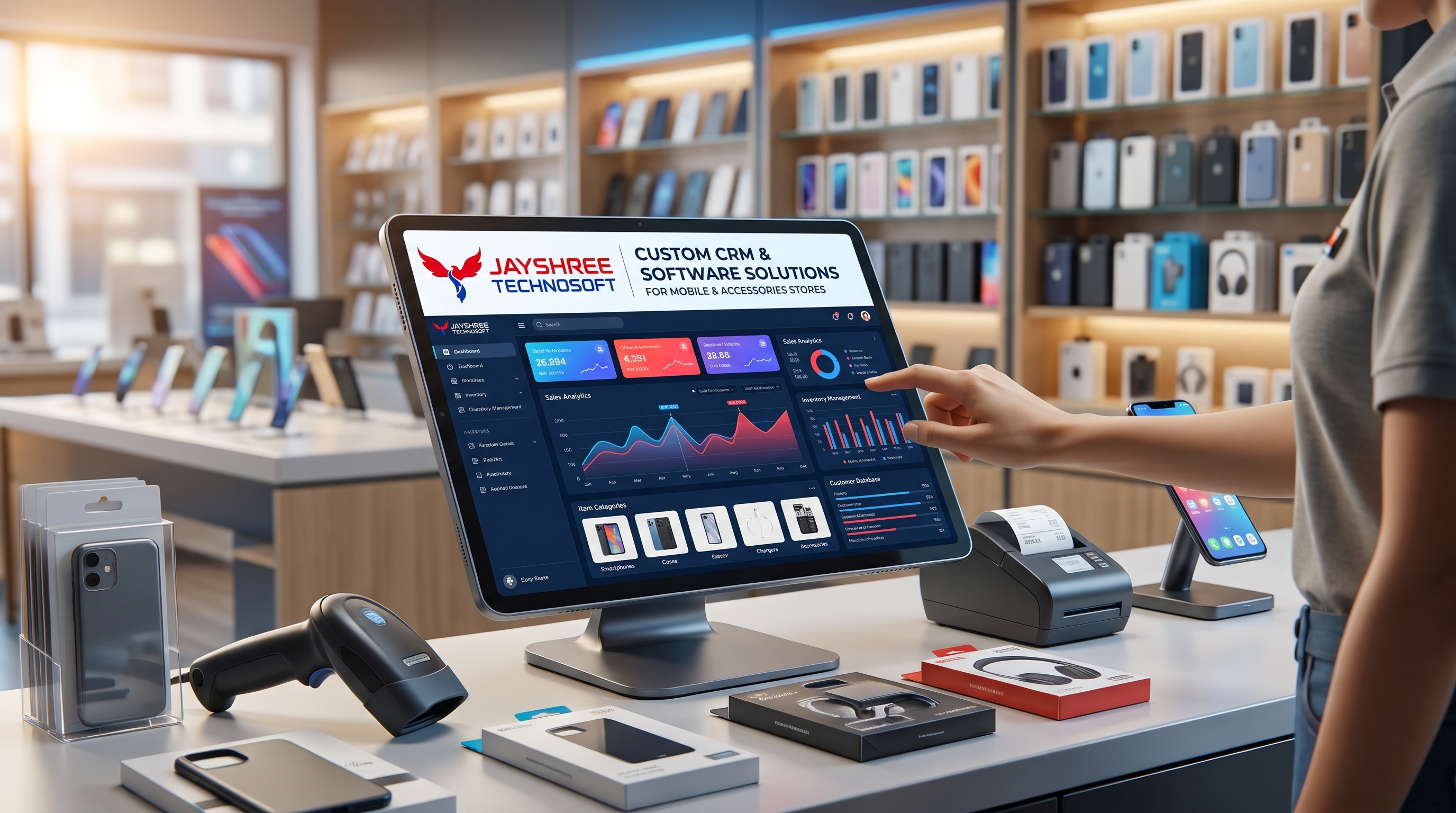
Custom CRM & Software Solutions for Mobile & Accessories Stores: How Jayshree Technosoft Can Help
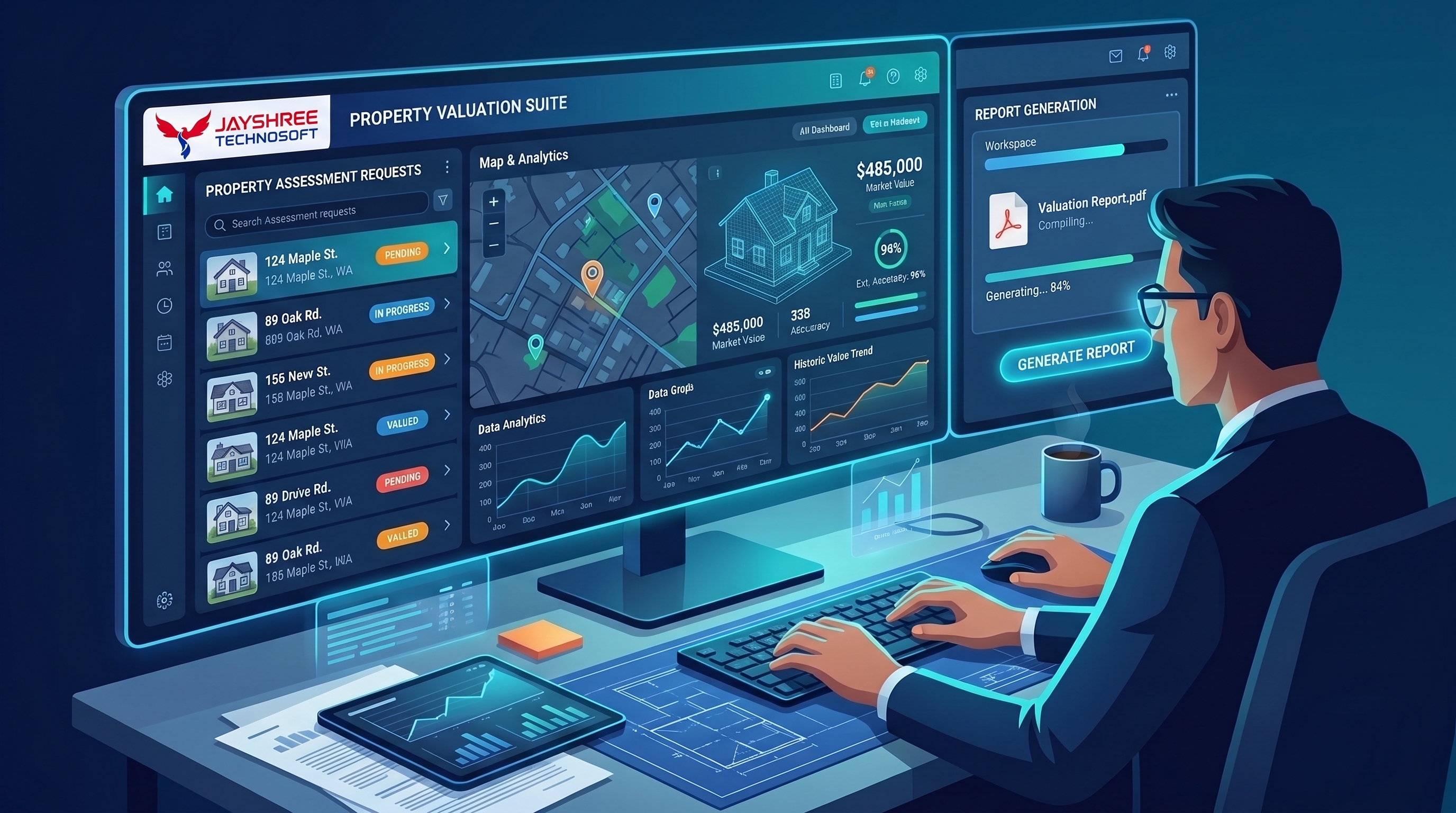
Custom CRM & Software Solutions for Property Valuation & Survey Companies: How Jayshree Technosoft Can Help
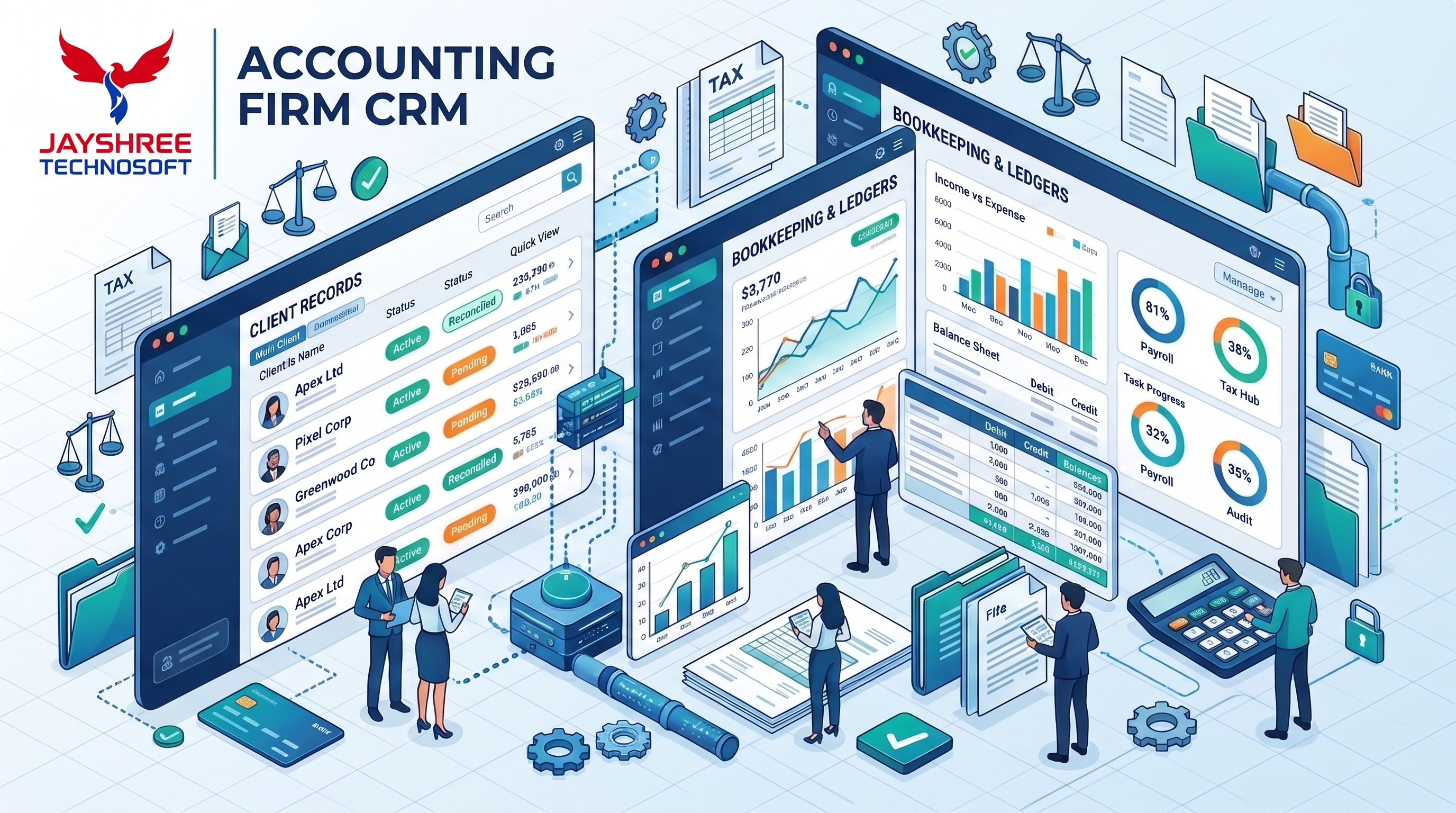
Custom CRM & Software Solutions for Accounting Firms: How Jayshree Technosoft Can Help