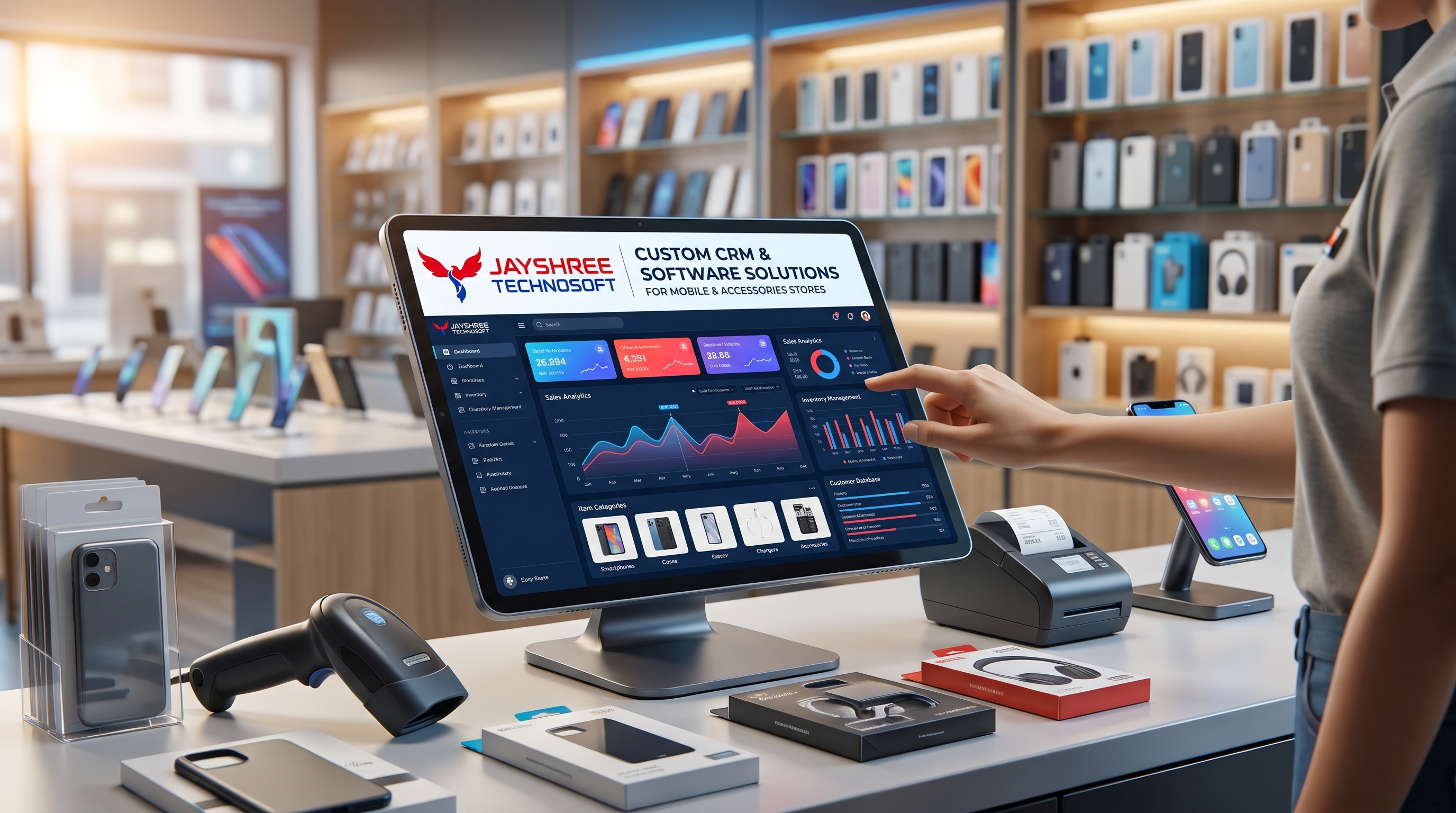
Custom CRM & Software Solutions for Mobile & Accessories Stores: How Jayshree Technosoft Can Help
Off-the-shelf software rarely fits a business perfectly, and mobile and accessories stores sell high-value phones needing IMEI tracking alongside dozens of low-cost accessories. Jayshree Technosoft, an IT consultancy and software development company, builds custom CRM and software solutions designed around exactly how mobile & accessories stores actually operate.
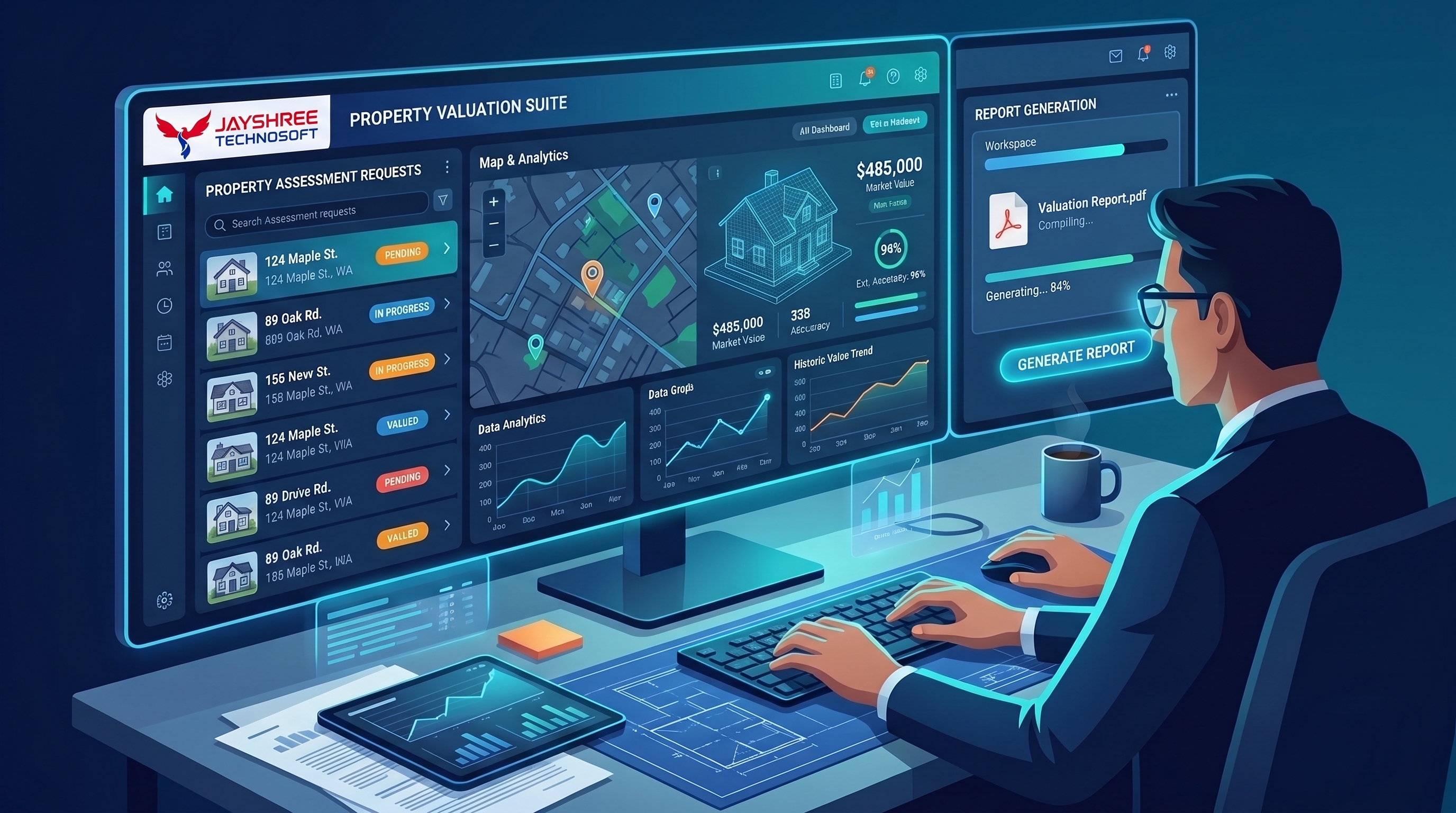
Custom CRM & Software Solutions for Property Valuation & Survey Companies: How Jayshree Technosoft Can Help
Off-the-shelf software rarely fits a business perfectly, and property valuation companies manage assessment requests through scheduling, site visits and report preparation, which a basic log tracks poorly. Jayshree Technosoft, an IT consultancy and software development company, builds custom CRM and software solutions designed around exactly how property valuation & survey companies actually operate.
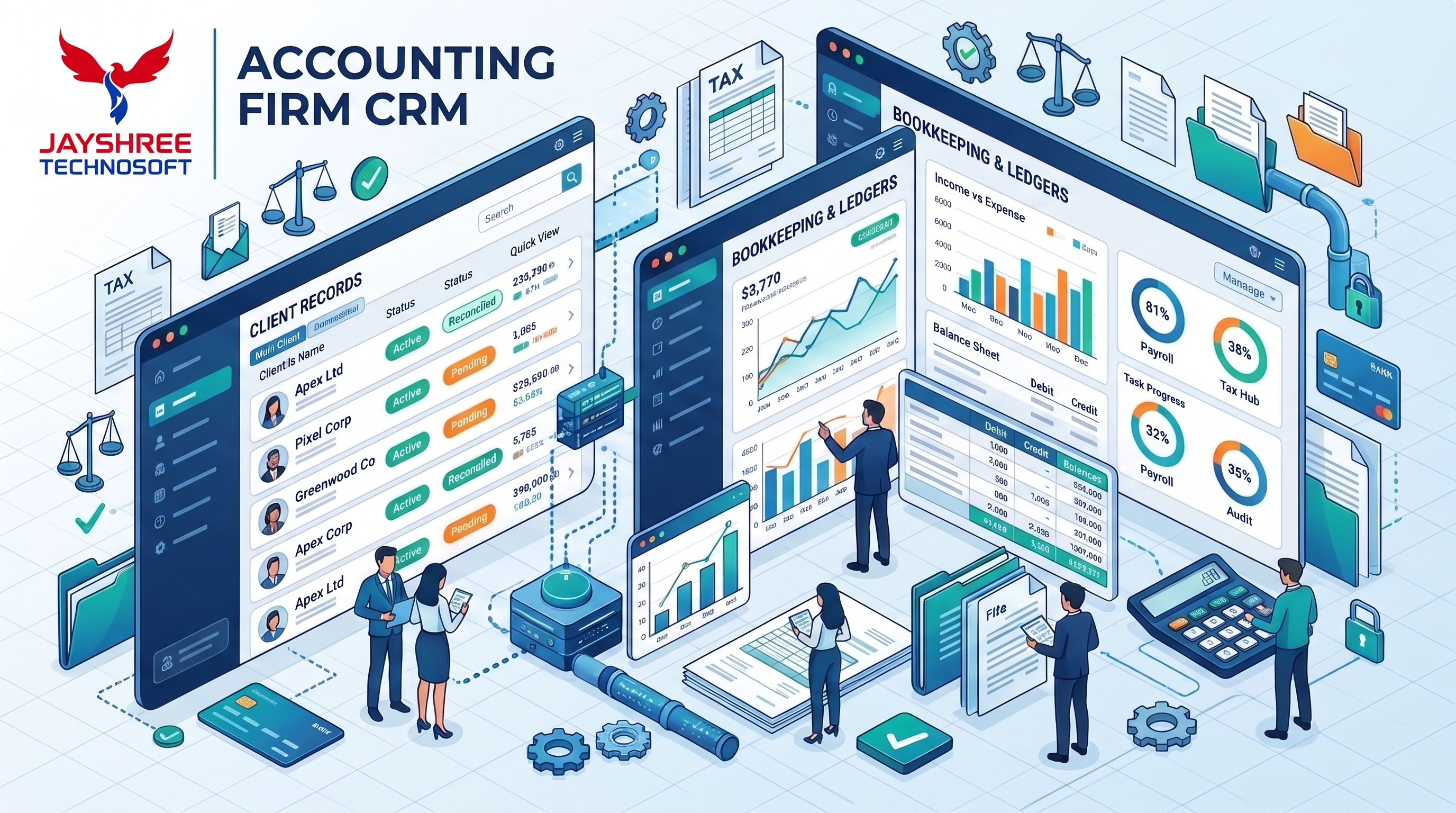
Custom CRM & Software Solutions for Accounting Firms: How Jayshree Technosoft Can Help
Off-the-shelf software rarely fits a business perfectly, and accounting firms manage bookkeeping and reporting deadlines for many clients, which a shared spreadsheet handles unreliably. Jayshree Technosoft, an IT consultancy and software development company, builds custom CRM and software solutions designed around exactly how accounting firms actually operate.
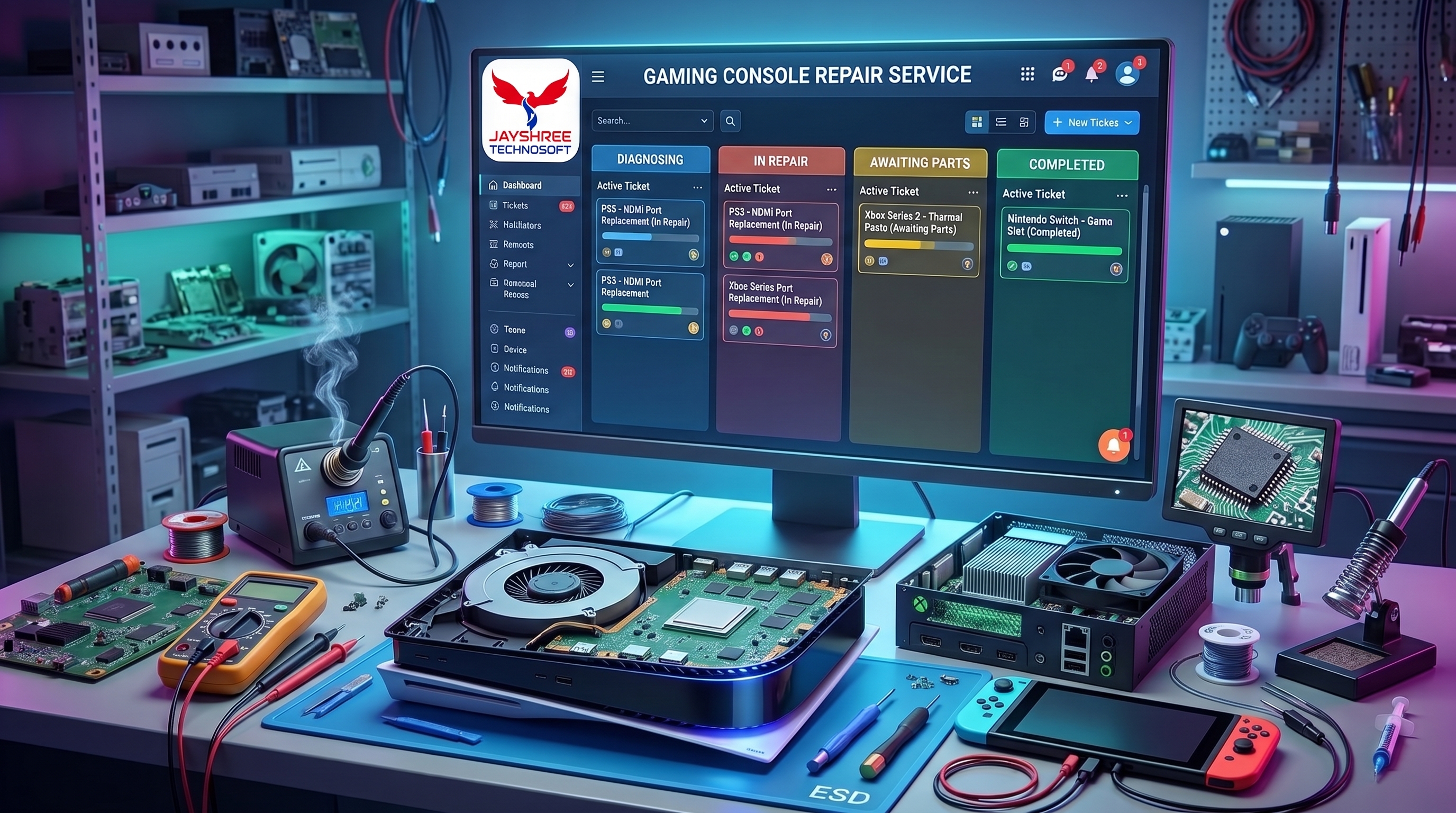
Custom CRM & Software Solutions for Gaming Console Repair Centers: How Jayshree Technosoft Can Help
Off-the-shelf software rarely fits a business perfectly, and gaming console repair involves specialized, model-specific diagnostics on devices customers use daily and want back quickly. Jayshree Technosoft, an IT consultancy and software development company, builds custom CRM and software solutions designed around exactly how gaming console repair centers actually operate.
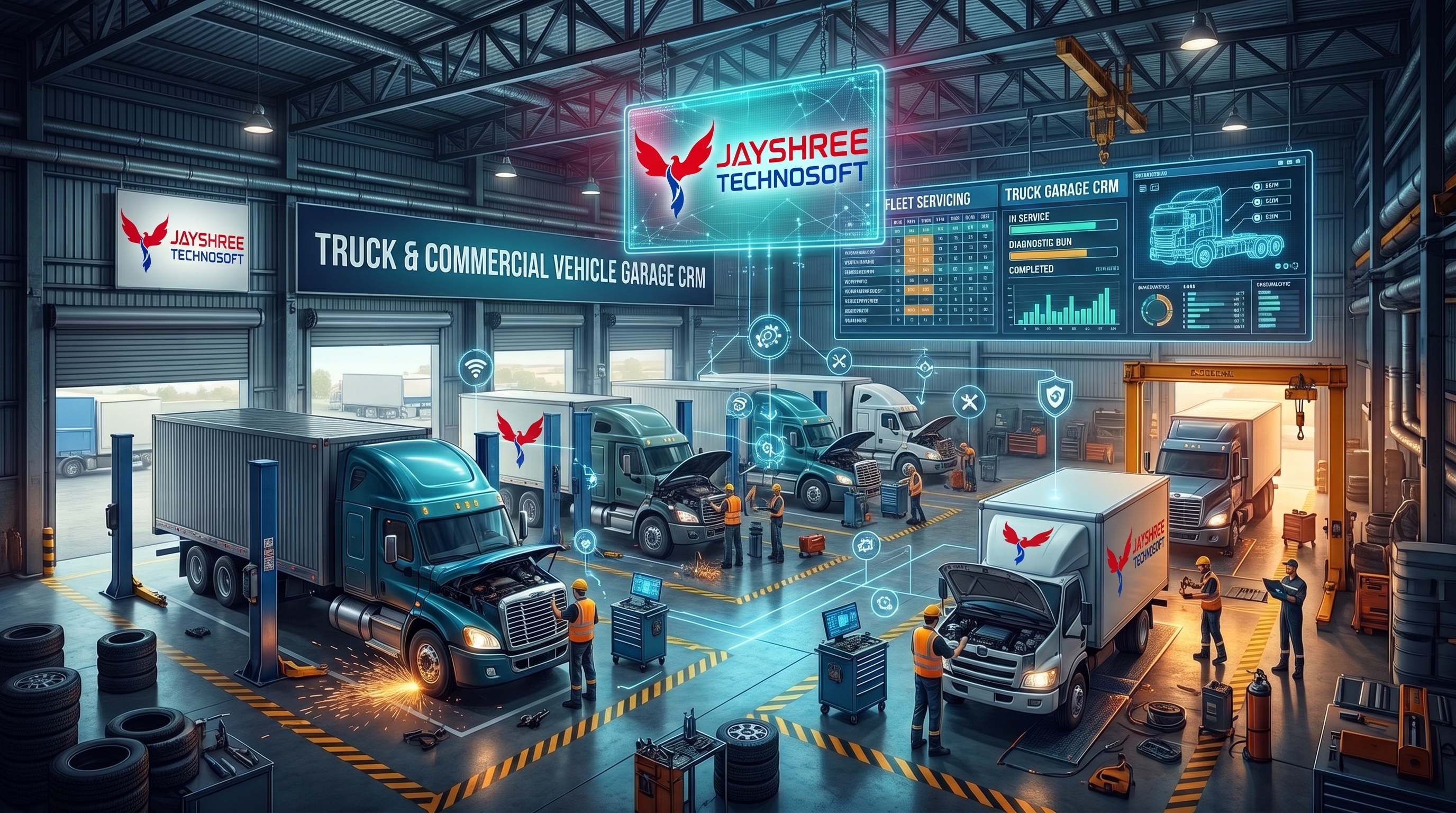
Custom CRM & Software Solutions for Truck & Commercial Vehicle Garages: How Jayshree Technosoft Can Help
Off-the-shelf software rarely fits a business perfectly, and commercial vehicle repairs directly affect a customer's business operations, making fast, clear job tracking essential. Jayshree Technosoft, an IT consultancy and software development company, builds custom CRM and software solutions designed around exactly how truck & commercial vehicle garages actually operate.
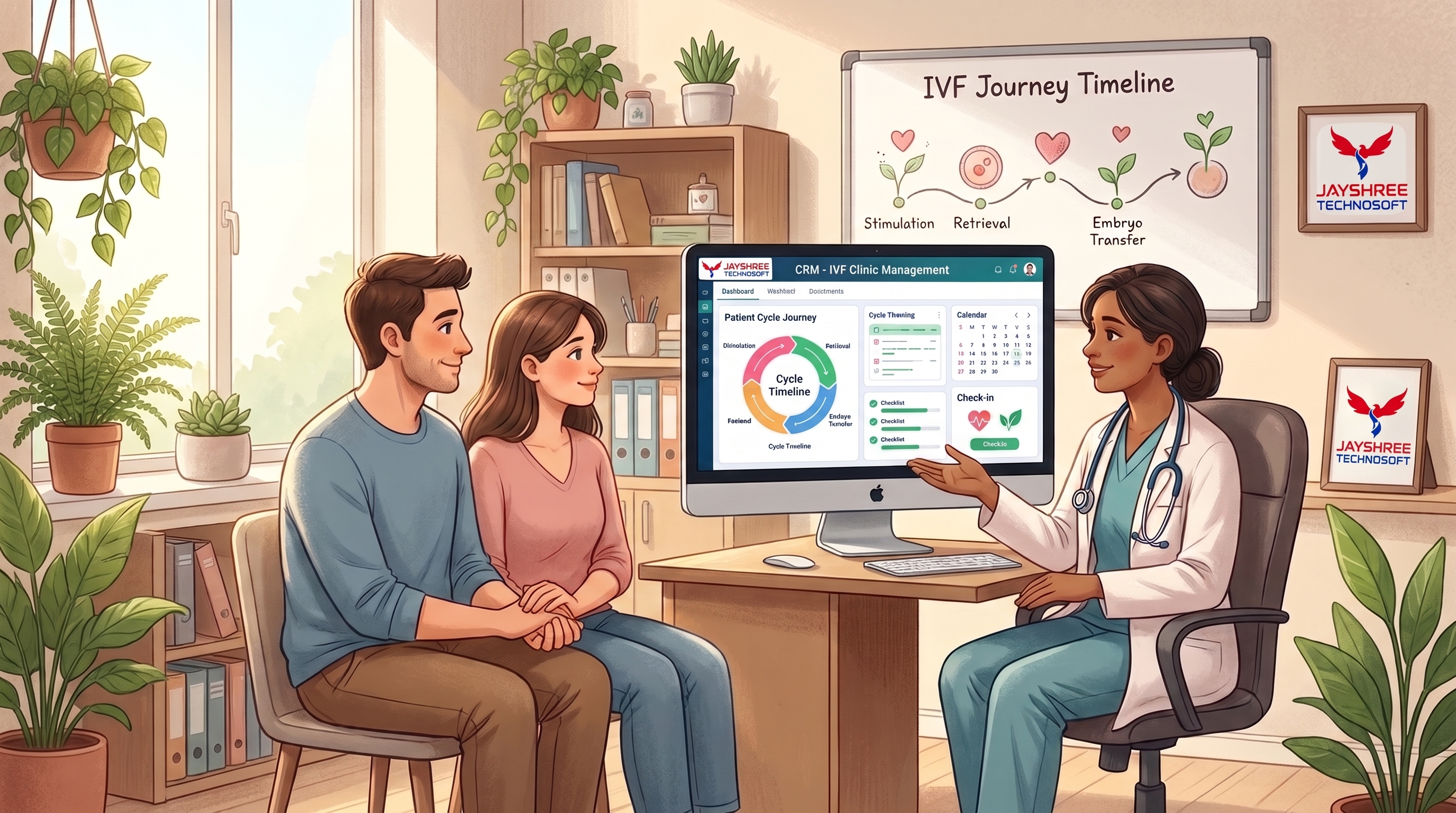
Custom CRM & Software Solutions for IVF Clinics: How Jayshree Technosoft Can Help
Off-the-shelf software rarely fits a business perfectly, and IVF treatment involves precisely timed medication cycles and emotionally sensitive care that need accuracy and discretion. Jayshree Technosoft, an IT consultancy and software development company, builds custom CRM and software solutions designed around exactly how IVF clinics actually operate.
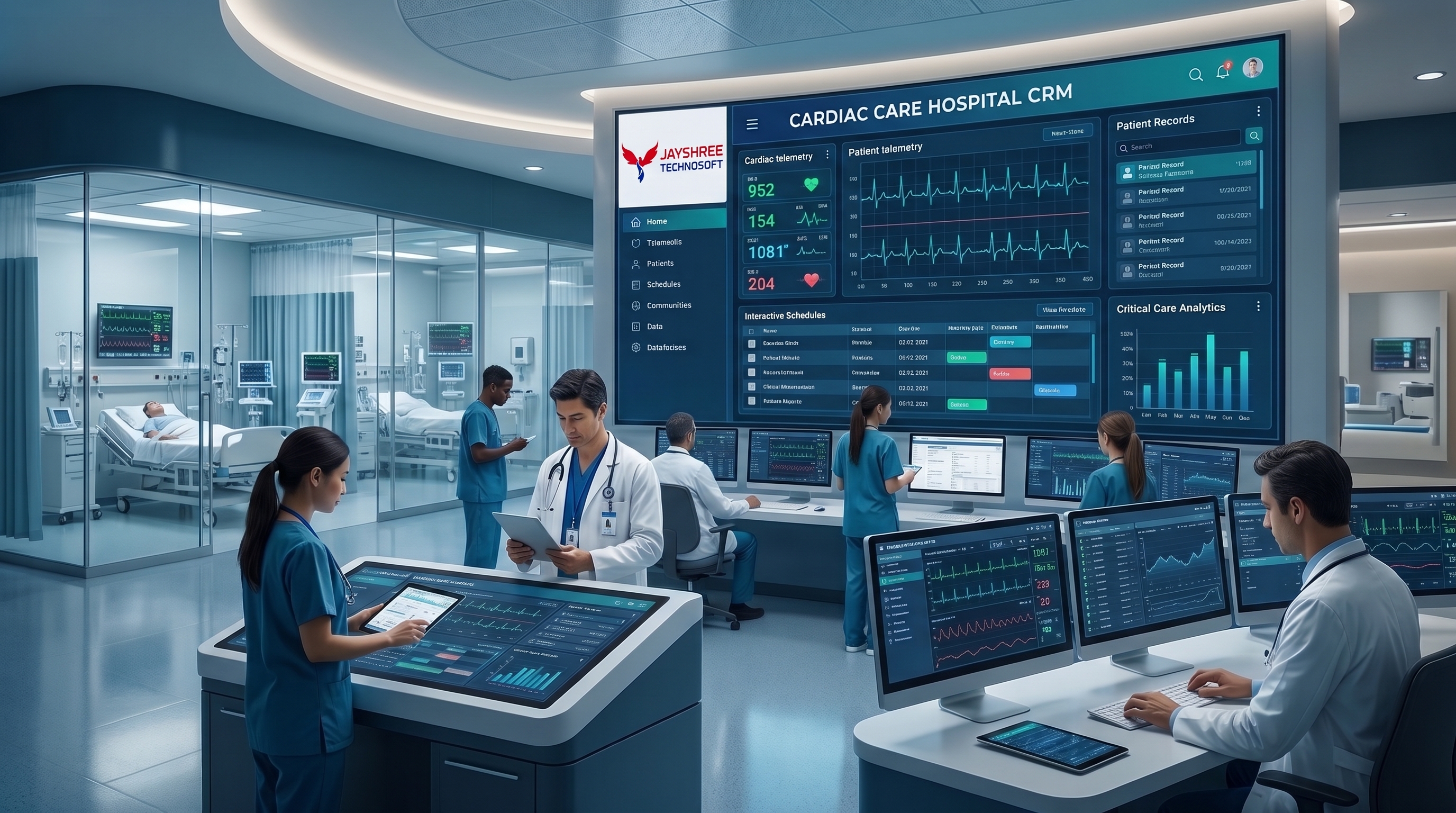
Custom CRM & Software Solutions for Cardiac Care Centers: How Jayshree Technosoft Can Help
Off-the-shelf software rarely fits a business perfectly, and cardiac care depends on reliable, timely follow-ups and accessible records where a missed reminder can have real consequences. Jayshree Technosoft, an IT consultancy and software development company, builds custom CRM and software solutions designed around exactly how cardiac care centers actually operate.
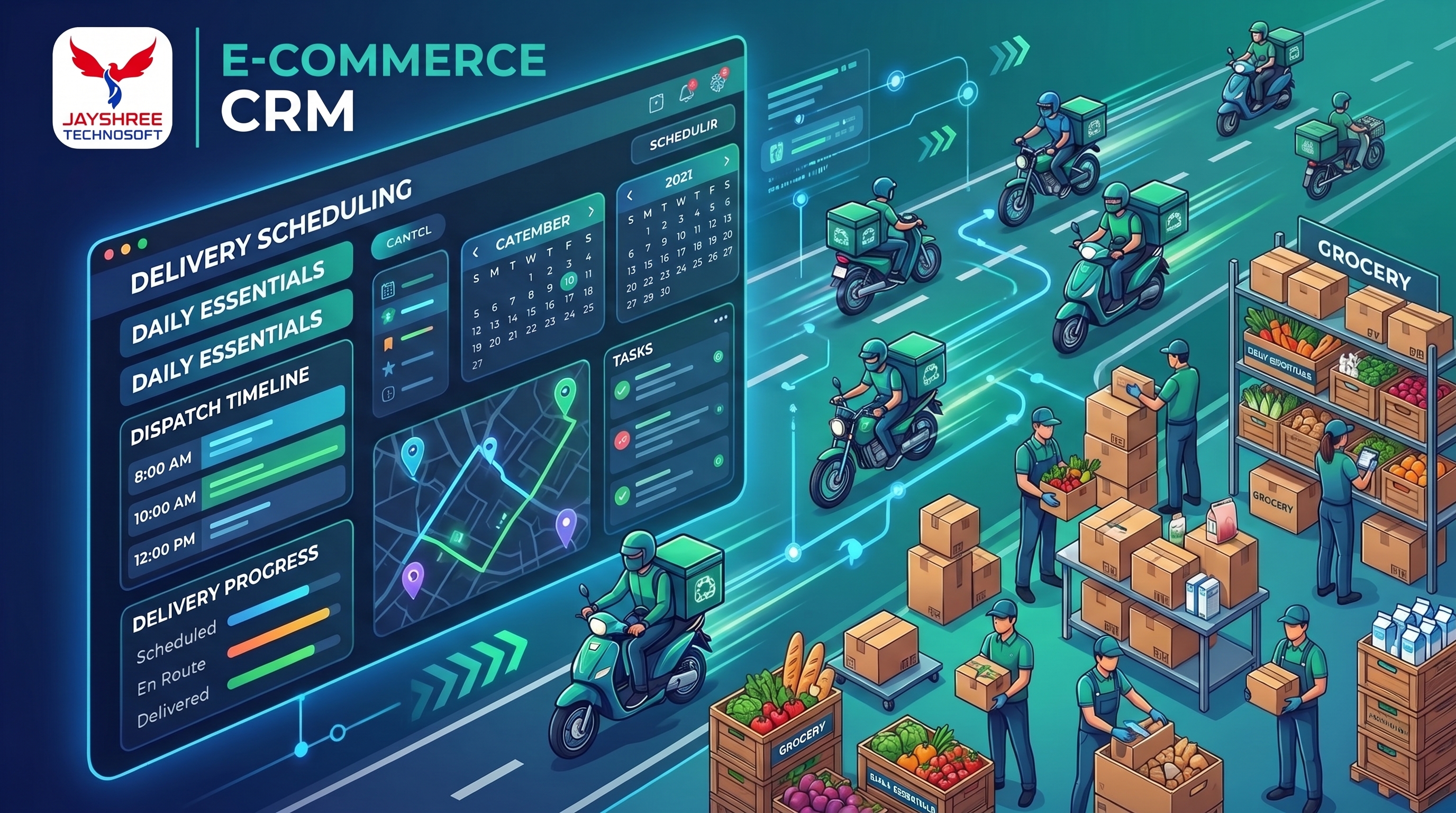
Custom CRM & Software Solutions for Grocery & Daily Essentials Brands: How Jayshree Technosoft Can Help
Off-the-shelf software rarely fits a business perfectly, and grocery and daily essentials brands depend on repeat orders and reliable delivery scheduling more than one-off purchase categories. Jayshree Technosoft, an IT consultancy and software development company, builds custom CRM and software solutions designed around exactly how grocery & daily essentials brands actually operate.
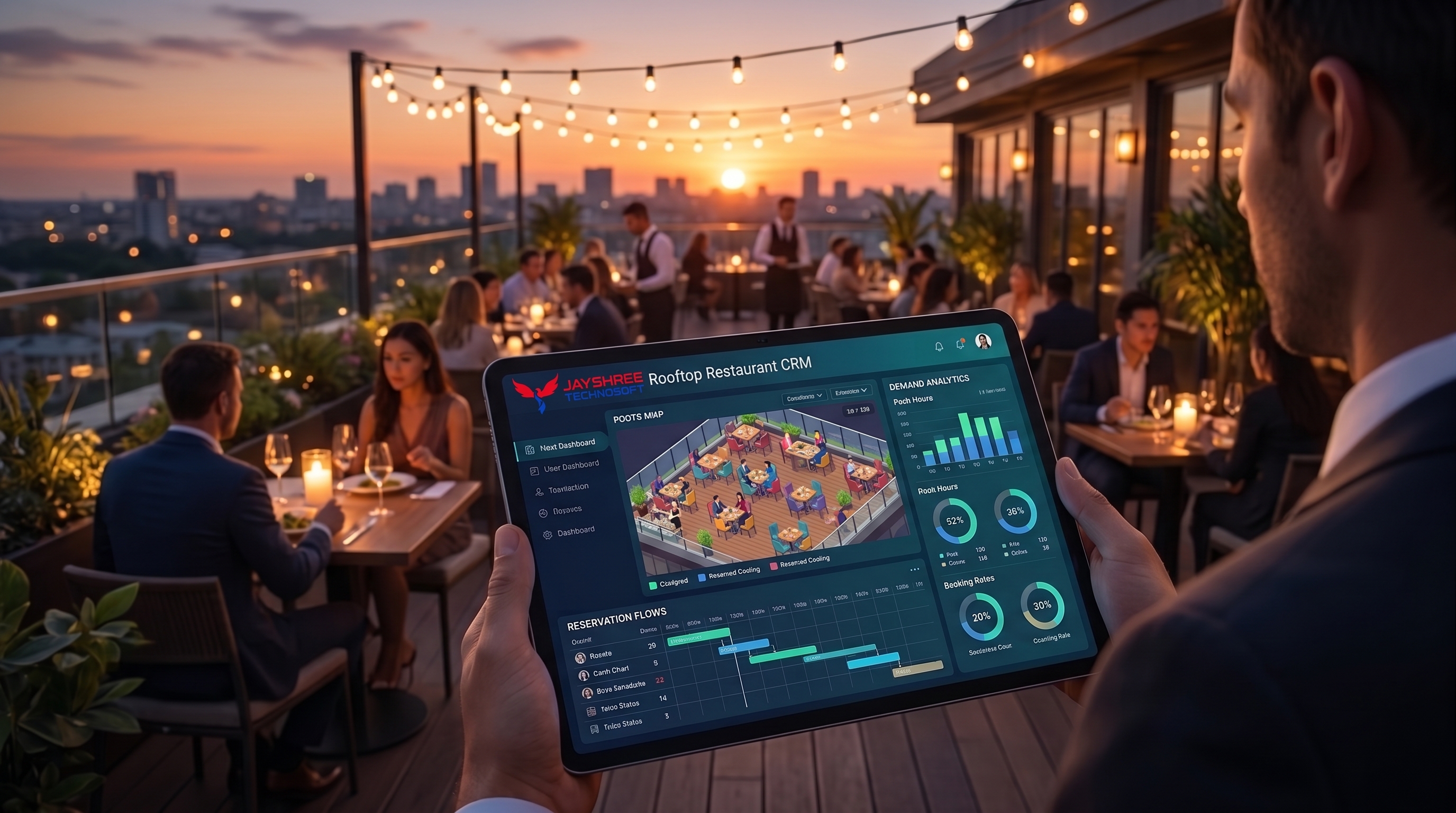
Custom CRM & Software Solutions for Rooftop Restaurants: How Jayshree Technosoft Can Help
Off-the-shelf software rarely fits a business perfectly, and rooftop restaurants face weather-sensitive demand and a reservation-heavy guest base planning ahead for the experience. Jayshree Technosoft, an IT consultancy and software development company, builds custom CRM and software solutions designed around exactly how rooftop restaurants actually operate.
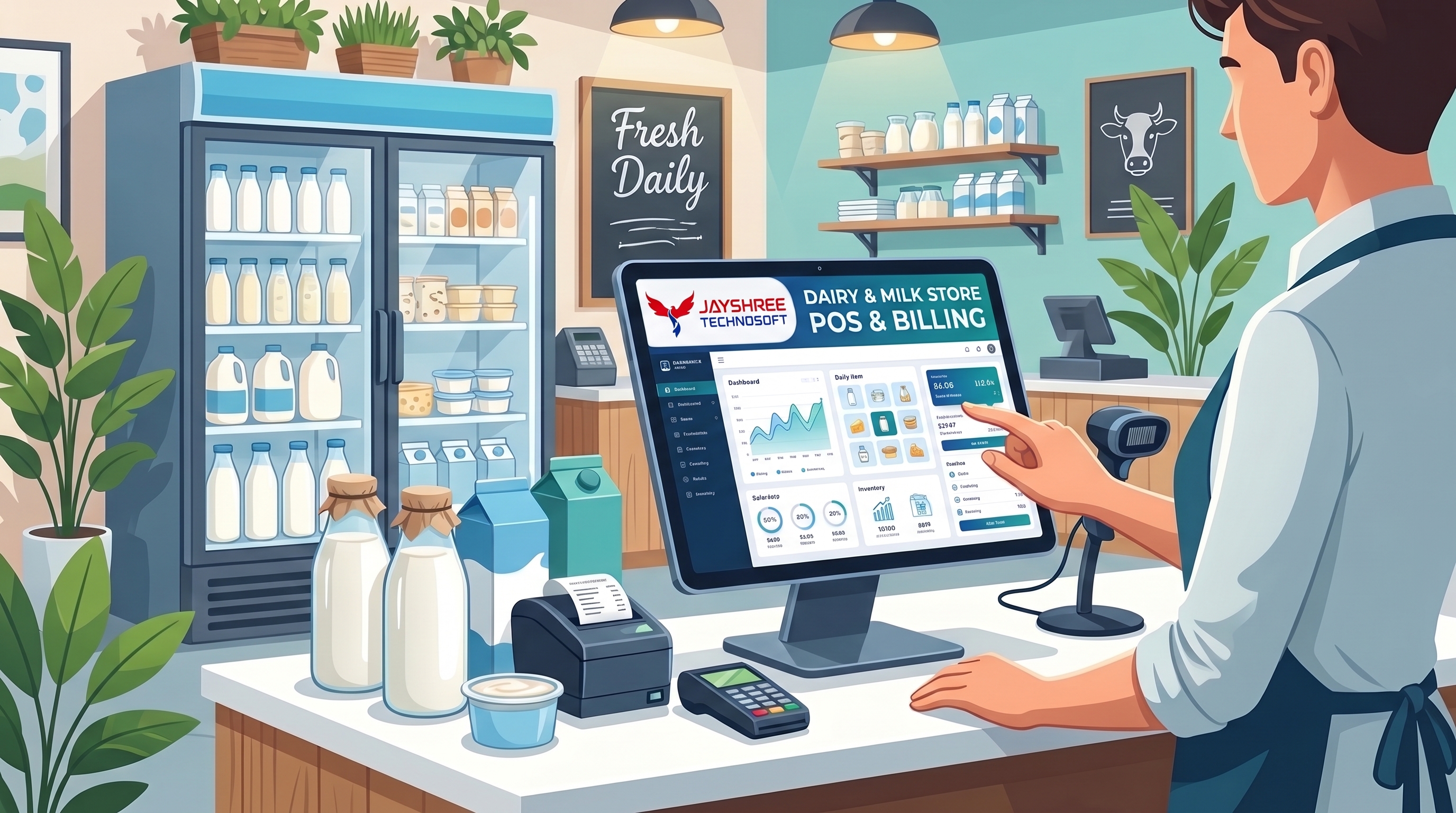
Custom CRM & Software Solutions for Dairy & Milk Product Stores: How Jayshree Technosoft Can Help
Off-the-shelf software rarely fits a business perfectly, and dairy and milk product stores manage short shelf-life daily stock alongside subscription customers who expect reliable daily billing. Jayshree Technosoft, an IT consultancy and software development company, builds custom CRM and software solutions designed around exactly how dairy & milk product stores actually operate.
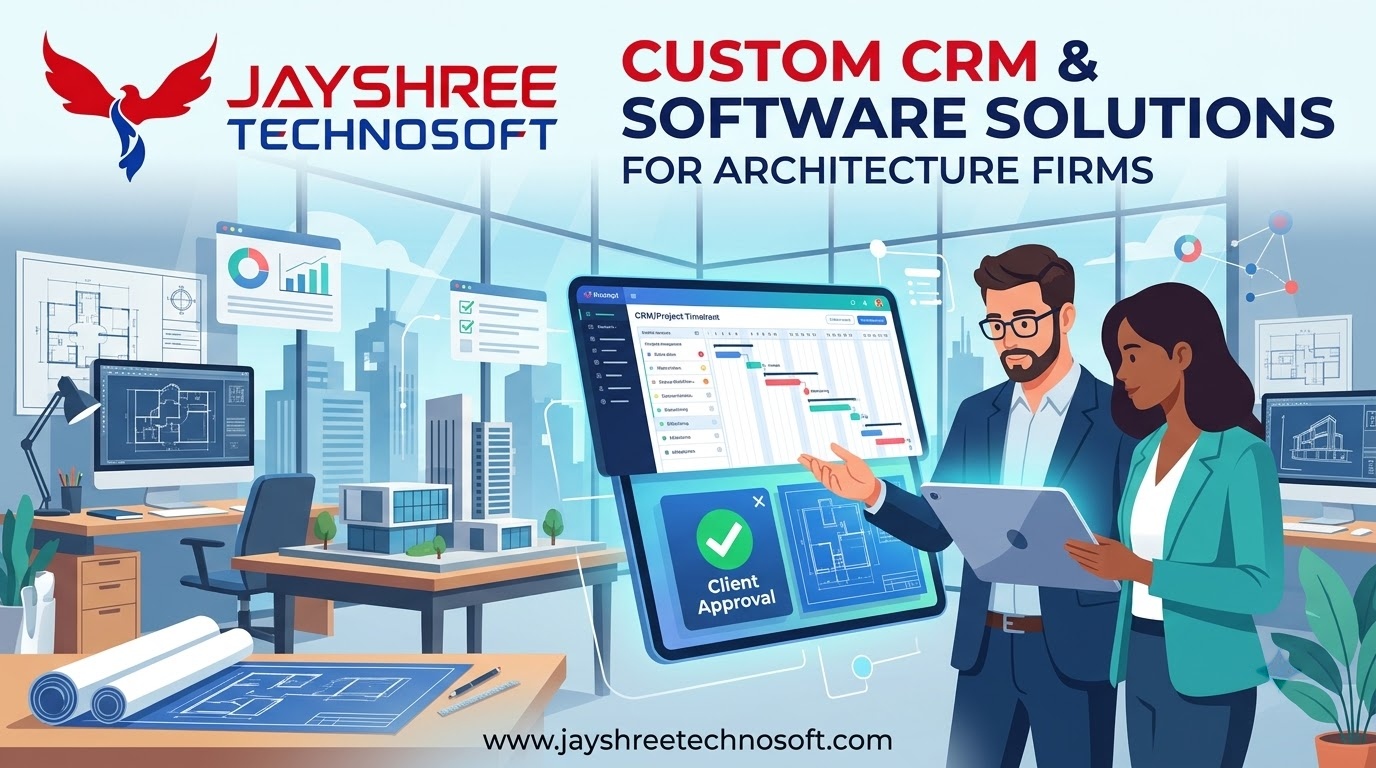
Custom CRM & Software Solutions for Architecture Firms: How Jayshree Technosoft Can Help
Off-the-shelf software rarely fits a business perfectly, and architecture firms manage multiple design projects through stages of design, revision and client approval that are hard to track on a shared folder. Jayshree Technosoft, an IT consultancy and software development company, builds custom CRM and software solutions designed around exactly how architecture firms actually operate.
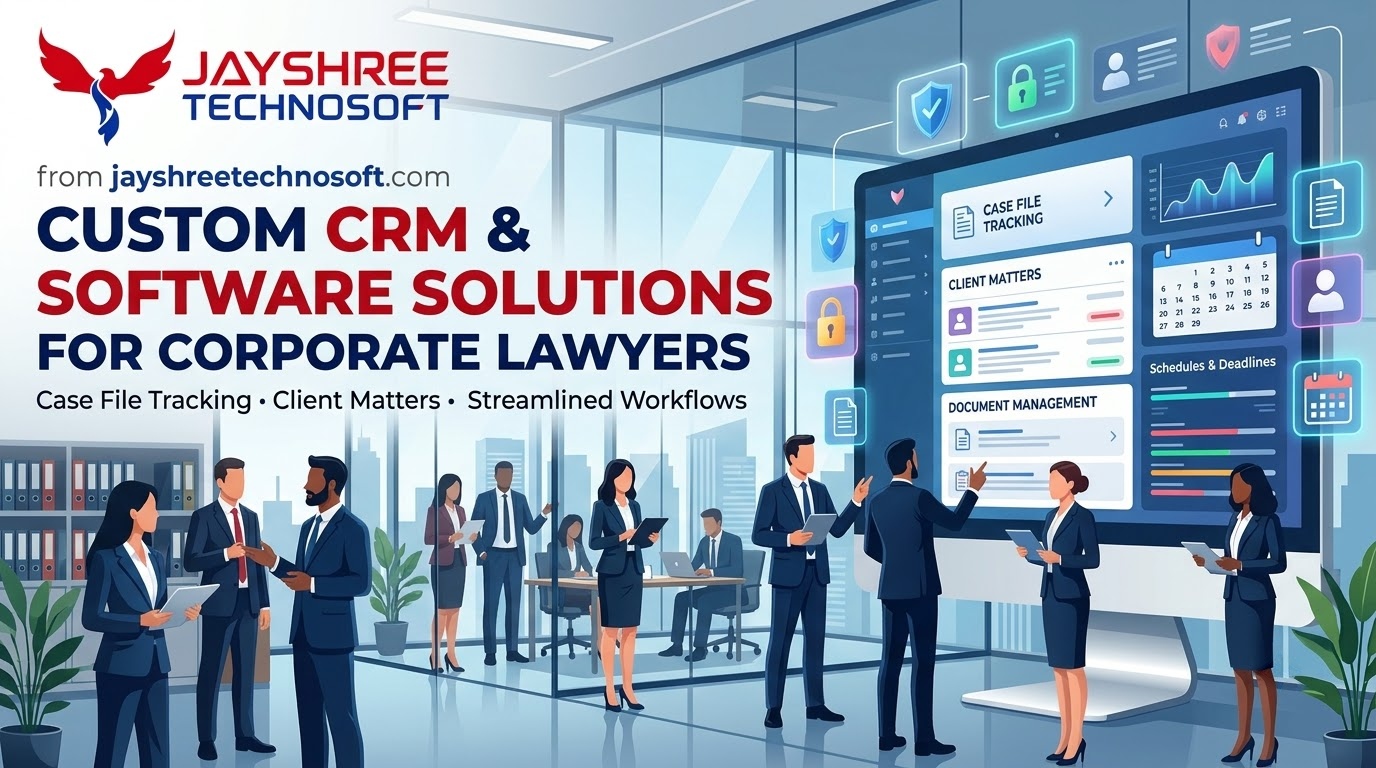
Custom CRM & Software Solutions for Corporate Lawyers: How Jayshree Technosoft Can Help
Off-the-shelf software rarely fits a business perfectly, and corporate lawyers handle multiple client matters at once, each with detailed documents and deadlines across long legal processes. Jayshree Technosoft, an IT consultancy and software development company, builds custom CRM and software solutions designed around exactly how corporate lawyers actually operate.
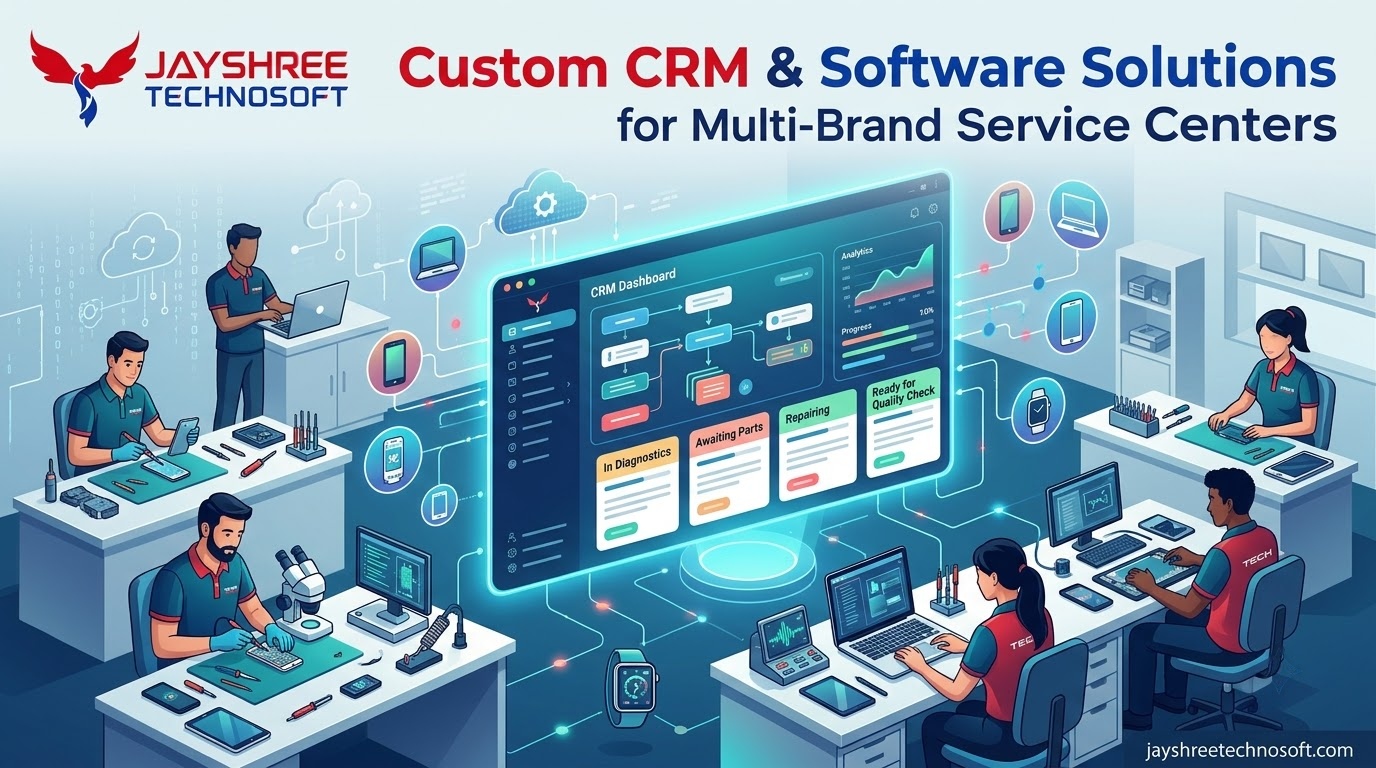
Custom CRM & Software Solutions for Multi-Brand Service Centers: How Jayshree Technosoft Can Help
Off-the-shelf software rarely fits a business perfectly, and multi-brand electronics service centers repair devices across many manufacturers, which generic job cards don't track with enough structure. Jayshree Technosoft, an IT consultancy and software development company, builds custom CRM and software solutions designed around exactly how multi-brand service centers actually operate.
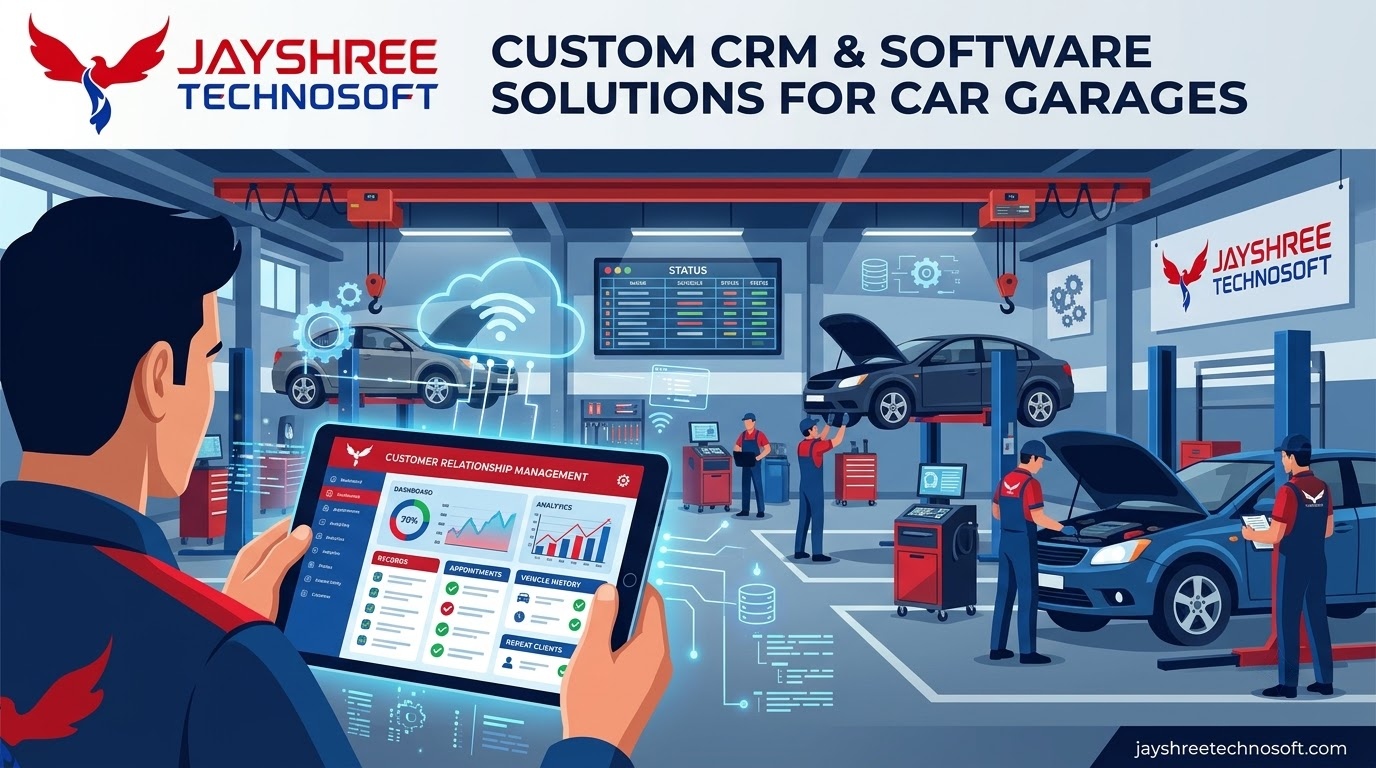
Custom CRM & Software Solutions for Car Garages: How Jayshree Technosoft Can Help
Off-the-shelf software rarely fits a business perfectly, and car garages depend on accurate job tracking and timely service reminders to keep a loyal base of regular customers. Jayshree Technosoft, an IT consultancy and software development company, builds custom CRM and software solutions designed around exactly how car garages actually operate.
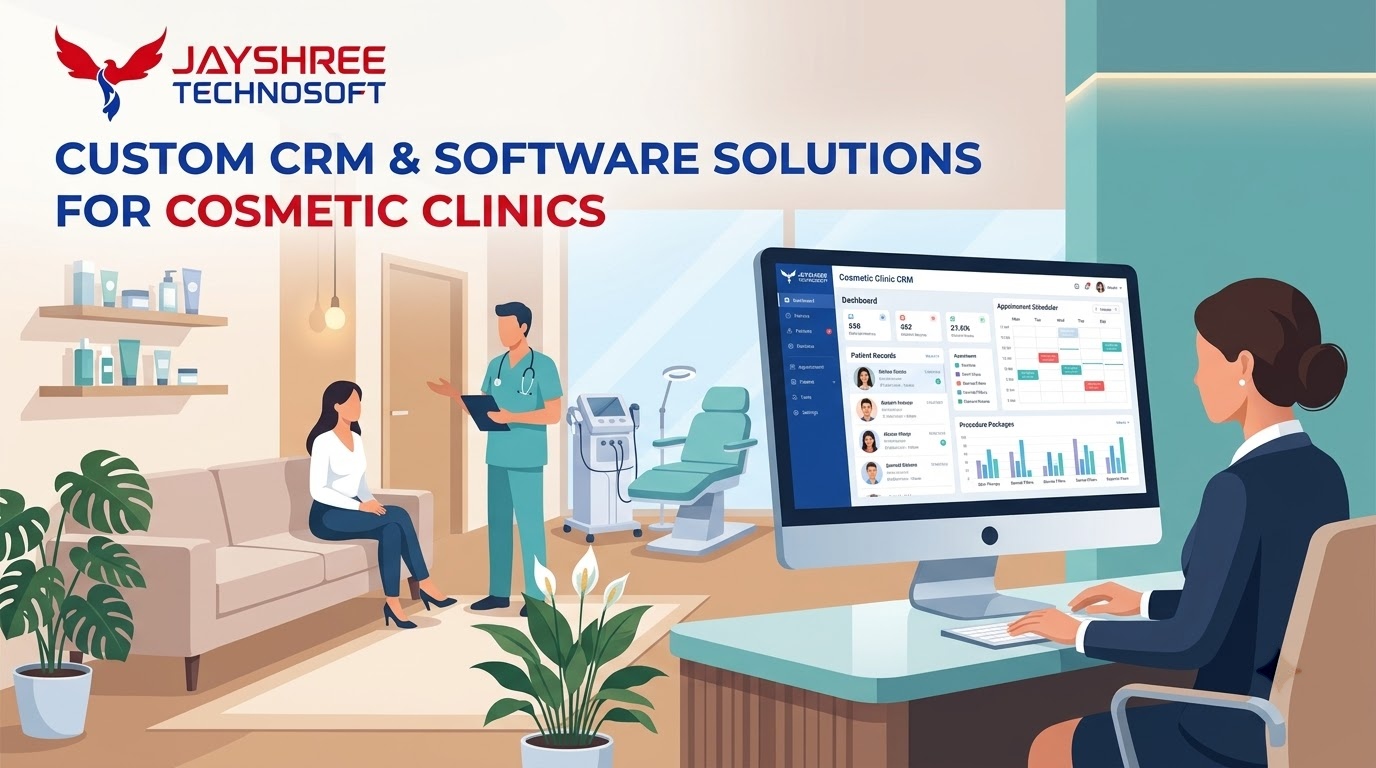
Custom CRM & Software Solutions for Cosmetic Clinics: How Jayshree Technosoft Can Help
Off-the-shelf software rarely fits a business perfectly, and cosmetic clinics sell procedure packages with scheduled follow-ups, where before-and-after documentation matters for results and confidence. Jayshree Technosoft, an IT consultancy and software development company, builds custom CRM and software solutions designed around exactly how cosmetic clinics actually operate.
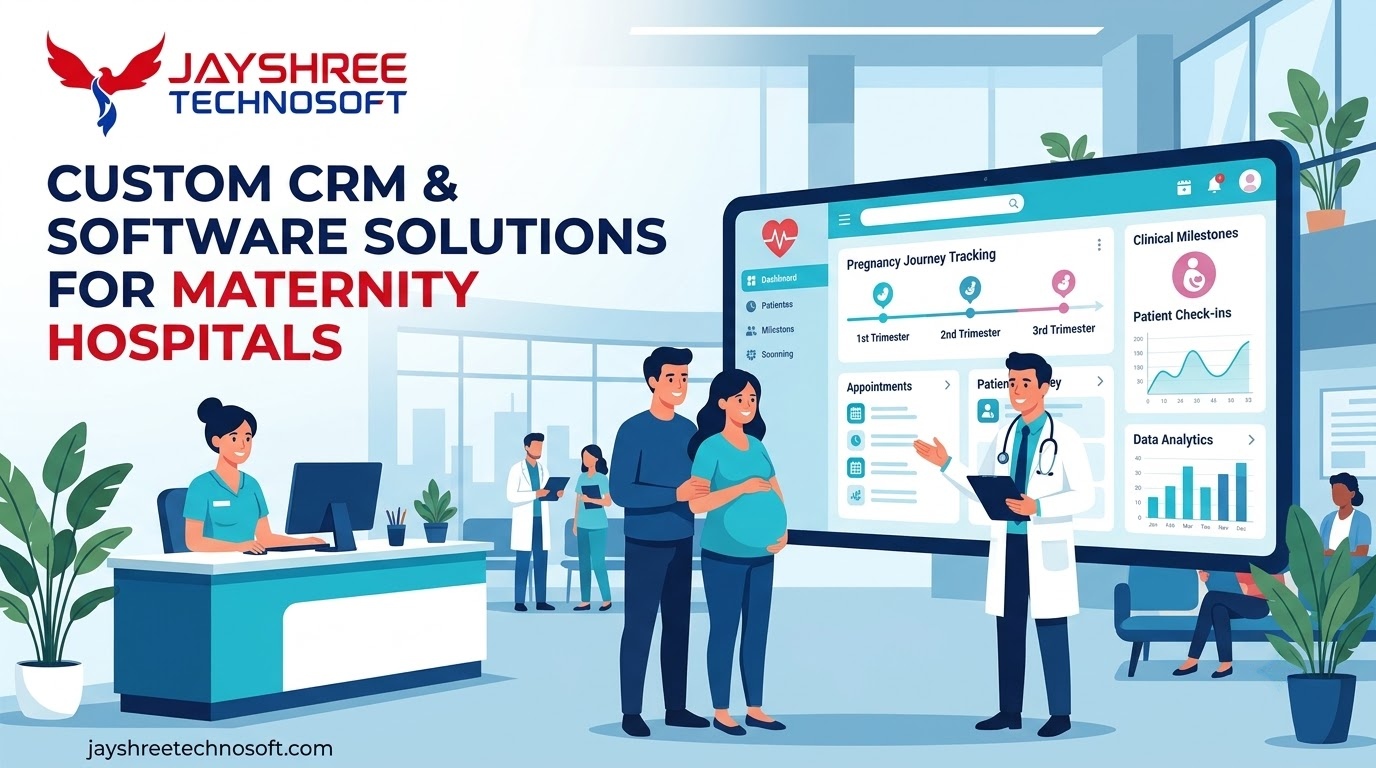
Custom CRM & Software Solutions for Maternity Hospitals: How Jayshree Technosoft Can Help
Off-the-shelf software rarely fits a business perfectly, and maternity care tracks a patient's full pregnancy journey across many checkups and milestones over months. Jayshree Technosoft, an IT consultancy and software development company, builds custom CRM and software solutions designed around exactly how maternity hospitals actually operate.
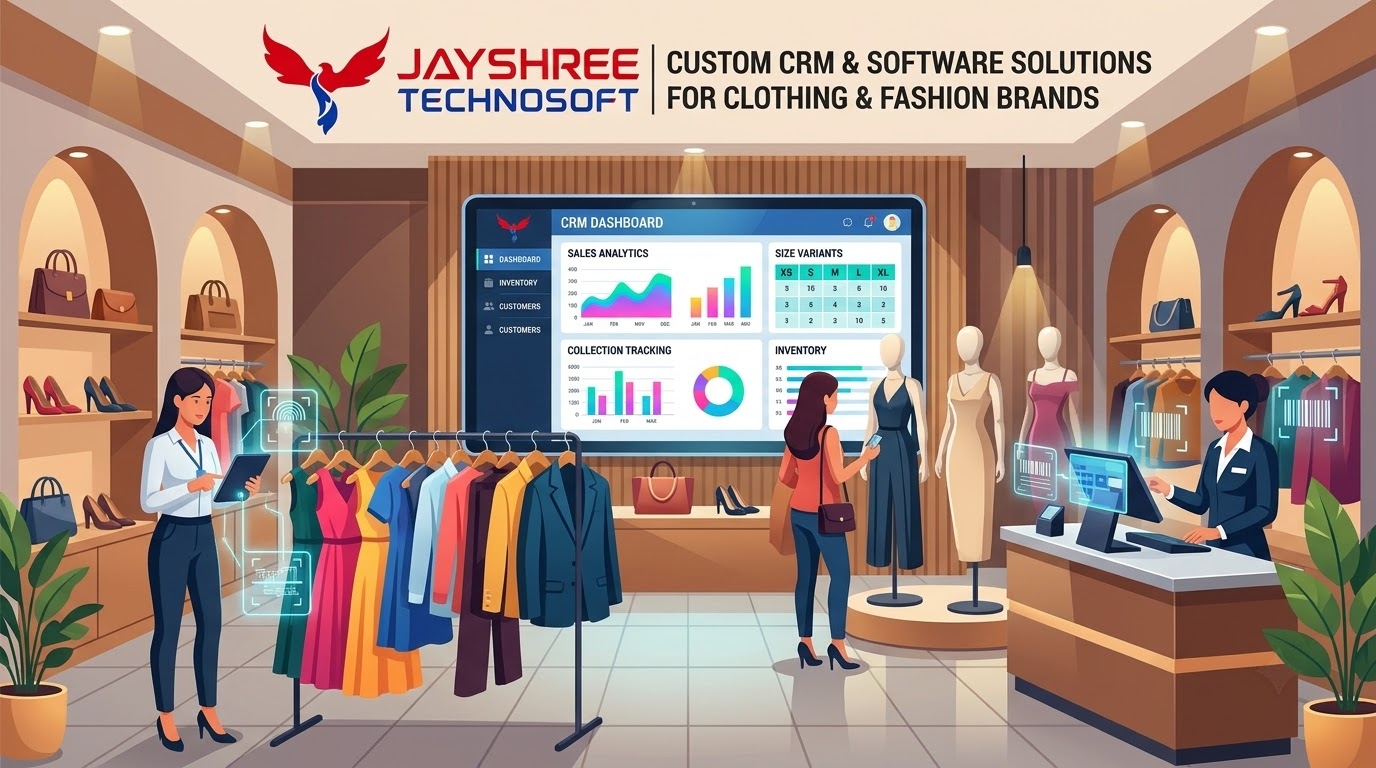
Custom CRM & Software Solutions for Clothing & Fashion Brands: How Jayshree Technosoft Can Help
Off-the-shelf software rarely fits a business perfectly, and clothing and fashion brands manage size and color variants, seasonal collections and a meaningful rate of returns. Jayshree Technosoft, an IT consultancy and software development company, builds custom CRM and software solutions designed around exactly how clothing & fashion brands actually operate.
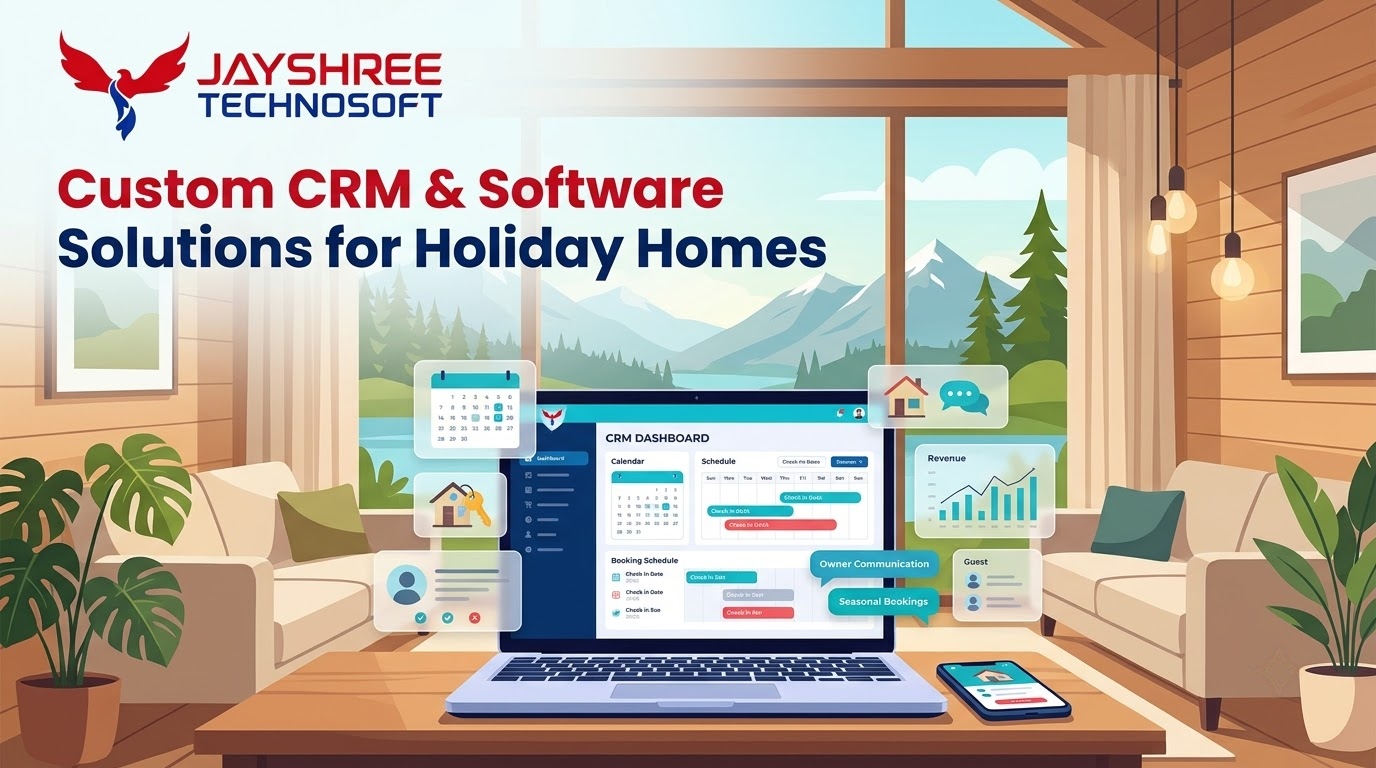
Custom CRM & Software Solutions for Holiday Homes: How Jayshree Technosoft Can Help
Off-the-shelf software rarely fits a business perfectly, and holiday homes see sharply seasonal demand and are often managed on behalf of owners who need clear booking and earnings visibility. Jayshree Technosoft, an IT consultancy and software development company, builds custom CRM and software solutions designed around exactly how holiday homes actually operate.
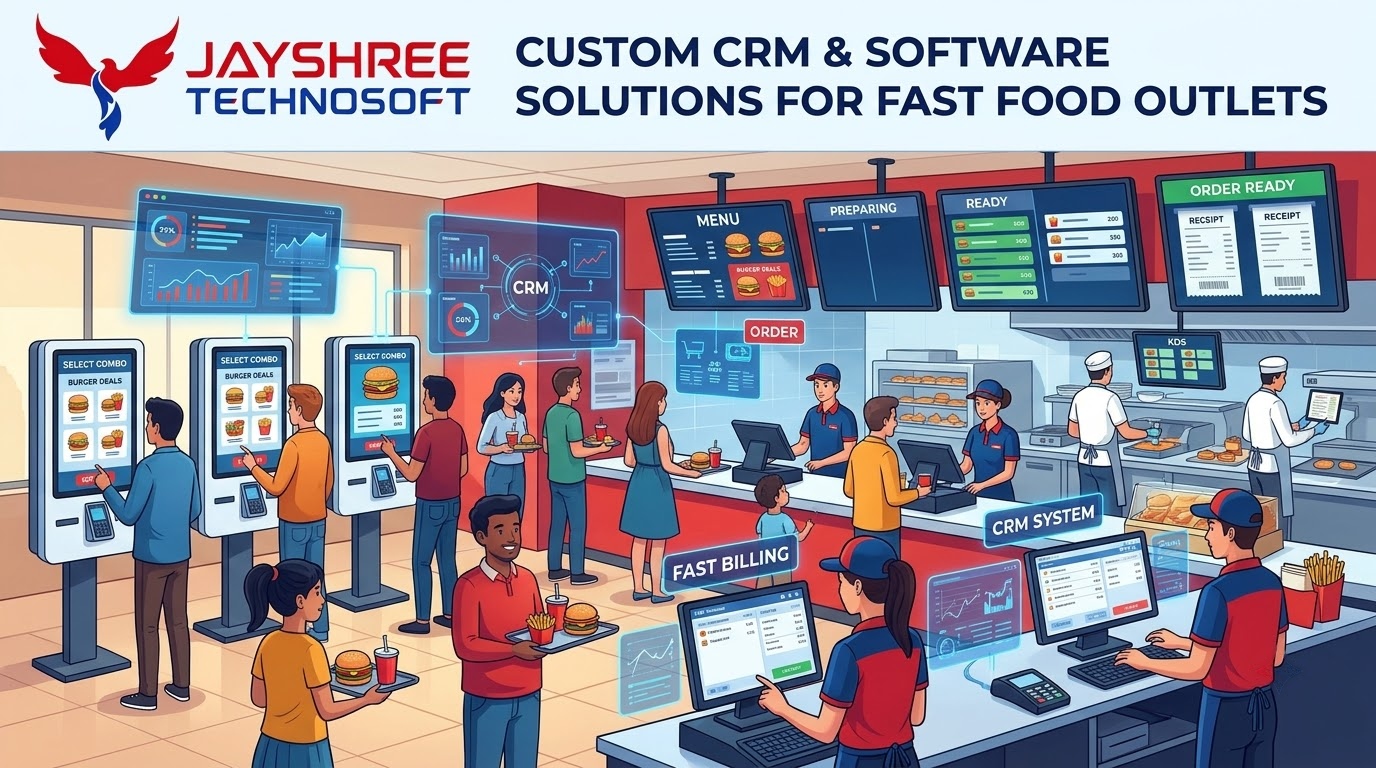
Custom CRM & Software Solutions for Fast Food Outlets: How Jayshree Technosoft Can Help
Off-the-shelf software rarely fits a business perfectly, and fast food outlets depend on near-instant billing for combo deals and customizable orders during peak rush periods. Jayshree Technosoft, an IT consultancy and software development company, builds custom CRM and software solutions designed around exactly how fast food outlets actually operate.
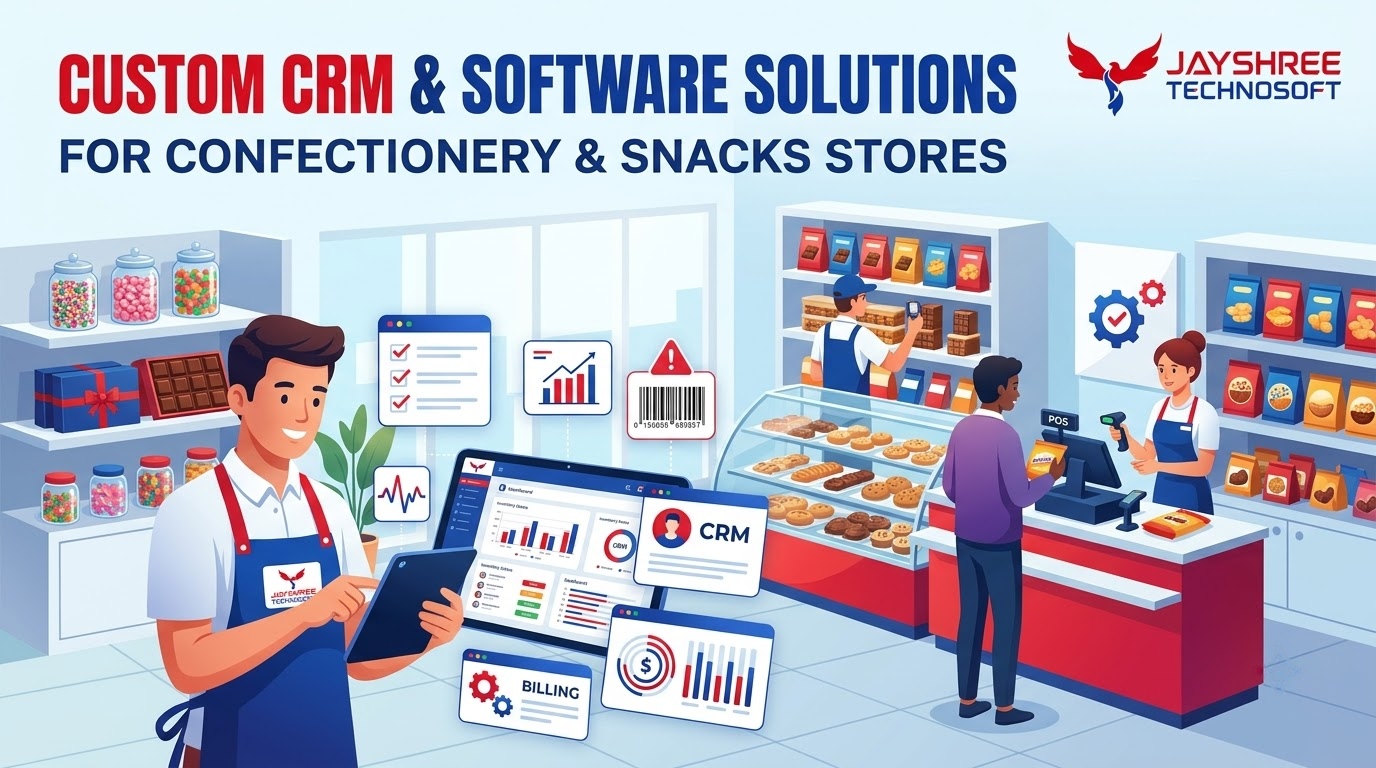
Custom CRM & Software Solutions for Confectionery & Snacks Stores: How Jayshree Technosoft Can Help
Off-the-shelf software rarely fits a business perfectly, and confectionery and snacks stores stock items with widely varying shelf lives alongside a steady stream of small, quick purchases. Jayshree Technosoft, an IT consultancy and software development company, builds custom CRM and software solutions designed around exactly how confectionery & snacks stores actually operate.
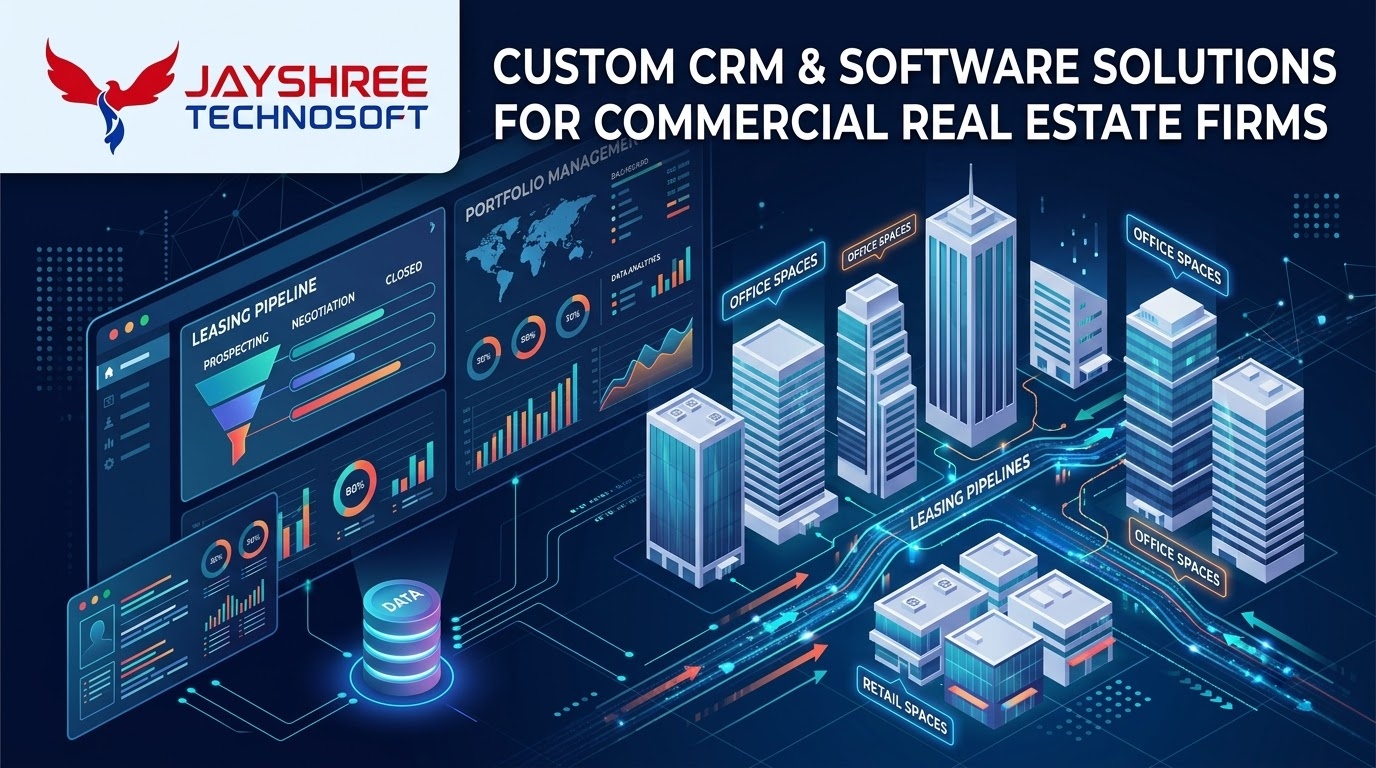
Custom CRM & Software Solutions for Commercial Real Estate Firms: How Jayshree Technosoft Can Help
Off-the-shelf software rarely fits a business perfectly, and commercial real estate firms manage longer, more complex leasing cycles than residential deals, which a basic contact list can't track. Jayshree Technosoft, an IT consultancy and software development company, builds custom CRM and software solutions designed around exactly how commercial real estate firms actually operate.
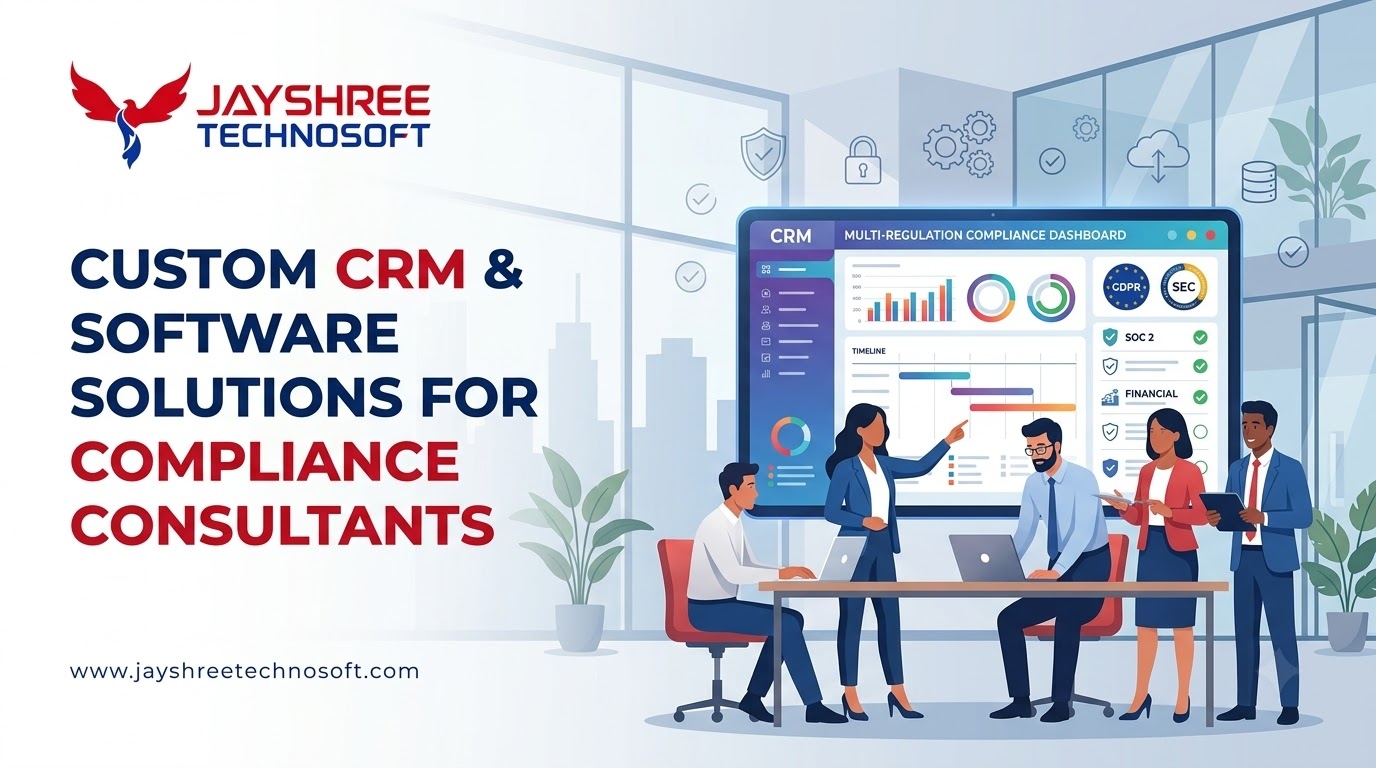
Custom CRM & Software Solutions for Compliance Consultants: How Jayshree Technosoft Can Help
Off-the-shelf software rarely fits a business perfectly, and compliance consultants track multiple regulatory requirements across clients, which a spreadsheet manages unreliably. Jayshree Technosoft, an IT consultancy and software development company, builds custom CRM and software solutions designed around exactly how compliance consultants actually operate.
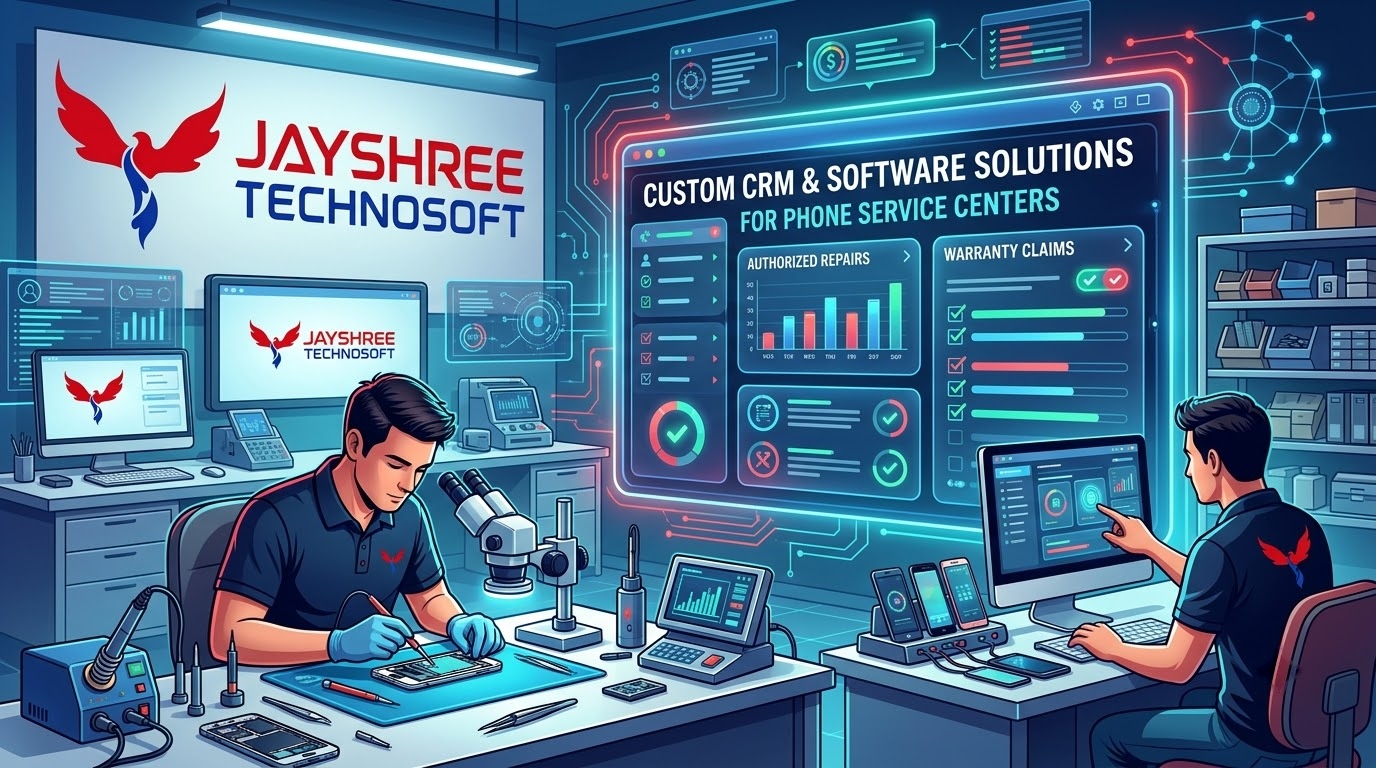
Custom CRM & Software Solutions for Phone Service Centers: How Jayshree Technosoft Can Help
Off-the-shelf software rarely fits a business perfectly, and phone service centers handle brand-authorized repairs and warranty claims, where documentation accuracy matters as much as the repair. Jayshree Technosoft, an IT consultancy and software development company, builds custom CRM and software solutions designed around exactly how phone service centers actually operate.
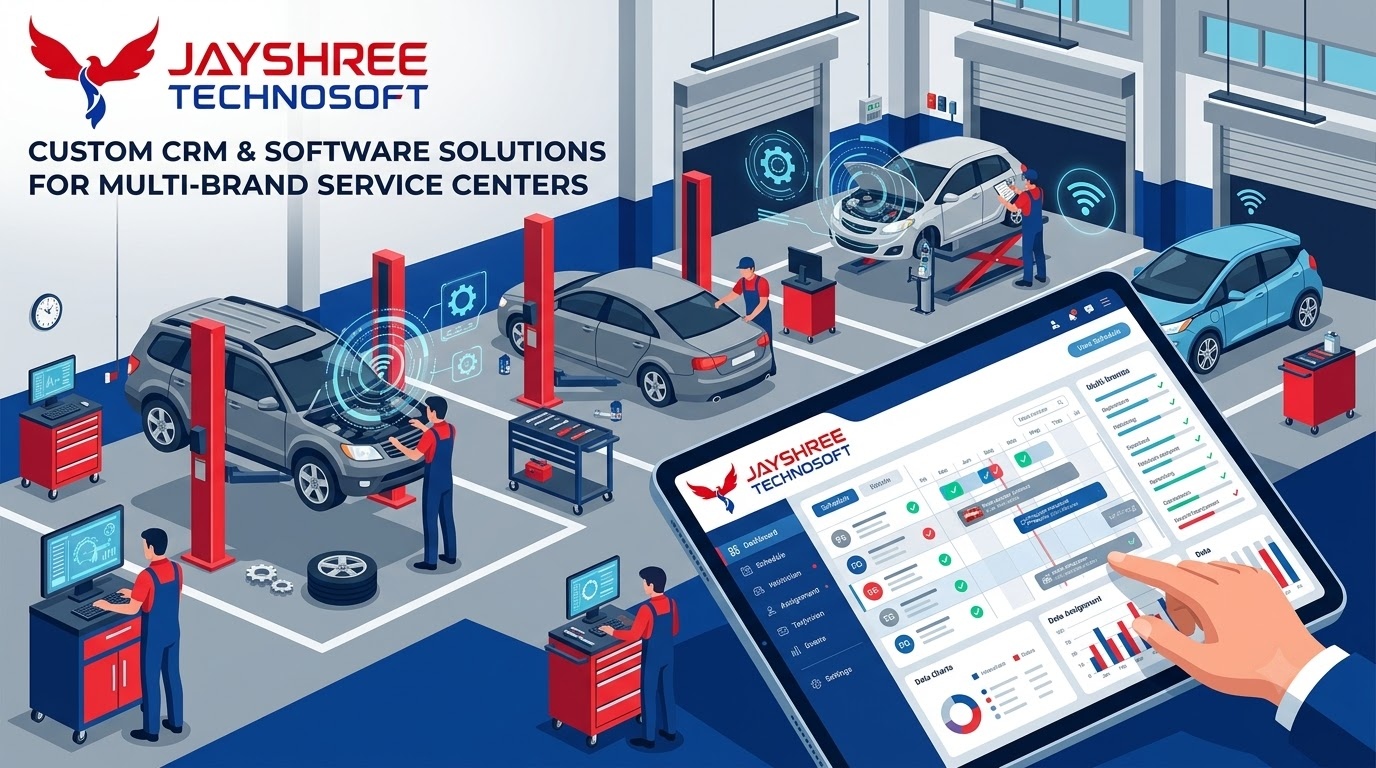
Custom CRM & Software Solutions for Multi-Brand Service Centers: How Jayshree Technosoft Can Help
Off-the-shelf software rarely fits a business perfectly, and multi-brand service centers service vehicles across many manufacturers, which generic job cards don't track with enough structure. Jayshree Technosoft, an IT consultancy and software development company, builds custom CRM and software solutions designed around exactly how multi-brand service centers actually operate.
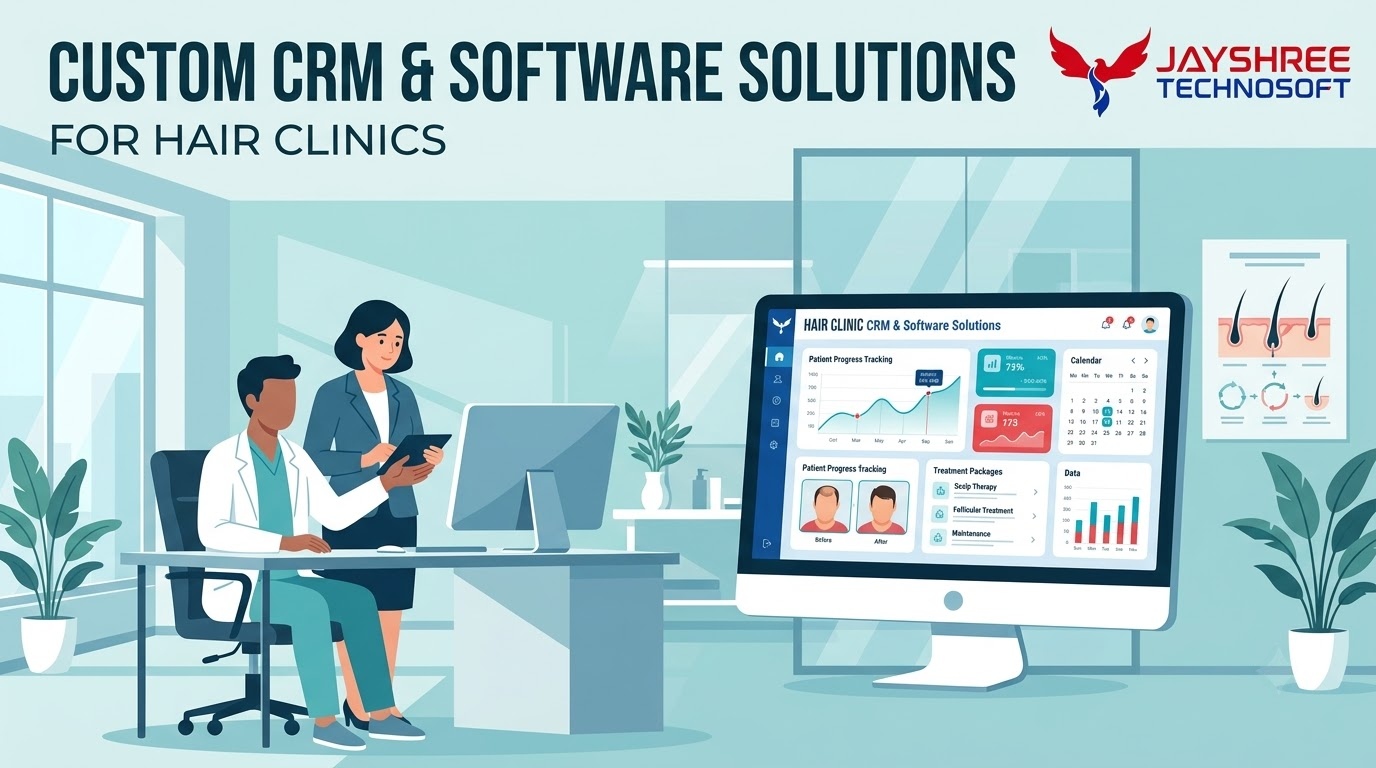
Custom CRM & Software Solutions for Hair Clinics: How Jayshree Technosoft Can Help
Off-the-shelf software rarely fits a business perfectly, and hair clinics sell structured, multi-session treatment packages that need accurate usage and progress tracking. Jayshree Technosoft, an IT consultancy and software development company, builds custom CRM and software solutions designed around exactly how hair clinics actually operate.
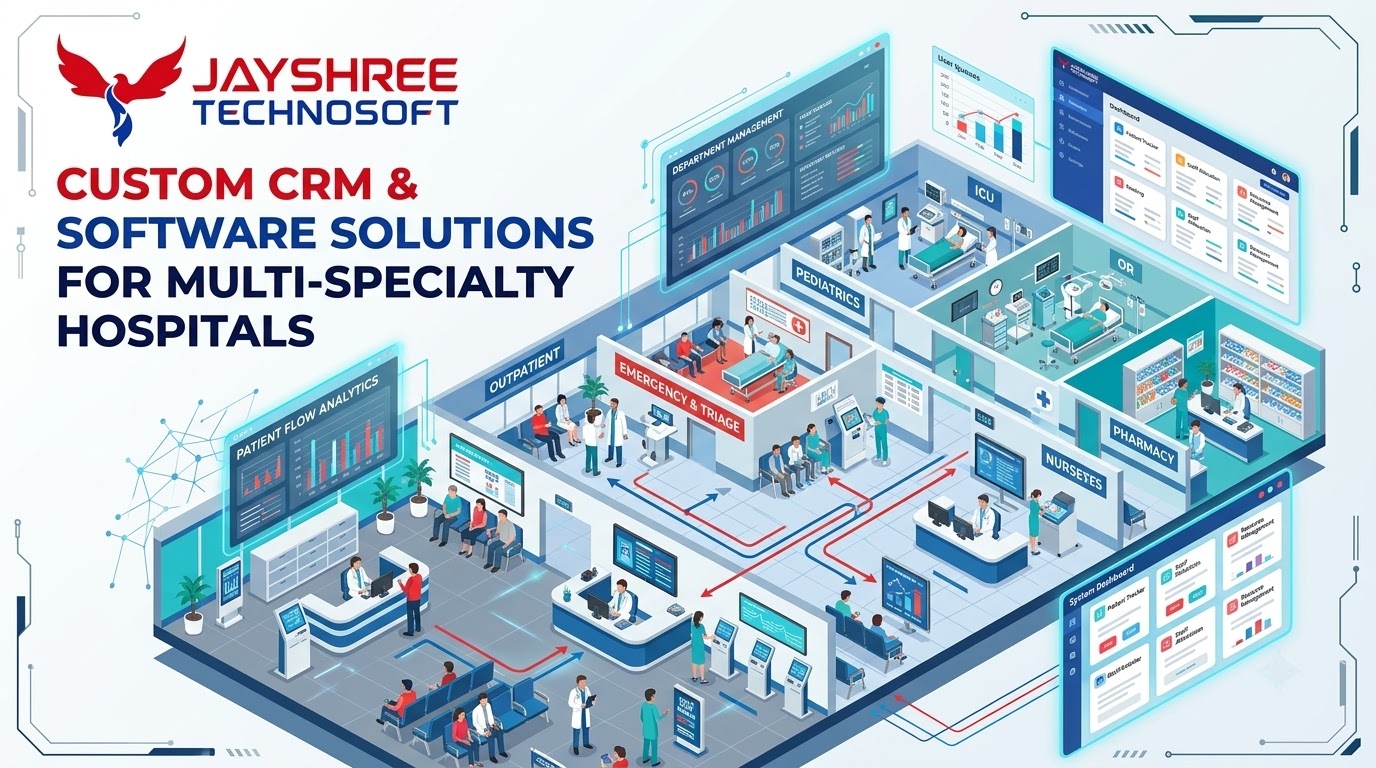
Custom CRM & Software Solutions for Multi-Specialty Hospitals: How Jayshree Technosoft Can Help
Off-the-shelf software rarely fits a business perfectly, and multi-specialty hospitals coordinate many departments at once, which requires facility-wide systems rather than single-department tools. Jayshree Technosoft, an IT consultancy and software development company, builds custom CRM and software solutions designed around exactly how multi-specialty hospitals actually operate.
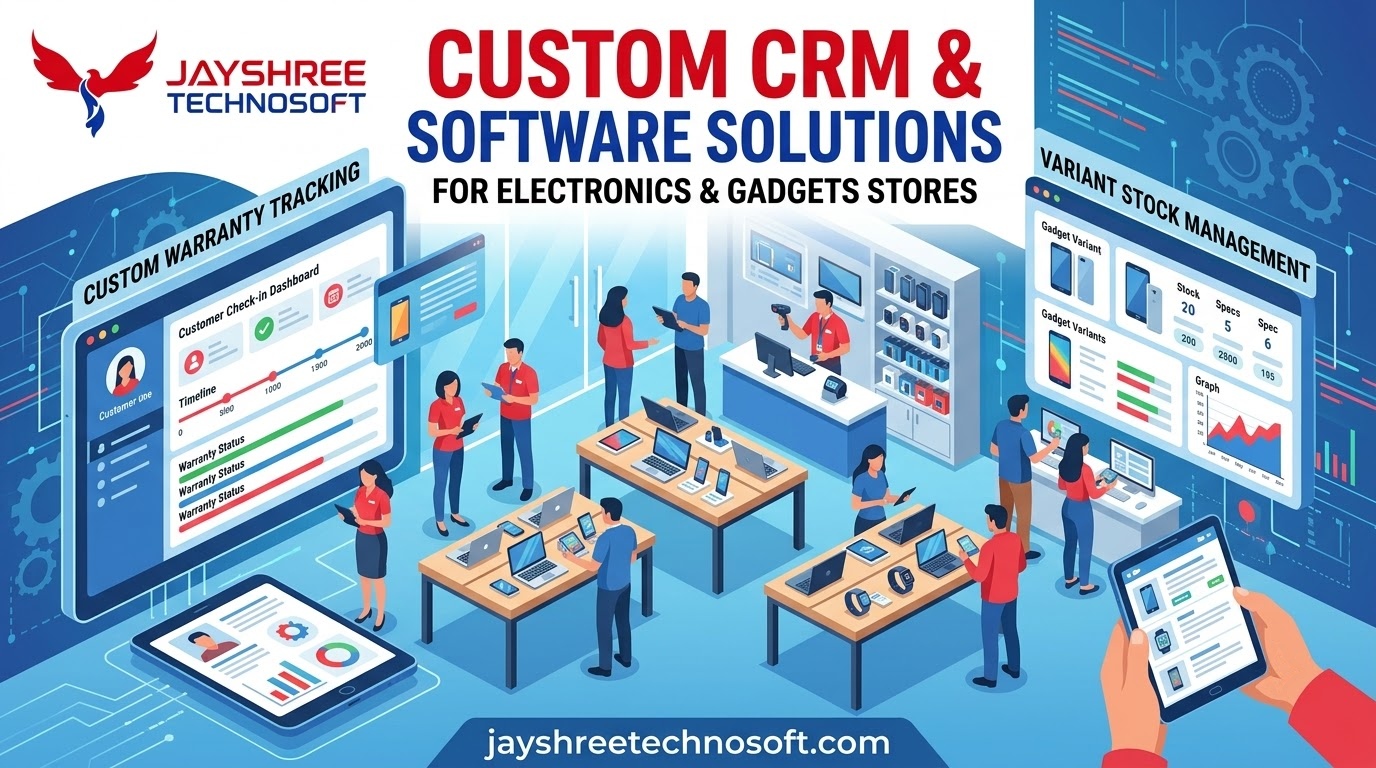
Custom CRM & Software Solutions for Electronics & Gadgets Stores: How Jayshree Technosoft Can Help
Off-the-shelf software rarely fits a business perfectly, and electronics and gadget stores sell products with warranty periods and many variants, which generic store software tracks poorly. Jayshree Technosoft, an IT consultancy and software development company, builds custom CRM and software solutions designed around exactly how electronics & gadgets stores actually operate.
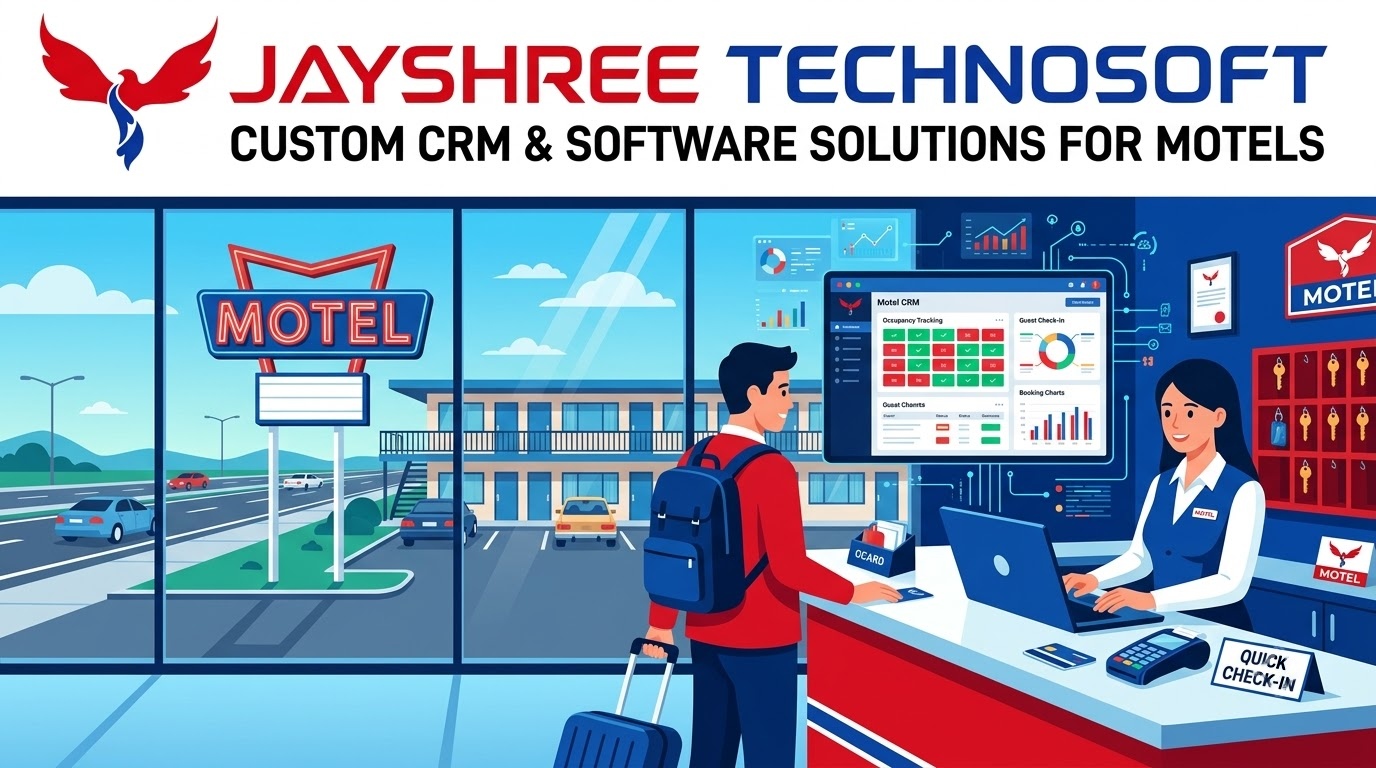
Custom CRM & Software Solutions for Motels: How Jayshree Technosoft Can Help
Off-the-shelf software rarely fits a business perfectly, and motels serve travelers needing fast check-in and quick room turnaround, which general hotel systems aren't optimized for. Jayshree Technosoft, an IT consultancy and software development company, builds custom CRM and software solutions designed around exactly how motels actually operate.
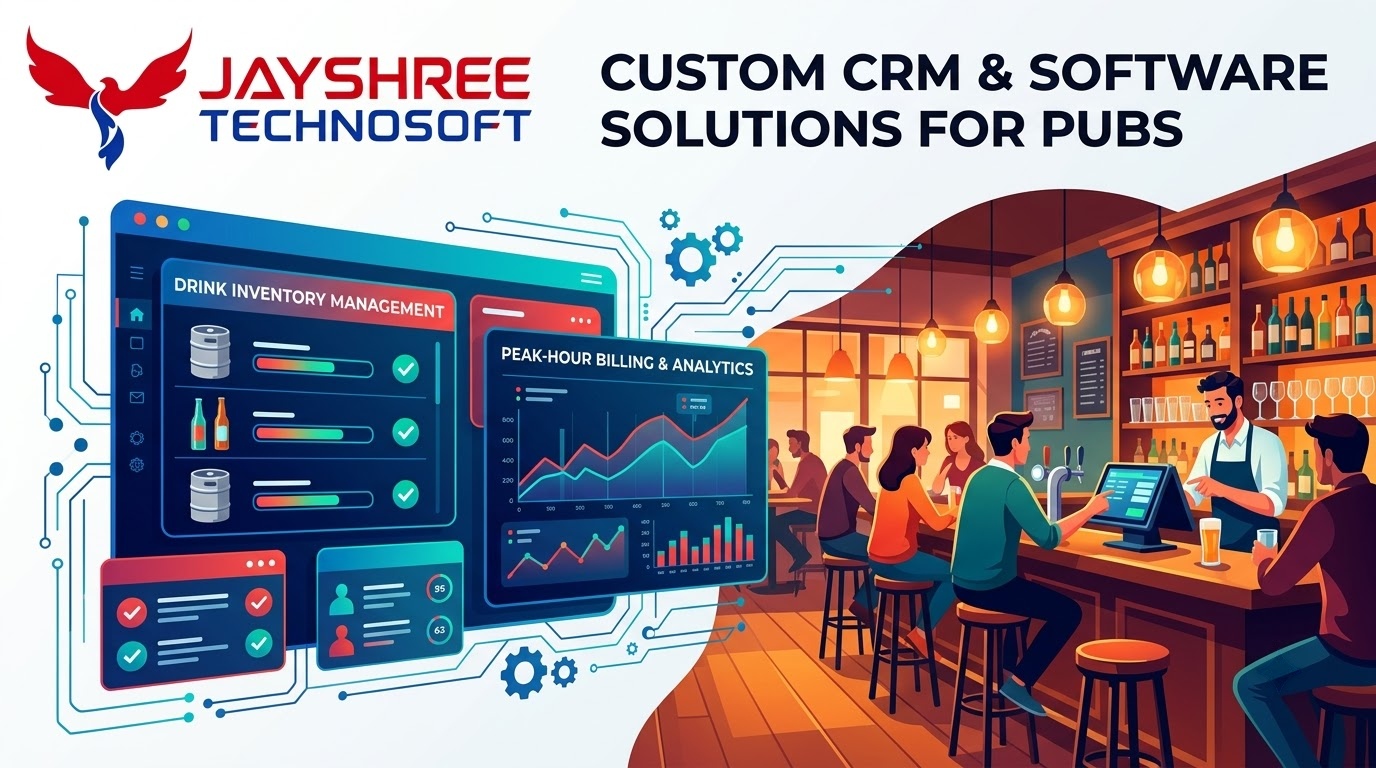
Custom CRM & Software Solutions for Pubs: How Jayshree Technosoft Can Help
Off-the-shelf software rarely fits a business perfectly, and pubs manage fast-moving drink inventory and peak-hour crowds where slow billing directly limits how many customers get served. Jayshree Technosoft, an IT consultancy and software development company, builds custom CRM and software solutions designed around exactly how pubs actually operate.
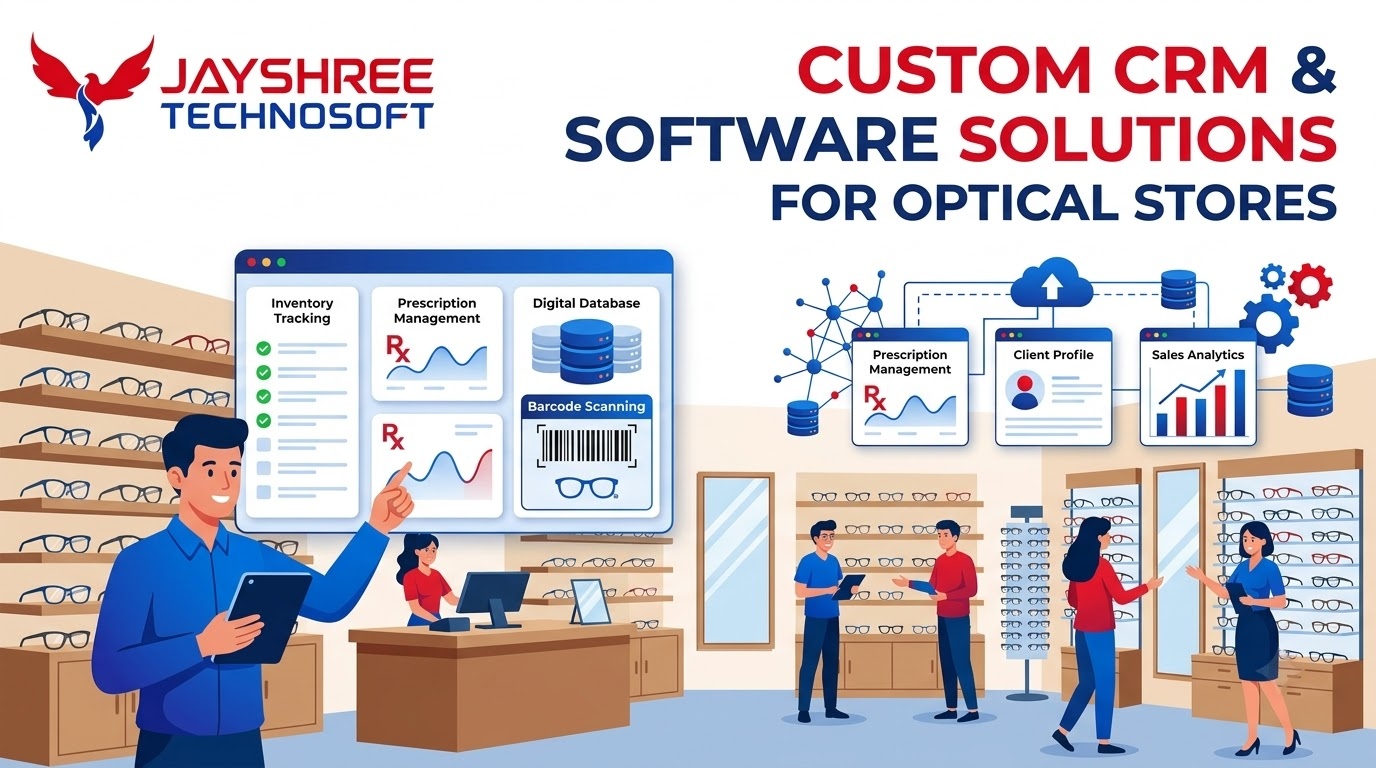
Custom CRM & Software Solutions for Optical Stores: How Jayshree Technosoft Can Help
Off-the-shelf software rarely fits a business perfectly, and optical stores sell products tied directly to a prescription, where a mismatched lens or frame order is a costly, avoidable error. Jayshree Technosoft, an IT consultancy and software development company, builds custom CRM and software solutions designed around exactly how optical stores actually operate.
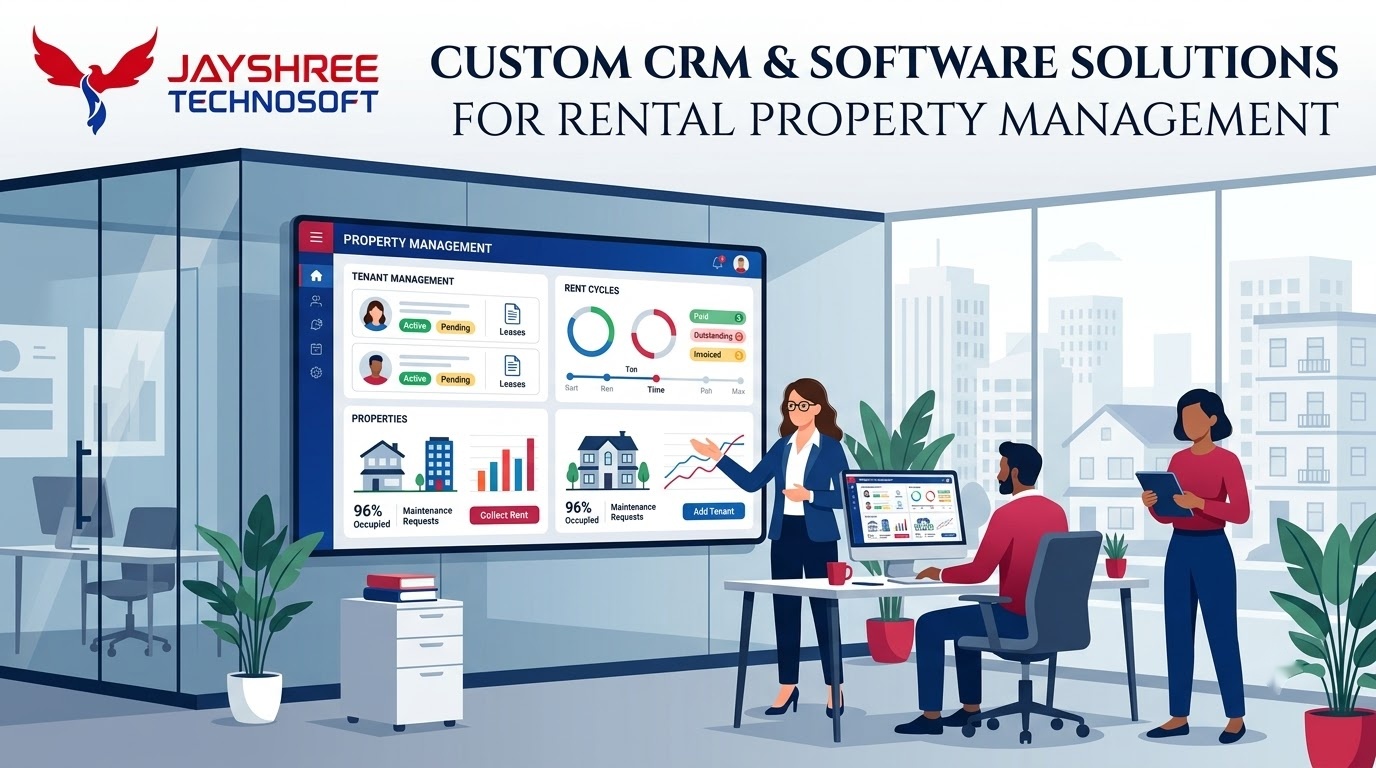
Custom CRM & Software Solutions for Rental Property Management: How Jayshree Technosoft Can Help
Off-the-shelf software rarely fits a business perfectly, and rental property managers juggle rent cycles, lease renewals and maintenance across multiple properties and tenants. Jayshree Technosoft, an IT consultancy and software development company, builds custom CRM and software solutions designed around exactly how rental property management actually operate.
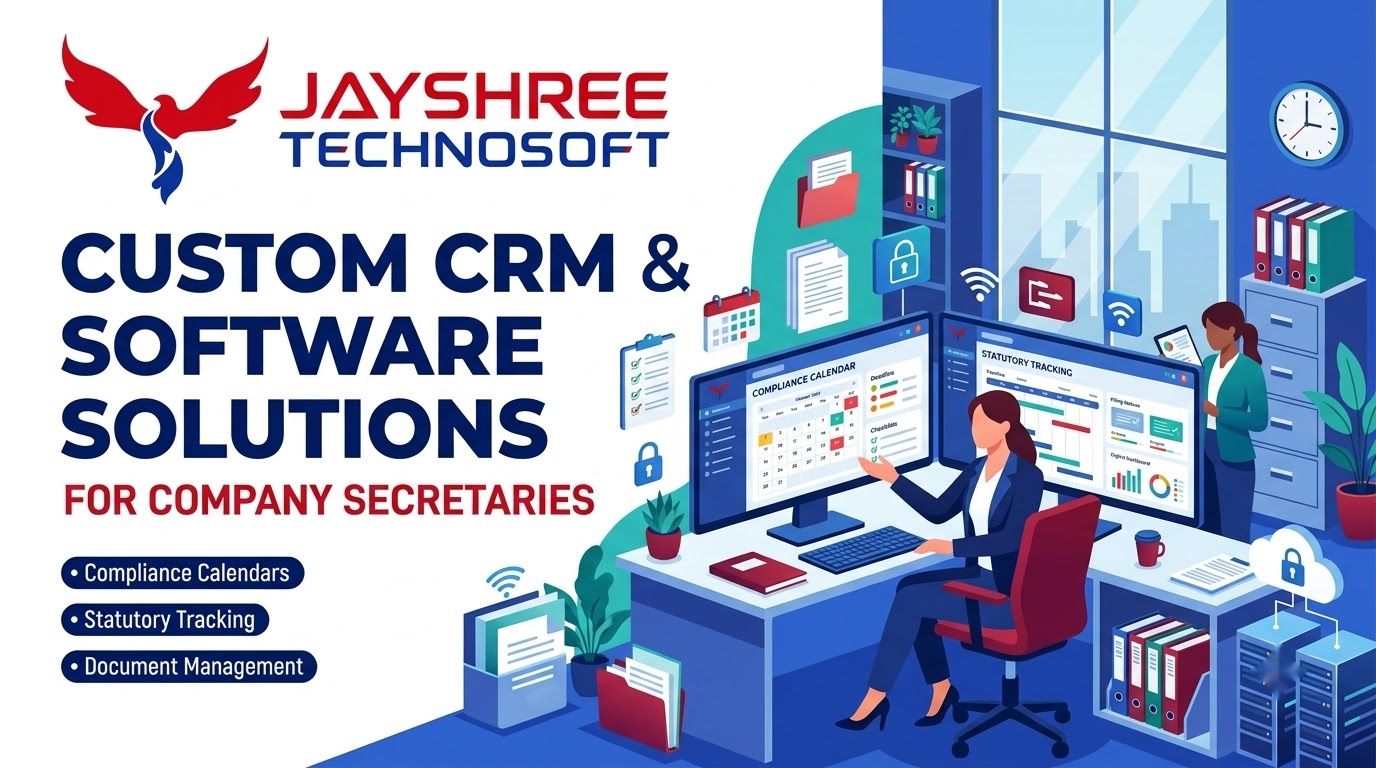
Custom CRM & Software Solutions for Company Secretaries: How Jayshree Technosoft Can Help
Off-the-shelf software rarely fits a business perfectly, and company secretaries manage statutory compliance for multiple client companies, where a missed deadline creates real legal exposure. Jayshree Technosoft, an IT consultancy and software development company, builds custom CRM and software solutions designed around exactly how company secretaries actually operate.
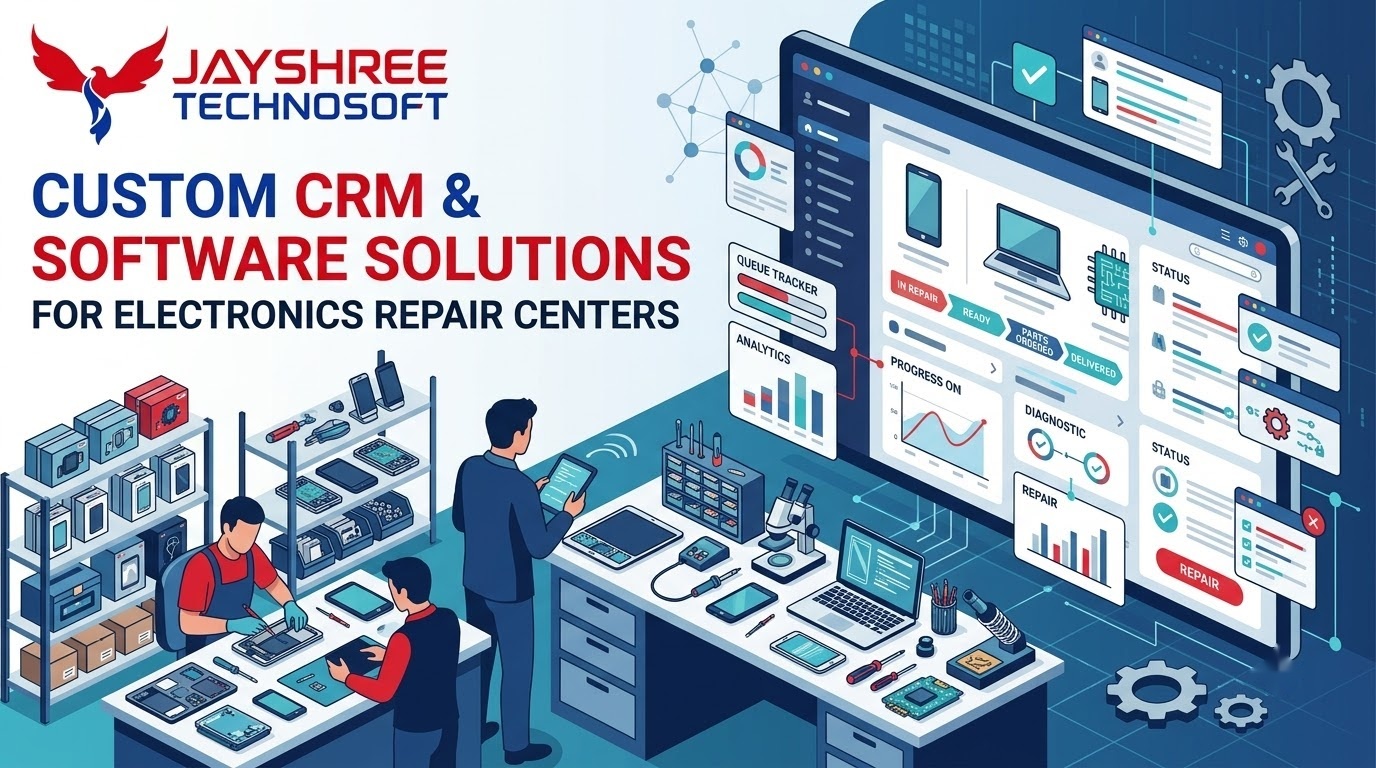
Custom CRM & Software Solutions for Electronics Repair Centers: How Jayshree Technosoft Can Help
Off-the-shelf software rarely fits a business perfectly, and electronics repair centers handle a wide mix of device types, each with its own diagnosis and parts, which a basic job register can't track well. Jayshree Technosoft, an IT consultancy and software development company, builds custom CRM and software solutions designed around exactly how electronics repair centers actually operate.
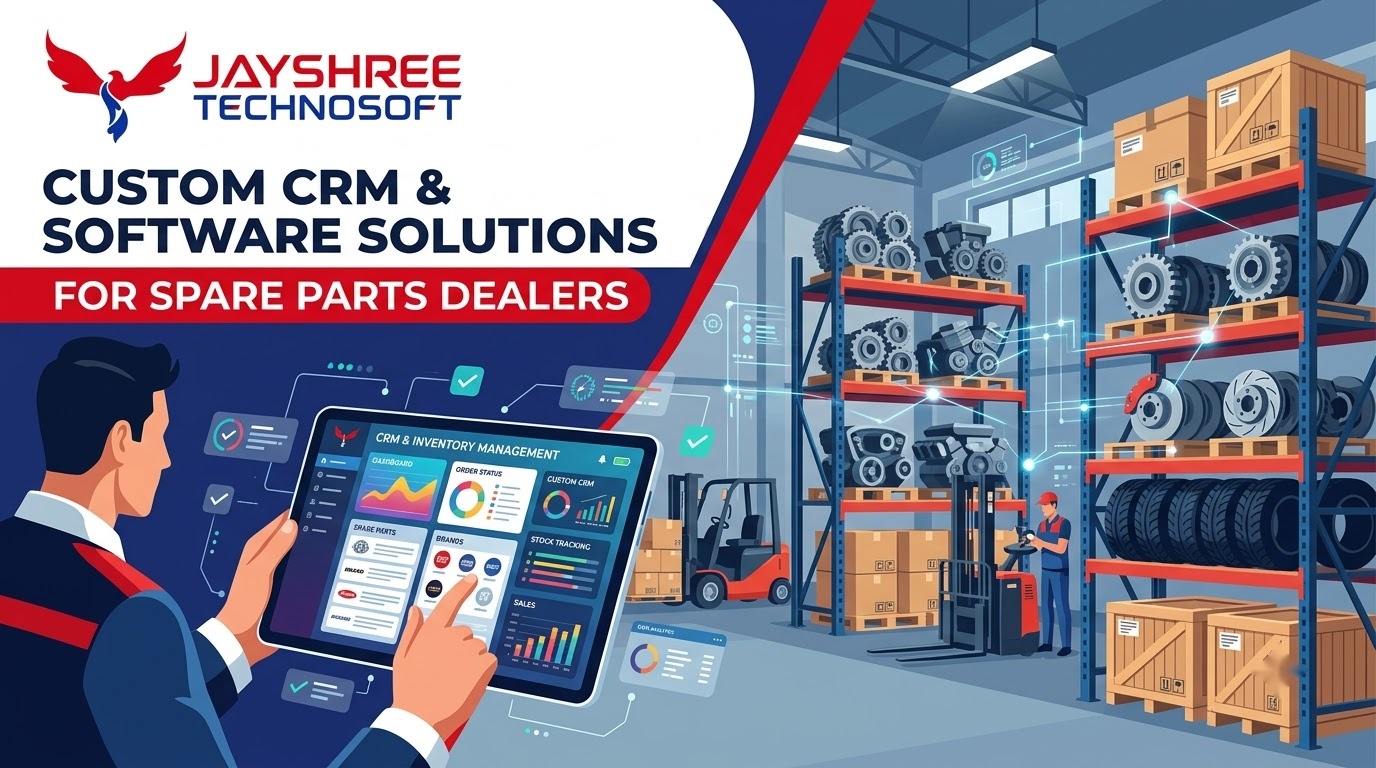
Custom CRM & Software Solutions for Spare Parts Dealers: How Jayshree Technosoft Can Help
Off-the-shelf software rarely fits a business perfectly, and spare parts dealers stock components across many vehicle brands and models, which generic retail billing manages poorly. Jayshree Technosoft, an IT consultancy and software development company, builds custom CRM and software solutions designed around exactly how spare parts dealers actually operate.
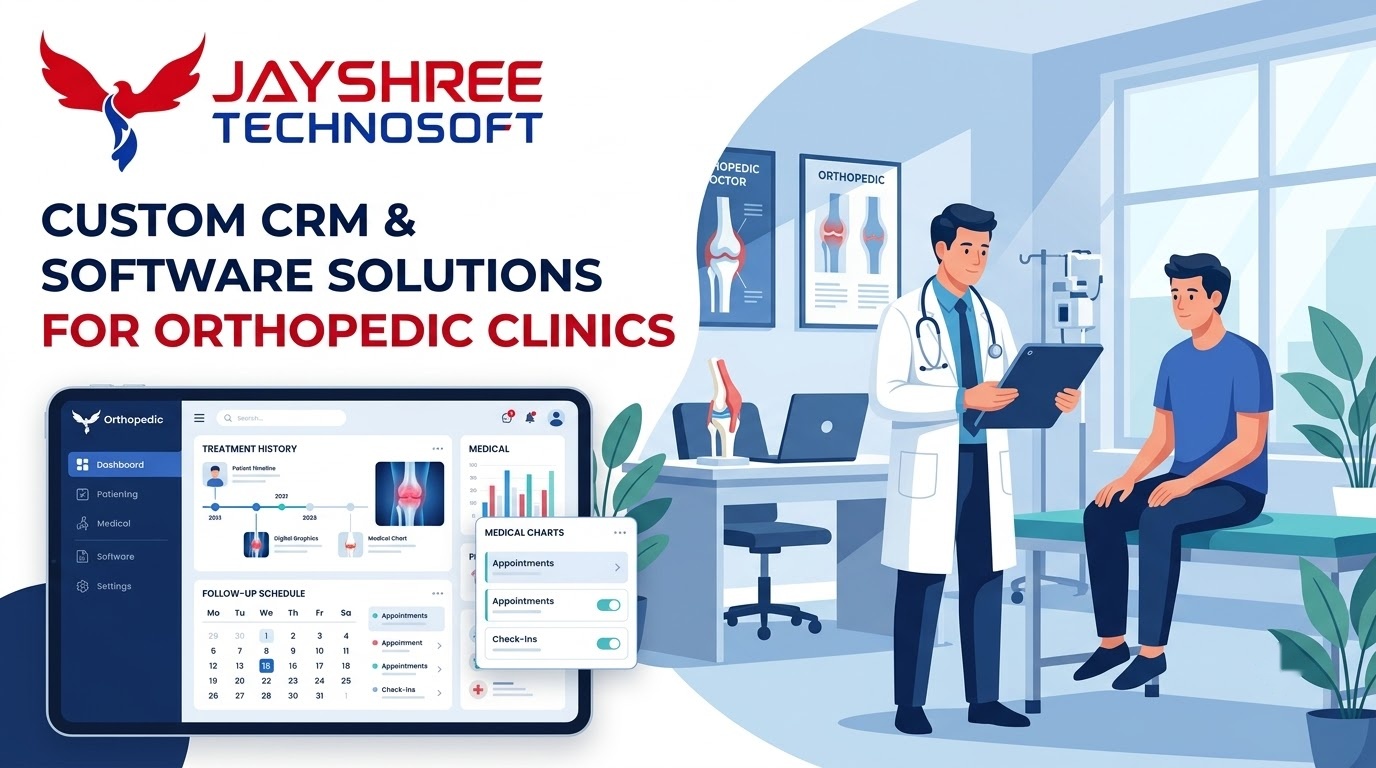
Custom CRM & Software Solutions for Orthopedic Clinics: How Jayshree Technosoft Can Help
Off-the-shelf software rarely fits a business perfectly, and orthopedic care tracks an injury across multiple visits, imaging records and follow-ups that are easy to lose track of on paper. Jayshree Technosoft, an IT consultancy and software development company, builds custom CRM and software solutions designed around exactly how orthopedic clinics actually operate.
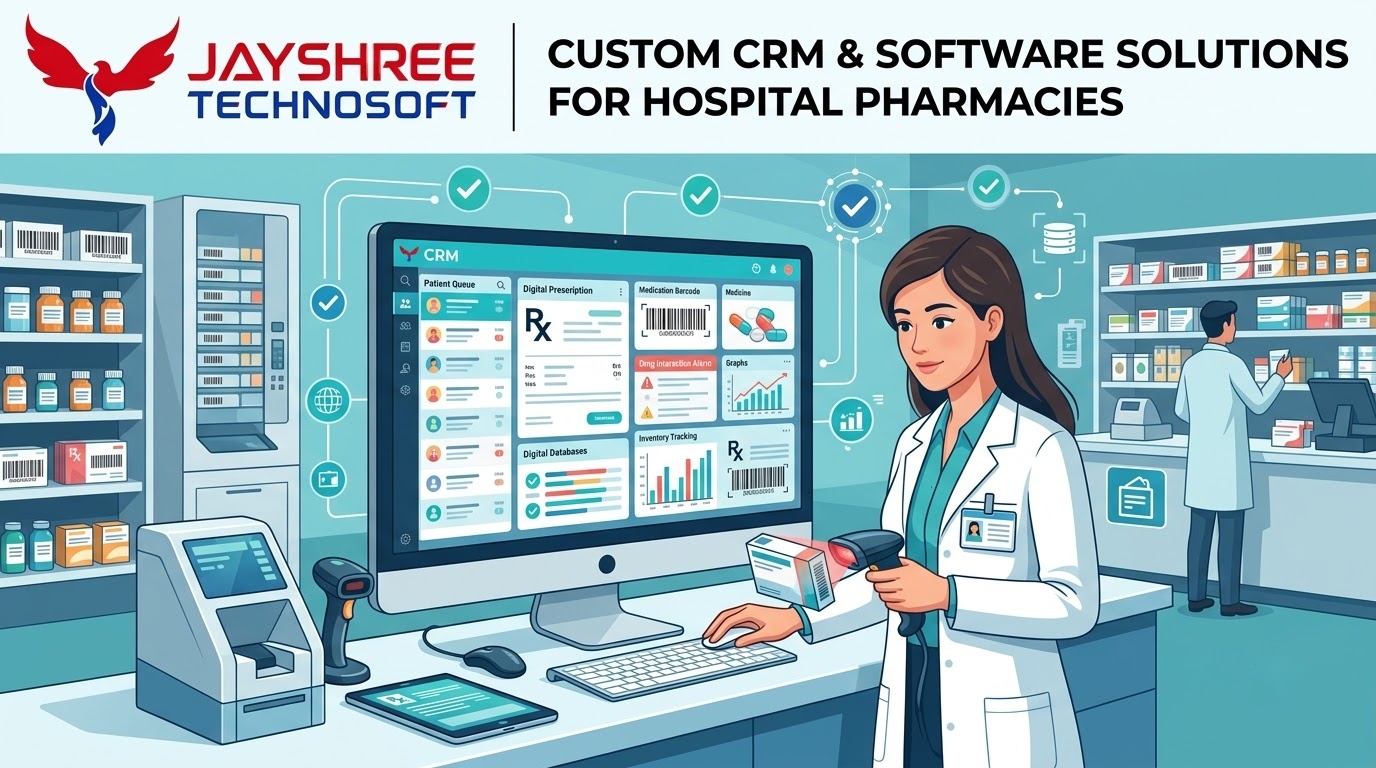
Custom CRM & Software Solutions for Hospital Pharmacies: How Jayshree Technosoft Can Help
Off-the-shelf software rarely fits a business perfectly, and hospital pharmacies dispense medication tied directly to patient prescriptions, which standalone pharmacy billing tools don't connect to care records. Jayshree Technosoft, an IT consultancy and software development company, builds custom CRM and software solutions designed around exactly how hospital pharmacies actually operate.
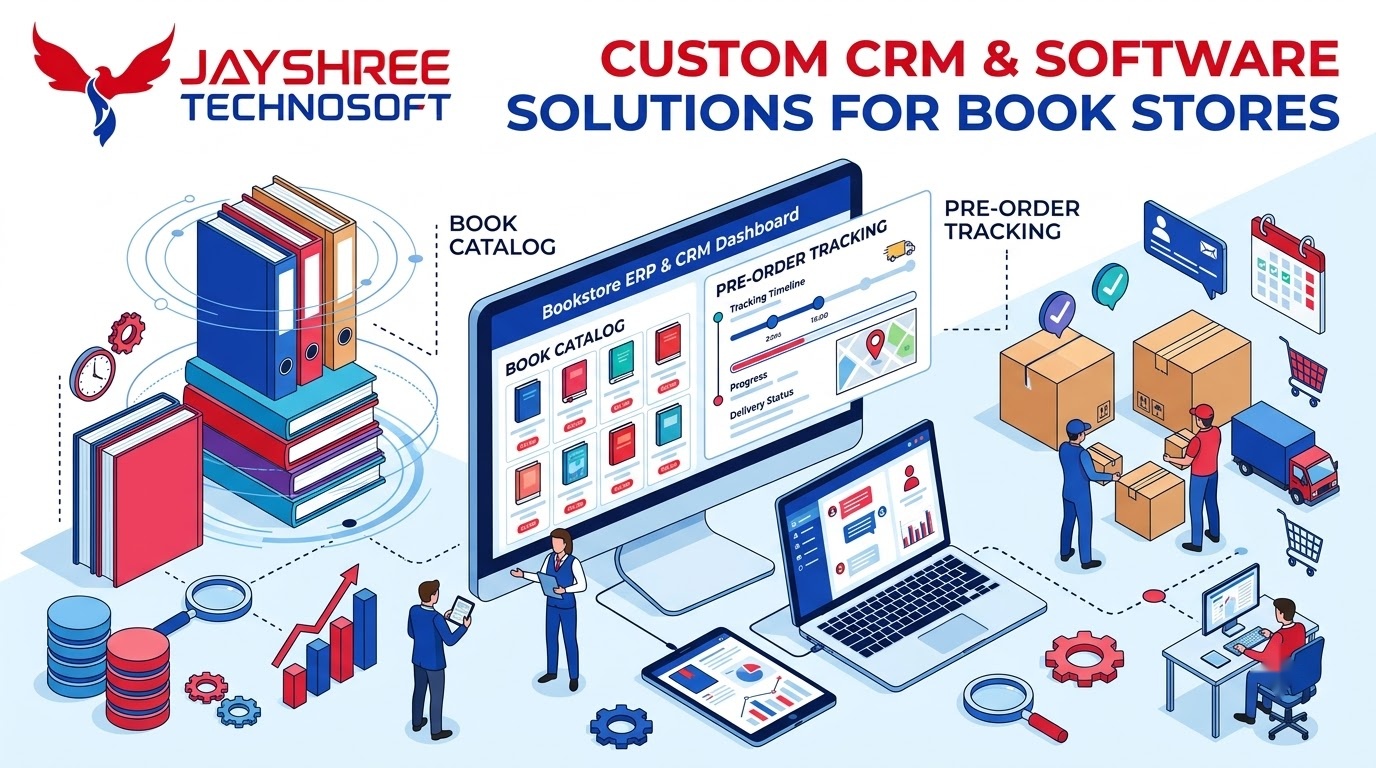
Custom CRM & Software Solutions for Book Stores: How Jayshree Technosoft Can Help
Off-the-shelf software rarely fits a business perfectly, and online book stores manage catalogs running into thousands of titles alongside pre-order demand for new releases. Jayshree Technosoft, an IT consultancy and software development company, builds custom CRM and software solutions designed around exactly how book stores actually operate.
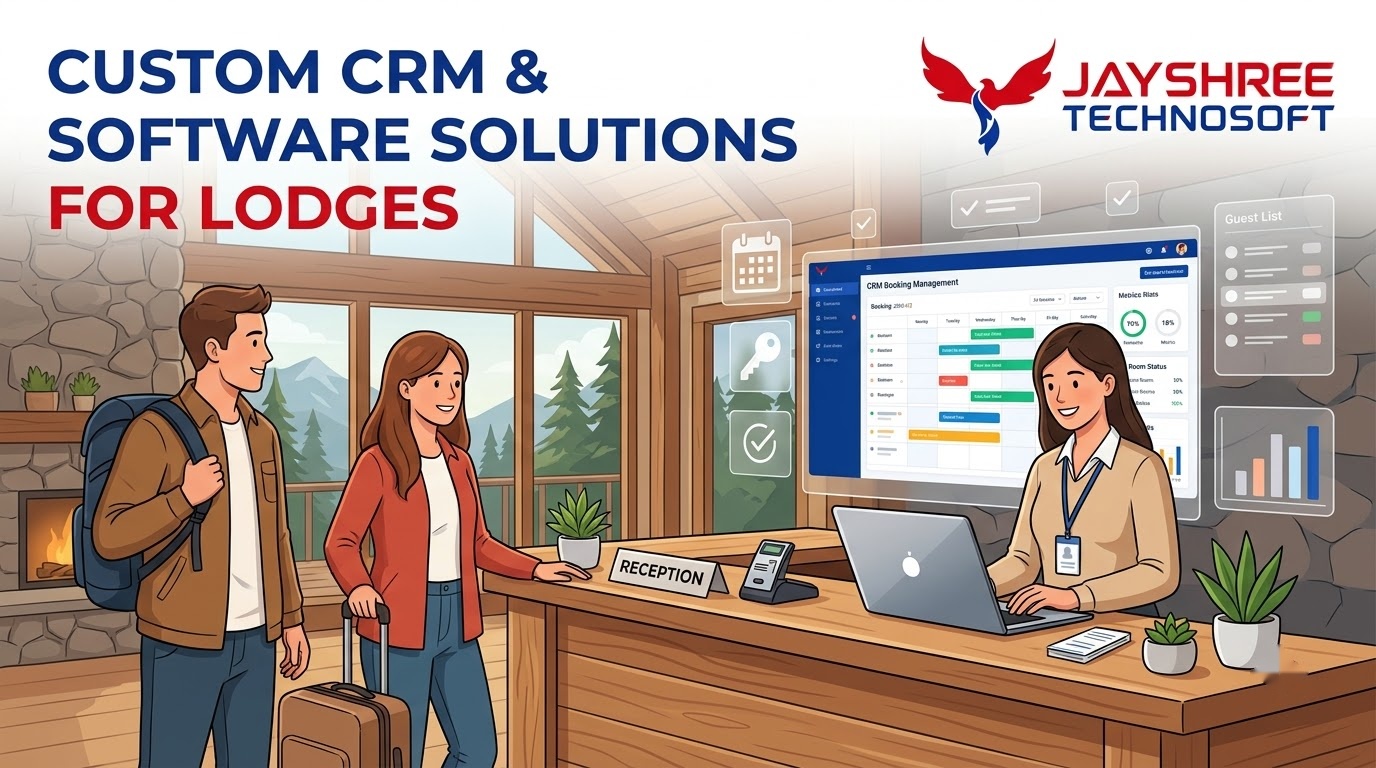
Custom CRM & Software Solutions for Lodges: How Jayshree Technosoft Can Help
Off-the-shelf software rarely fits a business perfectly, and lodges see a steady mix of advance bookings and walk-in travelers that needs reliable, real-time availability tracking. Jayshree Technosoft, an IT consultancy and software development company, builds custom CRM and software solutions designed around exactly how lodges actually operate.
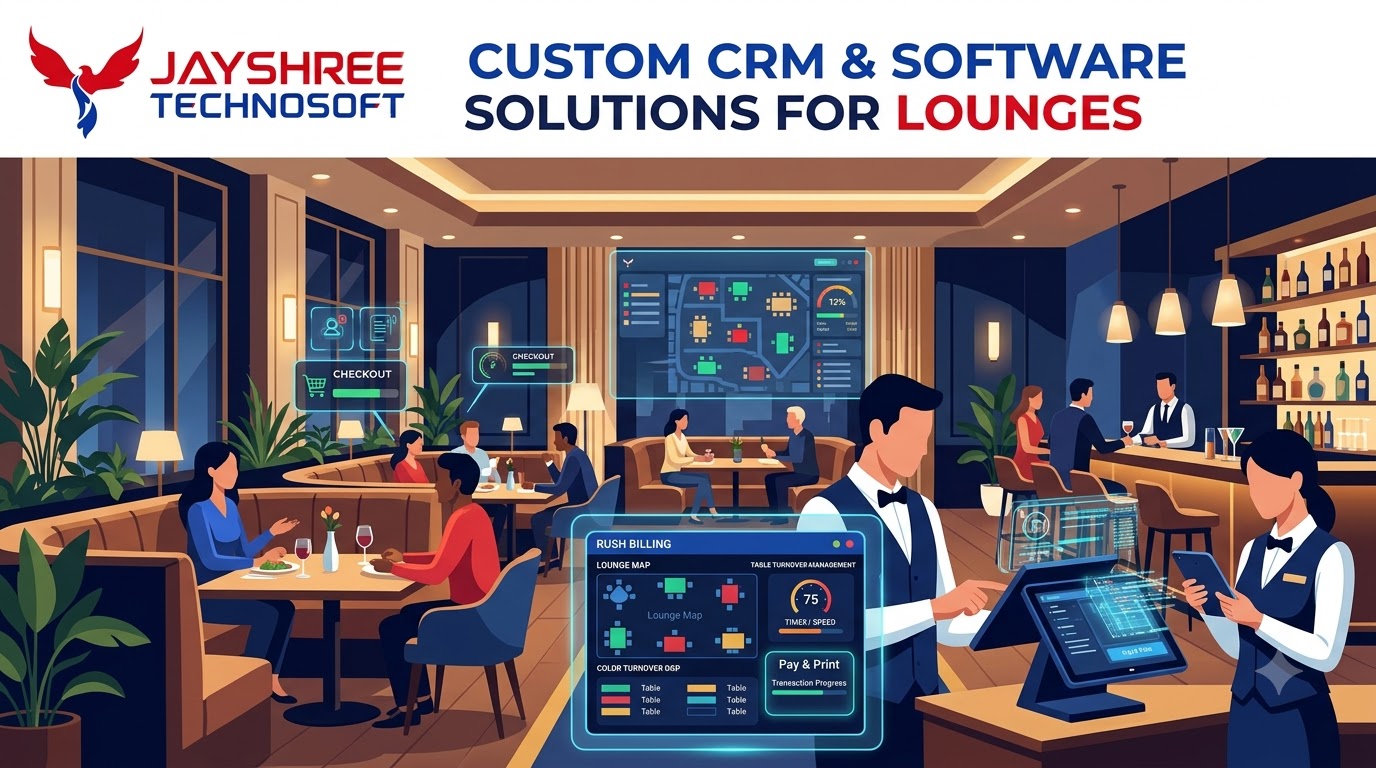
Custom CRM & Software Solutions for Lounges: How Jayshree Technosoft Can Help
Off-the-shelf software rarely fits a business perfectly, and lounges run on long table sessions and group orders that need accurate, split-friendly billing through the evening. Jayshree Technosoft, an IT consultancy and software development company, builds custom CRM and software solutions designed around exactly how lounges actually operate.
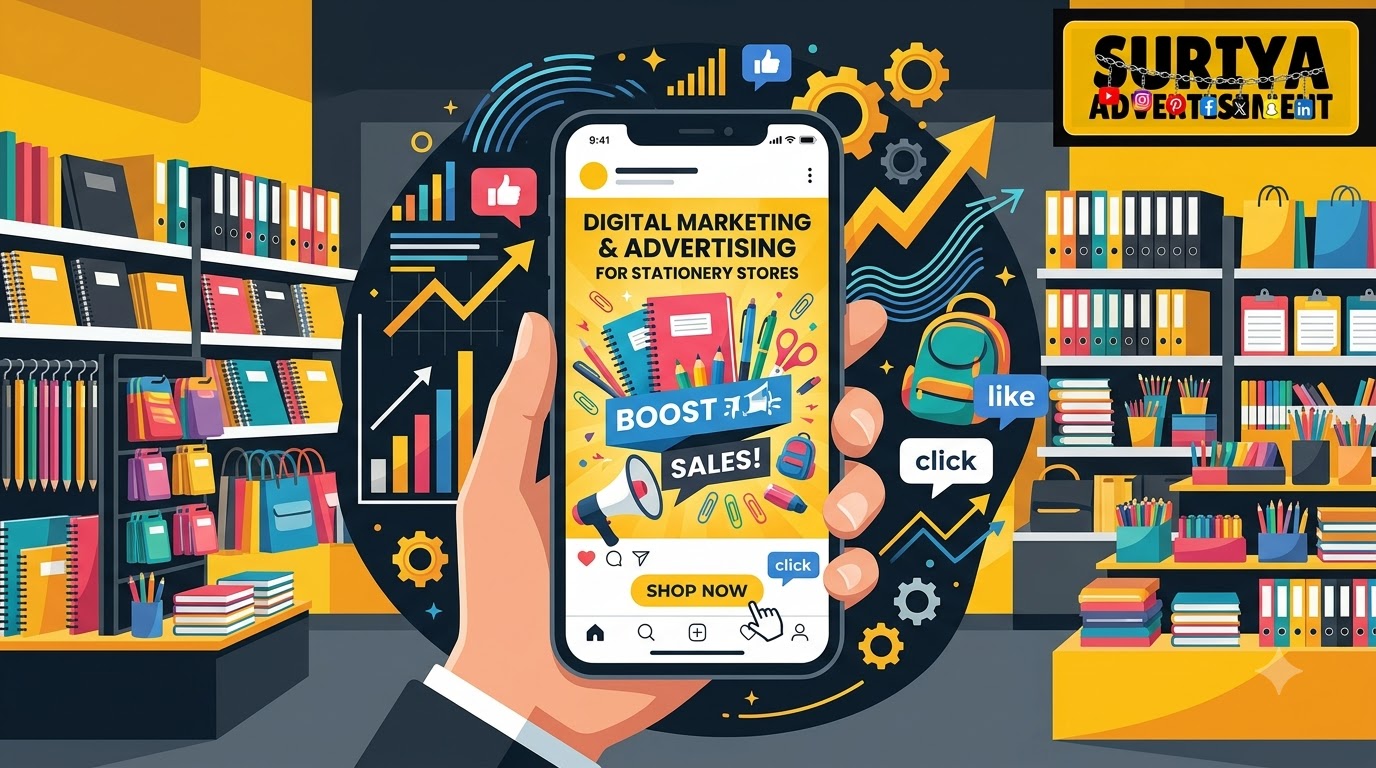
Custom CRM & Software Solutions for Stationery Stores: How Jayshree Technosoft Can Help
Off-the-shelf software rarely fits a business perfectly, and stationery stores manage hundreds of small-value SKUs with sharp seasonal spikes around school and exam seasons. Jayshree Technosoft, an IT consultancy and software development company, builds custom CRM and software solutions designed around exactly how stationery stores actually operate.
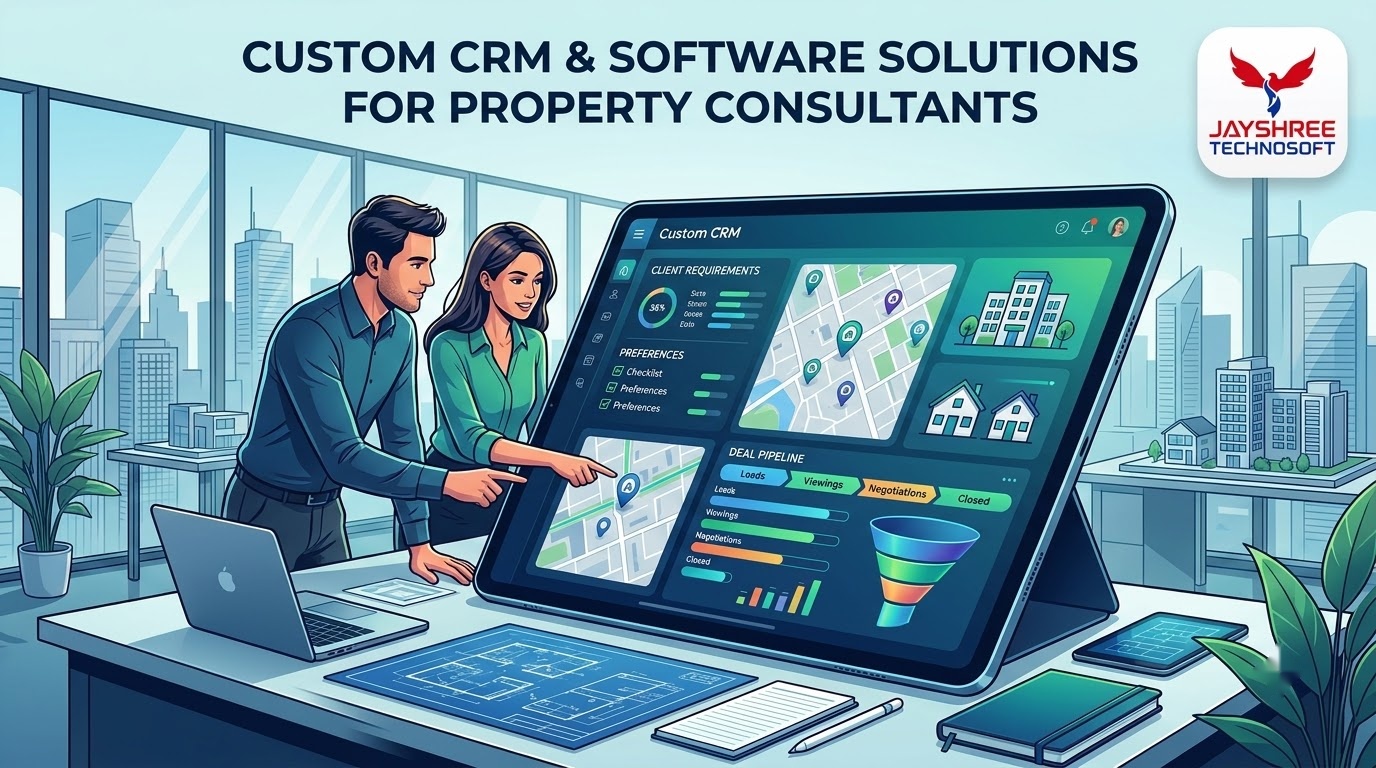
Custom CRM & Software Solutions for Property Consultants: How Jayshree Technosoft Can Help
Off-the-shelf software rarely fits a business perfectly, and property consultants juggle multiple deals at different stages while tracking each client's specific requirements. Jayshree Technosoft, an IT consultancy and software development company, builds custom CRM and software solutions designed around exactly how property consultants actually operate.
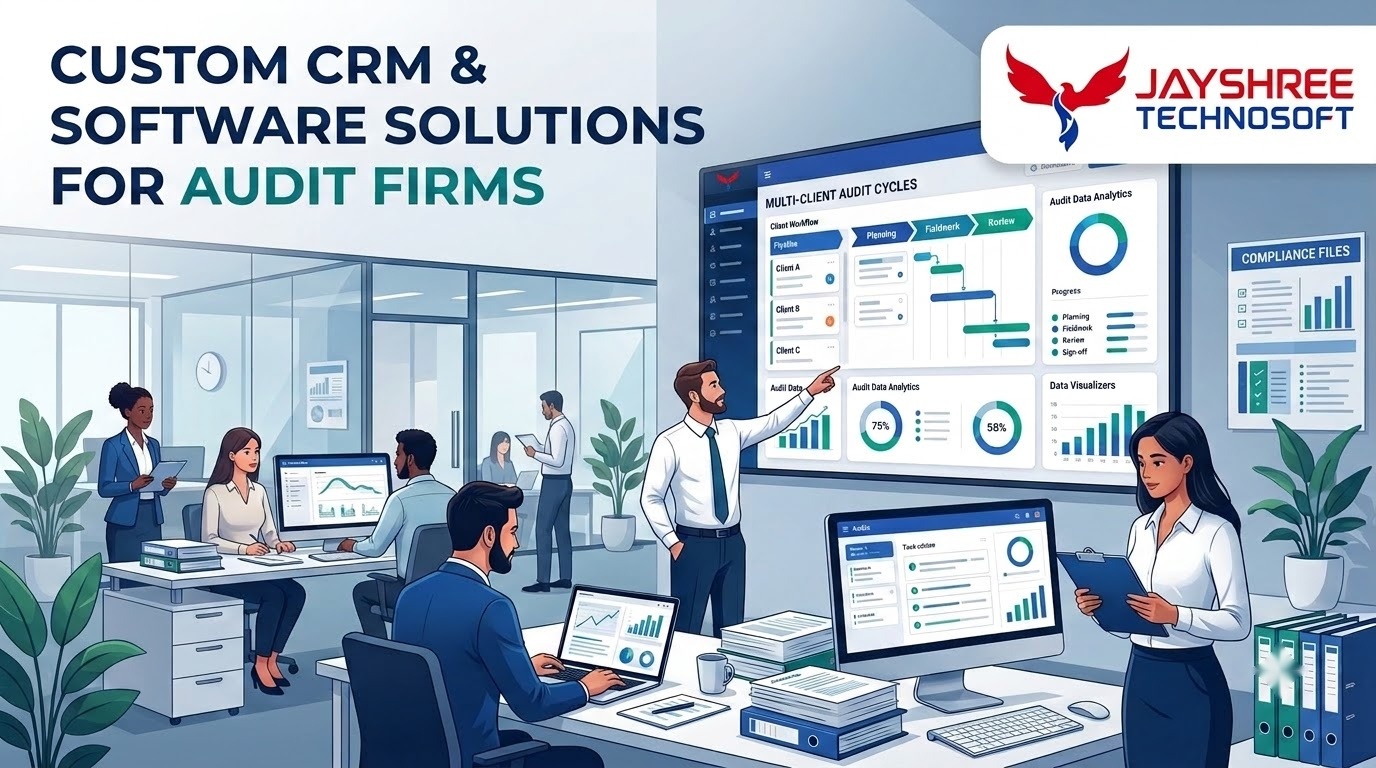
Custom CRM & Software Solutions for Audit Firms: How Jayshree Technosoft Can Help
Off-the-shelf software rarely fits a business perfectly, and audit firms run structured, multi-stage engagements across many clients at once, which a spreadsheet tracks poorly. Jayshree Technosoft, an IT consultancy and software development company, builds custom CRM and software solutions designed around exactly how audit firms actually operate.
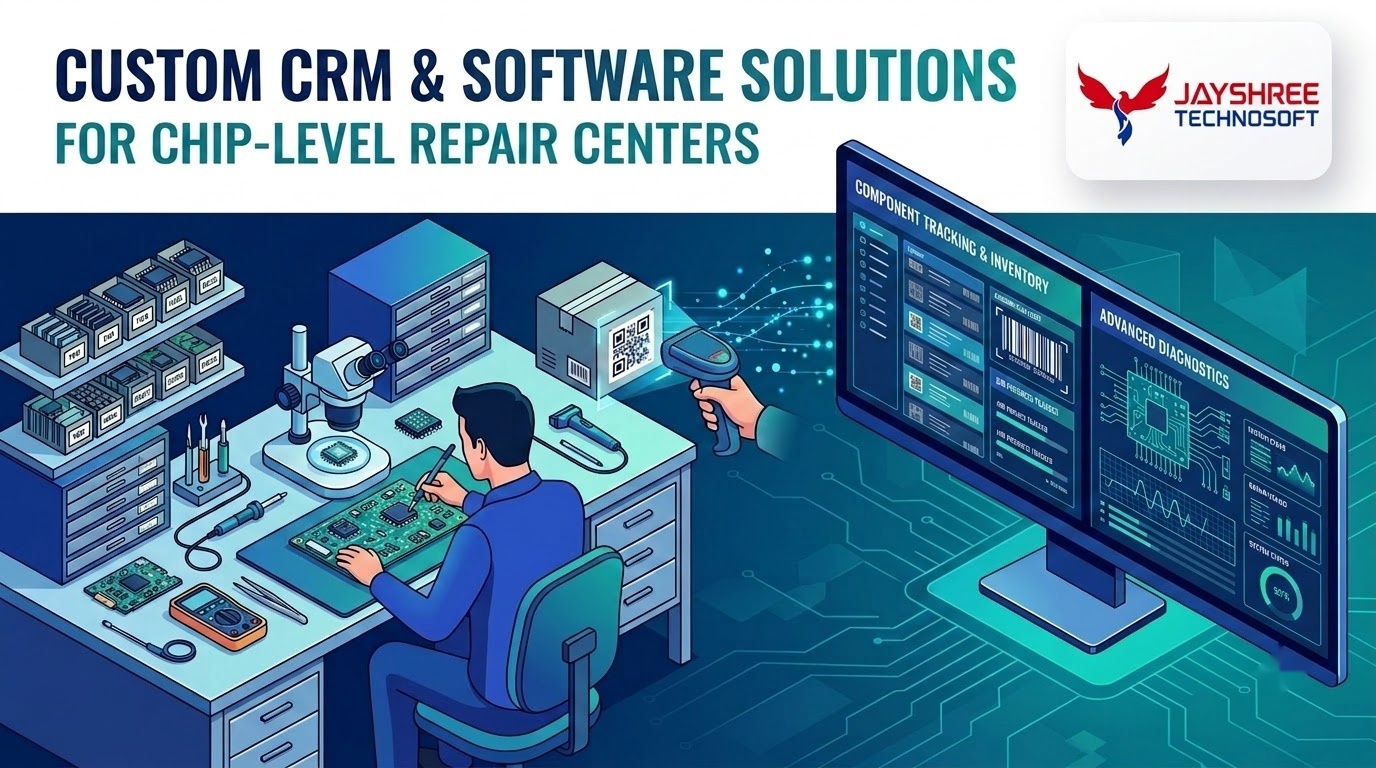
Custom CRM & Software Solutions for Chip-Level Repair Centers: How Jayshree Technosoft Can Help
Off-the-shelf software rarely fits a business perfectly, and chip-level repair involves motherboard-level diagnostics and component replacements that take longer and need precise documentation. Jayshree Technosoft, an IT consultancy and software development company, builds custom CRM and software solutions designed around exactly how chip-level repair centers actually operate.
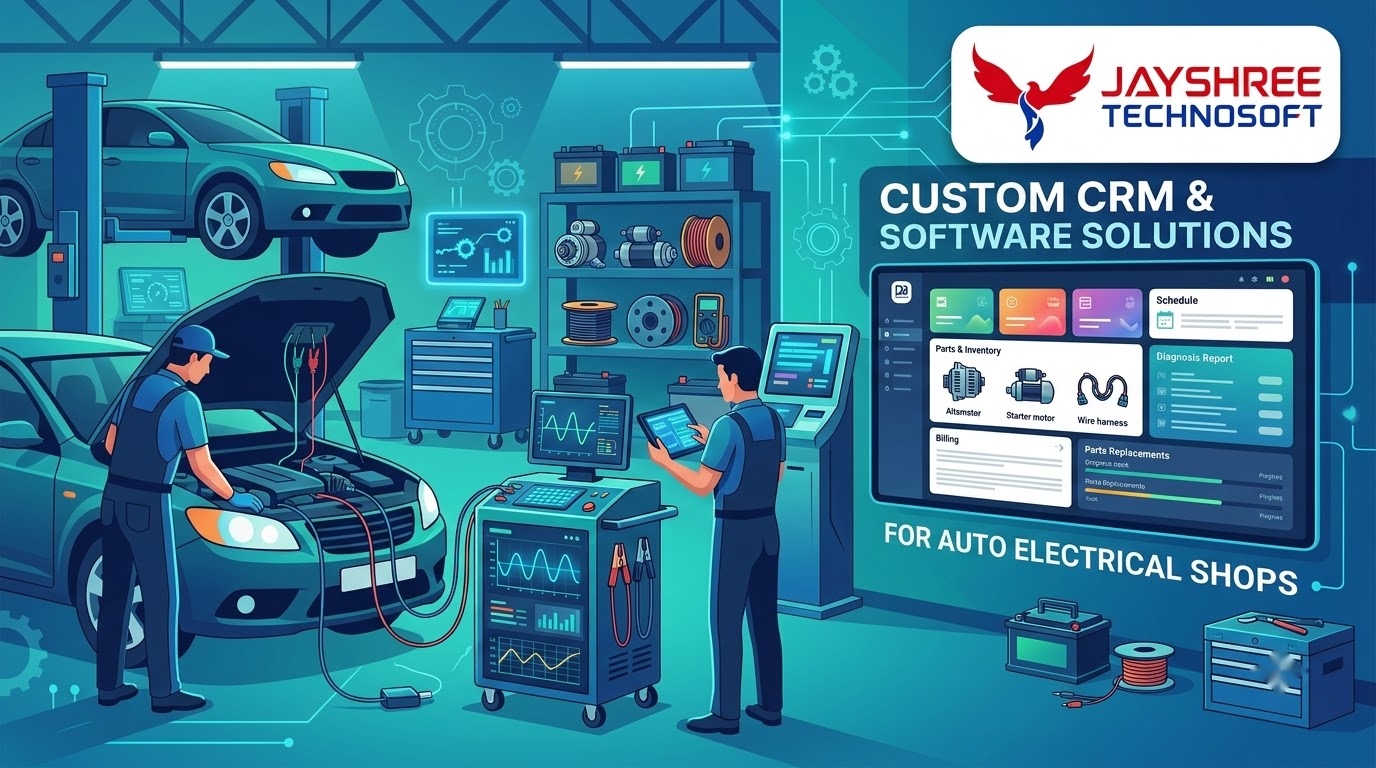
Custom CRM & Software Solutions for Auto Electrical Shops: How Jayshree Technosoft Can Help
Off-the-shelf software rarely fits a business perfectly, and auto electrical work requires diagnosis before the actual fault is clear, with parts that need precise tracking for billing and warranty. Jayshree Technosoft, an IT consultancy and software development company, builds custom CRM and software solutions designed around exactly how auto electrical shops actually operate.
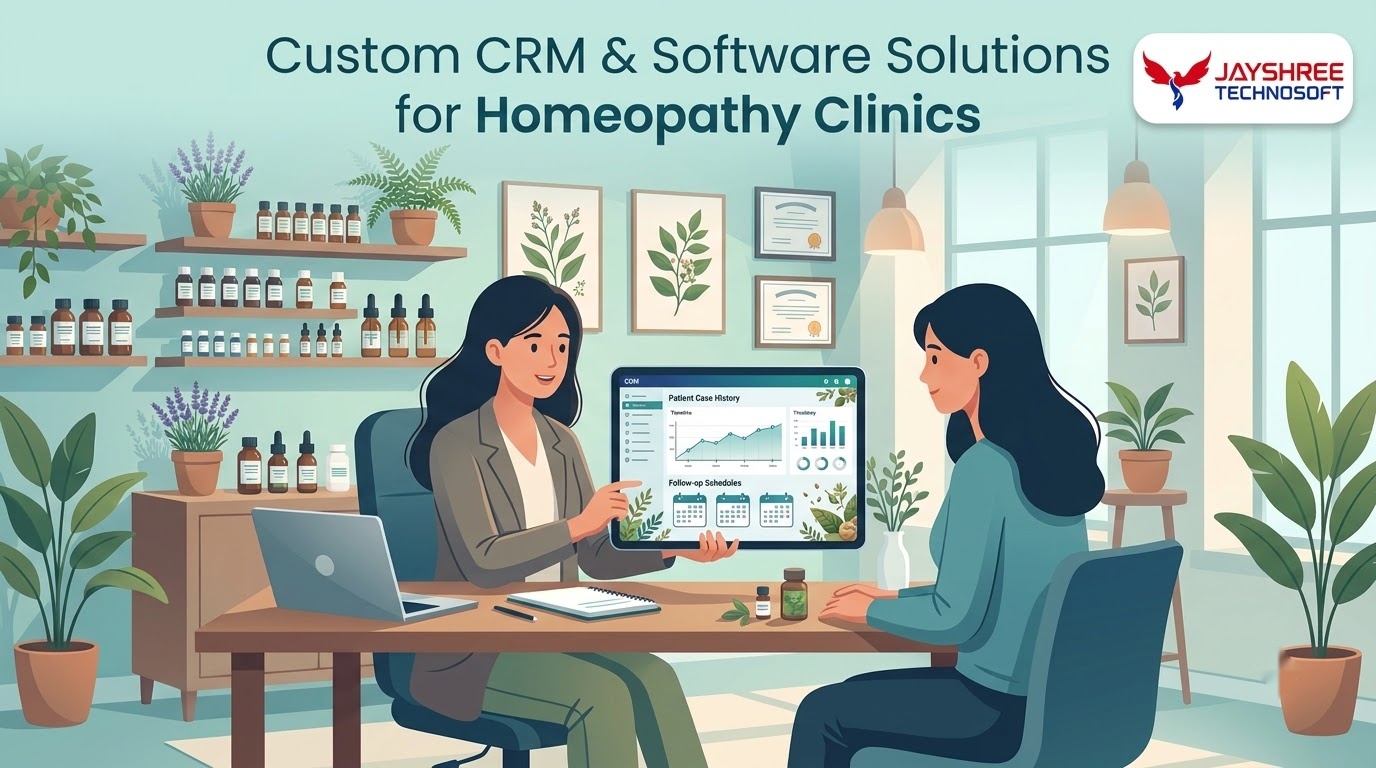
Custom CRM & Software Solutions for Homeopathy Clinics: How Jayshree Technosoft Can Help
Off-the-shelf software rarely fits a business perfectly, and homeopathy treatment relies on detailed case history and remedies tracked over long-term patient relationships. Jayshree Technosoft, an IT consultancy and software development company, builds custom CRM and software solutions designed around exactly how homeopathy clinics actually operate.
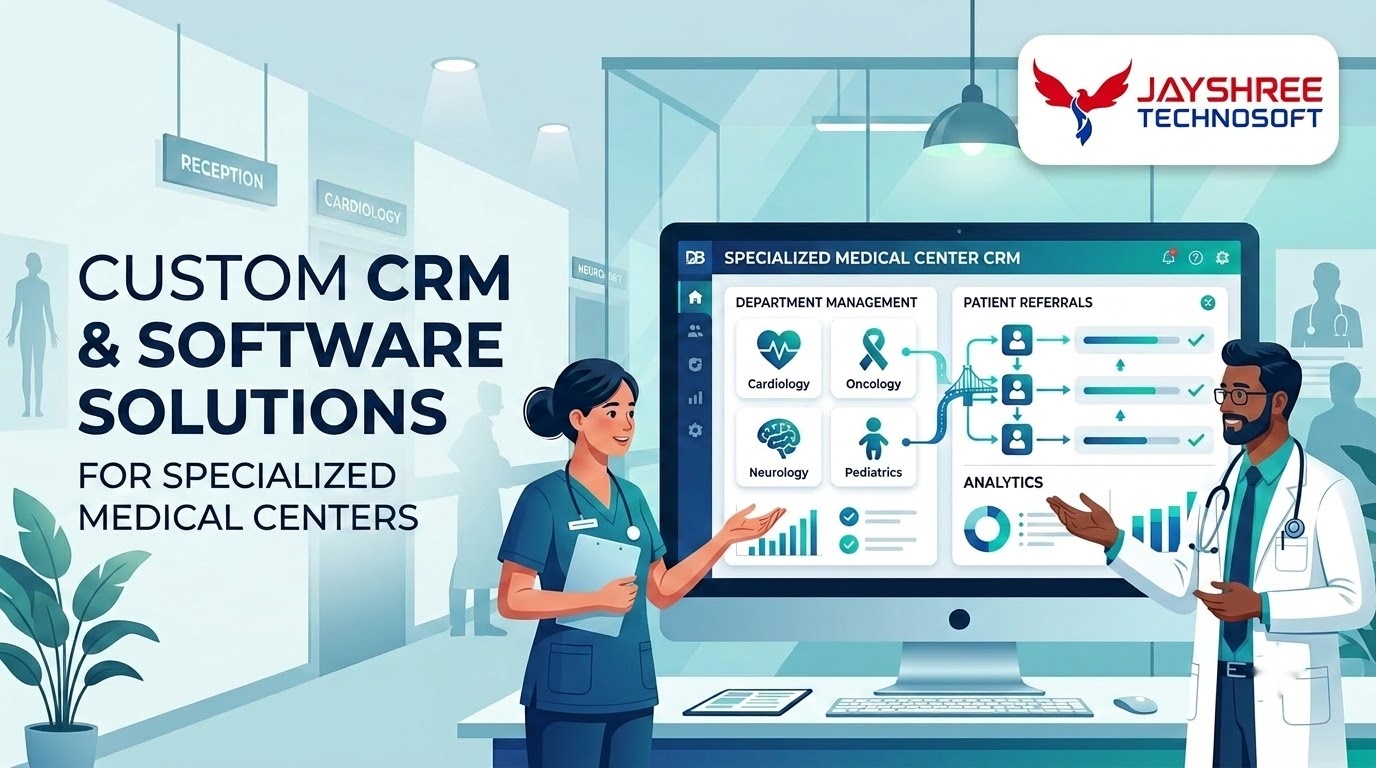
Custom CRM & Software Solutions for Specialized Medical Centers: How Jayshree Technosoft Can Help
Off-the-shelf software rarely fits a business perfectly, and specialized medical centers depend on smooth referral intake and focused department coordination, which general hospital systems don't match well. Jayshree Technosoft, an IT consultancy and software development company, builds custom CRM and software solutions designed around exactly how specialized medical centers actually operate.
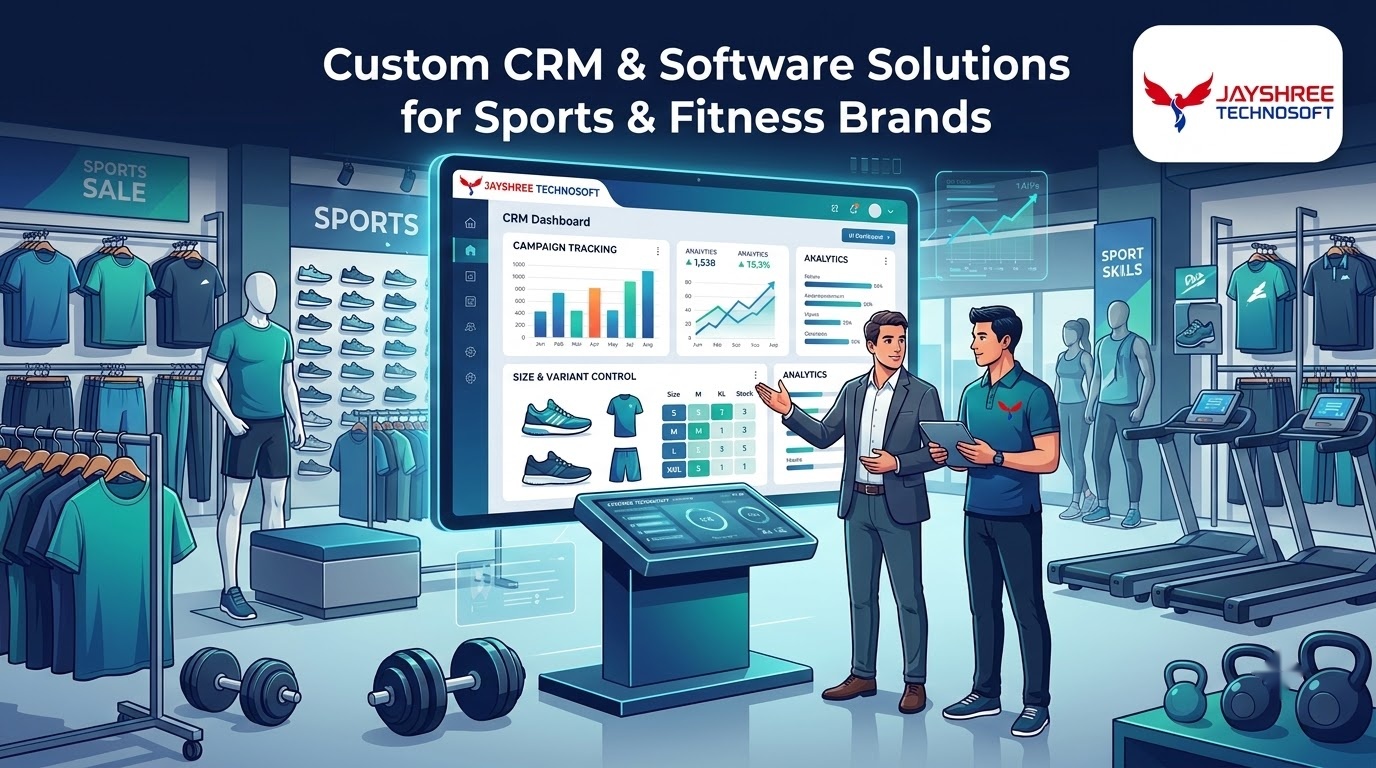
Custom CRM & Software Solutions for Sports & Fitness Brands: How Jayshree Technosoft Can Help
Off-the-shelf software rarely fits a business perfectly, and sports and fitness brands manage products across many size and variant combinations, with demand that spikes seasonally. Jayshree Technosoft, an IT consultancy and software development company, builds custom CRM and software solutions designed around exactly how sports & fitness brands actually operate.
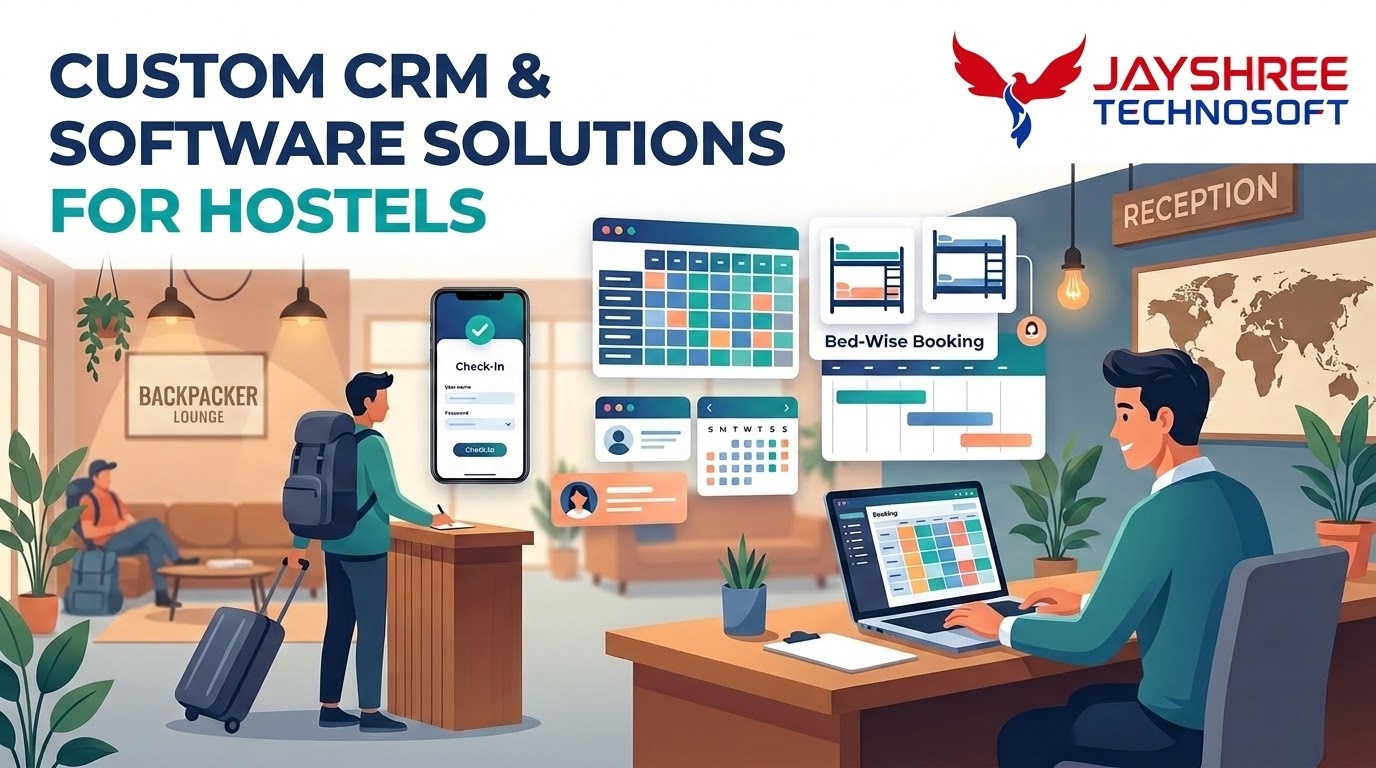
Custom CRM & Software Solutions for Hostels: How Jayshree Technosoft Can Help
Off-the-shelf software rarely fits a business perfectly, and hostels book guests bed-wise within shared rooms, which standard room-wise booking systems don't represent clearly. Jayshree Technosoft, an IT consultancy and software development company, builds custom CRM and software solutions designed around exactly how hostels actually operate.
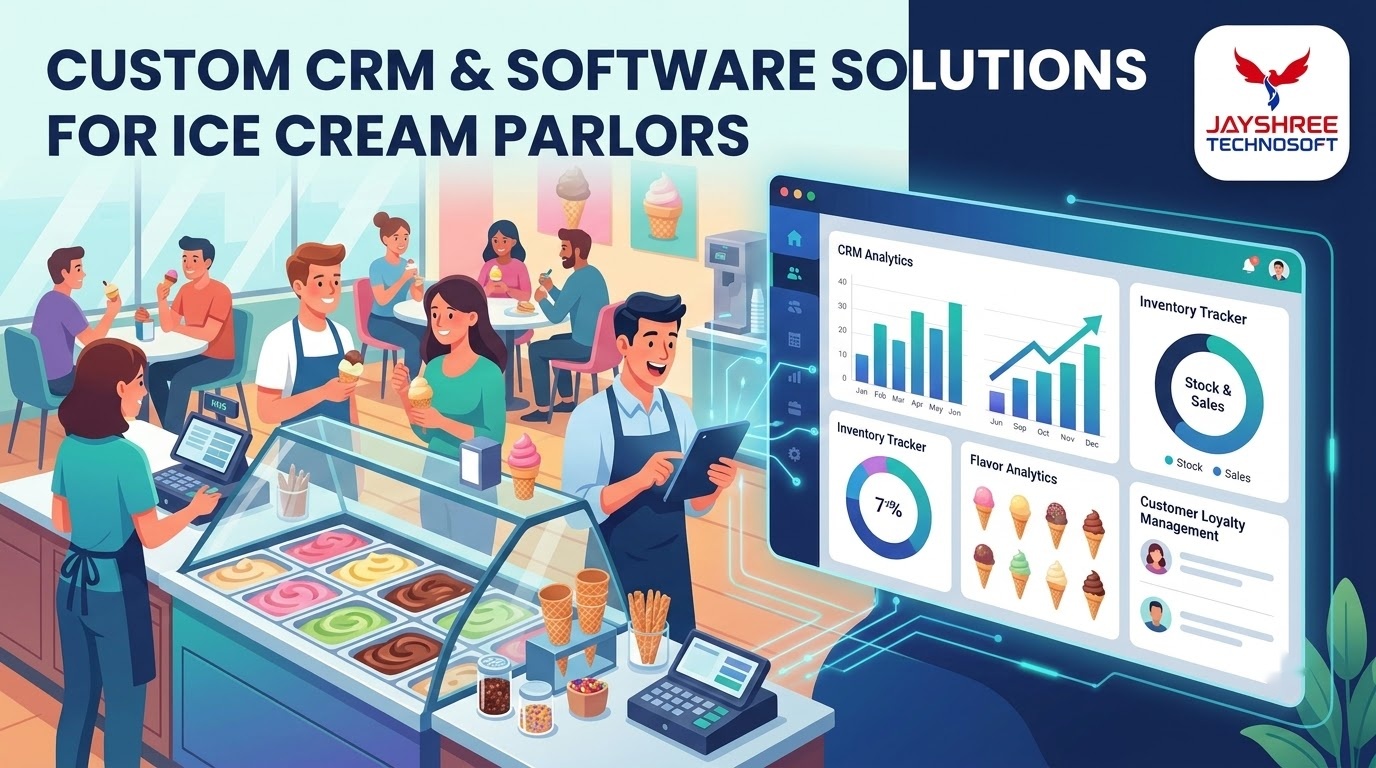
Custom CRM & Software Solutions for Ice Cream Parlors: How Jayshree Technosoft Can Help
Off-the-shelf software rarely fits a business perfectly, and ice cream parlors manage dozens of flavors with limited shelf life alongside demand that swings sharply with weather and season. Jayshree Technosoft, an IT consultancy and software development company, builds custom CRM and software solutions designed around exactly how ice cream parlors actually operate.
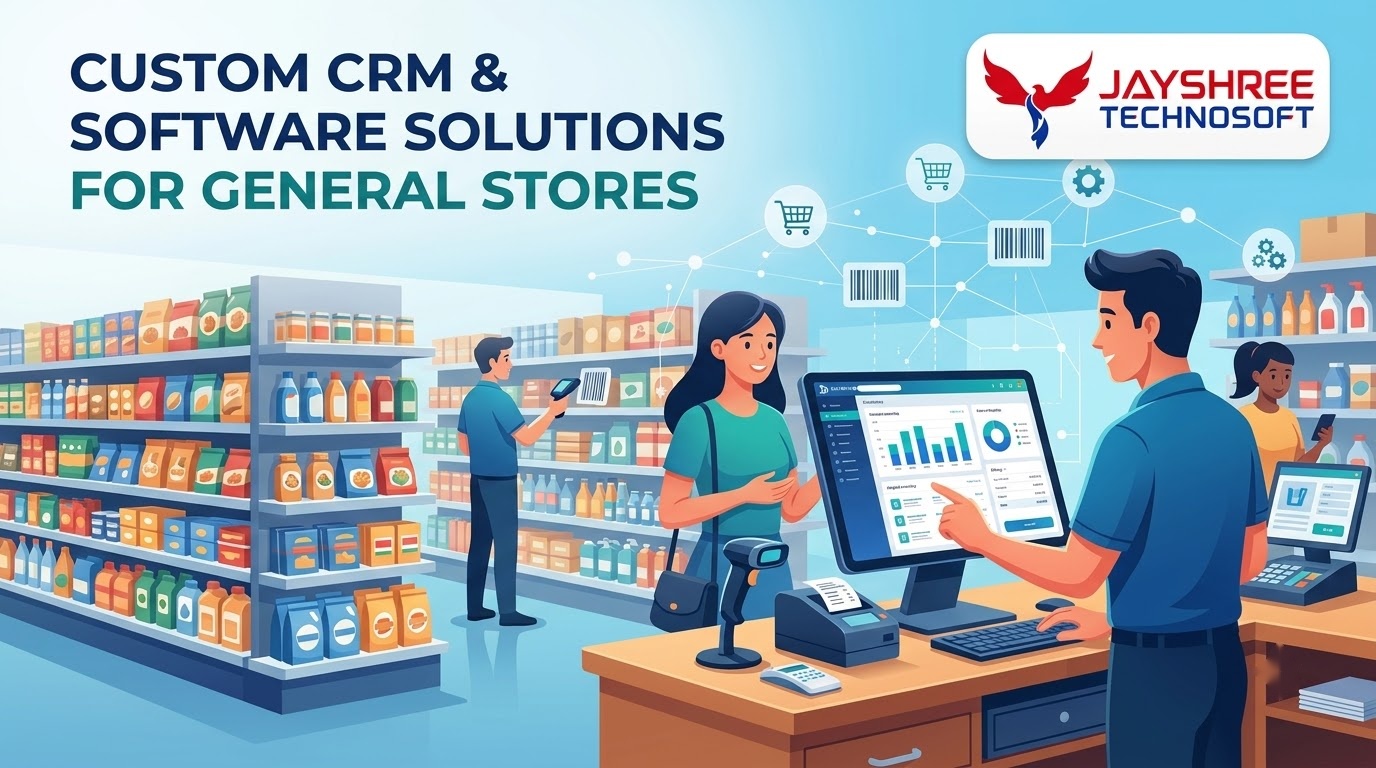
Custom CRM & Software Solutions for General Stores: How Jayshree Technosoft Can Help
Off-the-shelf software rarely fits a business perfectly, and general stores sell across dozens of unrelated categories under one roof, which narrow-focused billing tools don't handle cleanly. Jayshree Technosoft, an IT consultancy and software development company, builds custom CRM and software solutions designed around exactly how general stores actually operate.
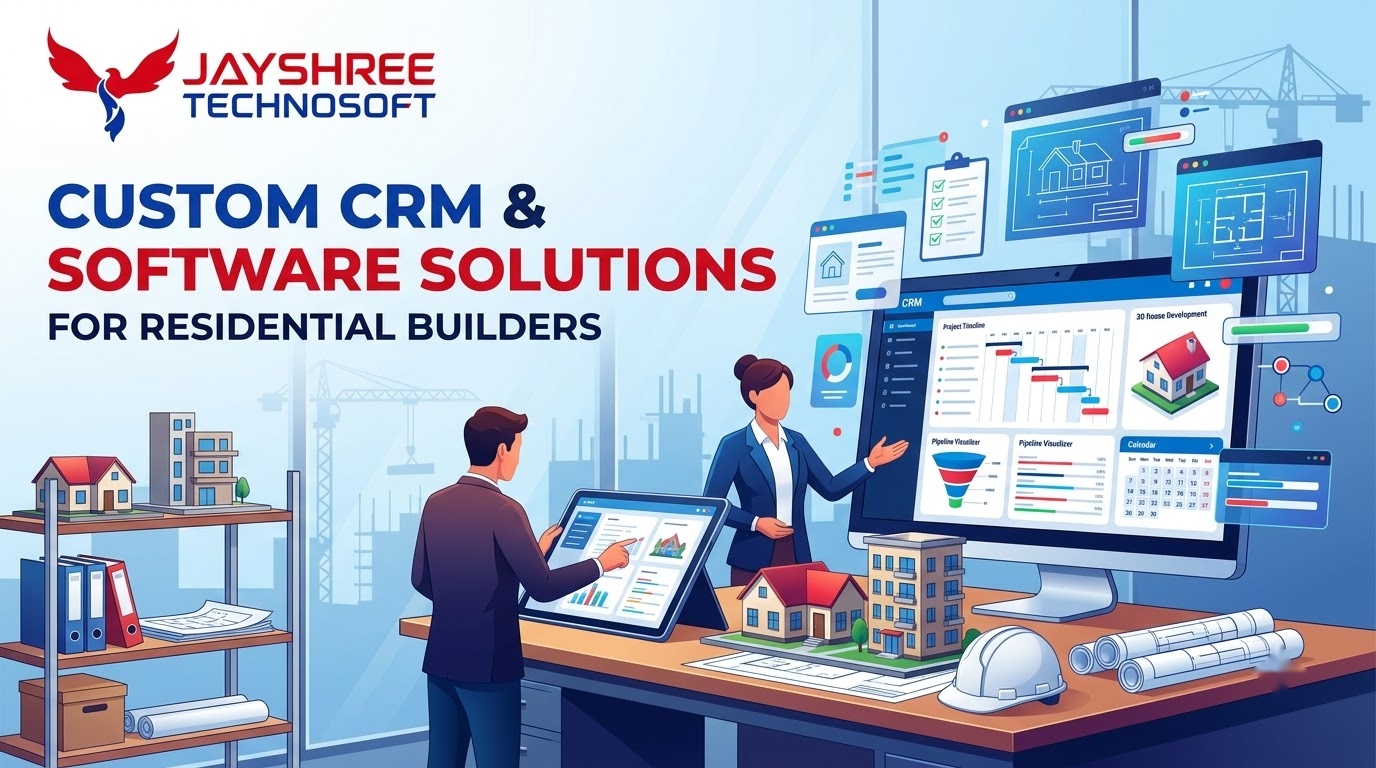
Custom CRM & Software Solutions for Residential Builders: How Jayshree Technosoft Can Help
Off-the-shelf software rarely fits a business perfectly, and residential builders coordinate construction timelines, unit-wise inventory and buyer communication all at once. Jayshree Technosoft, an IT consultancy and software development company, builds custom CRM and software solutions designed around exactly how residential builders actually operate.
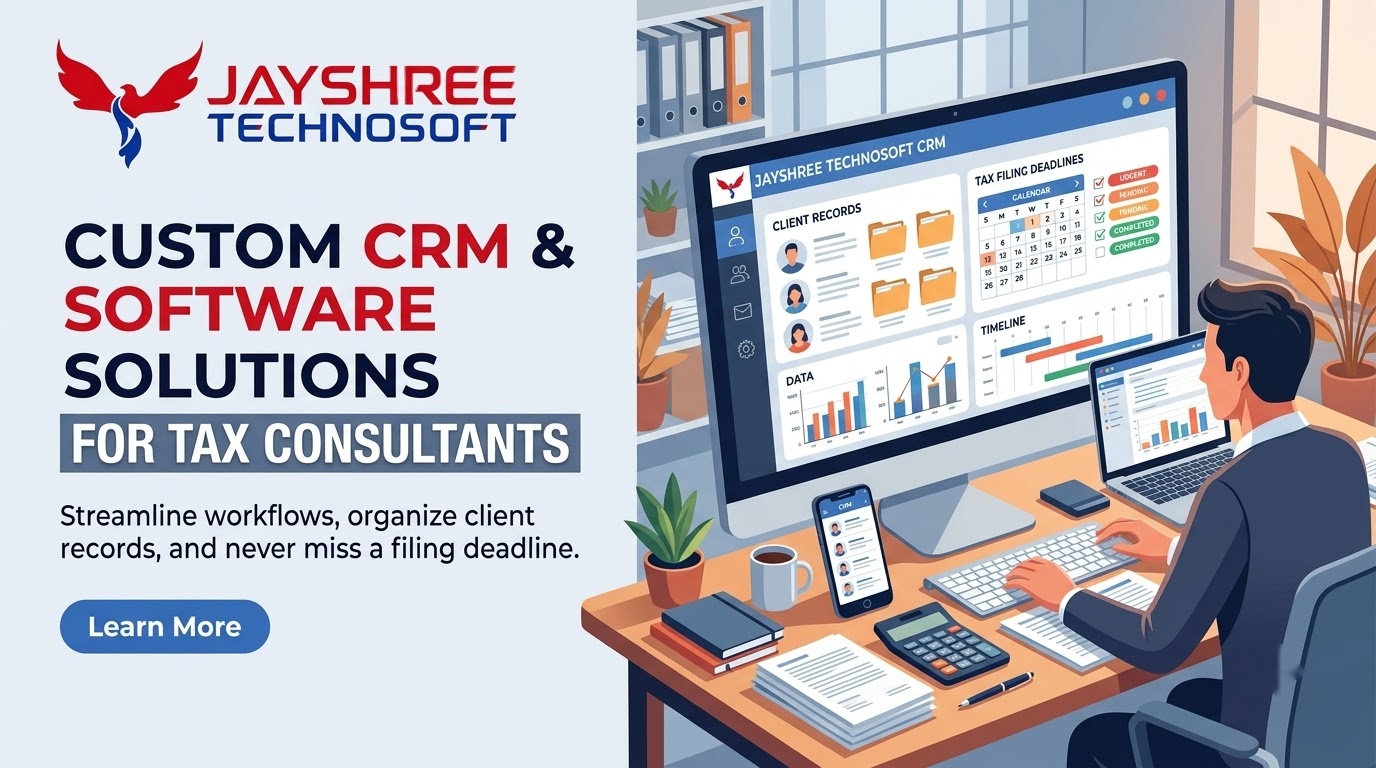
Custom CRM & Software Solutions for Tax Consultants: How Jayshree Technosoft Can Help
Off-the-shelf software rarely fits a business perfectly, and tax consultants track filing deadlines and documents for many clients at once, which a shared spreadsheet manages poorly. Jayshree Technosoft, an IT consultancy and software development company, builds custom CRM and software solutions designed around exactly how tax consultants actually operate.
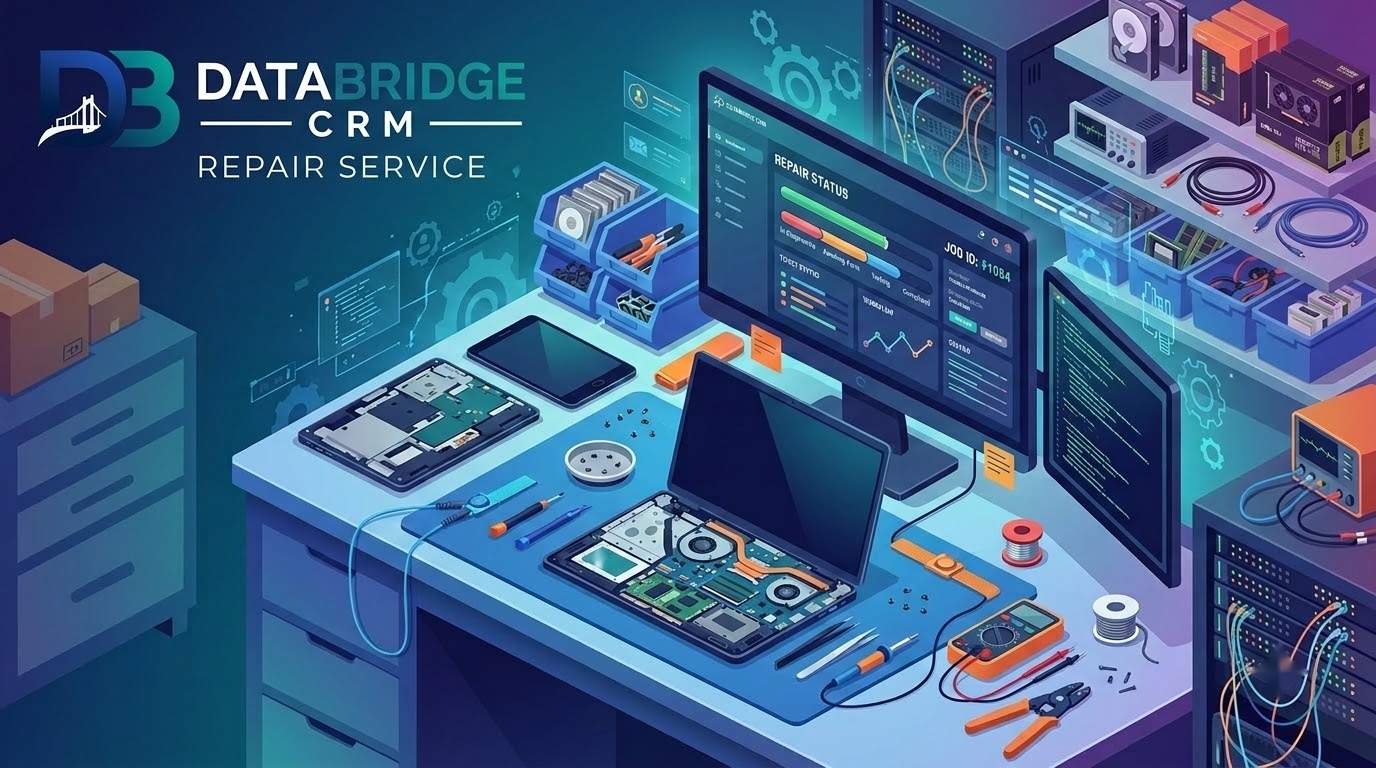
Custom CRM & Software Solutions for Computer Repair Shops: How Jayshree Technosoft Can Help
Off-the-shelf software rarely fits a business perfectly, and computer repair moves through several distinct stages that customers want visibility into, especially work devices. Jayshree Technosoft, an IT consultancy and software development company, builds custom CRM and software solutions designed around exactly how computer repair shops actually operate.
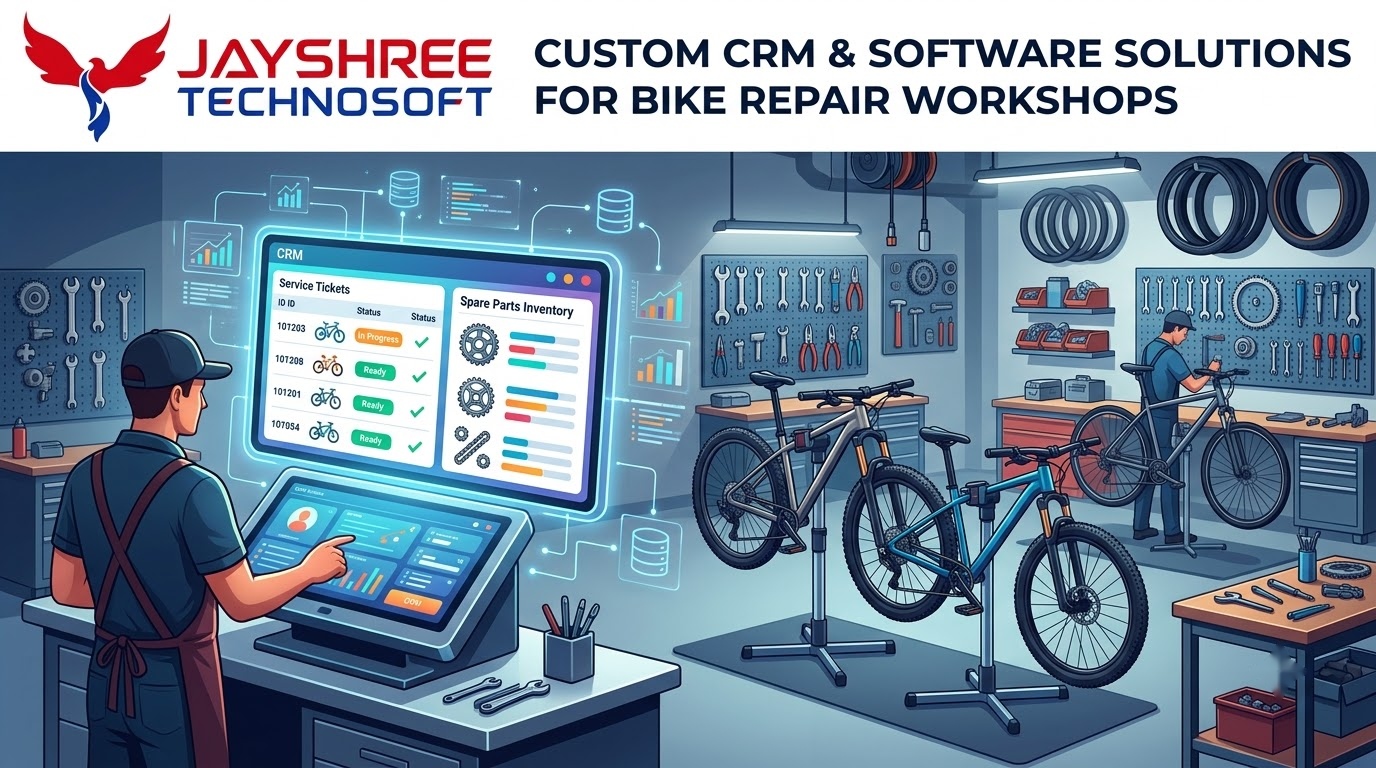
Custom CRM & Software Solutions for Bike Repair Workshops: How Jayshree Technosoft Can Help
Off-the-shelf software rarely fits a business perfectly, and bike repair workshops handle a high volume of quick jobs each day, each needing the right spare part tracked accurately. Jayshree Technosoft, an IT consultancy and software development company, builds custom CRM and software solutions designed around exactly how bike repair workshops actually operate.
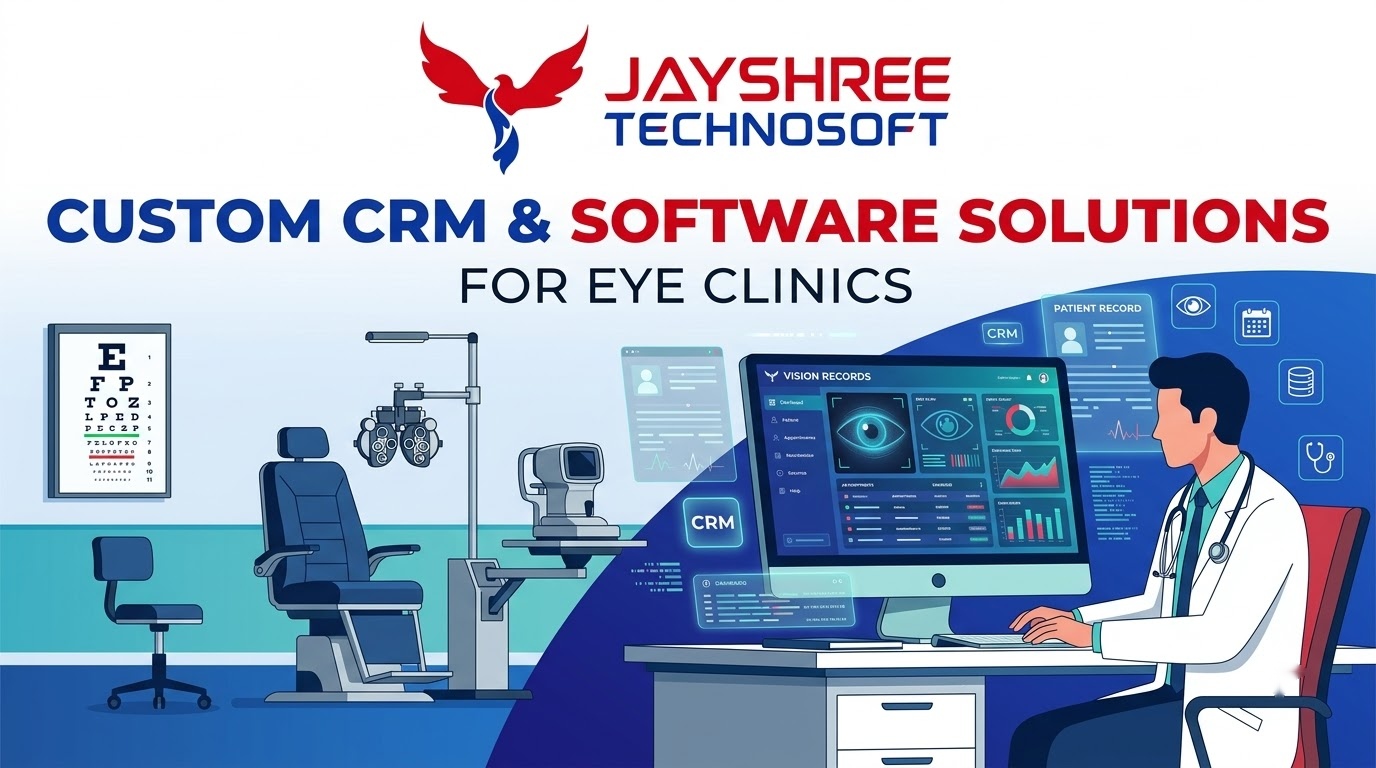
Custom CRM & Software Solutions for Eye Clinics: How Jayshree Technosoft Can Help
Off-the-shelf software rarely fits a business perfectly, and eye clinics need vision and prescription history compared visit over visit, with follow-ups that can't be missed. Jayshree Technosoft, an IT consultancy and software development company, builds custom CRM and software solutions designed around exactly how eye clinics actually operate.
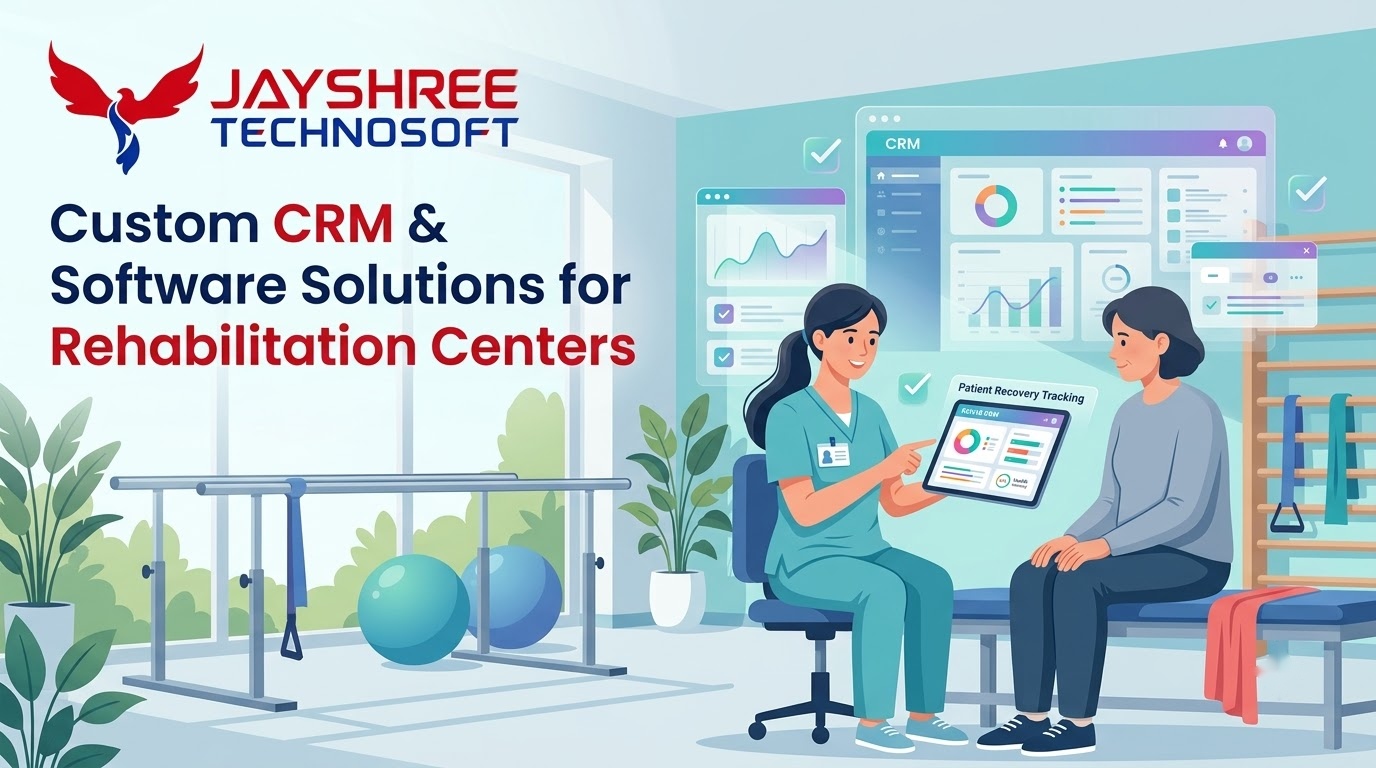
Custom CRM & Software Solutions for Rehabilitation Centers: How Jayshree Technosoft Can Help
Off-the-shelf software rarely fits a business perfectly, and rehabilitation care unfolds over months through structured recovery plans that are easy to lose track of with disconnected notes. Jayshree Technosoft, an IT consultancy and software development company, builds custom CRM and software solutions designed around exactly how rehabilitation centers actually operate.
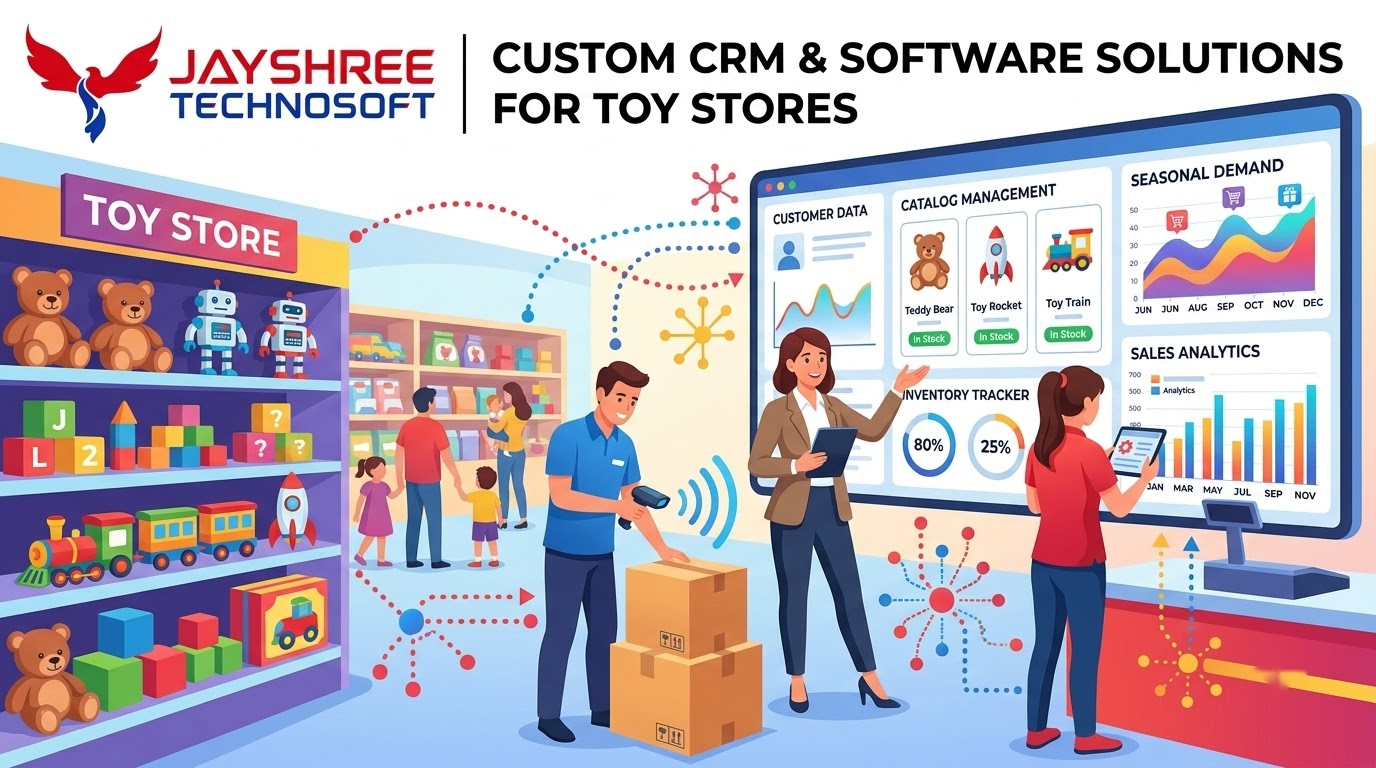
Custom CRM & Software Solutions for Budget Hotels: How Jayshree Technosoft Can Help
Off-the-shelf software rarely fits a business perfectly, and toy stores face sharp seasonal demand spikes and need an age-based catalog shoppers can navigate quickly. Jayshree Technosoft, an IT consultancy and software development company, builds custom CRM and software solutions designed around exactly how toy stores actually operate.
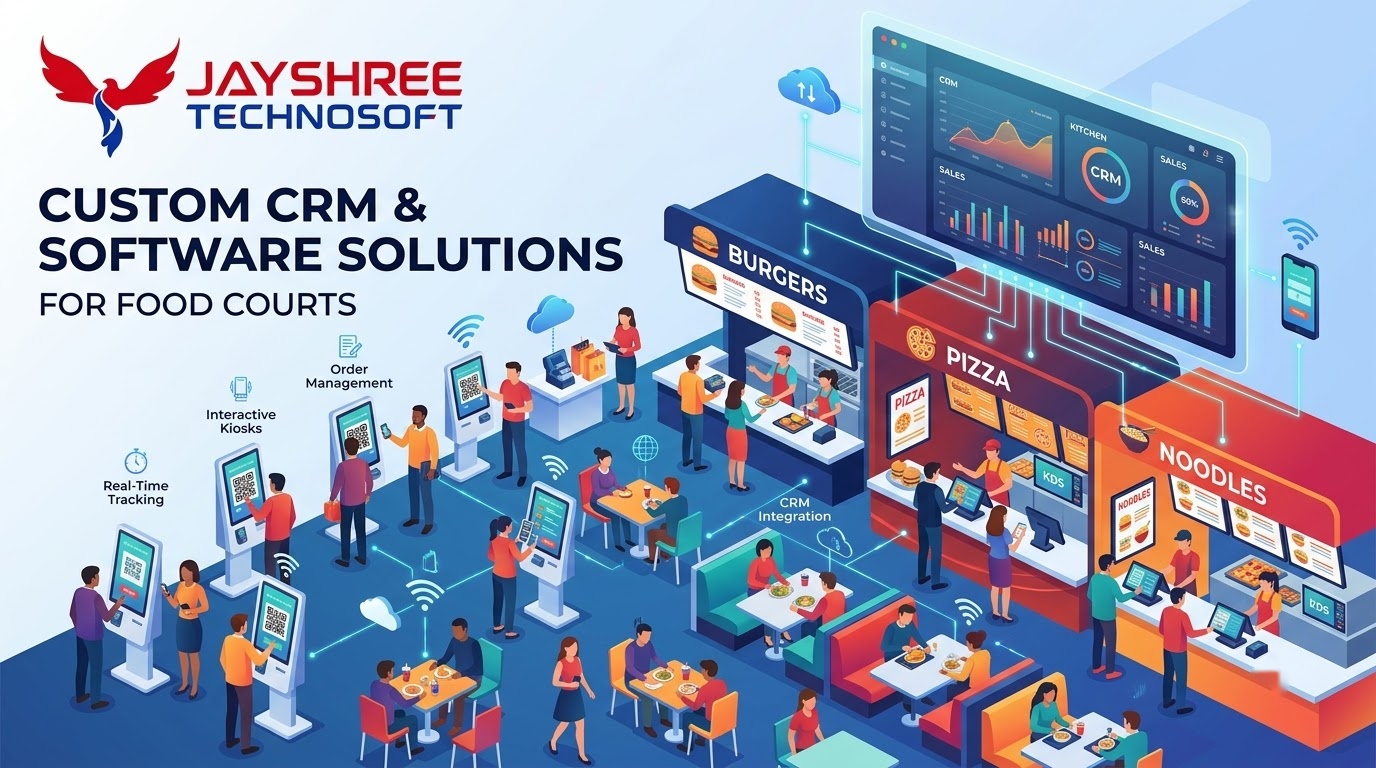
Custom CRM & Software Solutions for Food Courts: How Jayshree Technosoft Can Help
Off-the-shelf software rarely fits a business perfectly, and food courts run multiple independent counters under one roof that still need a combined, operator-level view. Jayshree Technosoft, an IT consultancy and software development company, builds custom CRM and software solutions designed around exactly how food courts actually operate.
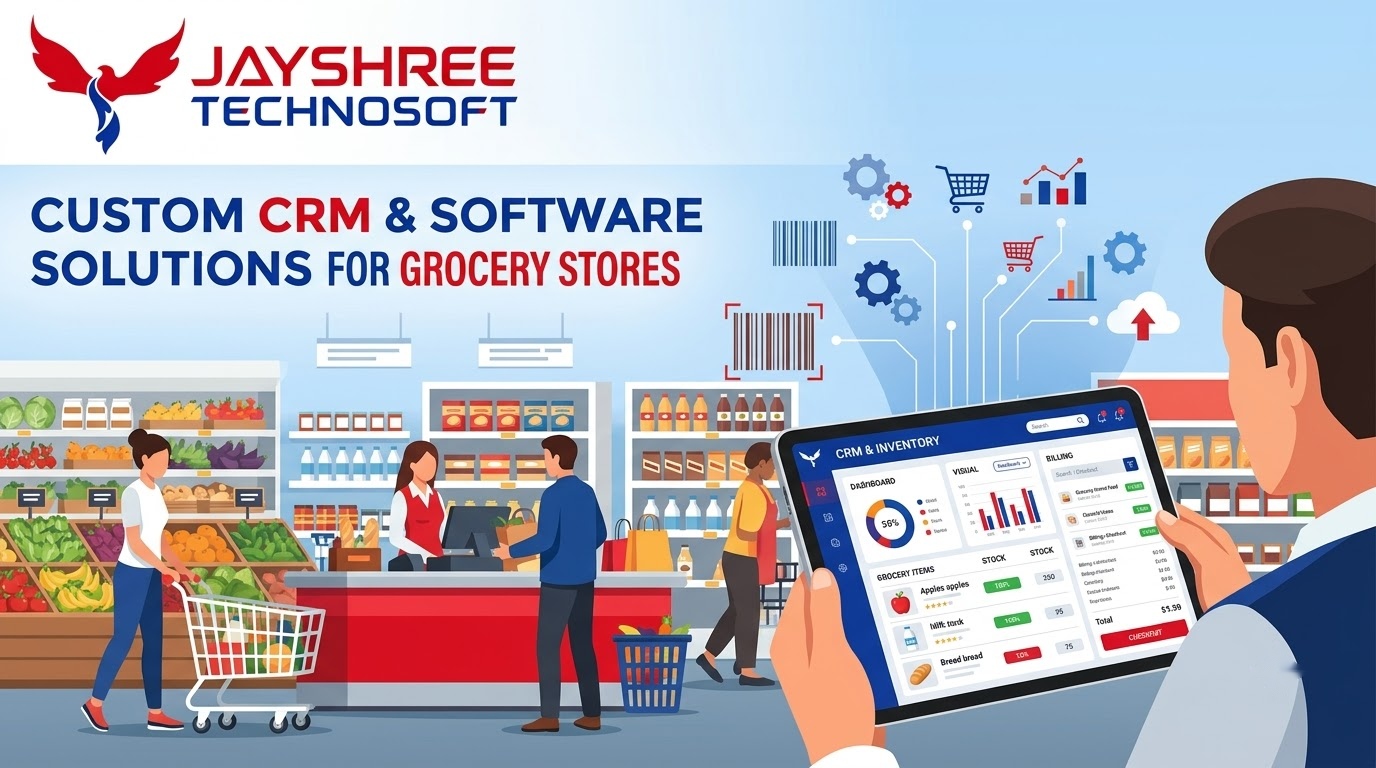
Custom CRM & Software Solutions for Grocery Stores: How Jayshree Technosoft Can Help
Off-the-shelf software rarely fits a business perfectly, and grocery stores bill high volumes of fast-moving, often perishable stock every single day. Jayshree Technosoft, an IT consultancy and software development company, builds custom CRM and software solutions designed around exactly how grocery stores actually operate.
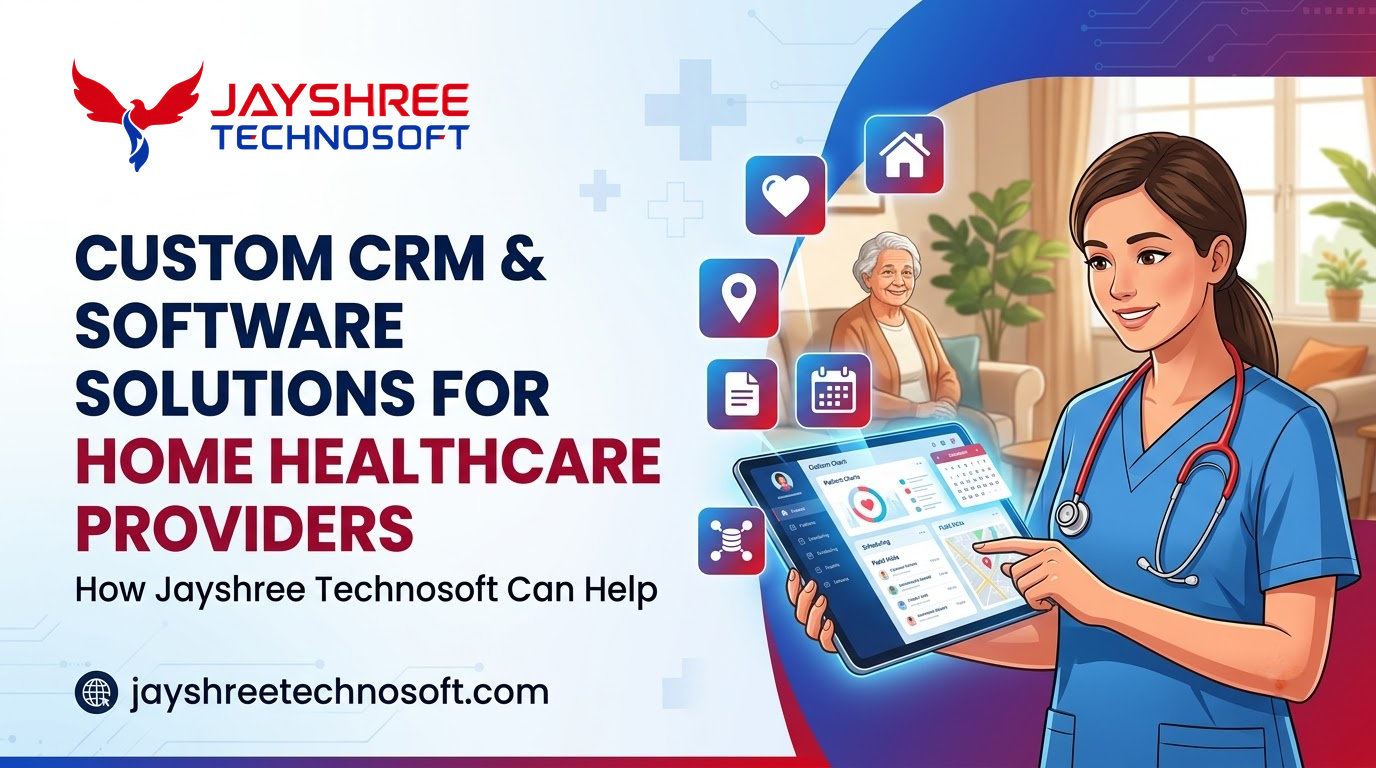
Custom CRM & Software Solutions for Home Healthcare Providers: How Jayshree Technosoft Can Help
Off-the-shelf software rarely fits a business perfectly, and home healthcare involves caregivers visiting patients across locations, which facility-based hospital software doesn't track well. Jayshree Technosoft, an IT consultancy and software development company, builds custom CRM and software solutions designed around exactly how home healthcare providers actually operate.
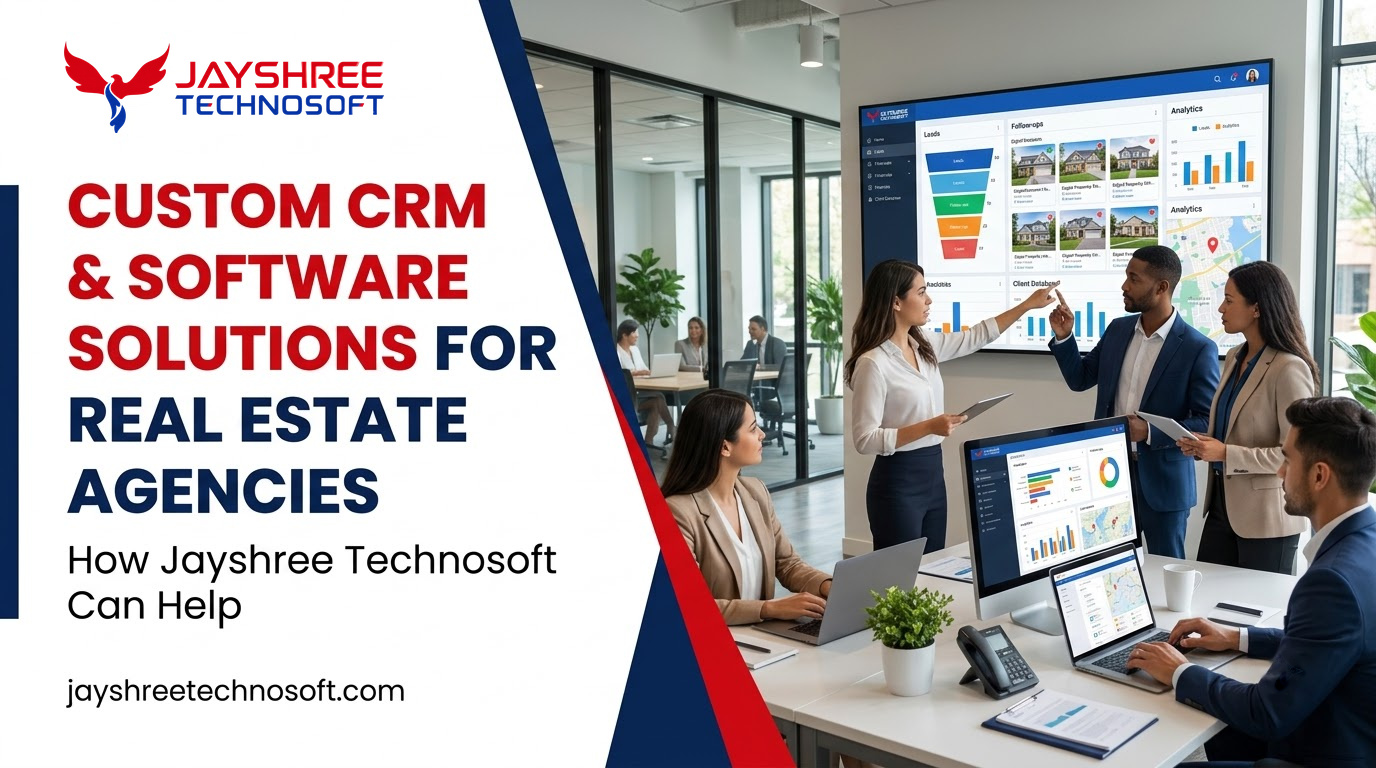
Custom CRM & Software Solutions for Real Estate Agencies: How Jayshree Technosoft Can Help
Off-the-shelf software rarely fits a business perfectly, and real estate agencies juggle many leads and listings in parallel, which a basic contact list manages poorly. Jayshree Technosoft, an IT consultancy and software development company, builds custom CRM and software solutions designed around exactly how real estate agencies actually operate.
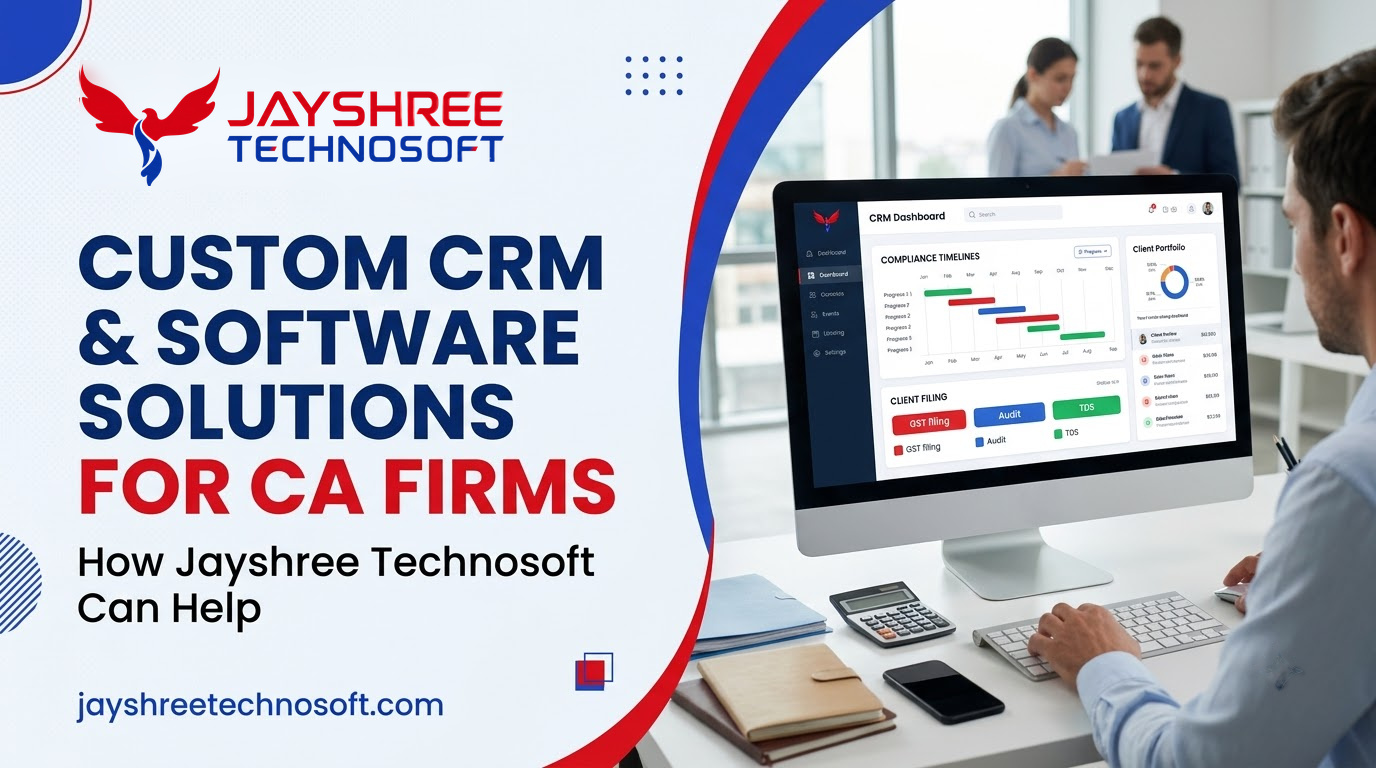
Custom CRM & Software Solutions for CA Firms: How Jayshree Technosoft Can Help
Off-the-shelf software rarely fits a business perfectly, and CA firms track filing deadlines and compliance requirements for many clients at once, which a shared spreadsheet can't manage reliably. Jayshree Technosoft, an IT consultancy and software development company, builds custom CRM and software solutions designed around exactly how CA firms actually operate.
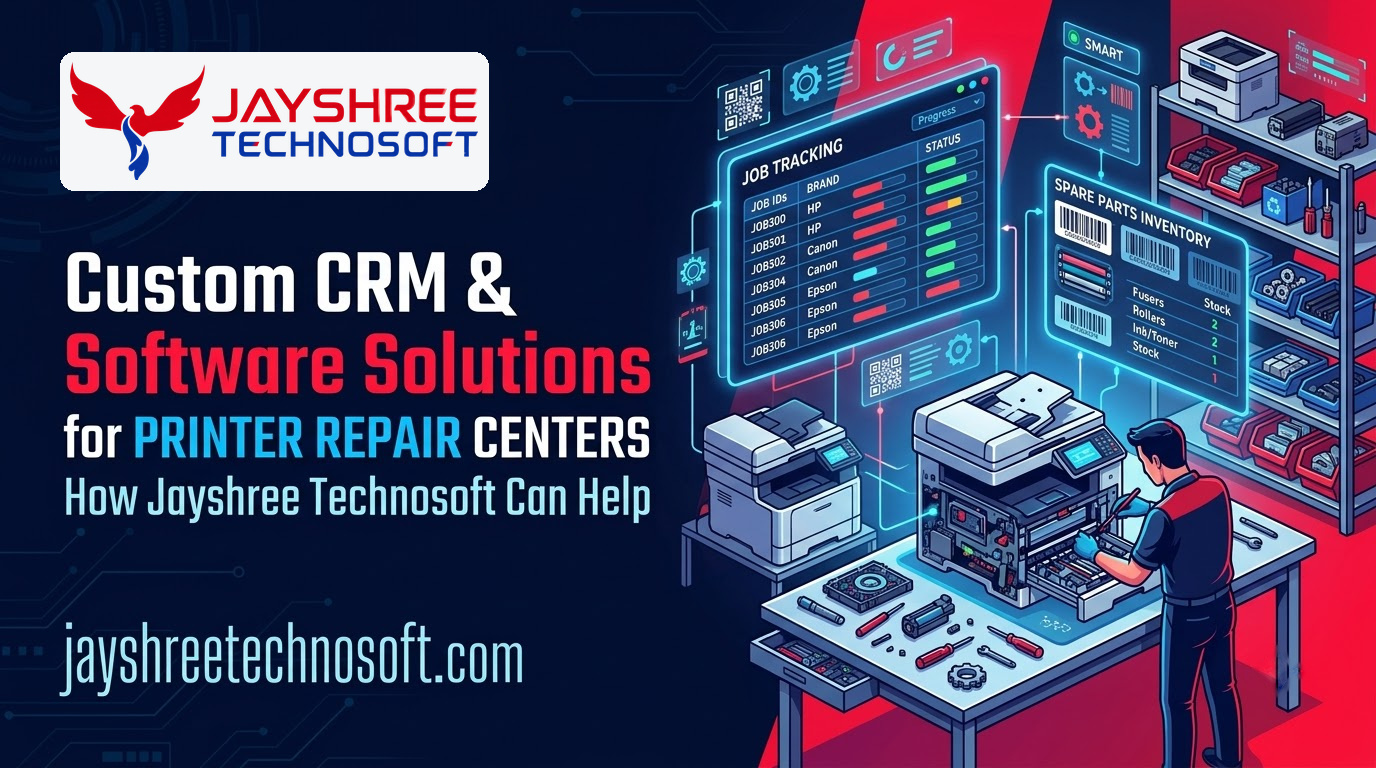
Custom CRM & Software Solutions for Printer Repair Centers: How Jayshree Technosoft Can Help
Off-the-shelf software rarely fits a business perfectly, and printer repair centers juggle multiple brands, models and spare parts, which a simple job register can't track reliably. Jayshree Technosoft, an IT consultancy and software development company, builds custom CRM and software solutions designed around exactly how printer repair centers actually operate.
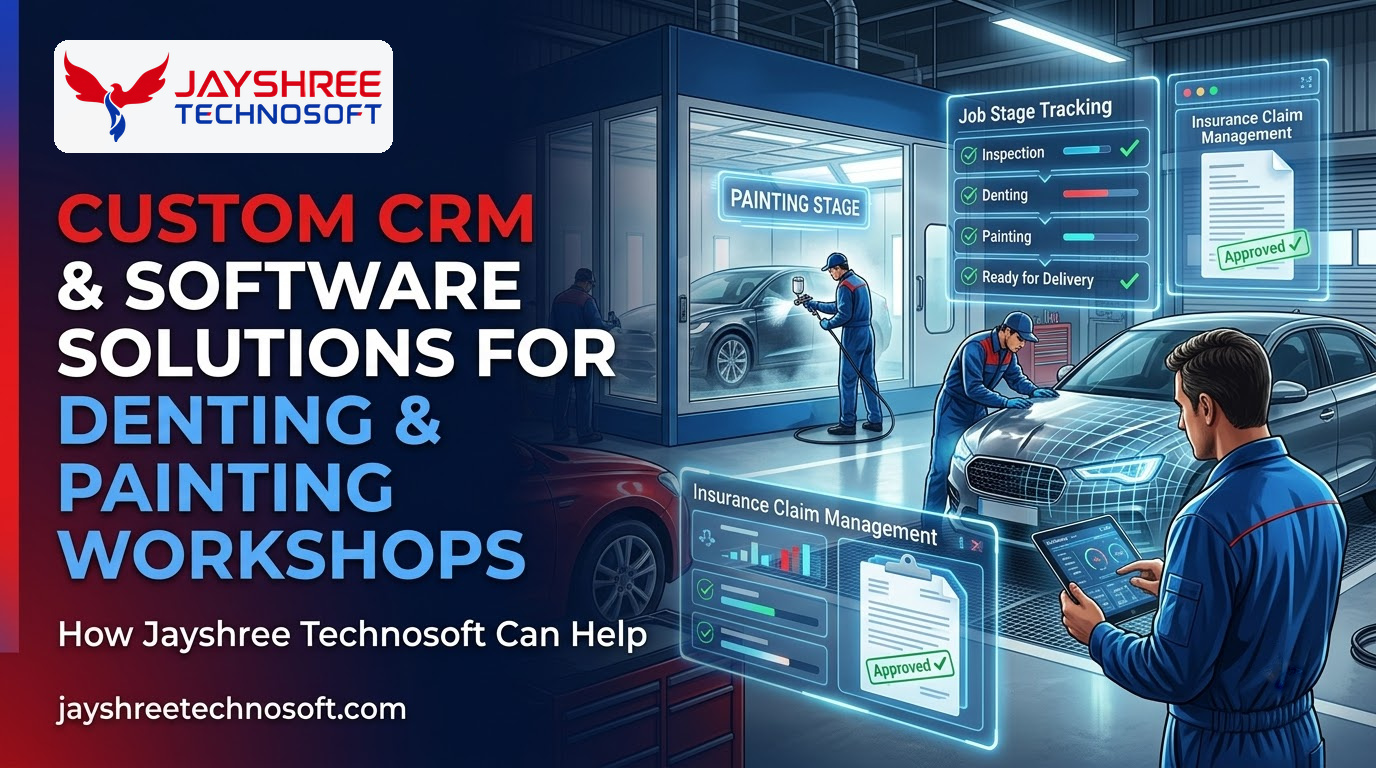
Custom CRM & Software Solutions for Denting & Painting Workshops: How Jayshree Technosoft Can Help
Off-the-shelf software rarely fits a business perfectly, and denting and painting jobs move through visible stages and often run alongside an insurance claim that needs tracking. Jayshree Technosoft, an IT consultancy and software development company, builds custom CRM and software solutions designed around exactly how denting and painting workshops actually operate.
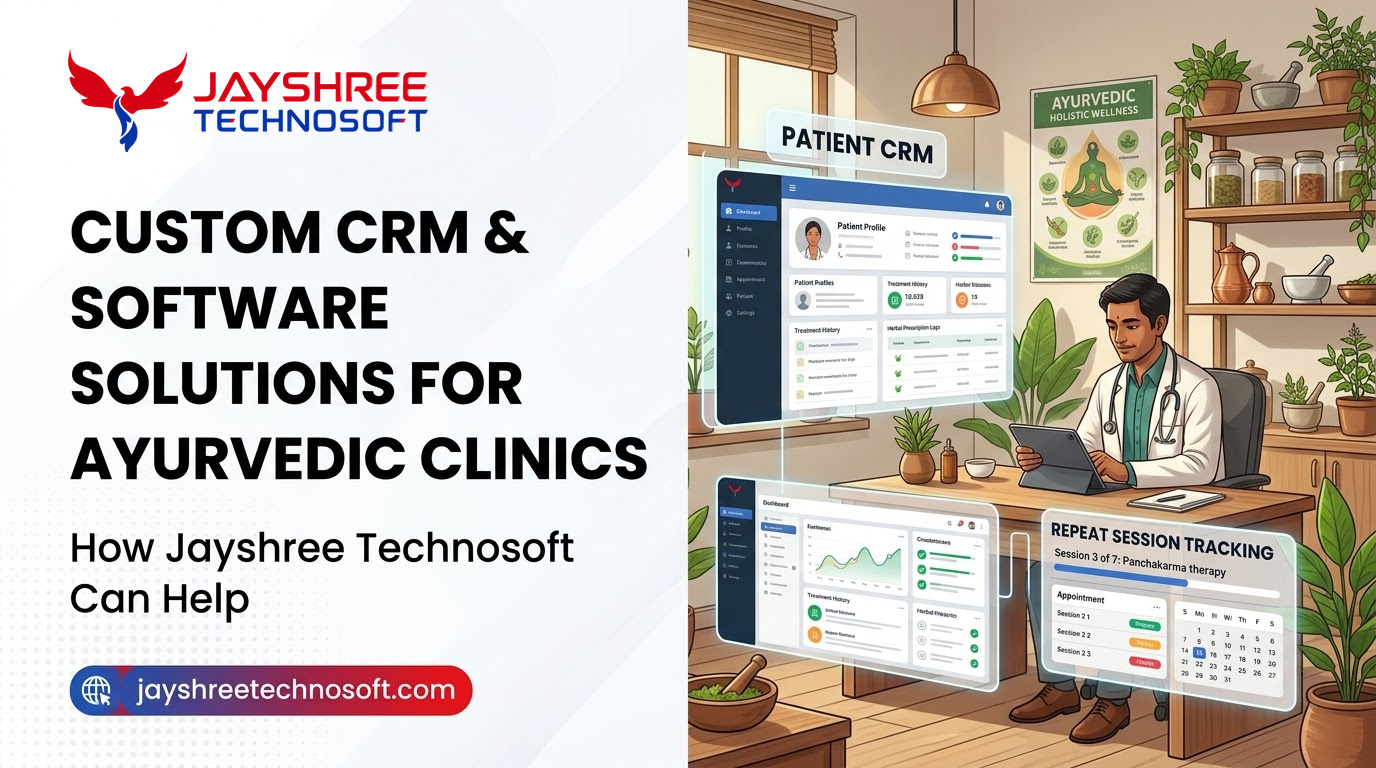
Custom CRM & Software Solutions for Ayurvedic Clinics: How Jayshree Technosoft Can Help
Off-the-shelf software rarely fits a business perfectly, and Ayurvedic treatment often runs as a multi-week therapy plan, which basic appointment booking doesn't track. Jayshree Technosoft, an IT consultancy and software development company, builds custom CRM and software solutions designed around exactly how ayurvedic clinics actually operate.
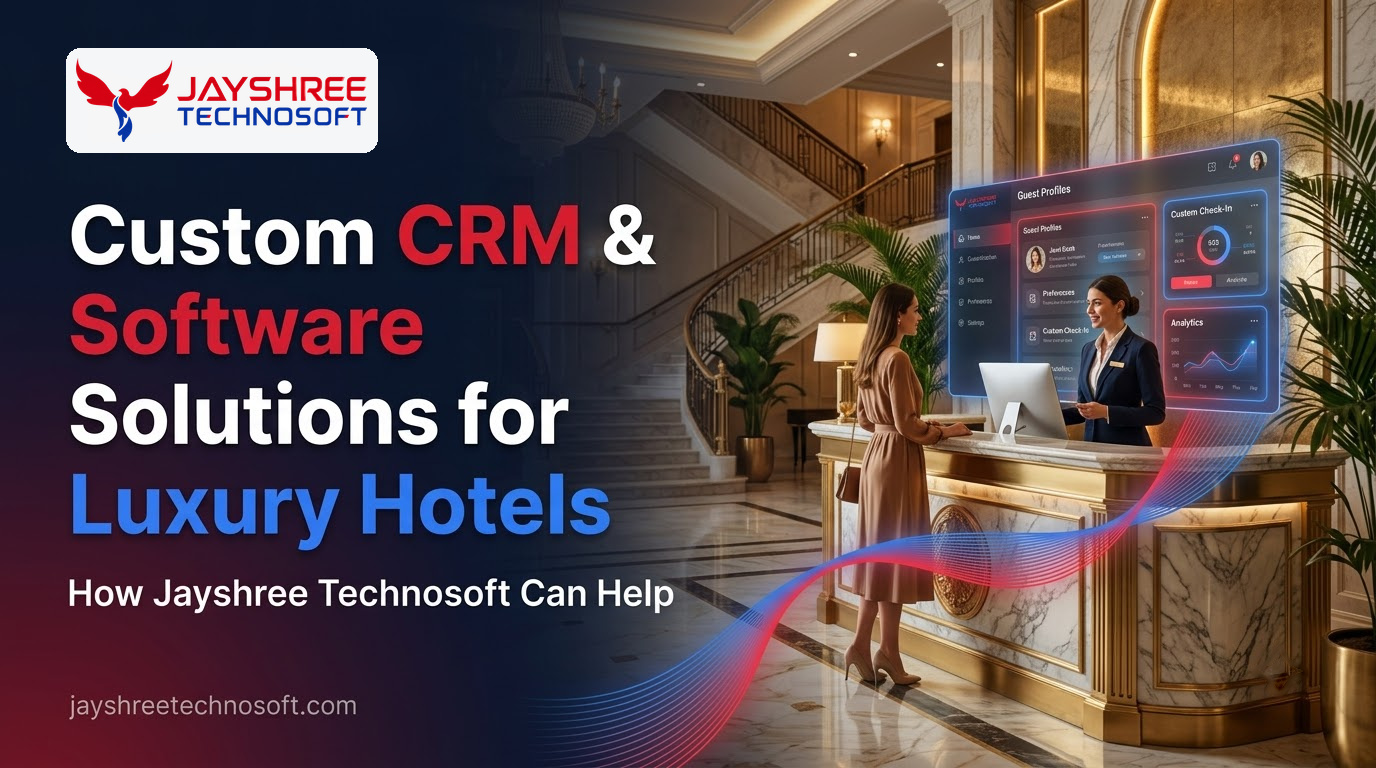
Custom CRM & Software Solutions for Luxury Hotels: How Jayshree Technosoft Can Help
Off-the-shelf software rarely fits a business perfectly, and home healthcare involves caregivers visiting patients across locations, which facility-based hospital software doesn't track well. Jayshree Technosoft, an IT consultancy and software development company, builds custom CRM and software solutions designed around exactly how home healthcare providers actually operate.
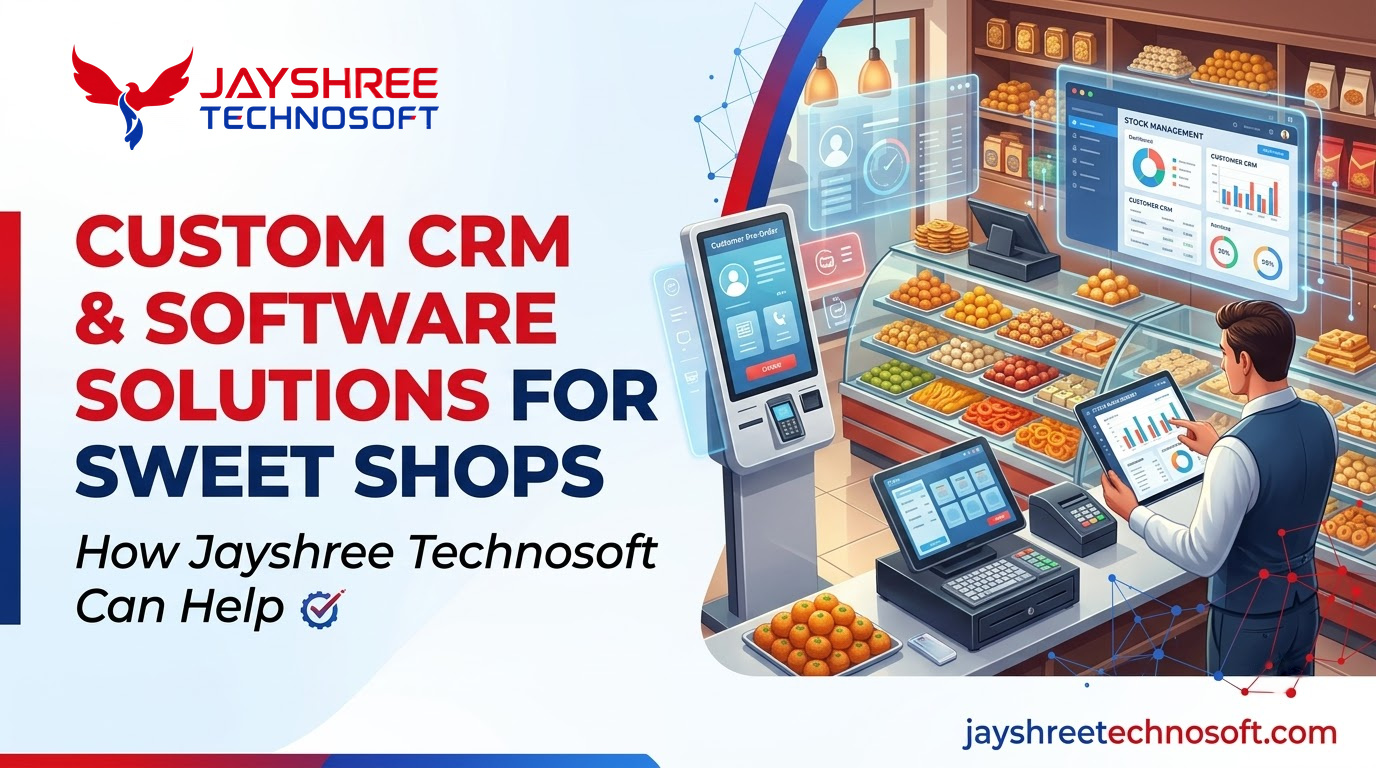
Custom CRM & Software Solutions for Sweet Shops: How Jayshree Technosoft Can Help
Off-the-shelf software rarely fits a business perfectly, and sweet shops face huge festive-season spikes with bulk pre-orders for gifting alongside daily counter sales. Jayshree Technosoft, an IT consultancy and software development company, builds custom CRM and software solutions designed around exactly how sweet shops actually operate.
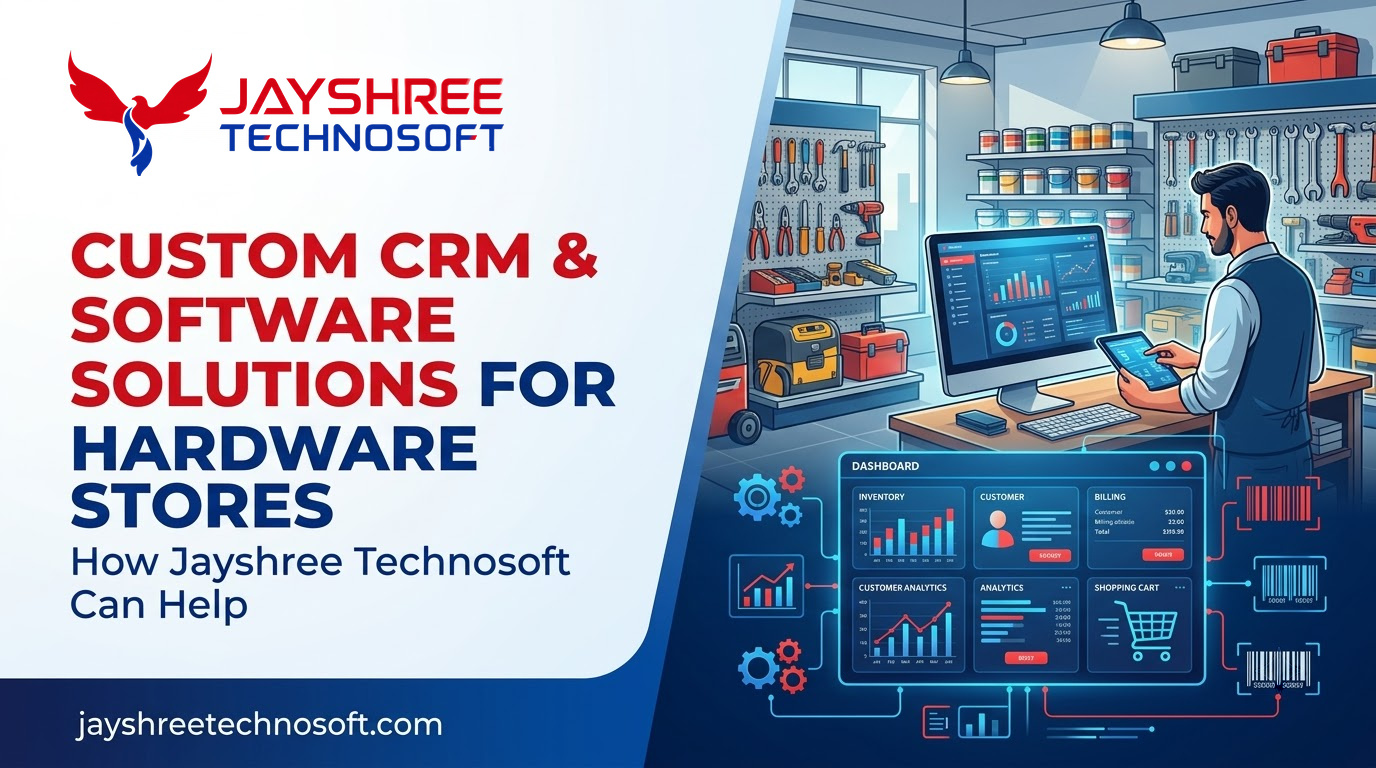
Custom CRM & Software Solutions for Hardware Stores: How Jayshree Technosoft Can Help
Off-the-shelf software rarely fits a business perfectly, and hardware stores bill items by piece, weight, length and box in a single transaction, often with separate contractor pricing. Jayshree Technosoft, an IT consultancy and software development company, builds custom CRM and software solutions designed around exactly how hardware stores actually operate.
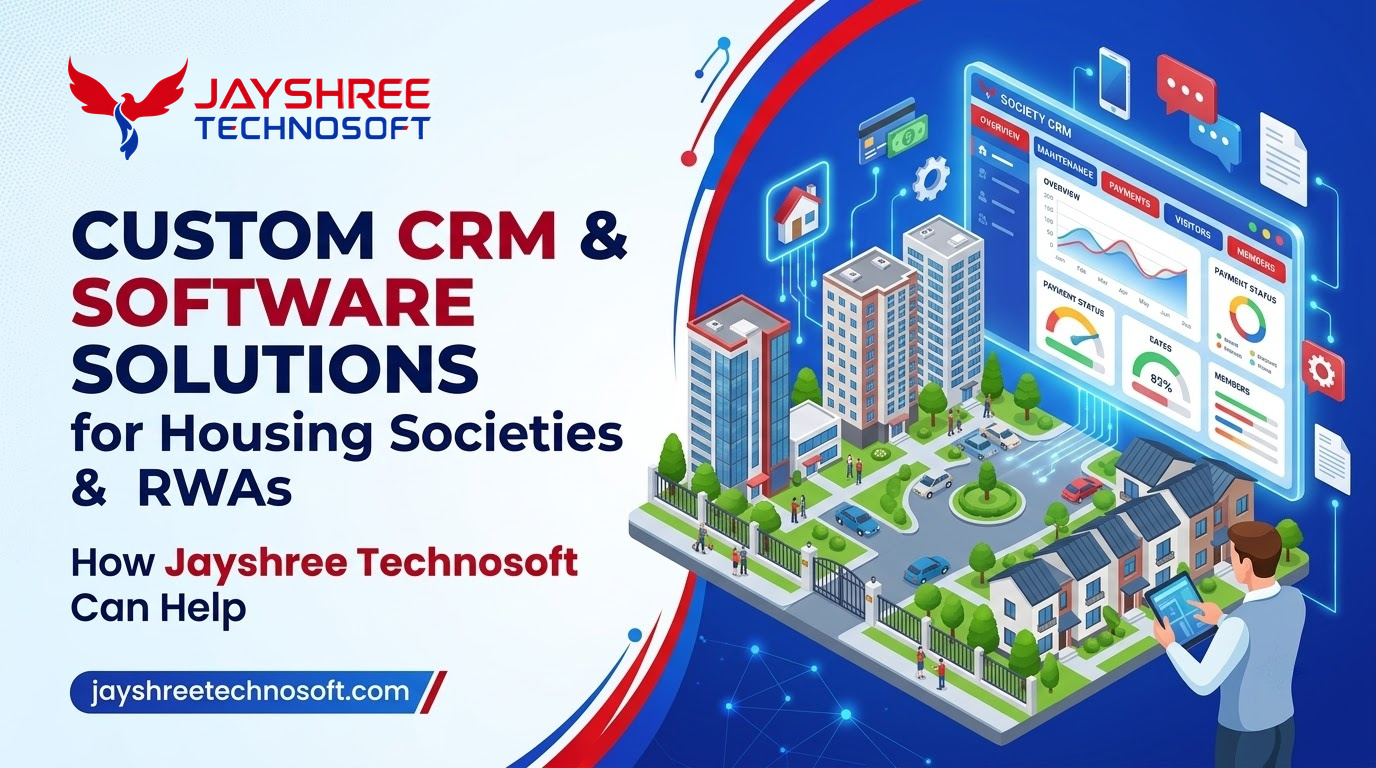
Custom CRM & Software Solutions for Housing Societies & RWAs: How Jayshree Technosoft Can Help
Off-the-shelf software rarely fits a business perfectly, and housing societies manage resident records, recurring dues and service requests, usually through registers and WhatsApp groups. Jayshree Technosoft, an IT consultancy and software development company, builds custom CRM and software solutions designed around exactly how housing societies and RWAs actually operate.
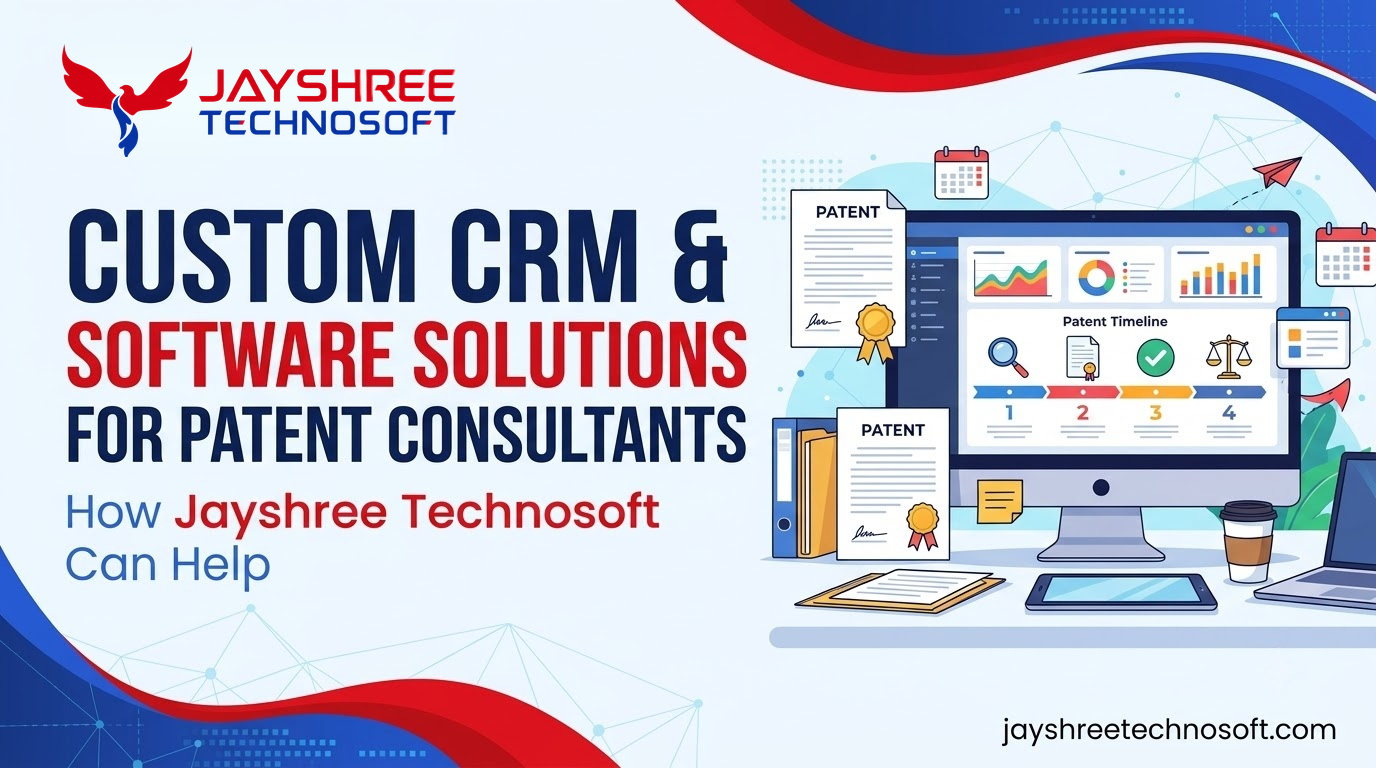
Custom CRM & Software Solutions for Patent Consultants: How Jayshree Technosoft Can Help
Off-the-shelf software rarely fits a business perfectly, and patent work spans years across multiple jurisdictions with some of the most deadline-dense timelines in legal practice. Jayshree Technosoft, an IT consultancy and software development company, builds custom CRM and software solutions designed around exactly how patent consultants actually operate.
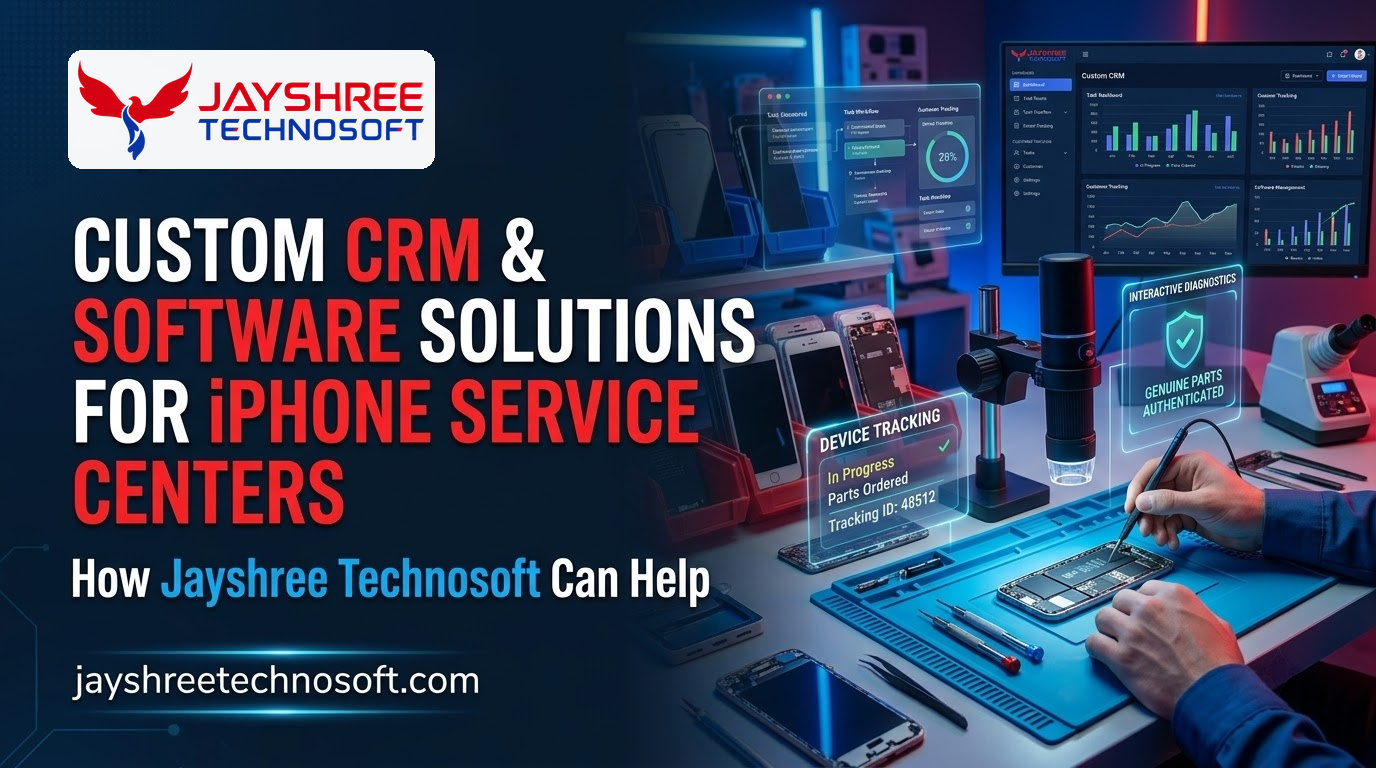
Custom CRM & Software Solutions for iPhone Service Centers: How Jayshree Technosoft Can Help
Off-the-shelf software rarely fits a business perfectly, and iPhone repairs involve high-value devices where customers expect precision, genuine parts and clear communication. Jayshree Technosoft, an IT consultancy and software development company, builds custom CRM and software solutions designed around exactly how iphone service centers actually operate.
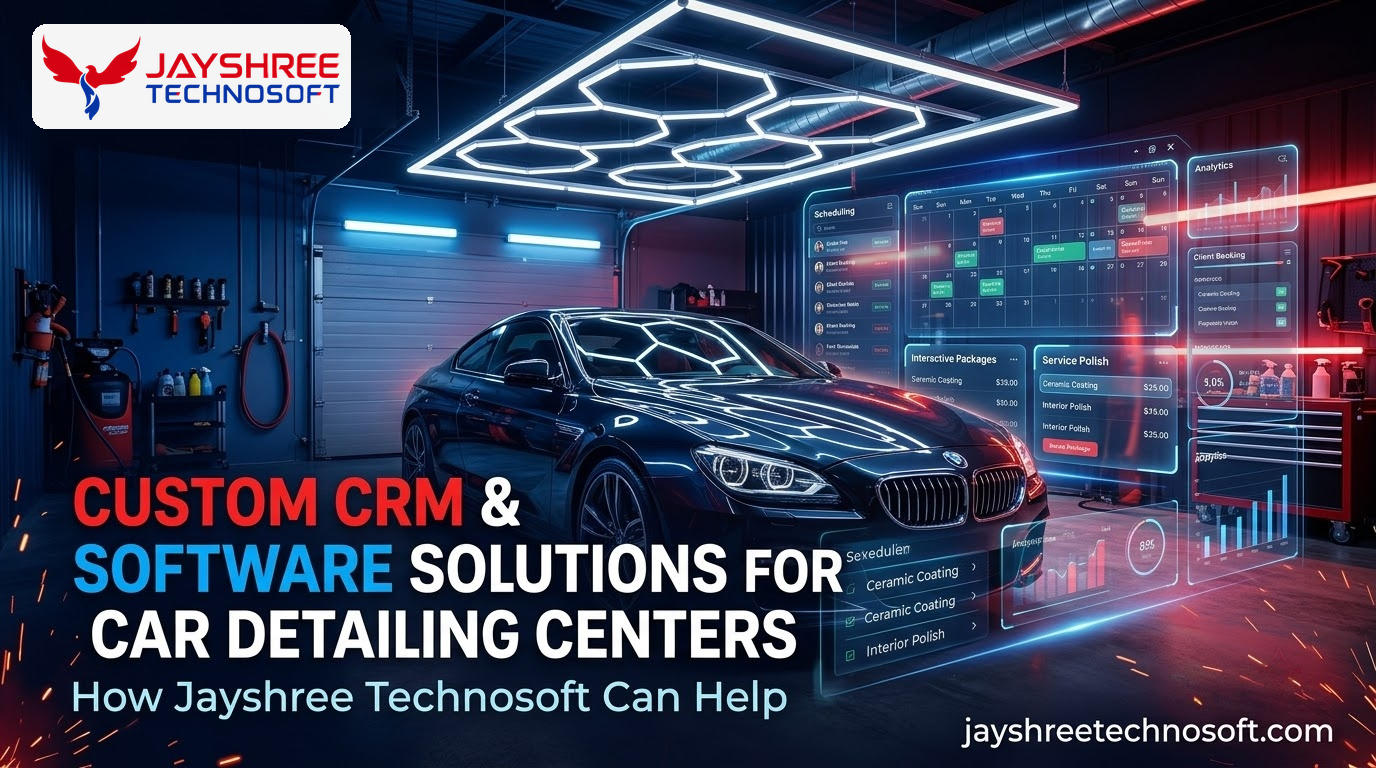
Custom CRM & Software Solutions for Car Detailing Centers: How Jayshree Technosoft Can Help
Off-the-shelf software rarely fits a business perfectly, and car detailing businesses sell tiered service packages to repeat customers, which simple job-card tools don't represent well. Jayshree Technosoft, an IT consultancy and software development company, builds custom CRM and software solutions designed around exactly how car detailing centers actually operate.
Custom CRM & Software Solutions for Pediatric Clinics: How Jayshree Technosoft Can Help
Off-the-shelf software rarely fits a business perfectly, and pediatric care depends on tracking growth and vaccination schedules accurately across years of visits. Jayshree Technosoft, an IT consultancy and software development company, builds custom CRM and software solutions designed around exactly how pediatric clinics actually operate.
Custom CRM & Software Solutions for IVF & Fertility Centers: How Jayshree Technosoft Can Help
Off-the-shelf software rarely fits a business perfectly, and fertility treatment spans long, sensitive journeys across multiple cycles that need careful, private tracking. Jayshree Technosoft, an IT consultancy and software development company, builds custom CRM and software solutions designed around exactly how IVF and fertility centers actually operate.
Custom CRM & Software Solutions for Home Décor Brands: How Jayshree Technosoft Can Help
Off-the-shelf software rarely fits a business perfectly, and home décor sees sharp seasonal demand spikes and a considered, compare-before-buying purchase pattern. Jayshree Technosoft, an IT consultancy and software development company, builds custom CRM and software solutions designed around exactly how home décor brands actually operate.
Custom CRM & Software Solutions for Serviced Apartments: How Jayshree Technosoft Can Help
Off-the-shelf software rarely fits a business perfectly, and serviced apartments host longer, business-focused stays that need billing built around weeks or months, not single nights. Jayshree Technosoft, an IT consultancy and software development company, builds custom CRM and software solutions designed around exactly how serviced apartments actually operate.
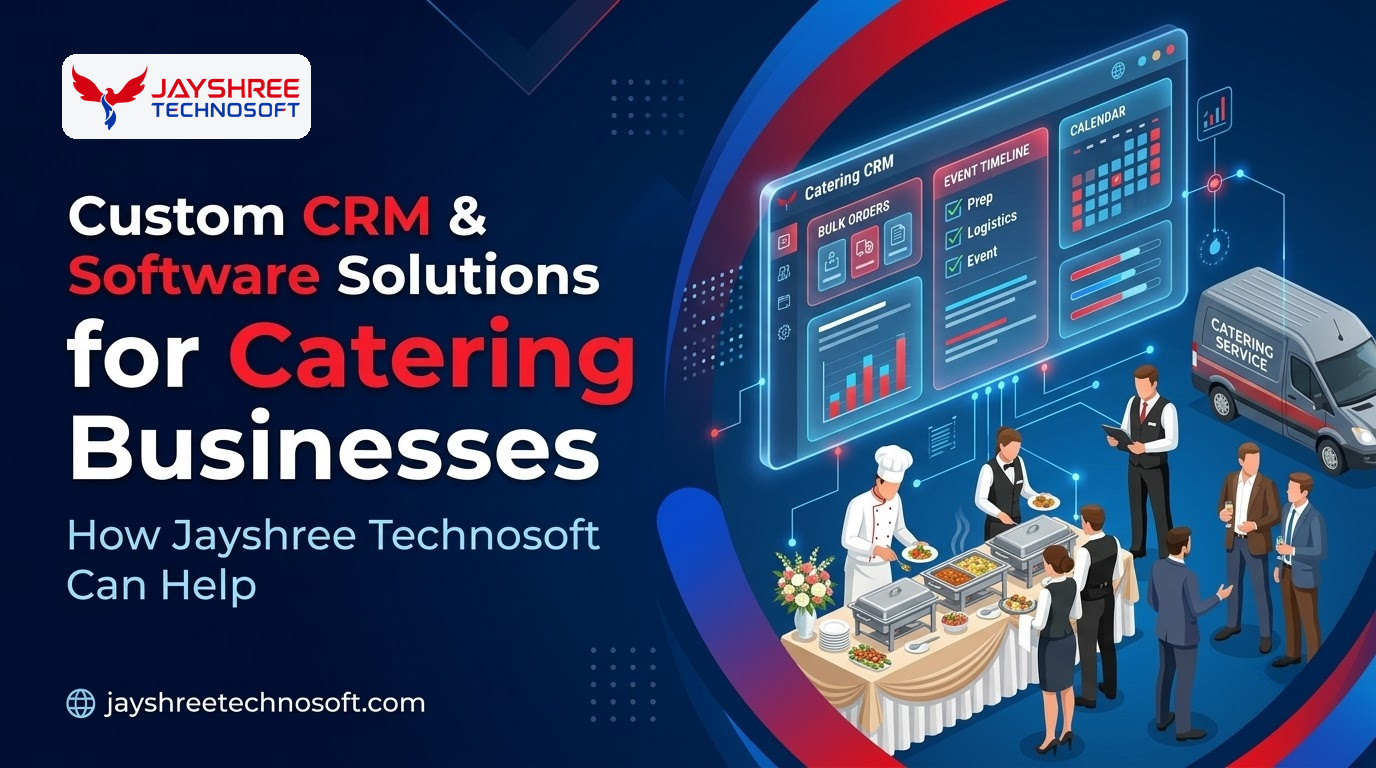
Custom CRM & Software Solutions for Catering Businesses: How Jayshree Technosoft Can Help
Off-the-shelf software rarely fits a business perfectly, and catering runs on advance bookings tied to fixed event dates, which daily billing-focused tools don't track well. Jayshree Technosoft, an IT consultancy and software development company, builds custom CRM and software solutions designed around exactly how catering businesses actually operate.
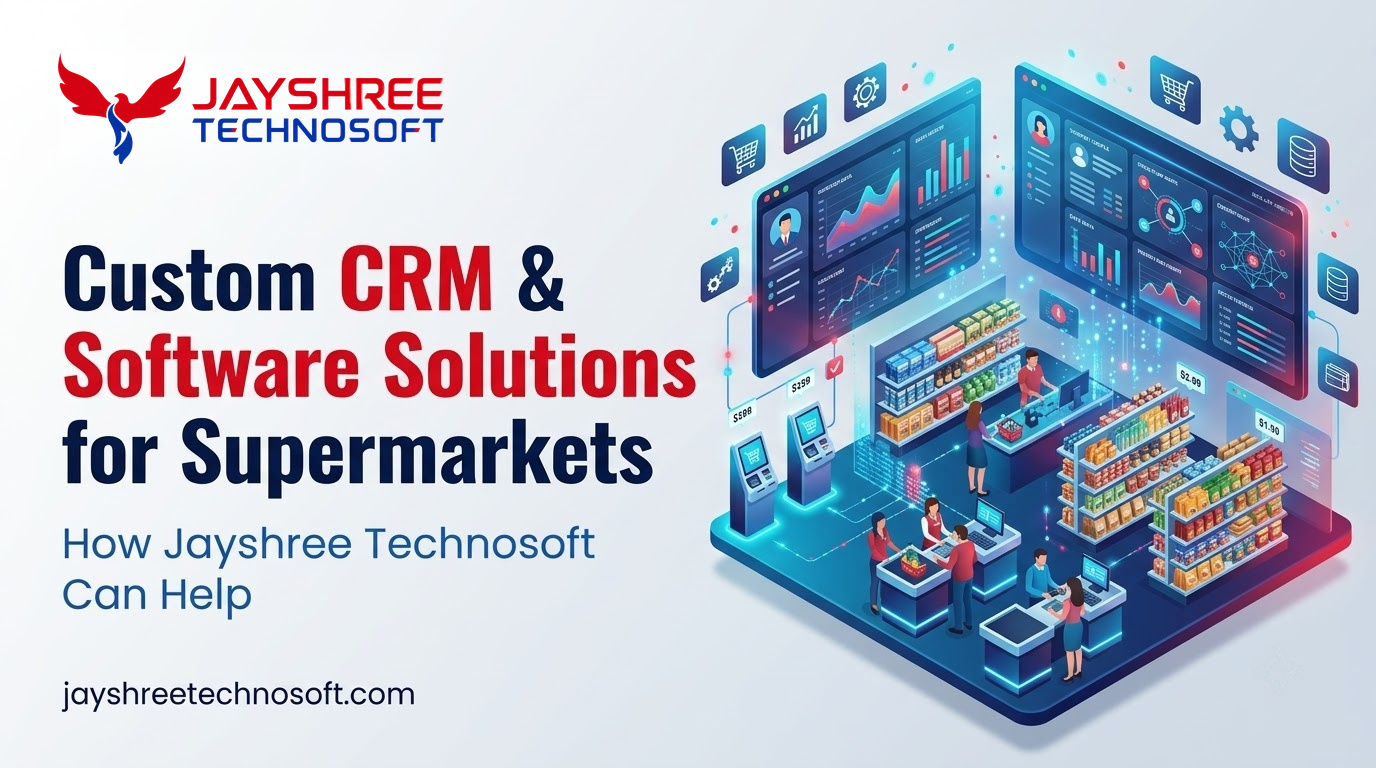
Custom CRM & Software Solutions for Supermarkets: How Jayshree Technosoft Can Help
Off-the-shelf software rarely fits a business perfectly, and supermarkets manage thousands of SKUs across multiple billing counters at once, which generic retail tools weren't built for. Jayshree Technosoft, an IT consultancy and software development company, builds custom CRM and software solutions designed around exactly how supermarkets actually operate.
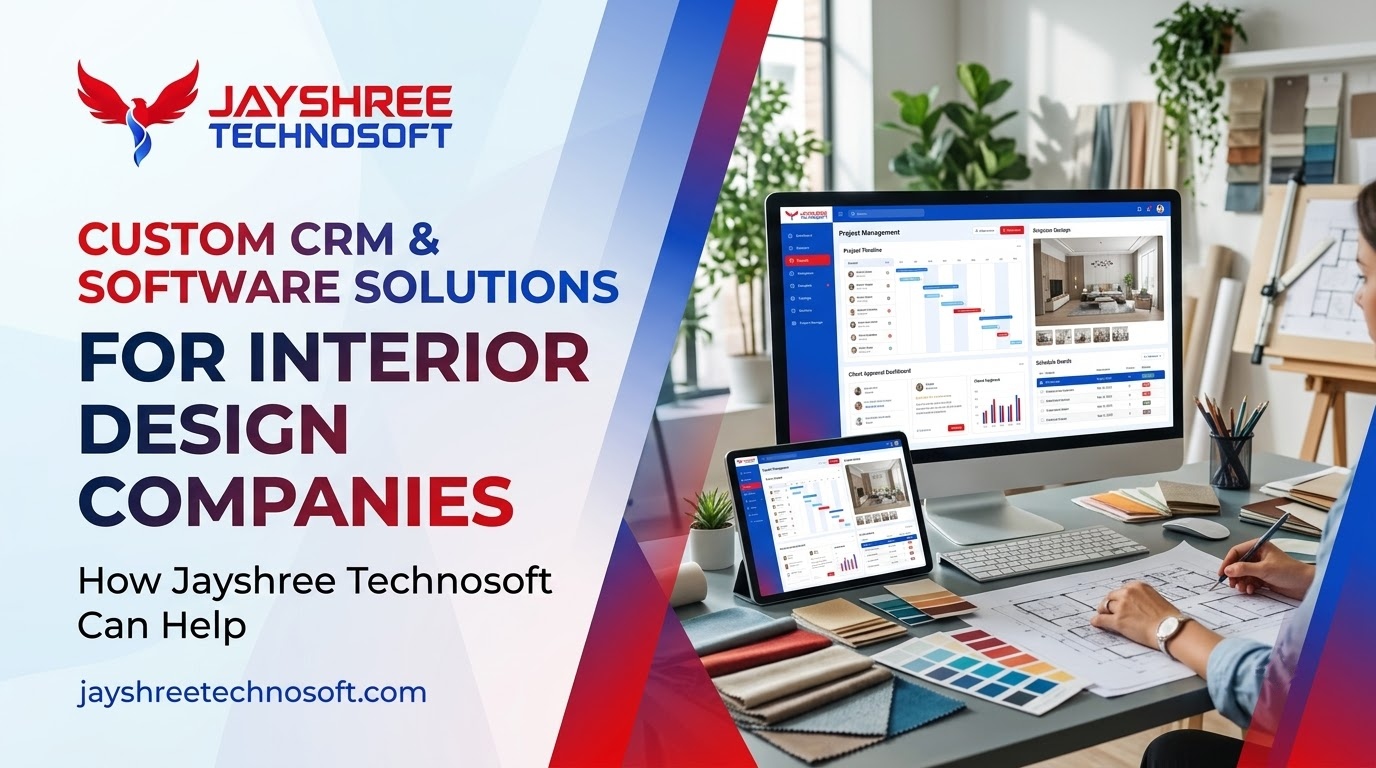
Custom CRM & Software Solutions for Interior Design Companies: How Jayshree Technosoft Can Help
Off-the-shelf software rarely fits a business perfectly, and interior design projects move through many client approvals that are easy to lose track of across calls and messages. Jayshree Technosoft, an IT consultancy and software development company, builds custom CRM and software solutions designed around exactly how interior design companies actually operate.
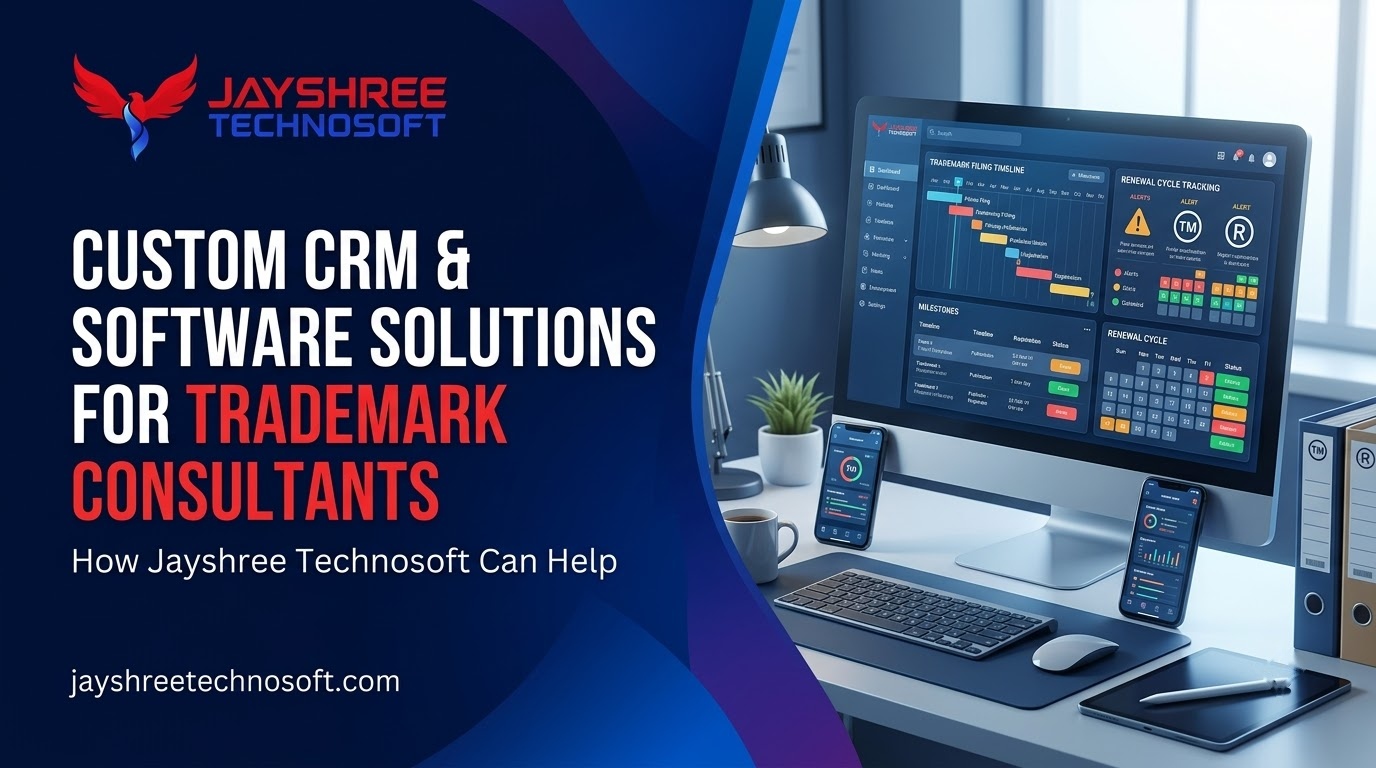
Custom CRM & Software Solutions for Trademark Consultants: How Jayshree Technosoft Can Help
Off-the-shelf software rarely fits a business perfectly, and trademark work spans years across filing, examination and renewal stages that are easy to lose track of over time. Jayshree Technosoft, an IT consultancy and software development company, builds custom CRM and software solutions designed around exactly how trademark consultants actually operate.
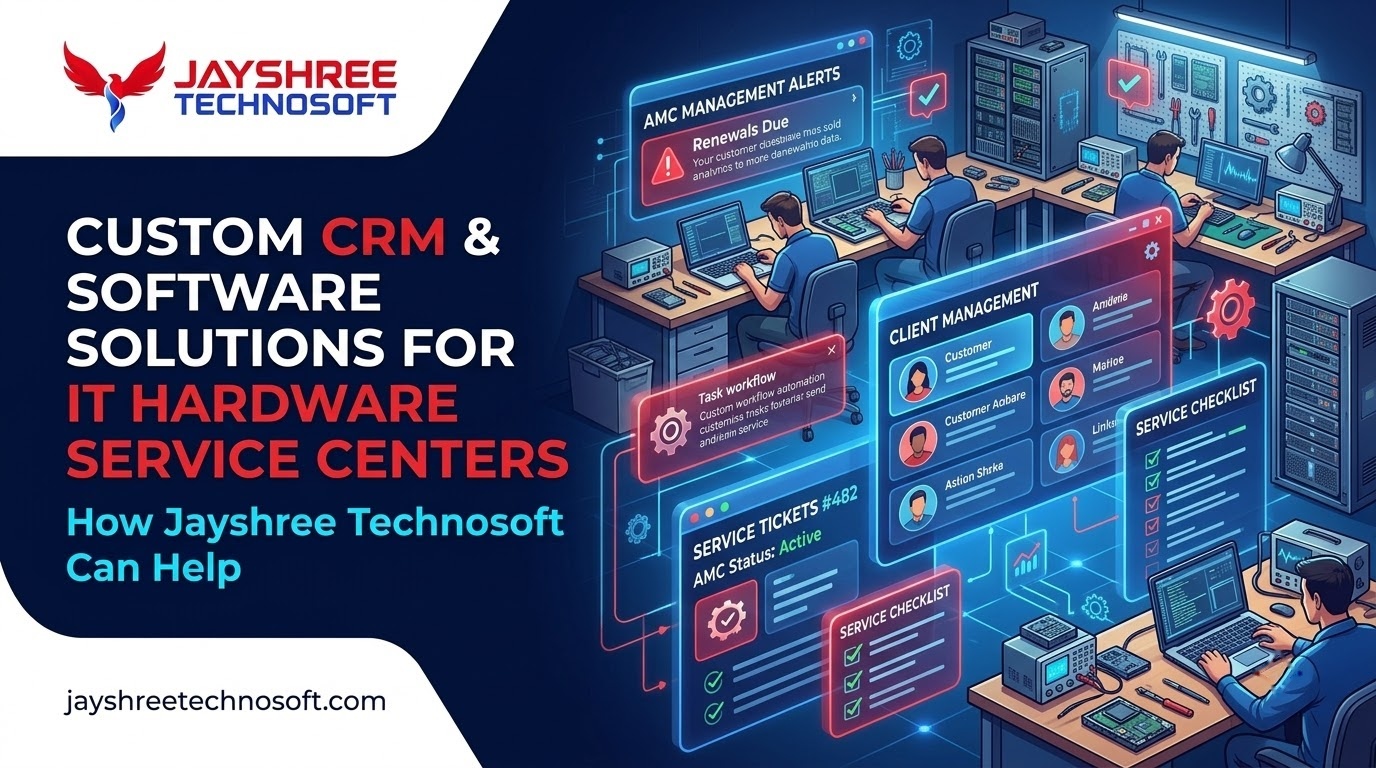
Custom CRM & Software Solutions for IT Hardware Service Centers: How Jayshree Technosoft Can Help
Off-the-shelf software rarely fits a business perfectly, and IT hardware service centers manage business clients with device fleets under ongoing AMCs, not one-off repairs. Jayshree Technosoft, an IT consultancy and software development company, builds custom CRM and software solutions designed around exactly how IT hardware service centers actually operate.
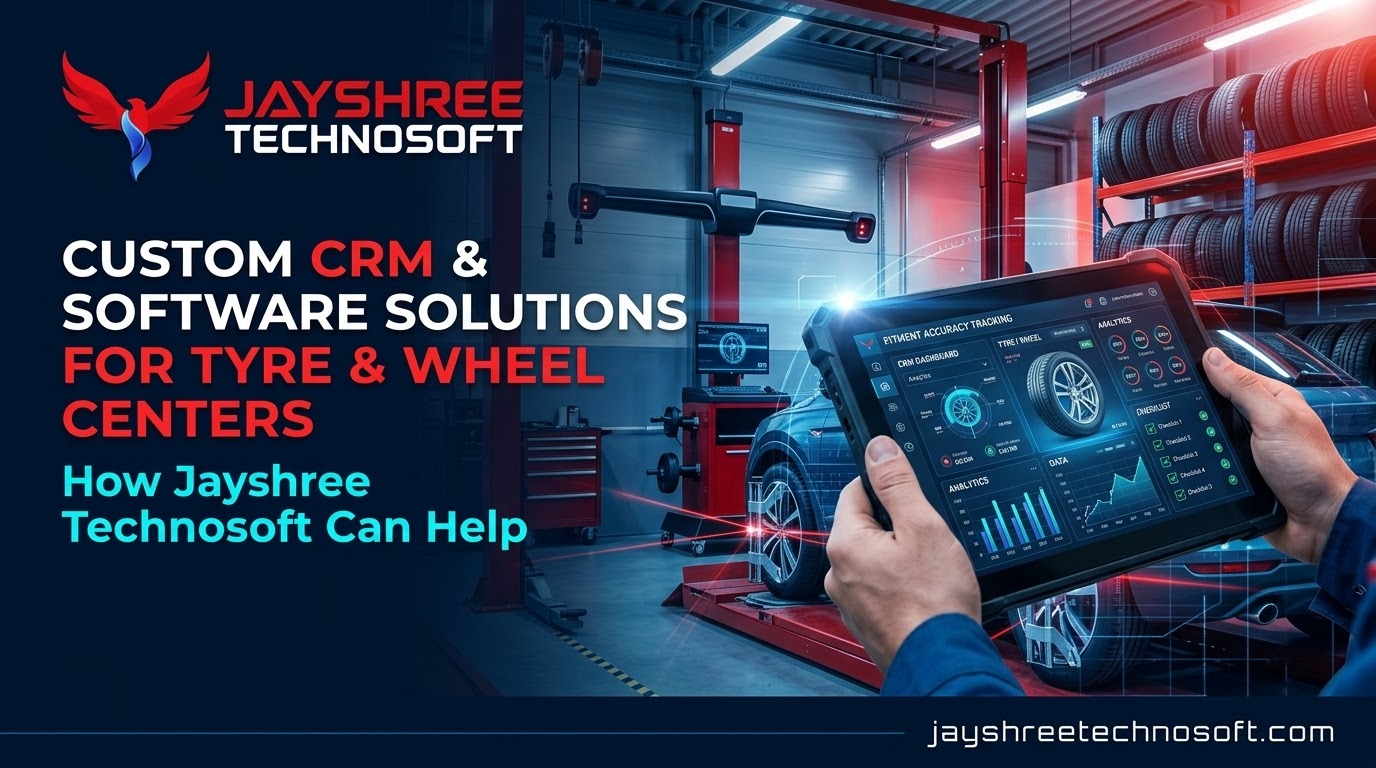
Custom CRM & Software Solutions for Tyre & Wheel Centers: How Jayshree Technosoft Can Help
Off-the-shelf software rarely fits a business perfectly, and tyre and wheel businesses need fitment-accurate stock tracking and manage sharp seasonal demand swings. Jayshree Technosoft, an IT consultancy and software development company, builds custom CRM and software solutions designed around exactly how tyre & wheel centers actually operate.
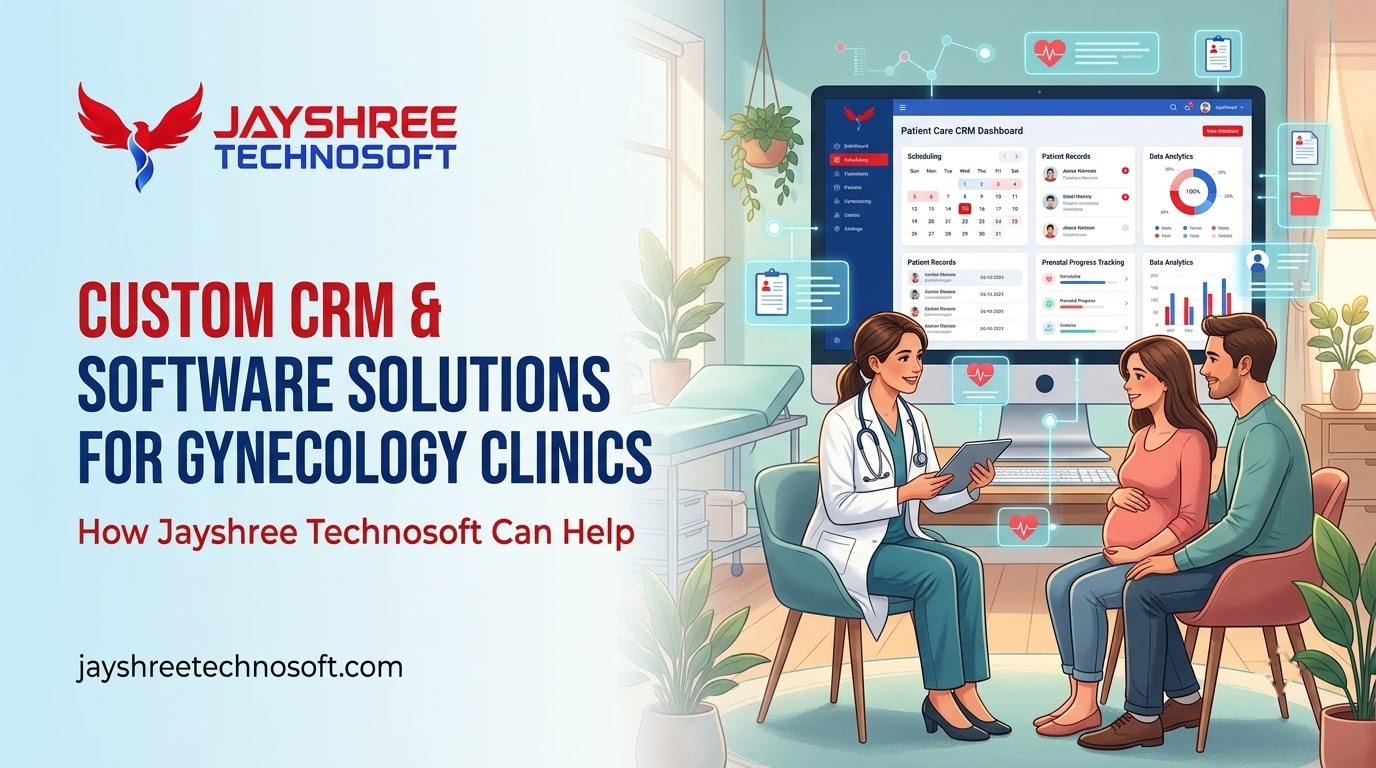
Custom CRM & Software Solutions for Gynecology Clinics: How Jayshree Technosoft Can Help
Off-the-shelf software rarely fits a business perfectly, and gynecology care depends on continuity and discretion across years of patient visits. Jayshree Technosoft, an IT consultancy and software development company, builds custom CRM and software solutions designed around exactly how gynecology clinics actually operate.
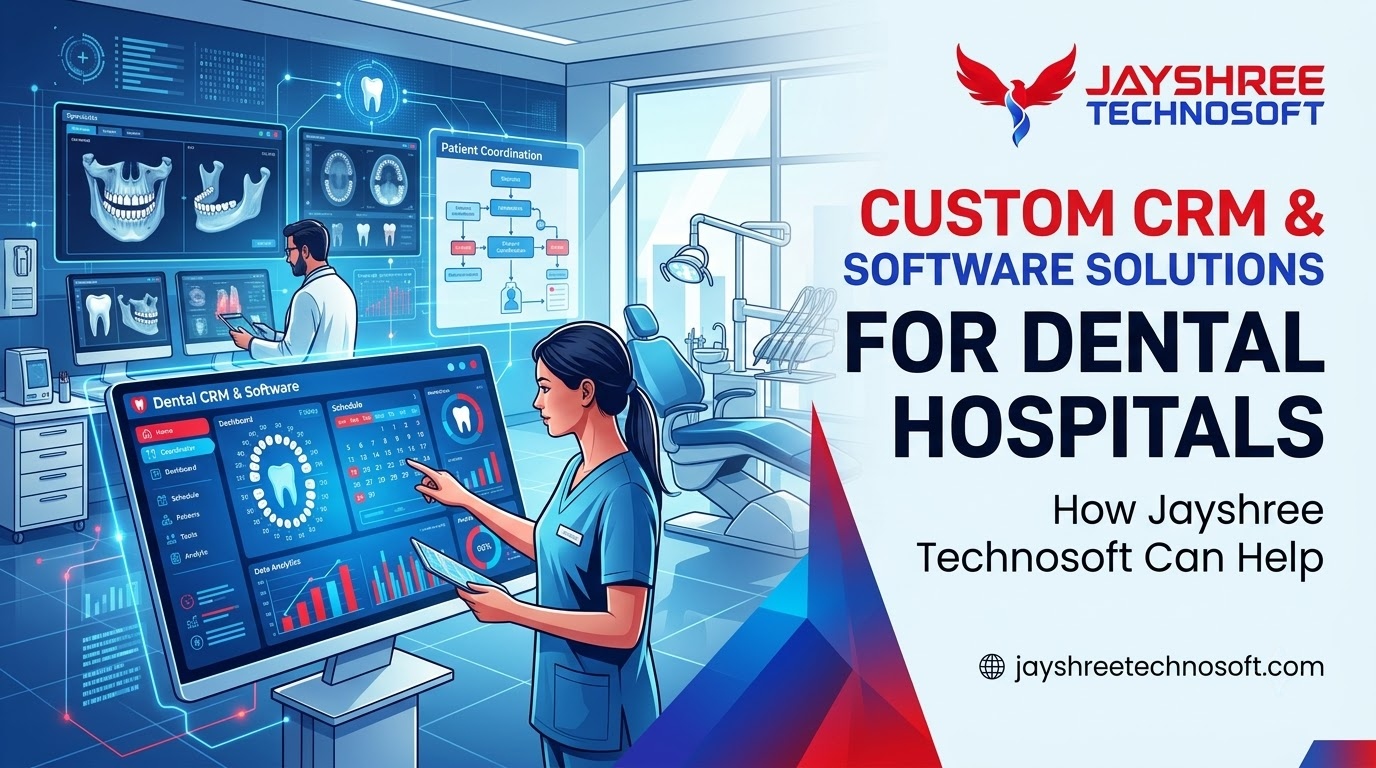
Custom CRM & Software Solutions for Dental Hospitals: How Jayshree Technosoft Can Help
Off-the-shelf software rarely fits a business perfectly, and multi-chair, multi-specialist dental hospitals need coordinated scheduling and shared patient records. Jayshree Technosoft, an IT consultancy and software development company, builds custom CRM and software solutions designed around exactly how dental hospitals actually operate.
Custom CRM & Software Solutions for Beauty Brands: How Jayshree Technosoft Can Help
Off-the-shelf software rarely fits a business perfectly, and beauty products follow predictable repurchase cycles that most tools don't track or act on. Jayshree Technosoft, an IT consultancy and software development company, builds custom CRM and software solutions designed around exactly how beauty brands actually operate.
Custom CRM & Software Solutions for Boutique Hotels: How Jayshree Technosoft Can Help
Off-the-shelf software rarely fits a business perfectly, and boutique hotels depend on consistent personalization, which is hard to deliver through memory alone as a property grows. Jayshree Technosoft, an IT consultancy and software development company, builds custom CRM and software solutions designed around exactly how boutique hotels actually operate.
Custom CRM & Software Solutions for QSRs: How Jayshree Technosoft Can Help
Off-the-shelf software rarely fits a business perfectly, and QSRs compete on speed and consistency across high order volumes and often multiple outlets. Jayshree Technosoft, an IT consultancy and software development company, builds custom CRM and software solutions designed around exactly how QSRs actually operate.
Custom CRM & Software Solutions for Clothing Stores: How Jayshree Technosoft Can Help
Off-the-shelf software rarely fits a business perfectly, and clothing stock needs to be tracked by exact size, color and seasonal variant, not just a general product count. Jayshree Technosoft, an IT consultancy and software development company, builds custom CRM and software solutions designed around exactly how clothing stores actually operate.
Custom CRM & Software Solutions for Co-Working Space Providers: How Jayshree Technosoft Can Help
Off-the-shelf software rarely fits a business perfectly, and co-working spaces manage frequently turning-over desks and memberships on different renewal cycles. Jayshree Technosoft, an IT consultancy and software development company, builds custom CRM and software solutions designed around exactly how co-working space providers actually operate.
Custom CRM & Software Solutions for GST Consultants: How Jayshree Technosoft Can Help
Off-the-shelf software rarely fits a business perfectly, and GST consultancy work depends on recurring, deadline-driven filings across many clients at once. Jayshree Technosoft, an IT consultancy and software development company, builds custom CRM and software solutions designed around exactly how gst consultants actually operate.
Custom CRM & Software Solutions for CCTV Service Centers: How Jayshree Technosoft Can Help
Off-the-shelf software rarely fits a business perfectly, and EV maintenance revolves around battery health and charging diagnostics, which traditional garage software wasn't built to track. Jayshree Technosoft, an IT consultancy and software development company, builds custom CRM and software solutions designed around exactly how ev service centers actually operate. Why Off-the-Shelf Software Falls Short for EV Service Centers Generic, one-size-fits-all tools force a business to change the way it works around the software, instead of the other way around. For ev service centers, that usually means paying for features that don't apply and missing the specific workflows that would actually save time day to day. How Jayshree Technosoft Helps Jayshree Technosoft's team designs and builds software around your actual workflow rather than a generic template. For ev service centers, that typically includes: A custom job-card system capturing EV-specific data like battery health and charging diagnostics. Specialized spare-parts tracking for less commonly stocked EV components. A service center website or app for easy EV service booking. Every solution is built to integrate with the tools you already use, so adopting custom software doesn't mean starting over — it means finally having a system that fits. Why This Matters for Your Business A custom-built system removes the daily friction of working around software that wasn't designed for you. It gives you accurate data to make decisions with, saves staff time on manual workarounds, and scales as your business grows — resulting in an EV service center positioned as a trusted specialist in a fast-growing category. Want to see what custom software could look like for your business? Talk to a Jayshree Technosoft consultant for a free consultation.
Custom CRM & Software Solutions for EV Service Centers: How Jayshree Technosoft Can Help
Off-the-shelf software rarely fits a business perfectly, and EV maintenance revolves around battery health and charging diagnostics, which traditional garage software wasn't built to track. Jayshree Technosoft, an IT consultancy and software development company, builds custom CRM and software solutions designed around exactly how ev service centers actually operate.
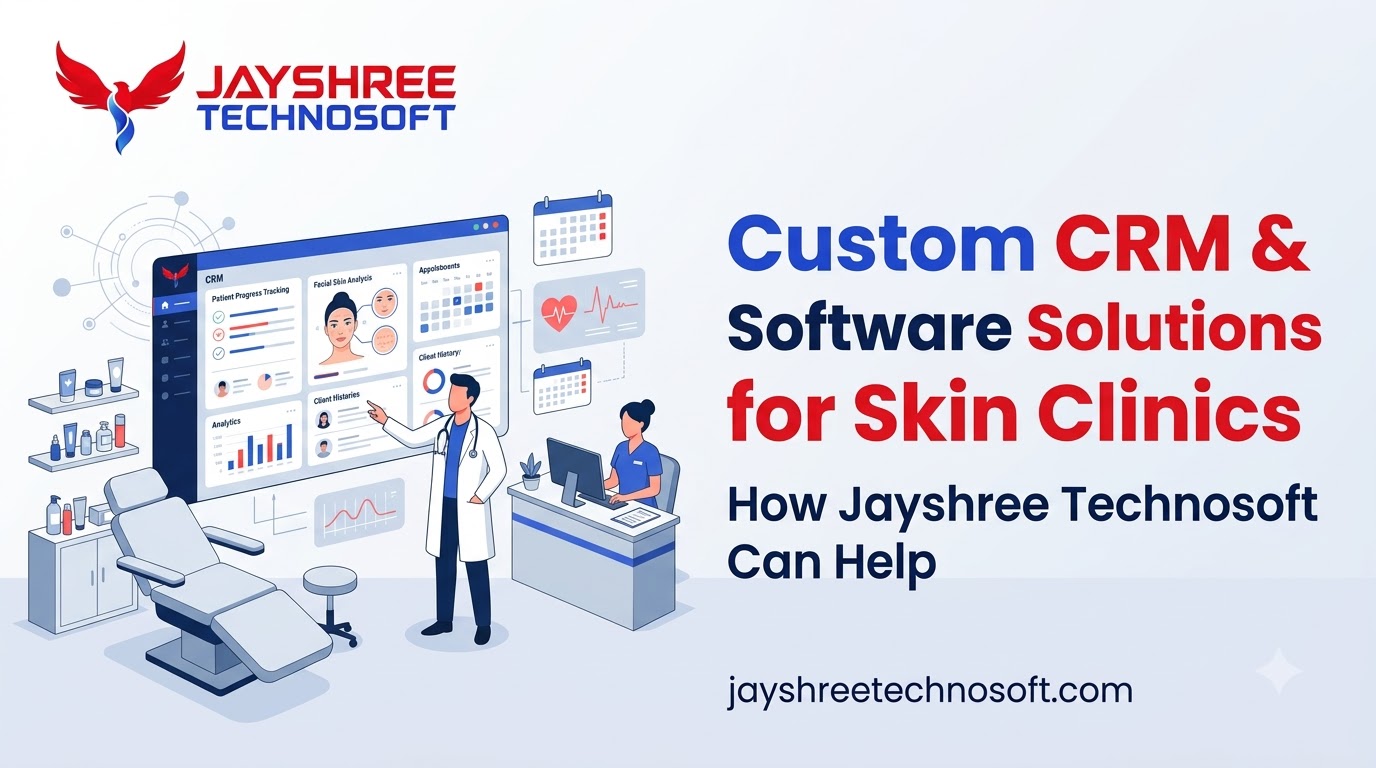
Custom CRM & Software Solutions for Skin Clinics: How Jayshree Technosoft Can Help
Off-the-shelf software rarely fits a business perfectly, and skin and dermatology treatments usually run across multiple sessions that need careful tracking. Jayshree Technosoft, an IT consultancy and software development company, builds custom CRM and software solutions designed around exactly how skin clinics actually operate.
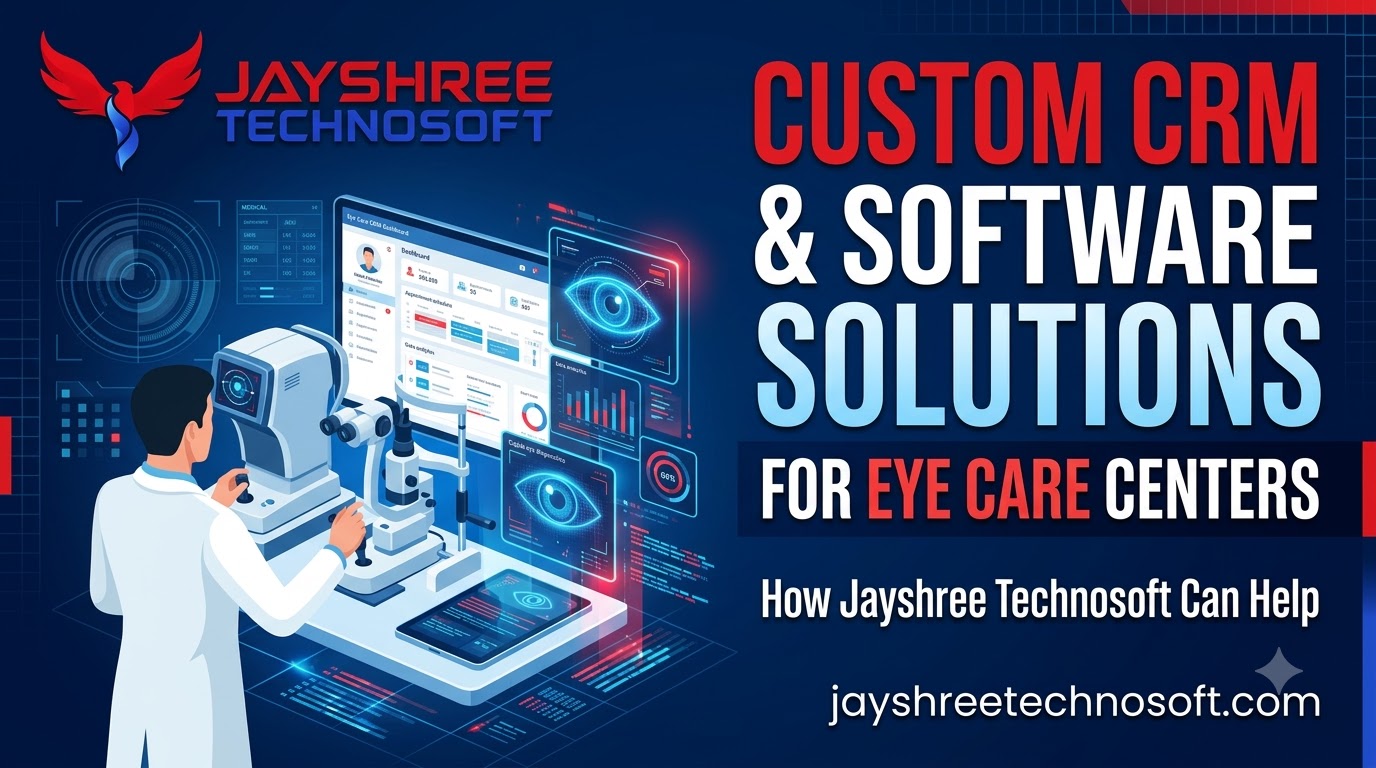
Custom CRM & Software Solutions for Eye Care Centers: How Jayshree Technosoft Can Help
Off-the-shelf software rarely fits a business perfectly, and eye care involves diagnostics, procedures and structured follow-ups that general hospital software doesn't track well. Jayshree Technosoft, an IT consultancy and software development company, builds custom CRM and software solutions designed around exactly how eye care centers actually operate.
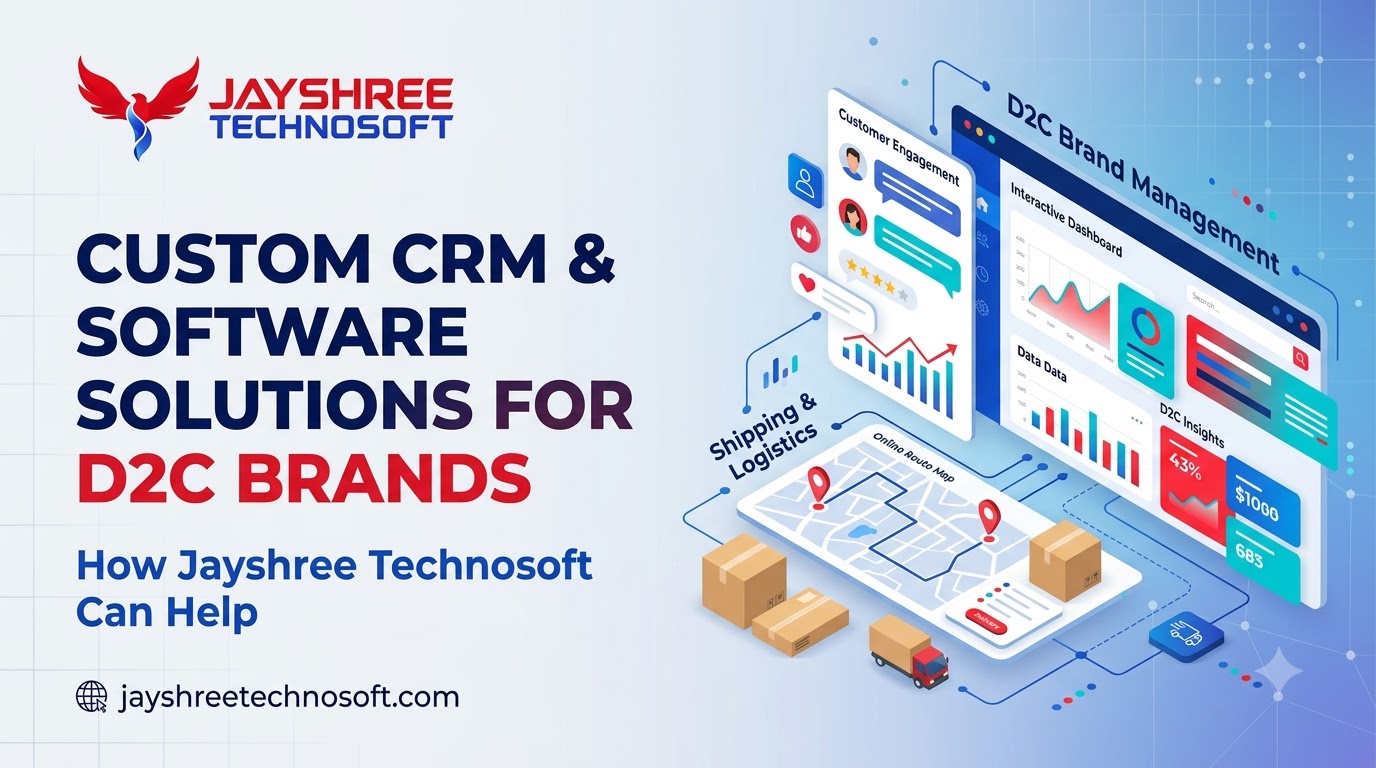
Custom CRM & Software Solutions for D2C Brands: How Jayshree Technosoft Can Help
Off-the-shelf software rarely fits a business perfectly, and D2C brands succeed by owning the customer relationship directly, which most tools don't fully support. Jayshree Technosoft, an IT consultancy and software development company, builds custom CRM and software solutions designed around exactly how d2c brands actually operate.
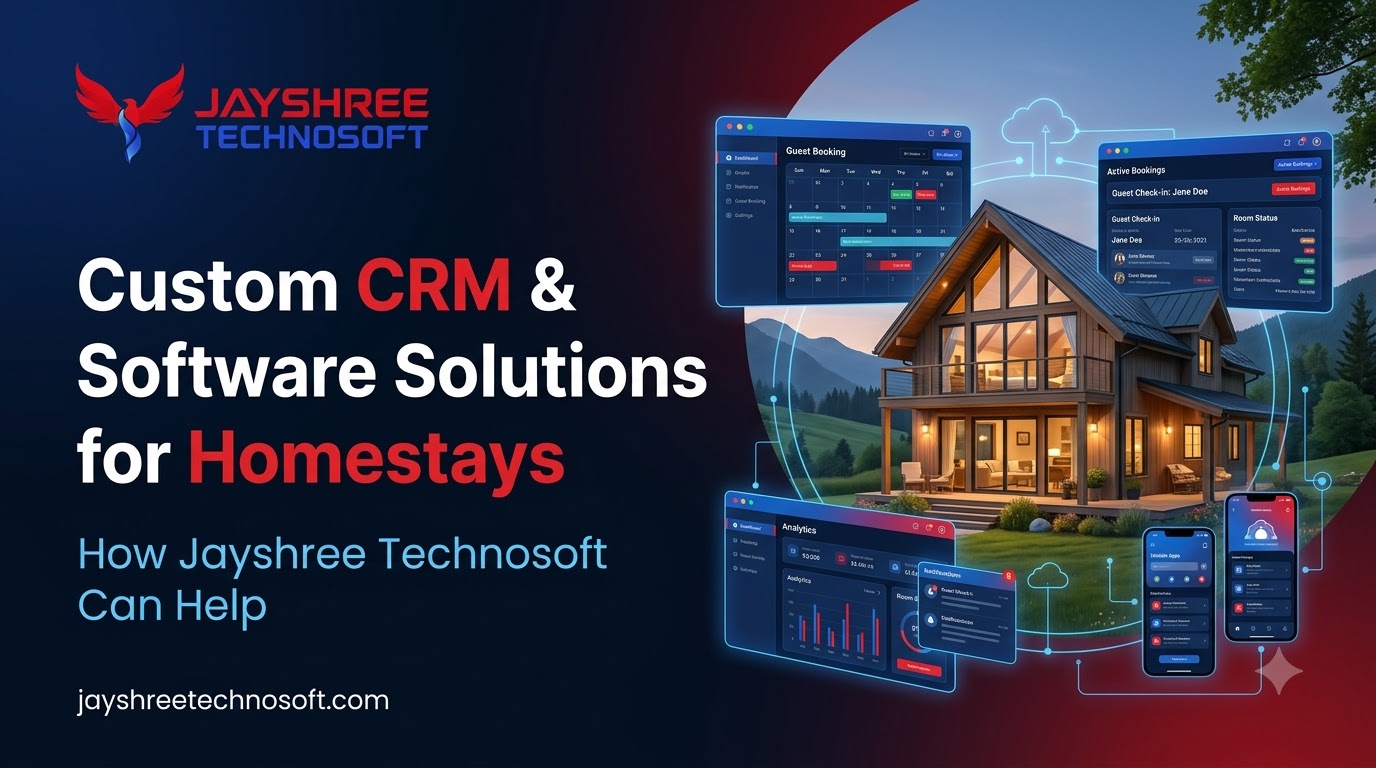
Custom CRM & Software Solutions for Homestays: How Jayshree Technosoft Can Help
Off-the-shelf software rarely fits a business perfectly, and homestay hosts juggle bookings across multiple listing platforms, often manually. Jayshree Technosoft, an IT consultancy and software development company, builds custom CRM and software solutions designed around exactly how homestays actually operate.
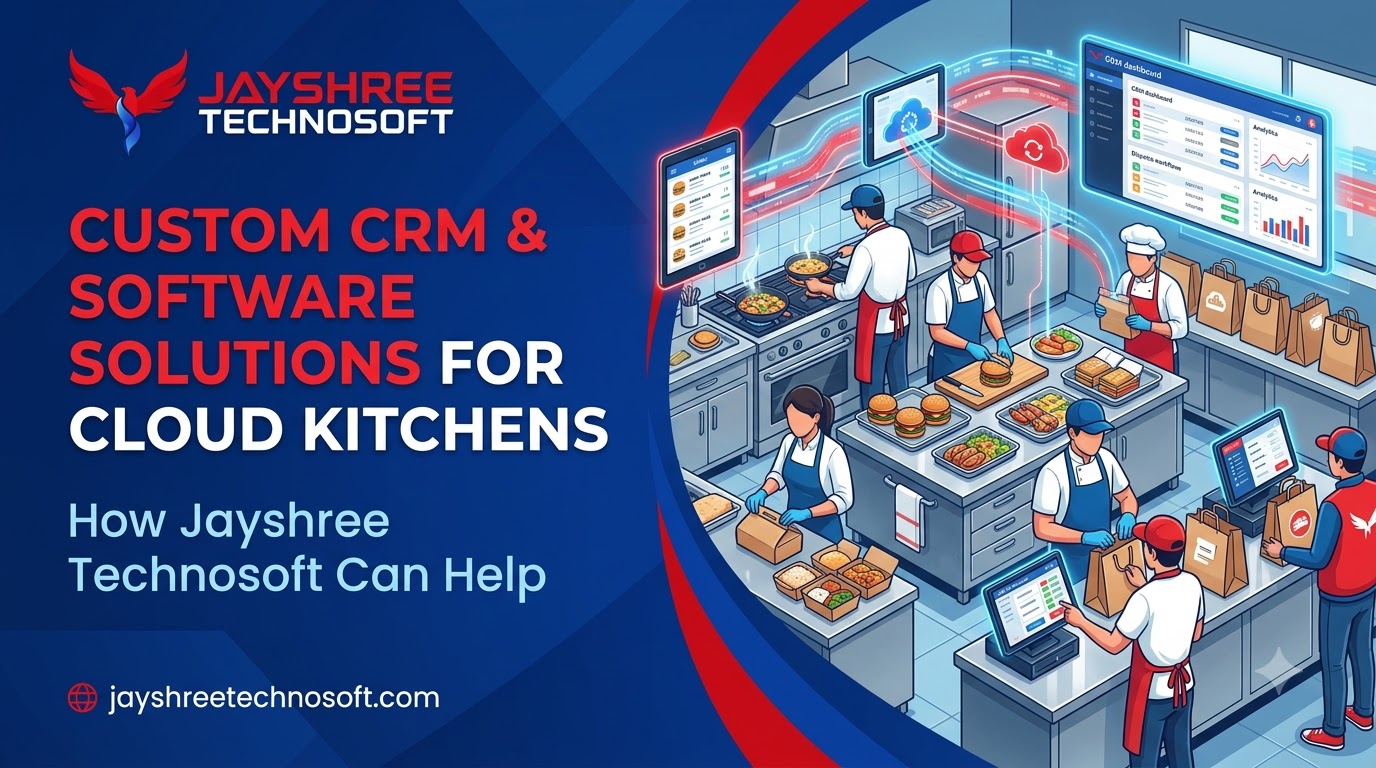
Custom CRM & Software Solutions for Cloud Kitchens: How Jayshree Technosoft Can Help
Off-the-shelf software rarely fits a business perfectly, and cloud kitchens take every order through delivery platforms, with no dine-in counter to fall back on. Jayshree Technosoft, an IT consultancy and software development company, builds custom CRM and software solutions designed around exactly how cloud kitchens actually operate.
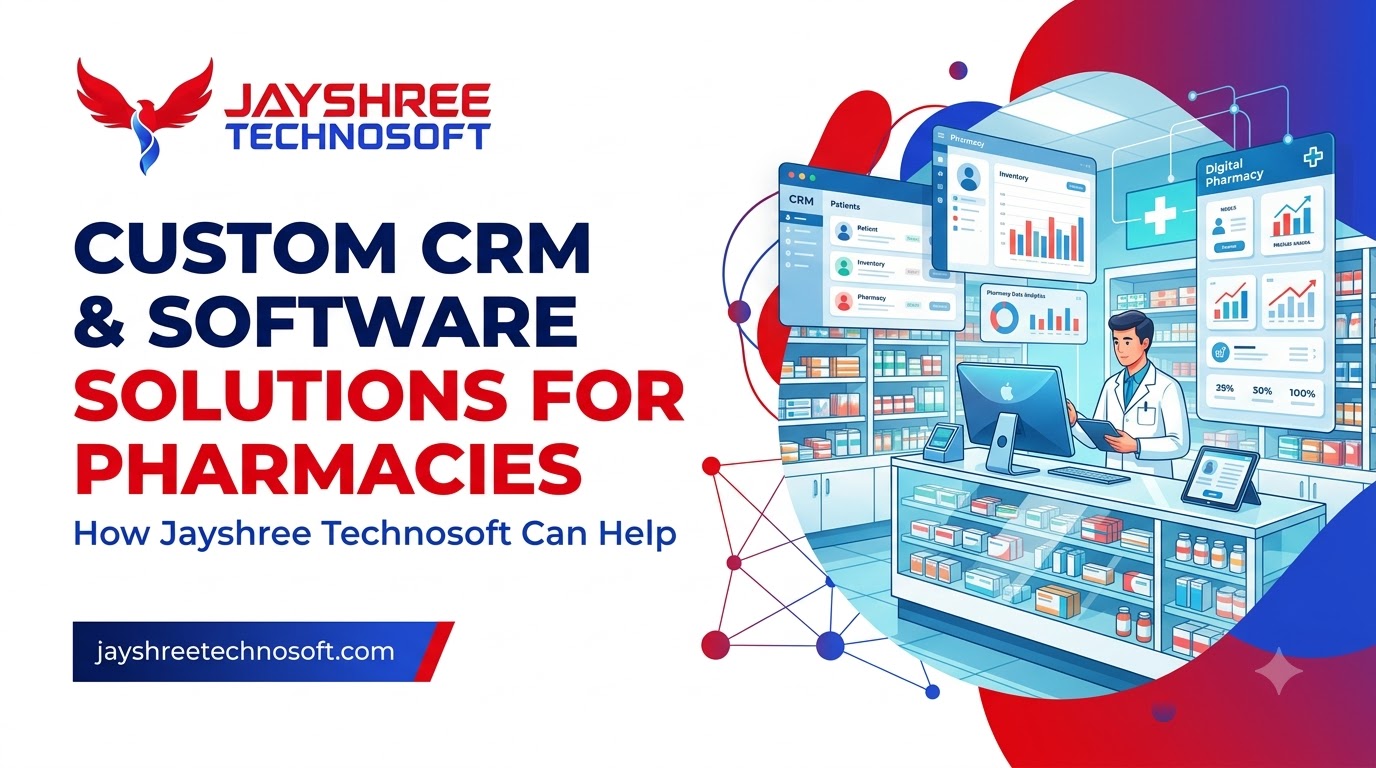
Custom CRM & Software Solutions for Pharmacies: How Jayshree Technosoft Can Help
Off-the-shelf software rarely fits a business perfectly, and pharmacies need to track medicine batches, expiry dates and prescriptions, which generic retail billing tools don't handle. Jayshree Technosoft, an IT consultancy and software development company, builds custom CRM and software solutions designed around exactly how pharmacies actually operate.
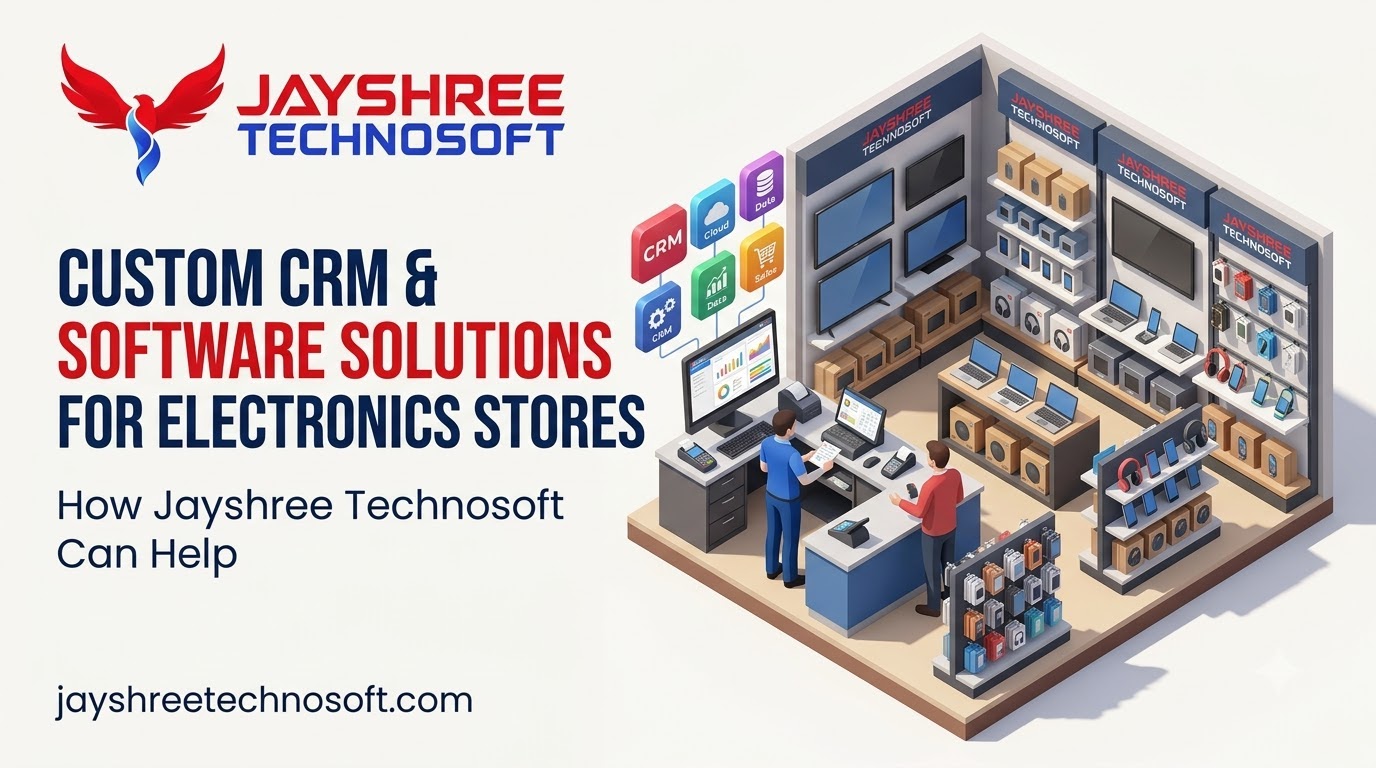
Custom CRM & Software Solutions for Electronics Stores: How Jayshree Technosoft Can Help
Off-the-shelf software rarely fits a business perfectly, and electronics retail needs serial number and warranty tracking that simpler retail categories don't. Jayshree Technosoft, an IT consultancy and software development company, builds custom CRM and software solutions designed around exactly how electronics stores actually operate.
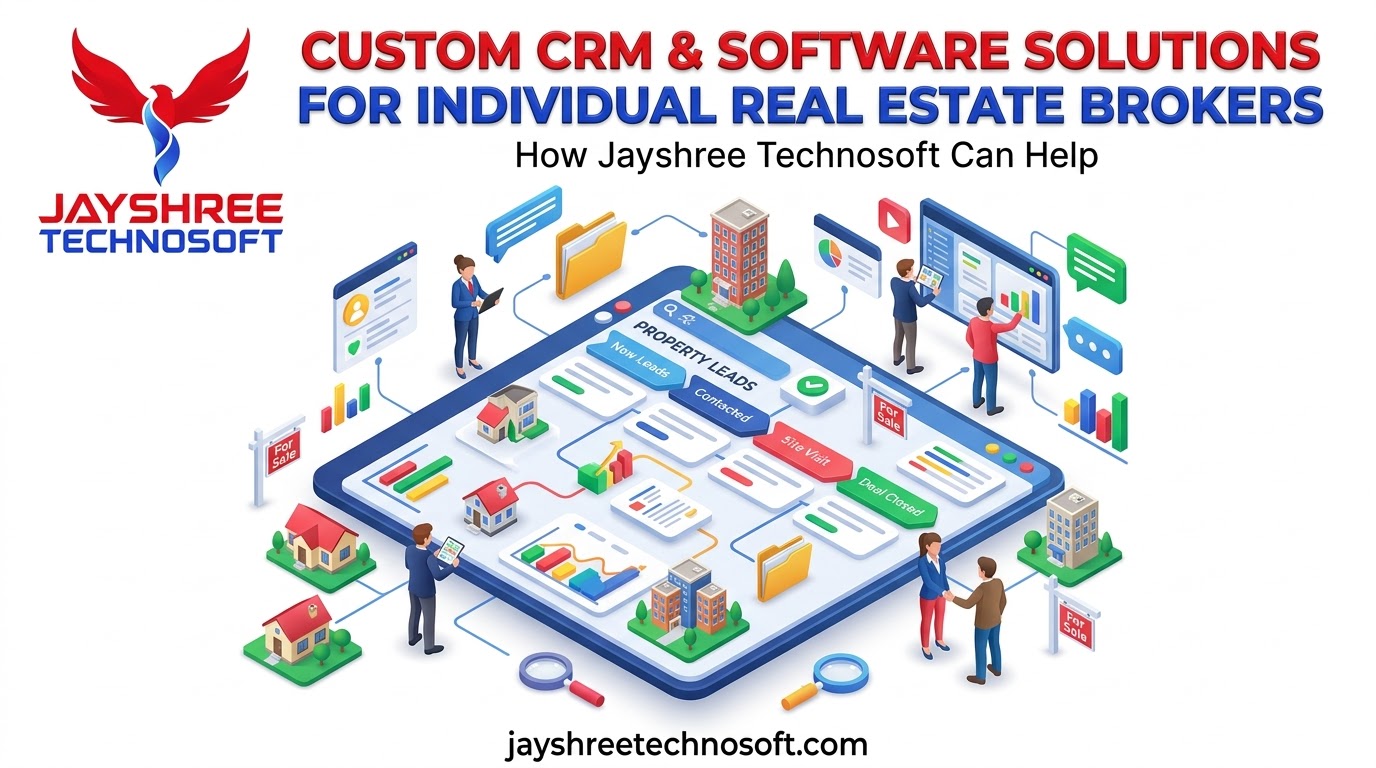
Custom CRM & Software Solutions for Individual Real Estate Brokers: How Jayshree Technosoft Can Help
Off-the-shelf software rarely fits a business perfectly, and an individual broker manages every enquiry and follow-up personally, without a back-office team. Jayshree Technosoft, an IT consultancy and software development company, builds custom CRM and software solutions designed around exactly how individual real estate brokers actually operate.
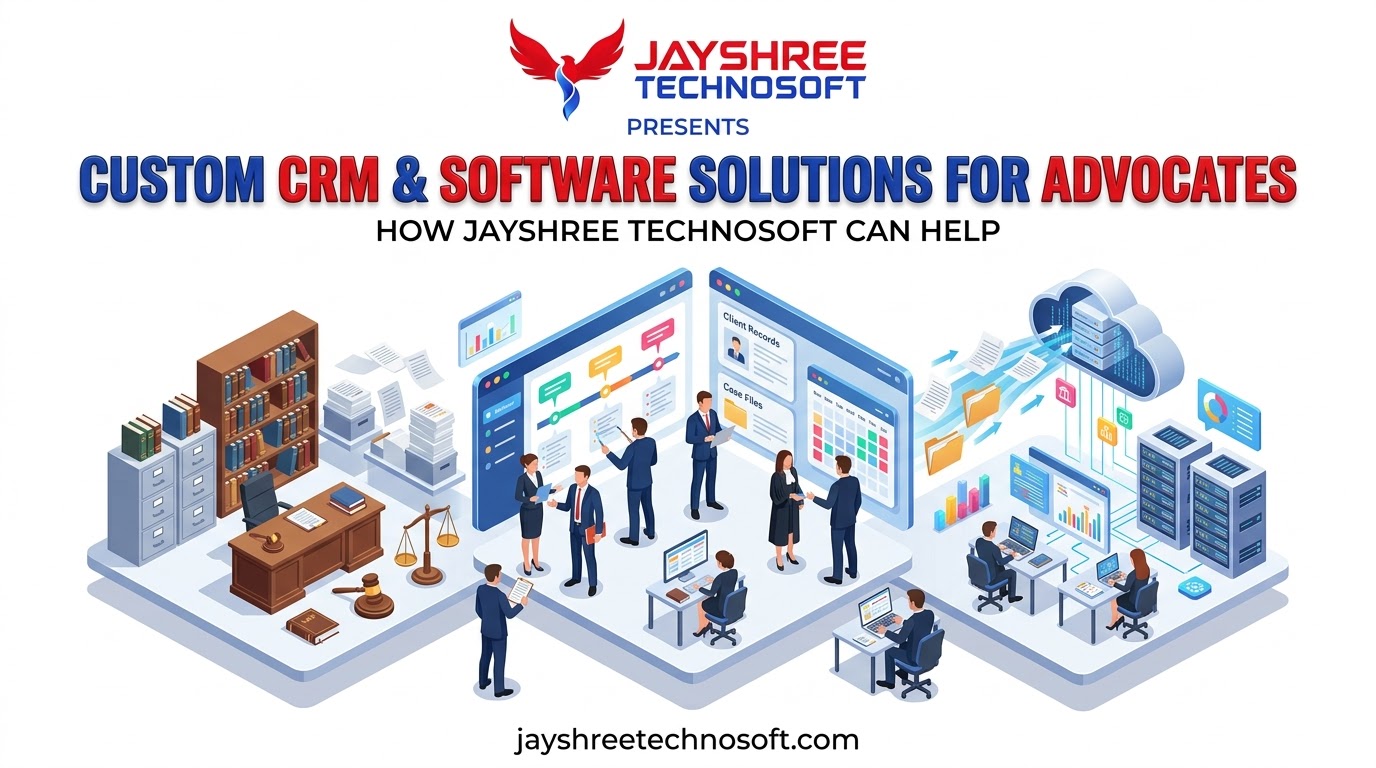
Custom CRM & Software Solutions for Advocates: How Jayshree Technosoft Can Help
Off-the-shelf software rarely fits a business perfectly, and an individual advocate often manages an entire caseload with little or no support staff. Jayshree Technosoft, an IT consultancy and software development company, builds custom CRM and software solutions designed around exactly how advocates actually operate.
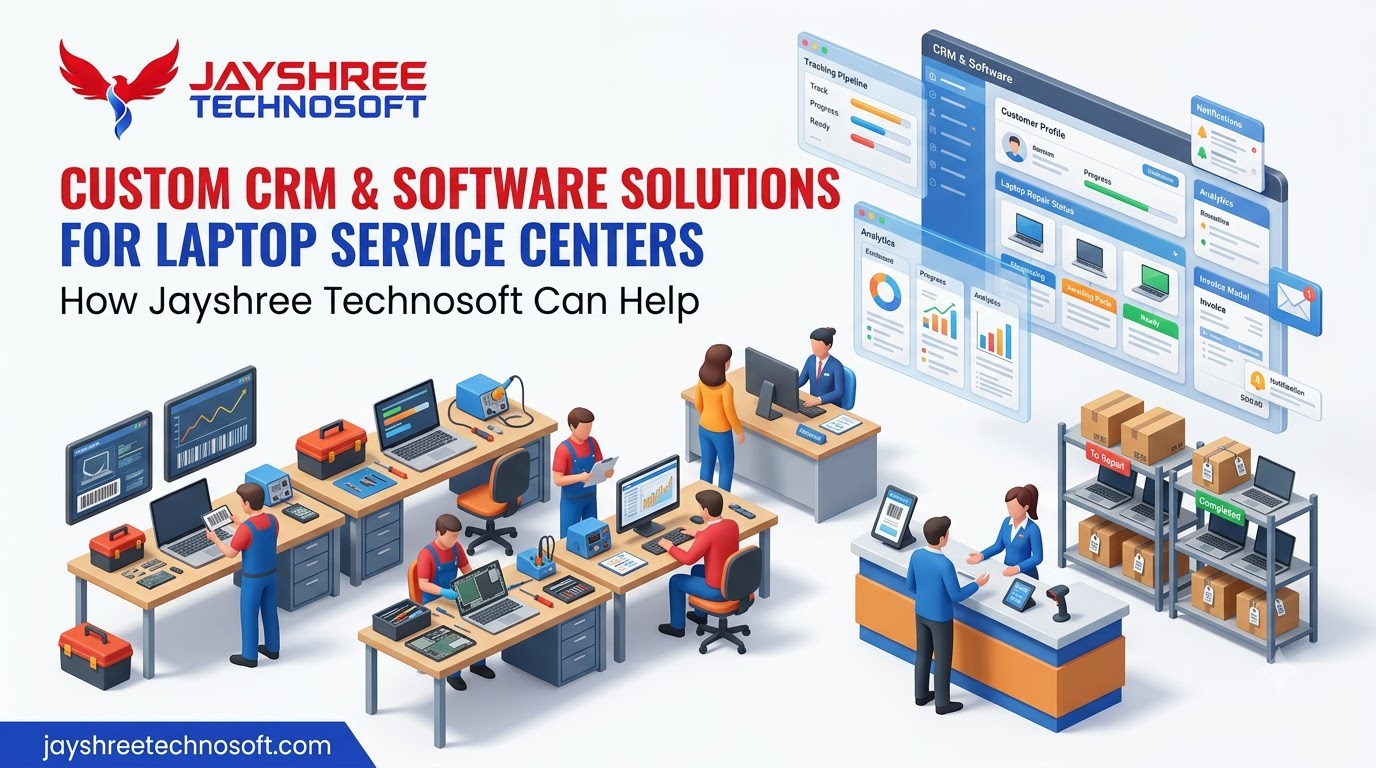
Custom CRM & Software Solutions for Laptop Service Centers: How Jayshree Technosoft Can Help
Off-the-shelf software rarely fits a business perfectly, and laptop repairs often take longer and involve more complex diagnosis than quick phone fixes. Jayshree Technosoft, an IT consultancy and software development company, builds custom CRM and software solutions designed around exactly how laptop service centers actually operate.
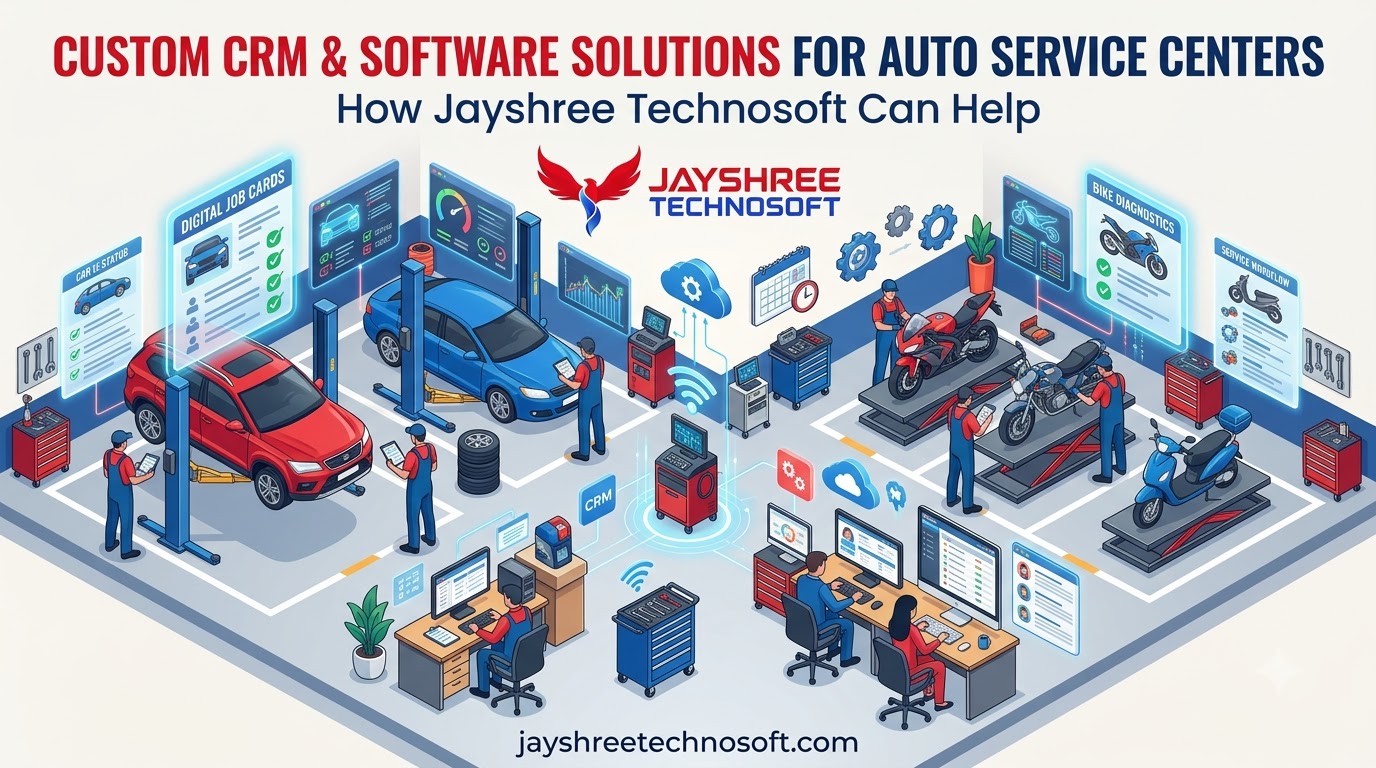
Custom CRM & Software Solutions for Auto Service Centers: How Jayshree Technosoft Can Help
Off-the-shelf software rarely fits a business perfectly, and auto service centers often handle a mix of cars, bikes and commercial vehicles with different needs. Jayshree Technosoft, an IT consultancy and software development company, builds custom CRM and software solutions designed around exactly how auto service centers actually operate.
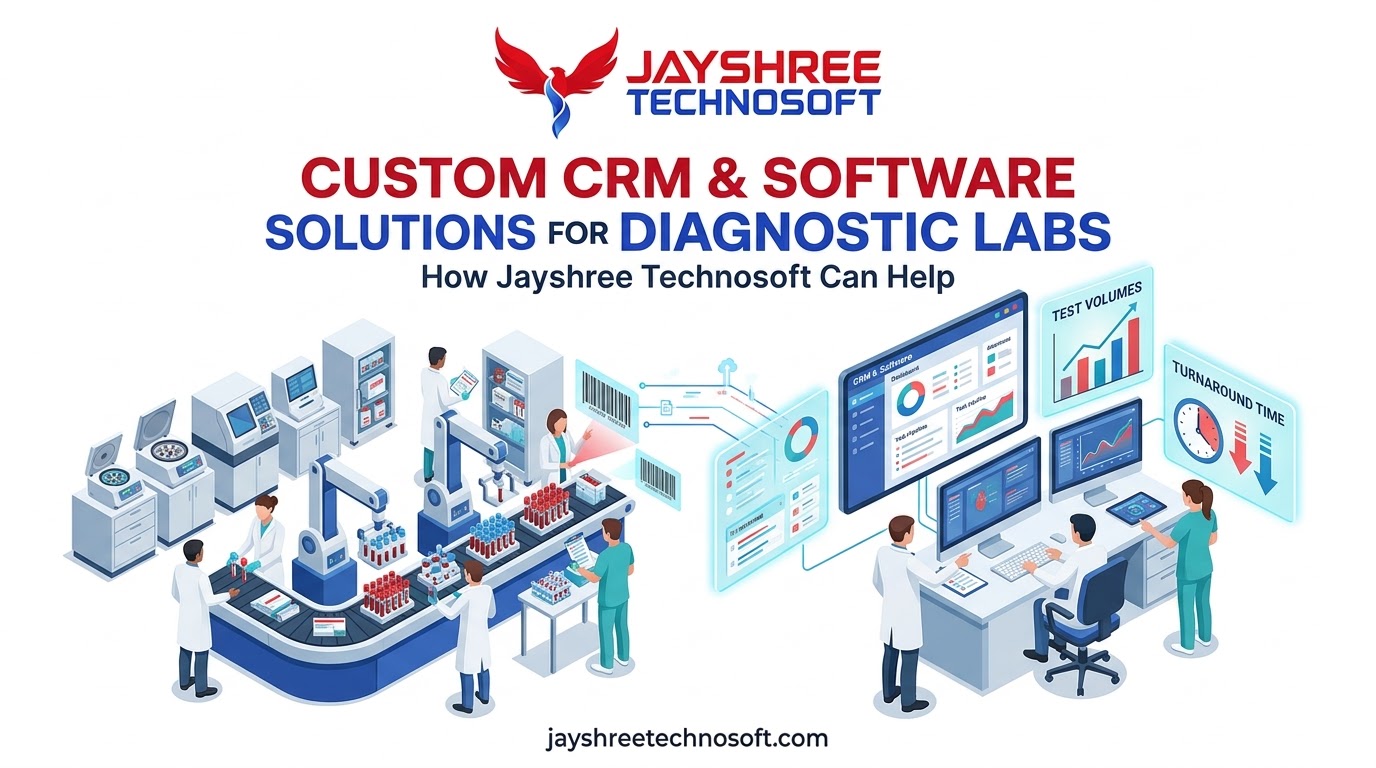
Custom CRM & Software Solutions for Diagnostic Labs: How Jayshree Technosoft Can Help
Off-the-shelf software rarely fits a business perfectly, and diagnostic labs handle high daily test volumes where turnaround time and accuracy both matter. Jayshree Technosoft, an IT consultancy and software development company, builds custom CRM and software solutions designed around exactly how diagnostic labs actually operate.
Custom CRM & Software Solutions for Dental Clinics: How Jayshree Technosoft Can Help
Off-the-shelf software rarely fits a business perfectly, and dental care often spans multiple visits, which needs careful tracking of treatment plans and recalls. Jayshree Technosoft, an IT consultancy and software development company, builds custom CRM and software solutions designed around exactly how dental clinics actually operate.
Custom CRM & Software Solutions for Footwear Brands: How Jayshree Technosoft Can Help
Off-the-shelf software rarely fits a business perfectly, and footwear has higher return rates than most categories, largely tied to size and fit. Jayshree Technosoft, an IT consultancy and software development company, builds custom CRM and software solutions designed around exactly how footwear brands actually operate.
Custom CRM & Software Solutions for Guest Houses: How Jayshree Technosoft Can Help
Off-the-shelf software rarely fits a business perfectly, and guest houses need to feel personal, which means software that's simple, not software built for large hotel chains. Jayshree Technosoft, an IT consultancy and software development company, builds custom CRM and software solutions designed around exactly how guest houses actually operate.
Custom CRM & Software Solutions for Bars: How Jayshree Technosoft Can Help
Off-the-shelf software rarely fits a business perfectly, and bars run on fast orders, open tabs and a handful of intensely busy hours each week. Jayshree Technosoft, an IT consultancy and software development company, builds custom CRM and software solutions designed around exactly how bars actually operate.
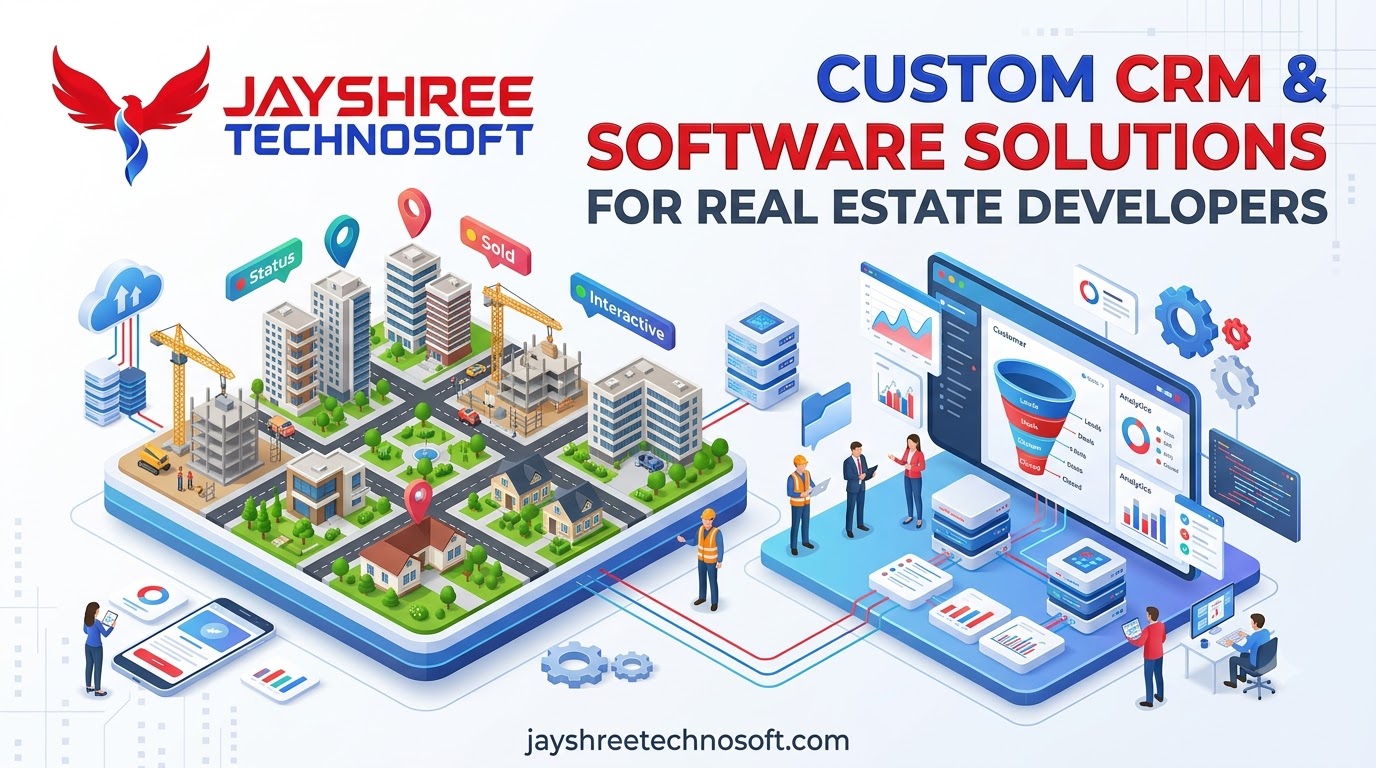
Custom CRM & Software Solutions for Real Estate Developers: How Jayshree Technosoft Can Help
Off-the-shelf software rarely fits a business perfectly, and an individual broker manages every enquiry and follow-up personally, without a back-office team. Jayshree Technosoft, an IT consultancy and software development company, builds custom CRM and software solutions designed around exactly how individual real estate brokers actually operate.
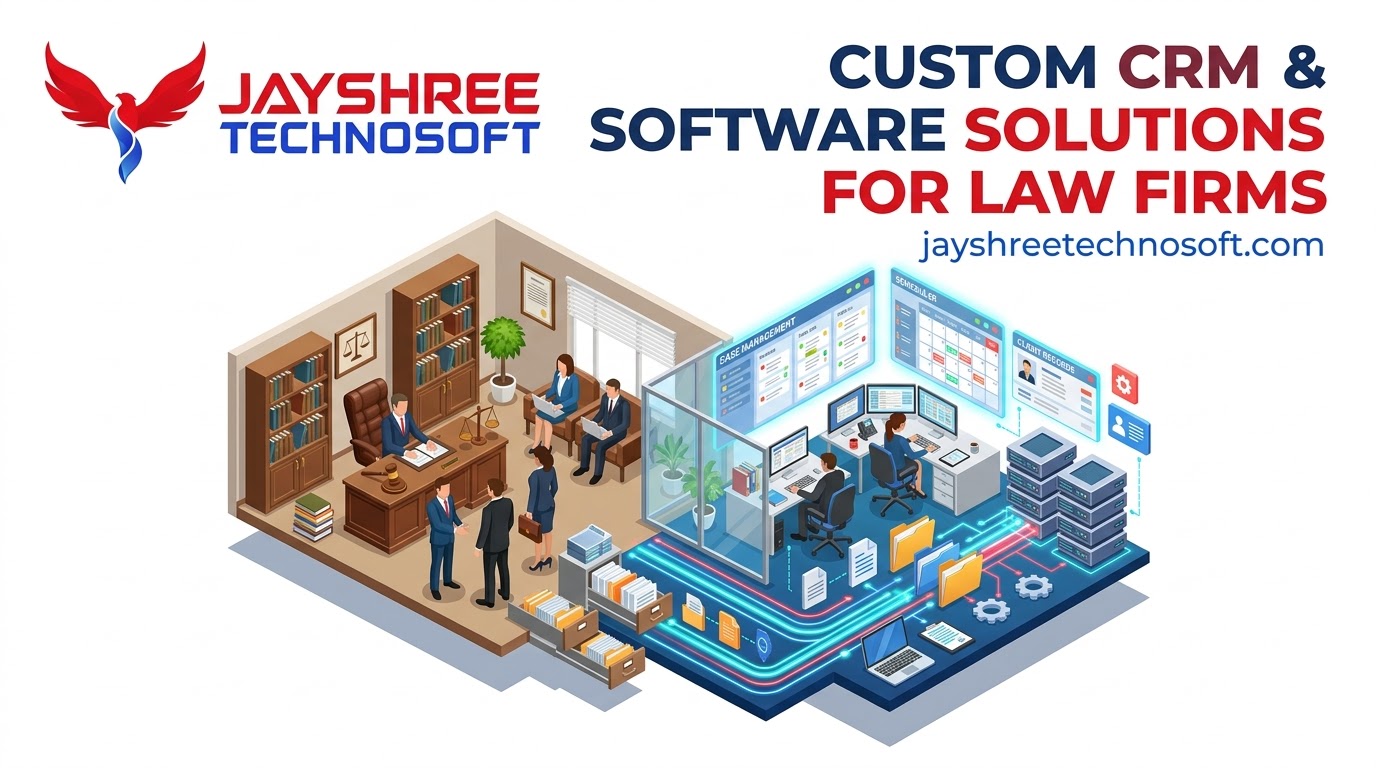
Custom CRM & Software Solutions for Law Firms: How Jayshree Technosoft Can Help
Off-the-shelf software rarely fits a business perfectly, and law firms manage sensitive, deadline-driven work where a missed date or a lost document has real consequences. Jayshree Technosoft, an IT consultancy and software development company, builds custom CRM and software solutions designed around exactly how law firms actually operate.
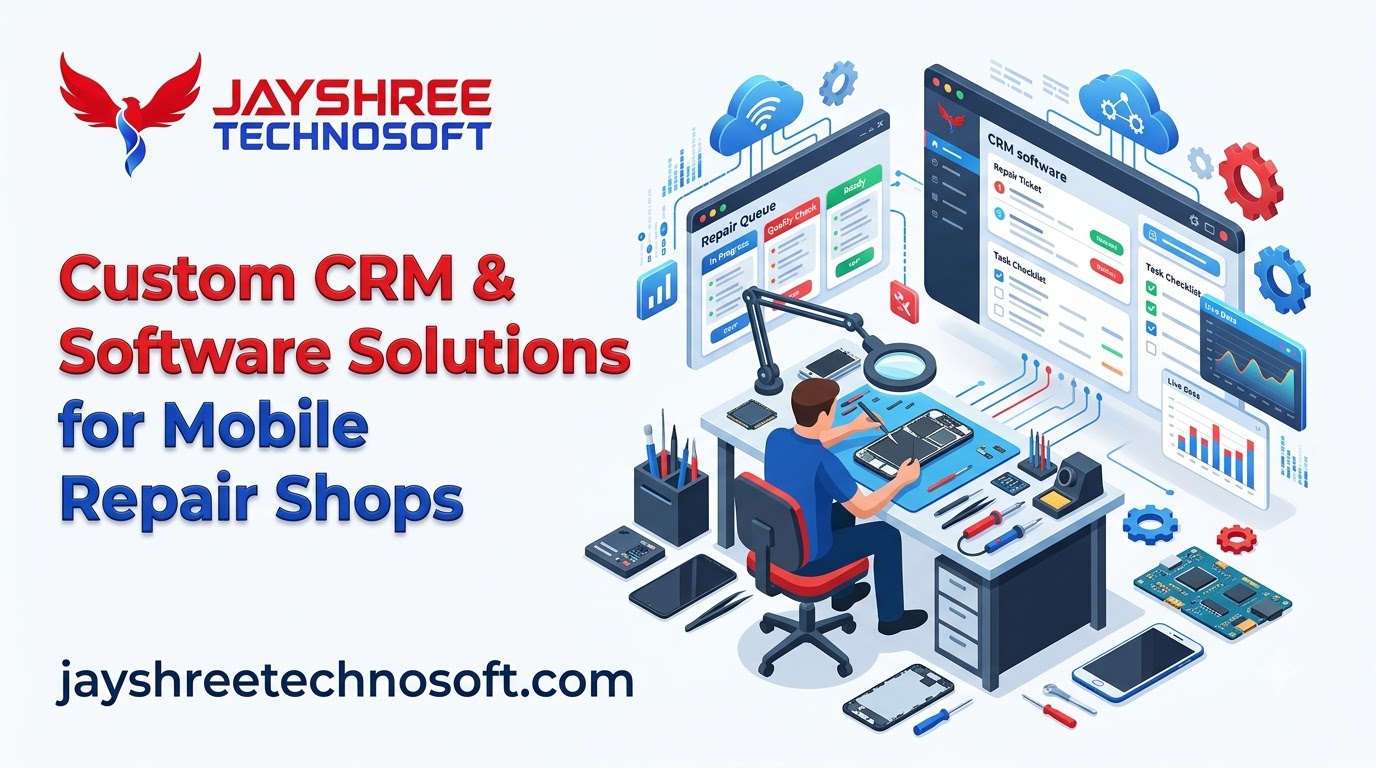
Custom CRM & Software Solutions for Mobile Repair Shops: How Jayshree Technosoft Can Help
Off-the-shelf software rarely fits a business perfectly, and mobile repair shops juggle a constant flow of devices where losing track of even one creates a dispute. Jayshree Technosoft, an IT consultancy and software development company, builds custom CRM and software solutions designed around exactly how mobile repair shops actually operate.
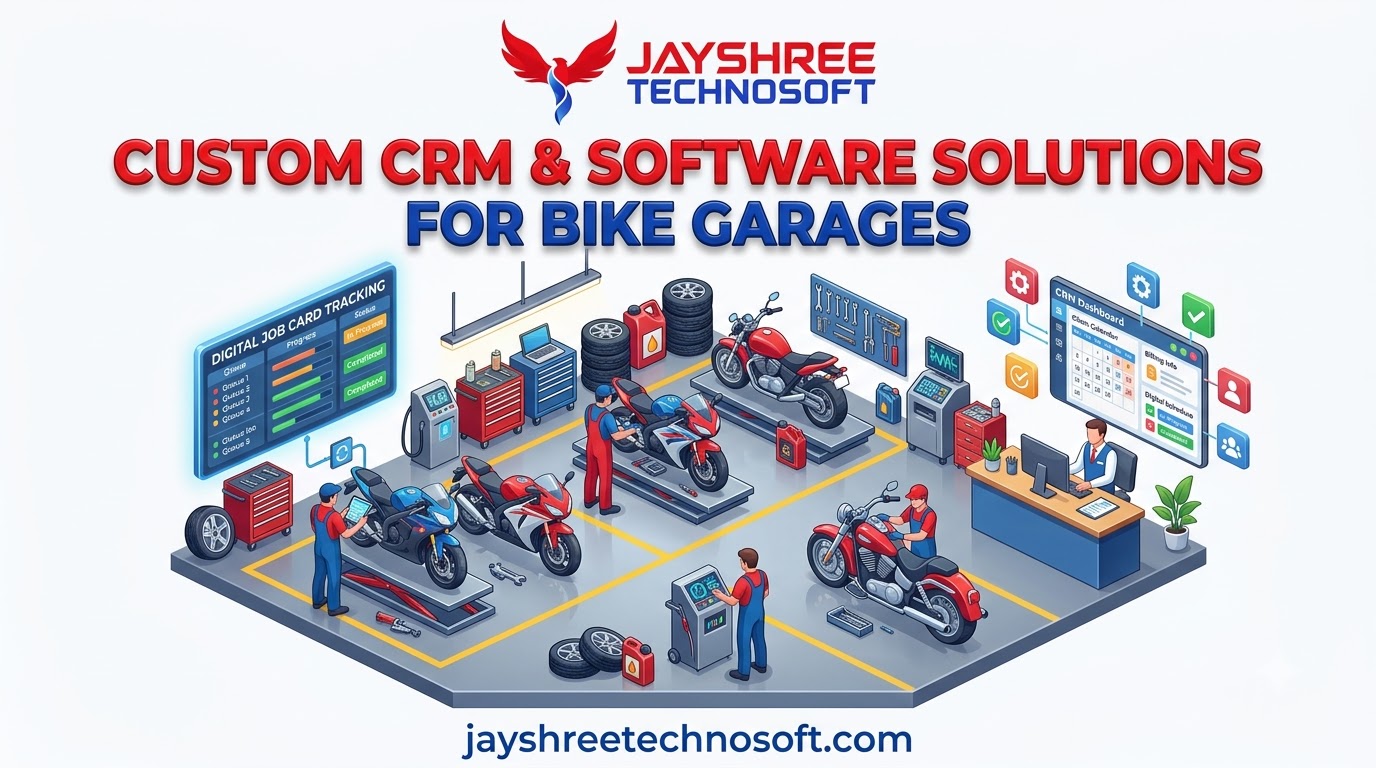
Custom CRM & Software Solutions for Bike Garages: How Jayshree Technosoft Can Help
Off-the-shelf software rarely fits a business perfectly, and bike garages handle high daily volumes with shorter service times than car workshops. Jayshree Technosoft, an IT consultancy and software development company, builds custom CRM and software solutions designed around exactly how bike garages actually operate.
Custom CRM & Software Solutions for Clinics: How Jayshree Technosoft Can Help
Off-the-shelf software rarely fits a business perfectly, and smaller clinics need the same reliability as a hospital, without hospital-scale overhead or budget. Jayshree Technosoft, an IT consultancy and software development company, builds custom CRM and software solutions designed around exactly how clinics actually operate.
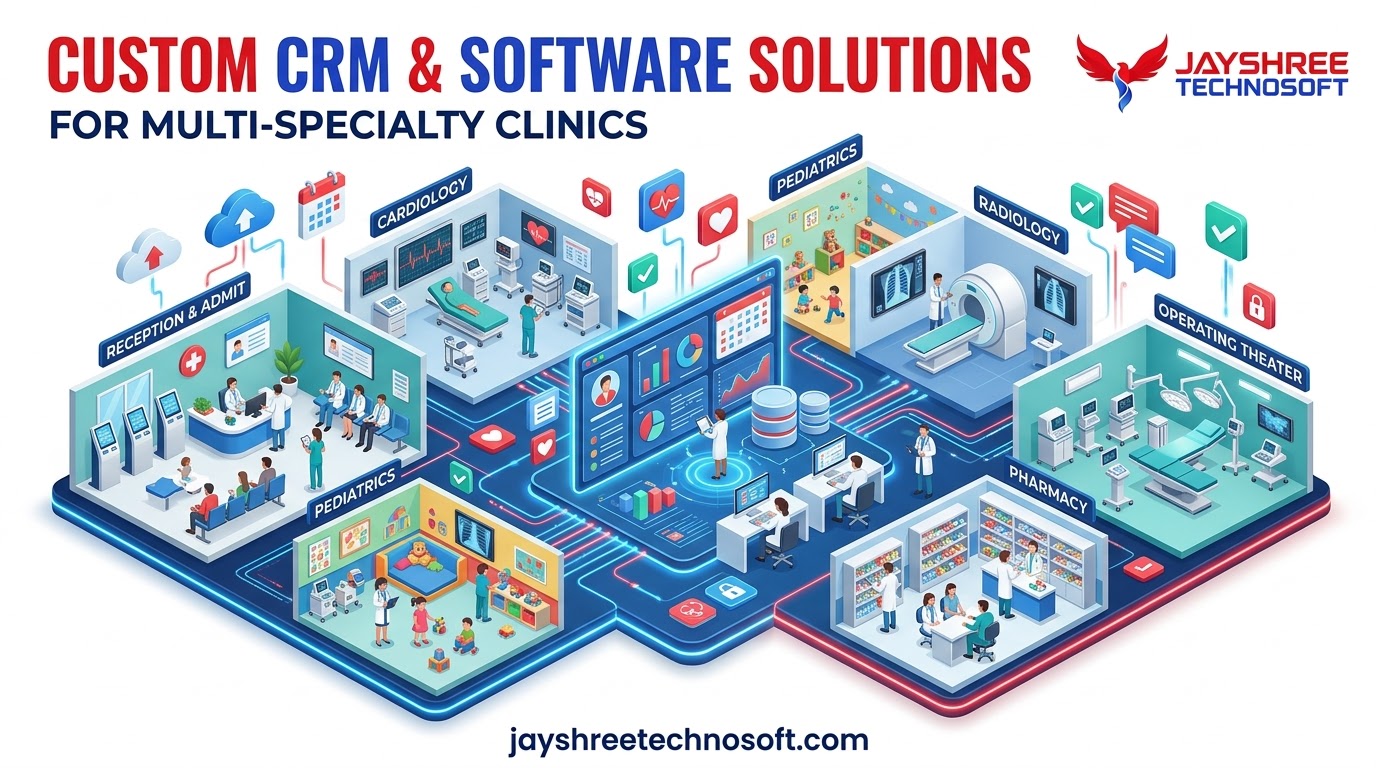
Custom CRM & Software Solutions for Multi-Specialty Clinics: How Jayshree Technosoft Can Help
Off-the-shelf software rarely fits a business perfectly, and multi-specialty clinics need multiple doctors, departments and patient records to work together smoothly. Jayshree Technosoft, an IT consultancy and software development company, builds custom CRM and software solutions designed around exactly how multi-specialty clinics actually operate.
Custom CRM & Software Solutions for Jewellery Businesses: How Jayshree Technosoft Can Help
Off-the-shelf software rarely fits a business perfectly, and jewellery is a high-trust, high-value category where customers research extensively before buying. Jayshree Technosoft, an IT consultancy and software development company, builds custom CRM and software solutions designed around exactly how jewellery businesses actually operate.
Custom CRM & Software Solutions for Resorts: How Jayshree Technosoft Can Help
Off-the-shelf software rarely fits a business perfectly, and resorts juggle long guest stays, multiple amenities and a brand image that depends heavily on visuals. Jayshree Technosoft, an IT consultancy and software development company, builds custom CRM and software solutions designed around exactly how resorts actually operate.
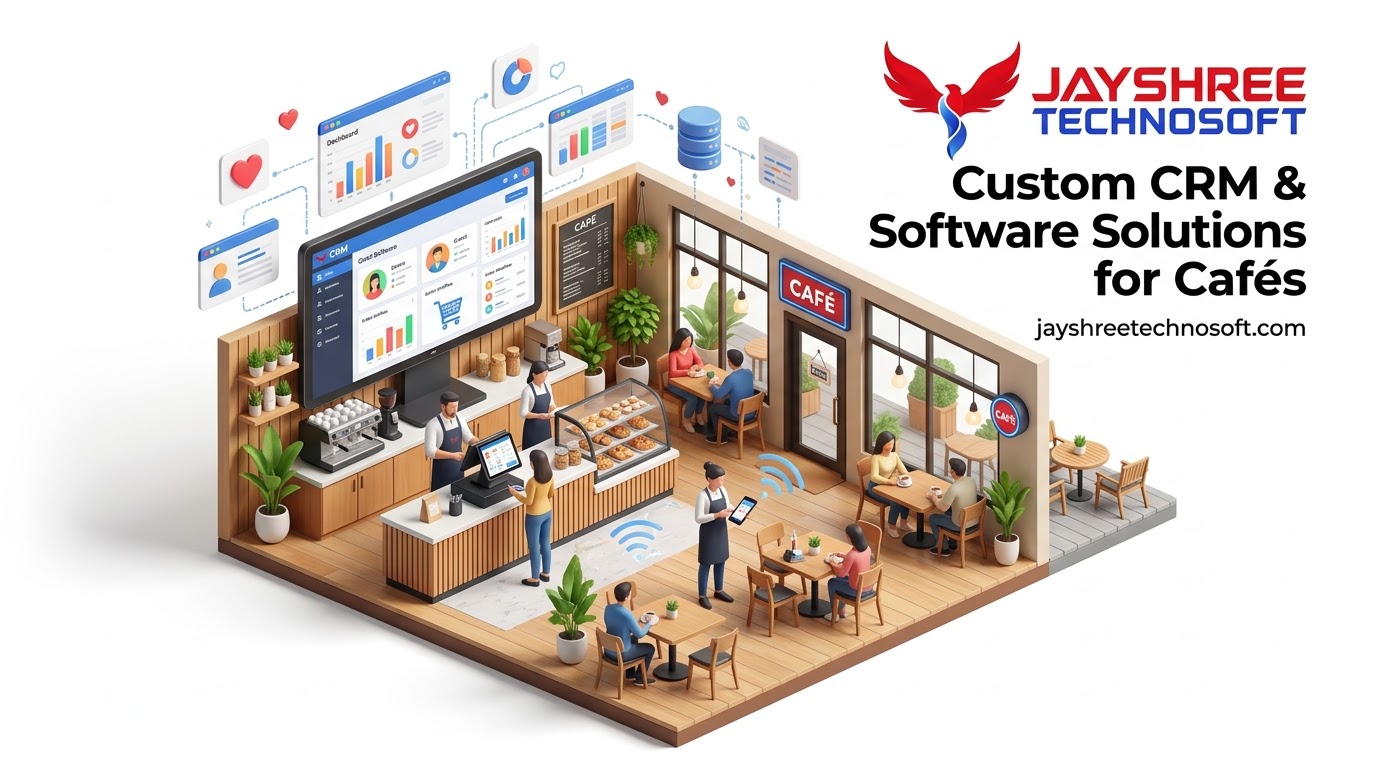
Custom CRM & Software Solutions for Cafés: How Jayshree Technosoft Can Help
Off-the-shelf software rarely fits a business perfectly, and a café's fast pace, small team and high volume of regular customers don't fit generic templates. Jayshree Technosoft, an IT consultancy and software development company, builds custom CRM and software solutions designed around exactly how cafés actually operate.
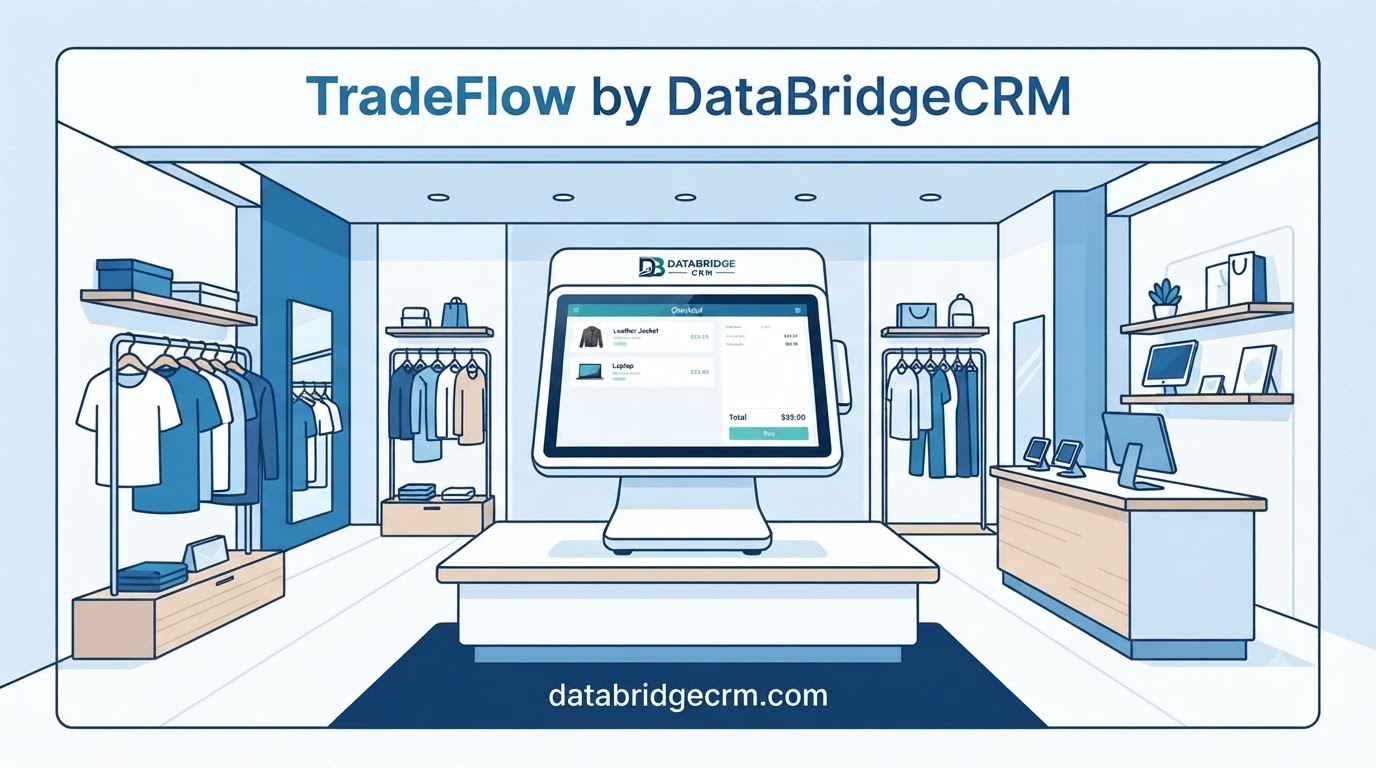
TradeFlow by DataBridgeCRM: Billing & POS Software for Clothing, Kirana, Vegetable and Electronics Stores
Retail businesses across India — from a neighbourhood kirana store to a clothing boutique to an electronics shop — share the same two daily pressure points: billing customers quickly, and knowing exactly what's in stock. TradeFlow, DataBridgeCRM's POS and billing module, is built around solving both, whatever kind of retail store you run.
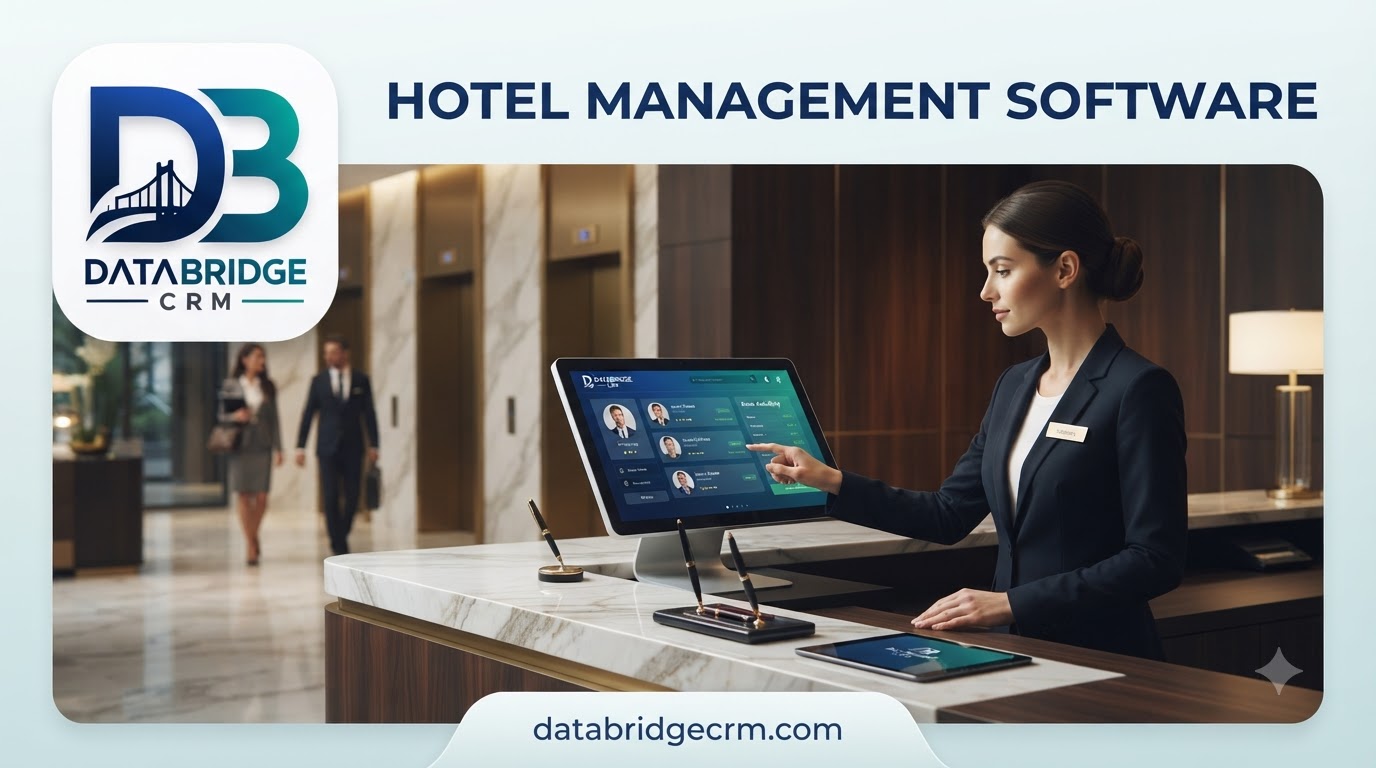
Hotel Management Software by DataBridgeCRM: Smarter Bookings, Happier Guests
-Hotel guests today expect fast check-ins, accurate bookings, and a property that remembers them from their last stay. DataBridgeCRM's Hotel Management module gives your front desk the system to deliver exactly that, replacing the register-and-memory approach many hotels still rely on.
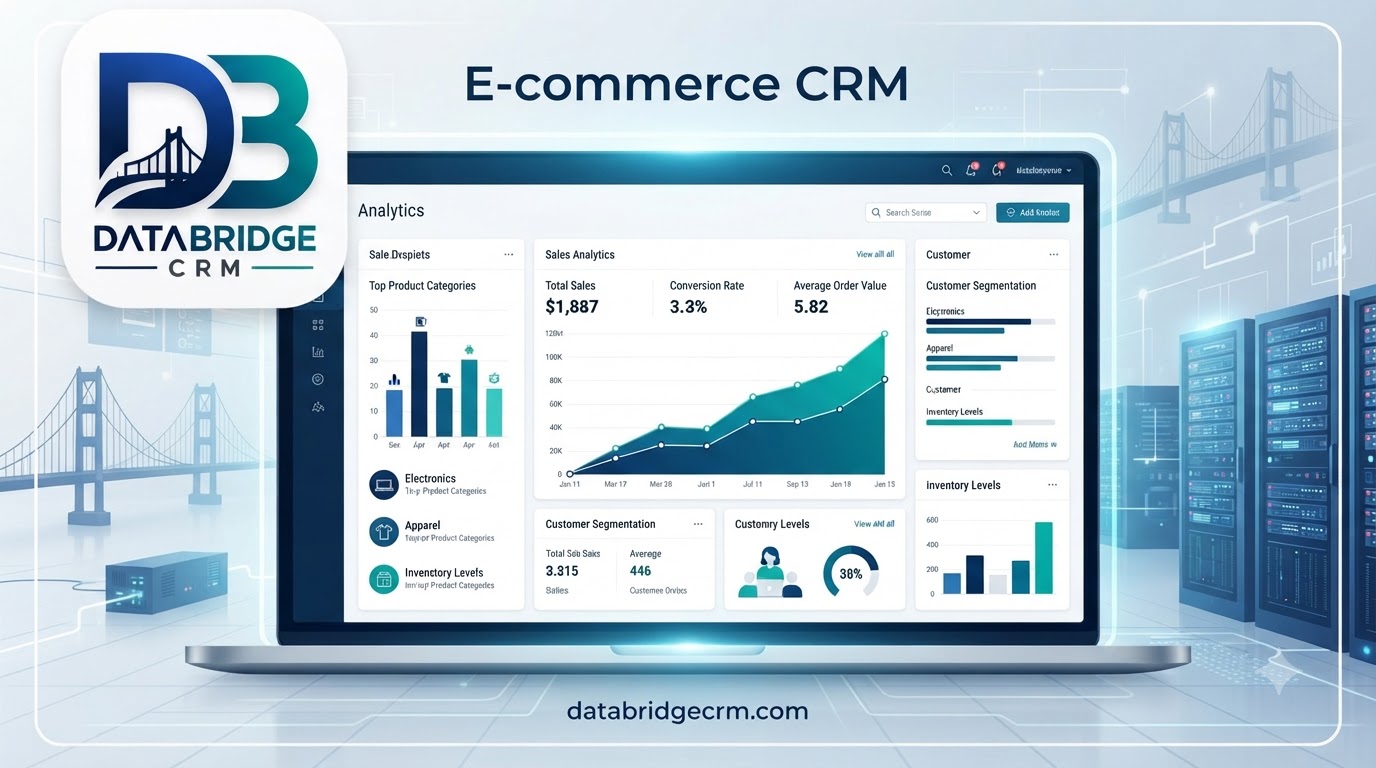
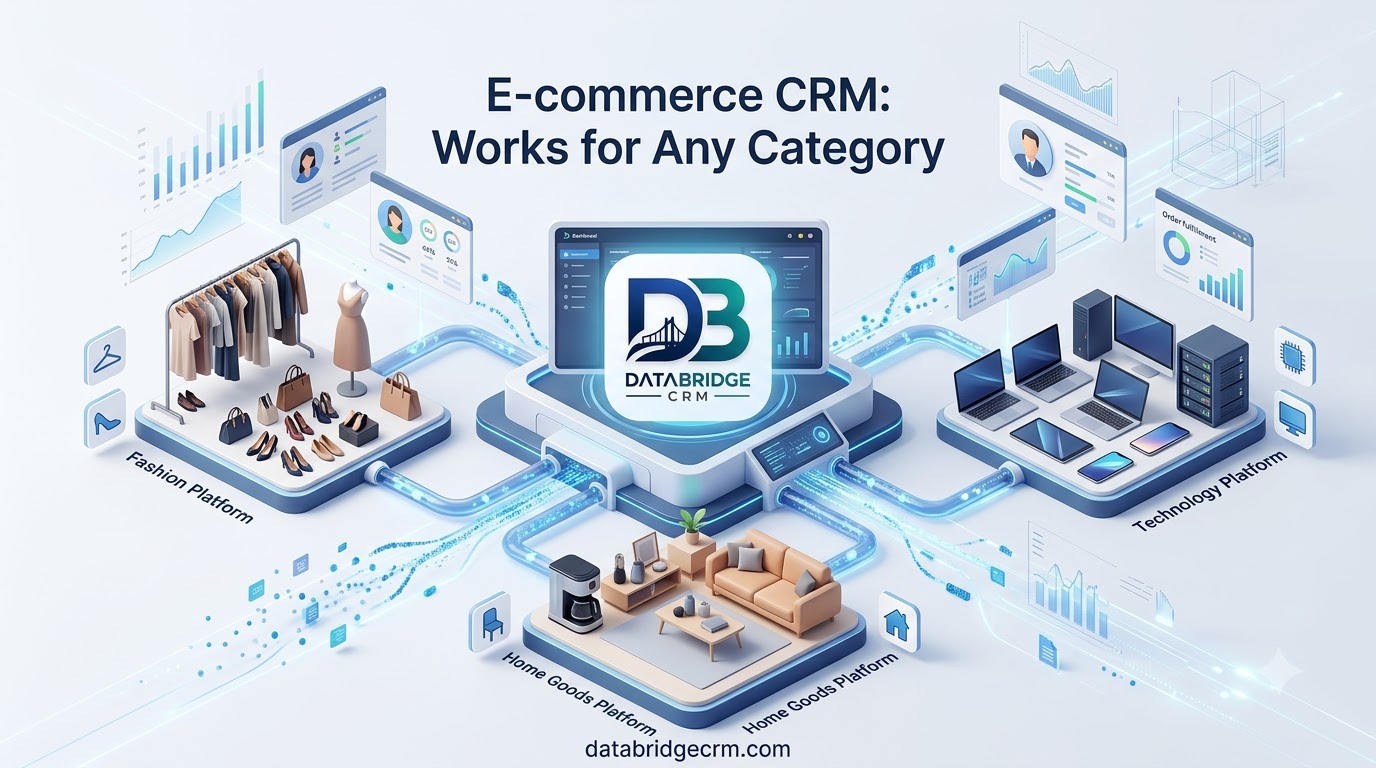
E-commerce CRM by DataBridgeCRM: One Dashboard for Every Product Category
Whatever category your online store sells in — fashion, electronics, groceries, or anything in between — the real challenge beyond taking orders is managing customer relationships and driving repeat sales. DataBridgeCRM's E-commerce CRM module is built to handle this across any category.
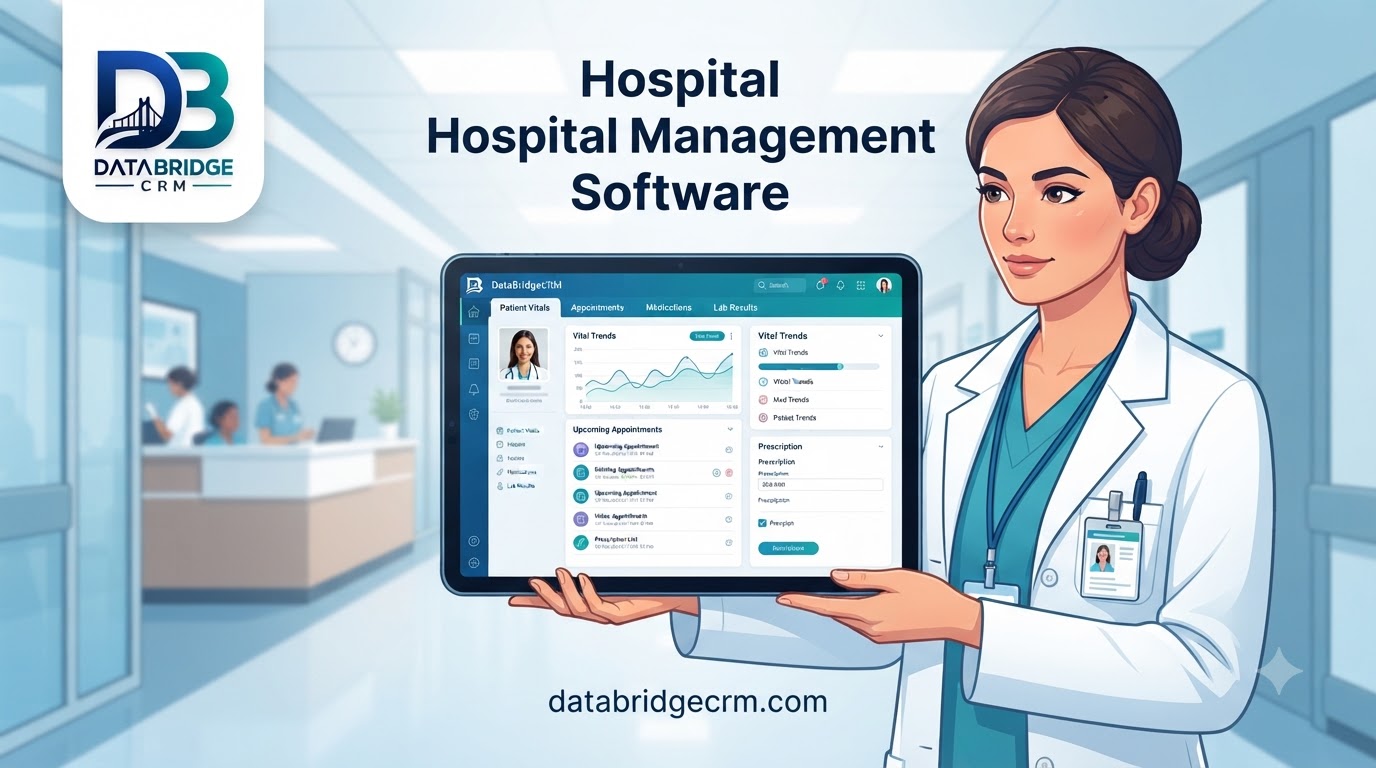
Hospital Management Software by DataBridgeCRM: Patient Care Without the Paperwork
Hospitals need to move quickly without compromising patient care accuracy. DataBridgeCRM's Hospital Management module connects patient records, appointment scheduling, and billing into one system, freeing staff from manual paperwork.
Clinic Management Software by DataBridgeCRM: Built for Smaller Practices
A clinic doesn't need hospital-scale software, but it still needs the same reliability — organized patient records, smooth scheduling, and clean billing. DataBridgeCRM's Clinic module is purpose-built for smaller, often single- or few-doctor practices.
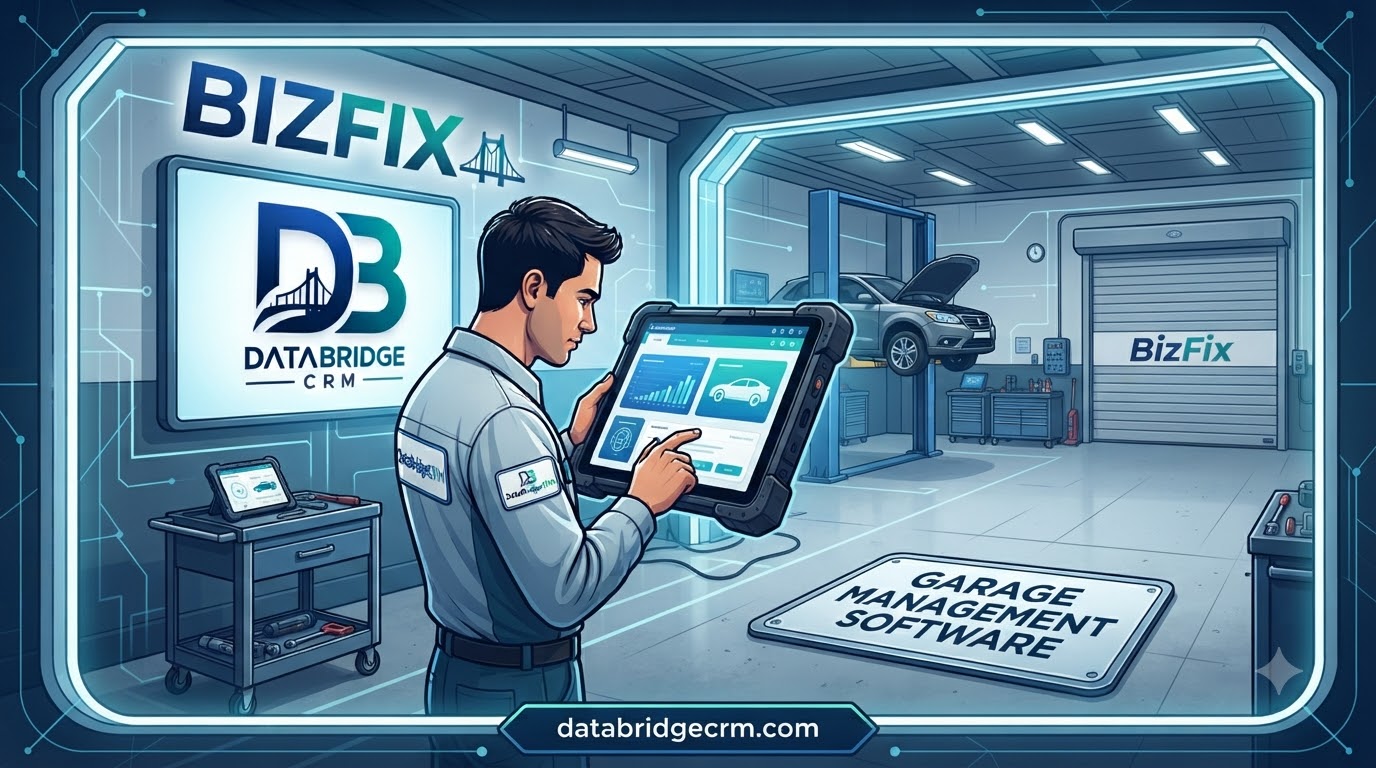
BizFix by DataBridgeCRM: Garage Management Software for Car & Bike Workshops
Garages and vehicle workshops juggle a constant flow of job cards, spare parts, and customer vehicle history — details that are genuinely hard to manage reliably on paper. BizFix, DataBridgeCRM's Garage Management module, turns this into a simple digital process.
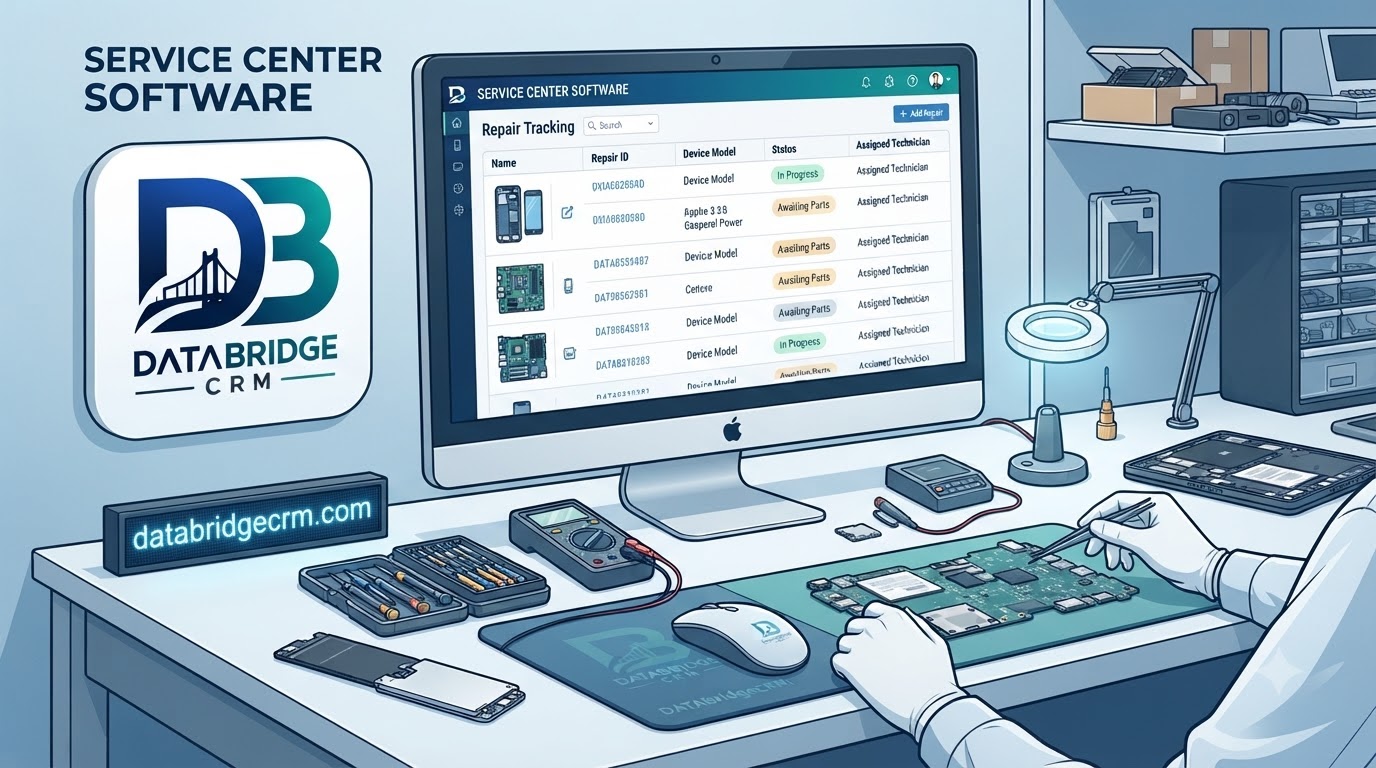
Service Center Software by DataBridgeCRM: For Phone, Computer & Electronics Repair Shops
Repair shops for phones, computers, and electronics handle a constant stream of devices coming in for diagnosis and repair, and losing track of even one creates a customer dispute. DataBridgeCRM's Service Center module keeps every device and job organized from drop-off to delivery.
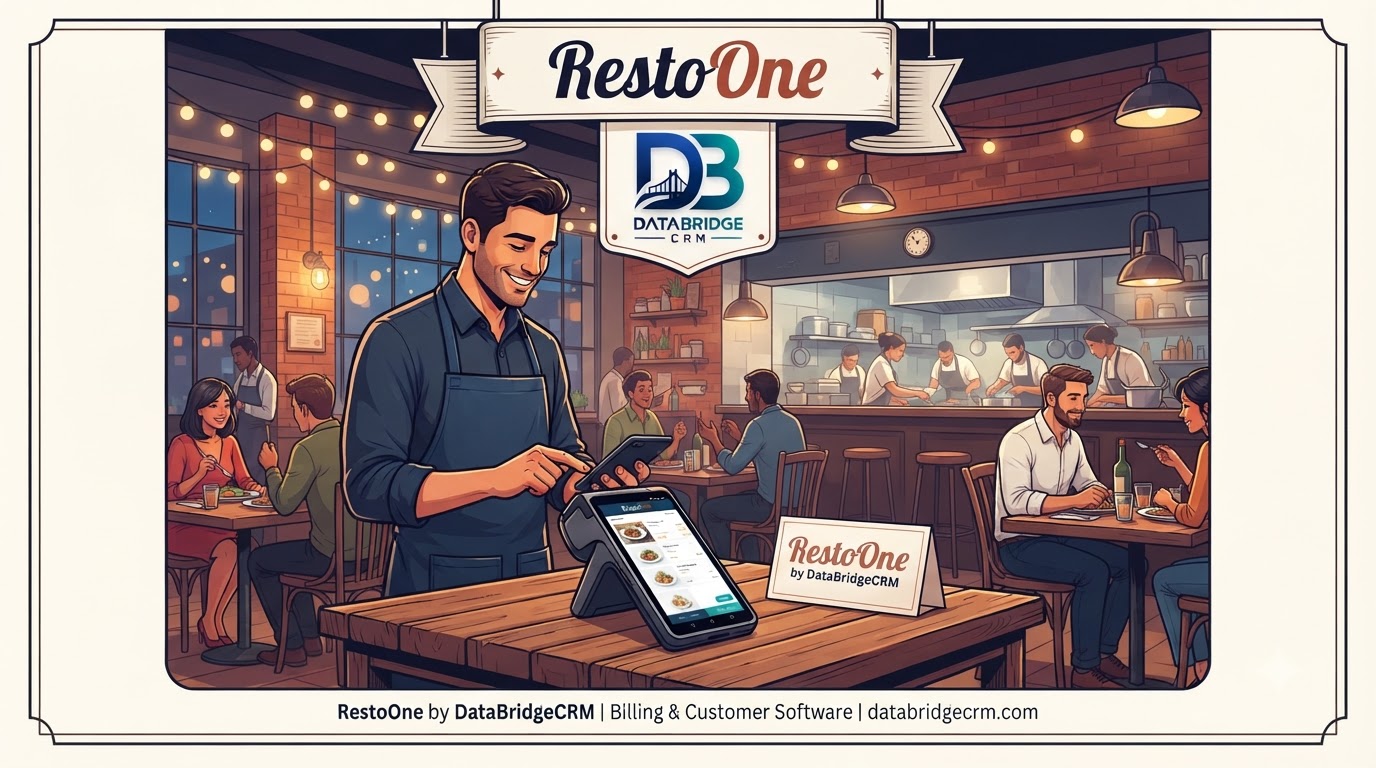
RestoOne by DataBridgeCRM: Billing & Customer Software for Restaurants, Bars and Sweet Shops
Whether you run a restaurant, a bar, or a sweet shop, the daily goal is the same: take orders quickly, bill accurately, and bring customers back. RestoOne, DataBridgeCRM's Restaurant CRM module, is built to handle all three.
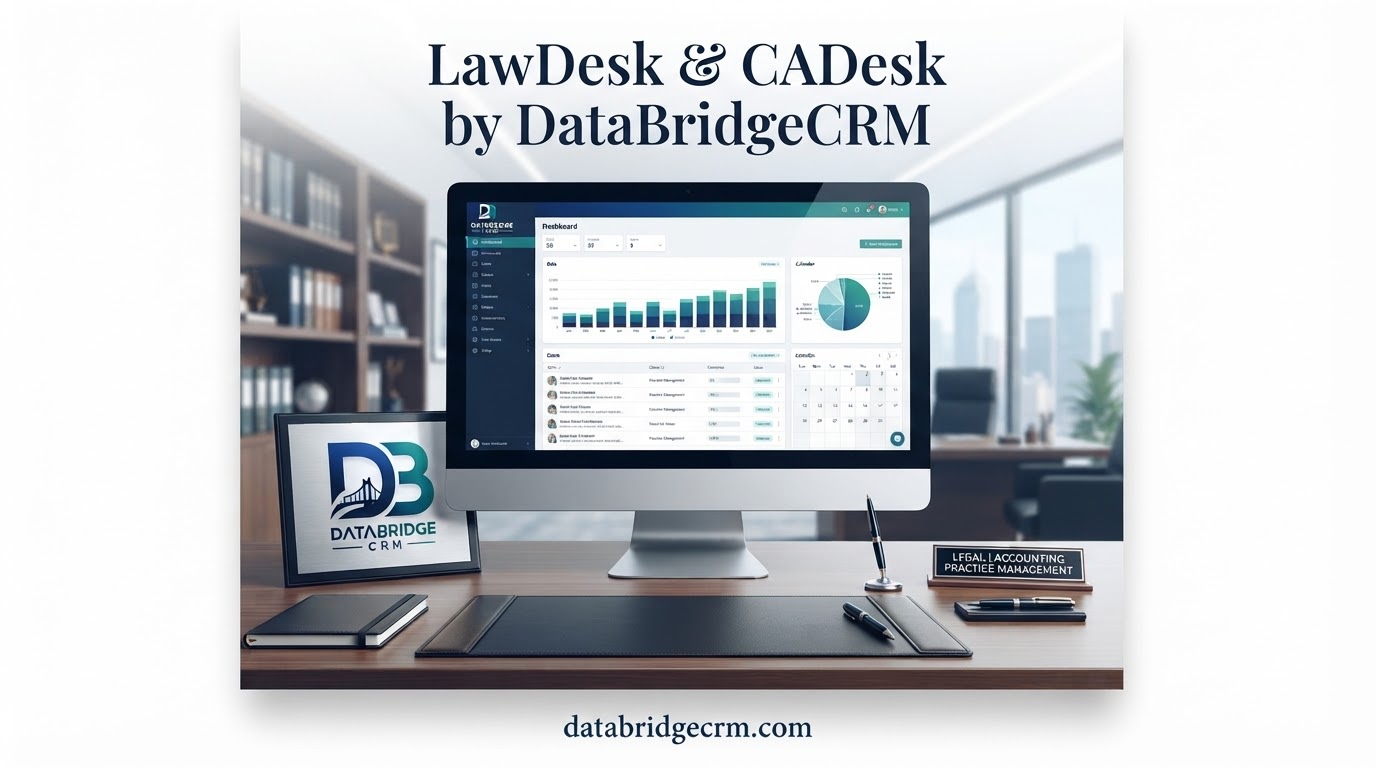
LawDesk & CADesk by DataBridgeCRM: Practice Management for Lawyers and Chartered Accountants
Lawyers and chartered accountants both handle something most businesses don't — client matters with strict deadlines and sensitive documents, where a missed date has real consequences. LawDesk (for law firms) and CADesk (for CA practices) are DataBridgeCRM modules built specifically for this kind of work.
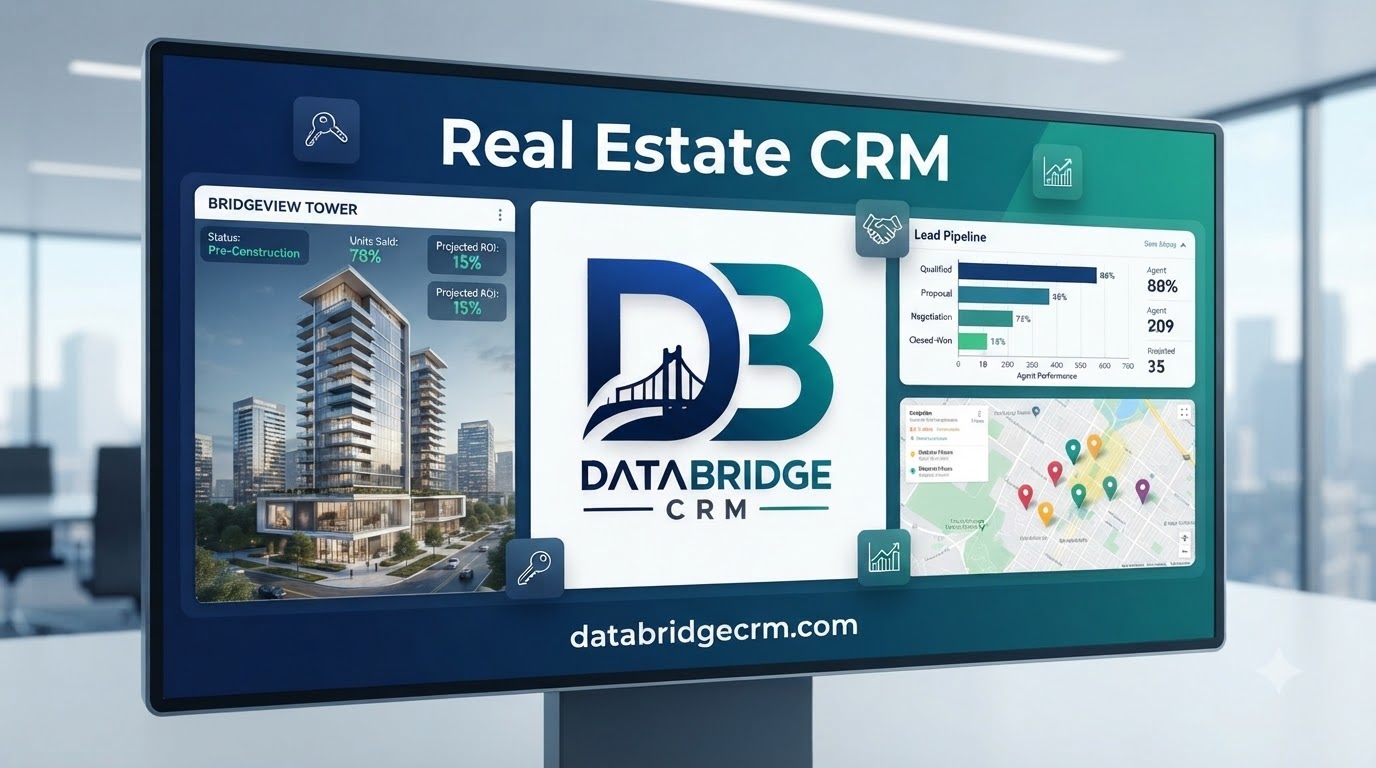
Real Estate CRM by DataBridgeCRM: From First Enquiry to Closed Deal
Real estate leads come in from everywhere — portals, referrals, walk-ins, calls — and the agents and builders who close the most deals are the ones who never let an enquiry go cold. DataBridgeCRM's Real Estate CRM keeps every lead and deal organized from first contact to closing.
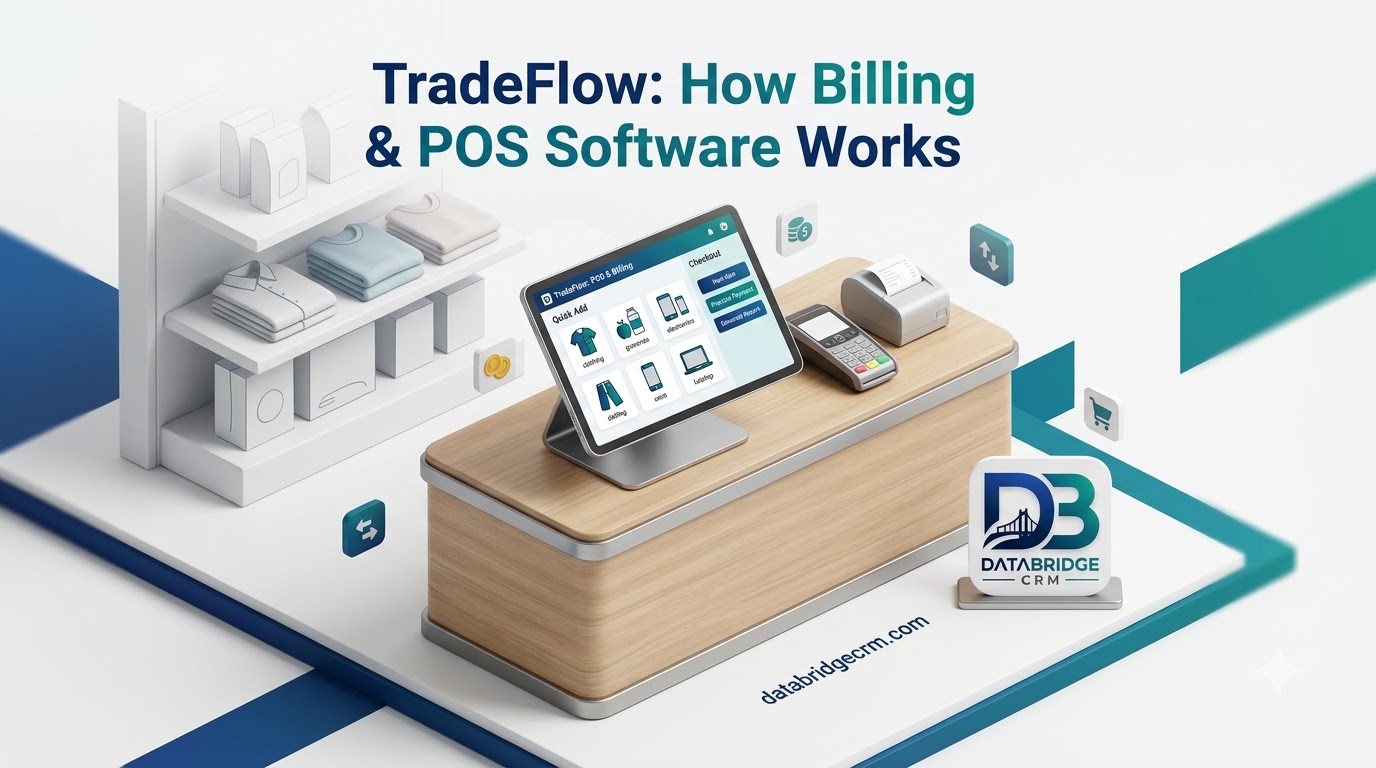
TradeFlow: How Billing & POS Software Works for Clothing, Kirana, Vegetable and Electronics Shops
Retail businesses across India — from a neighbourhood kirana store to a clothing boutique to an electronics shop — share the same two daily pressure points: billing customers quickly, and knowing exactly what's in stock. TradeFlow, DataBridgeCRM's POS and billing module, is built around solving both, whatever kind of retail store you run.
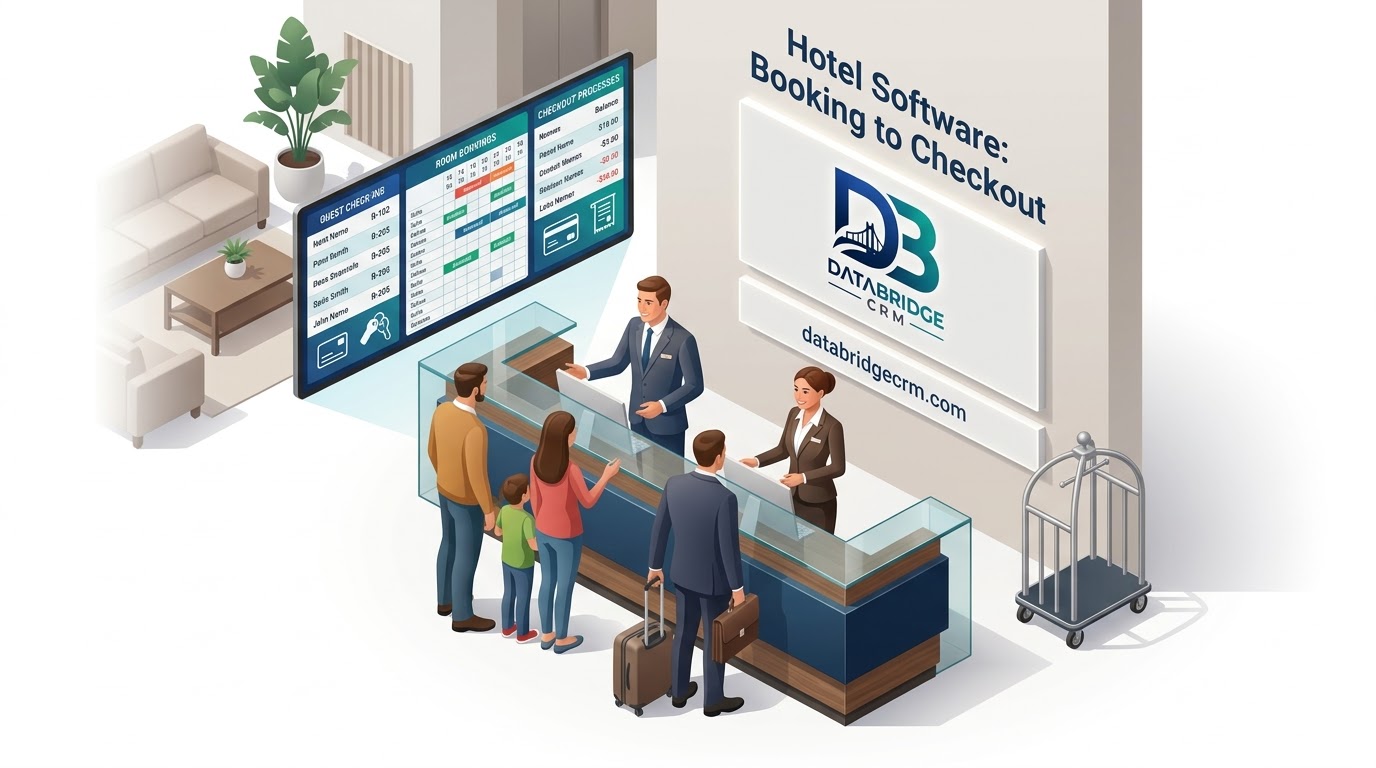
How DataBridgeCRM's Hotel Software Actually Works, Booking to Checkout
A hotel's front desk deals with bookings, check-ins, housekeeping updates and billing all at once, often from a register and a lot of memory. DataBridgeCRM's Hotel module is built to carry that entire flow digitally, from the moment a booking is made to the moment a guest checks out.
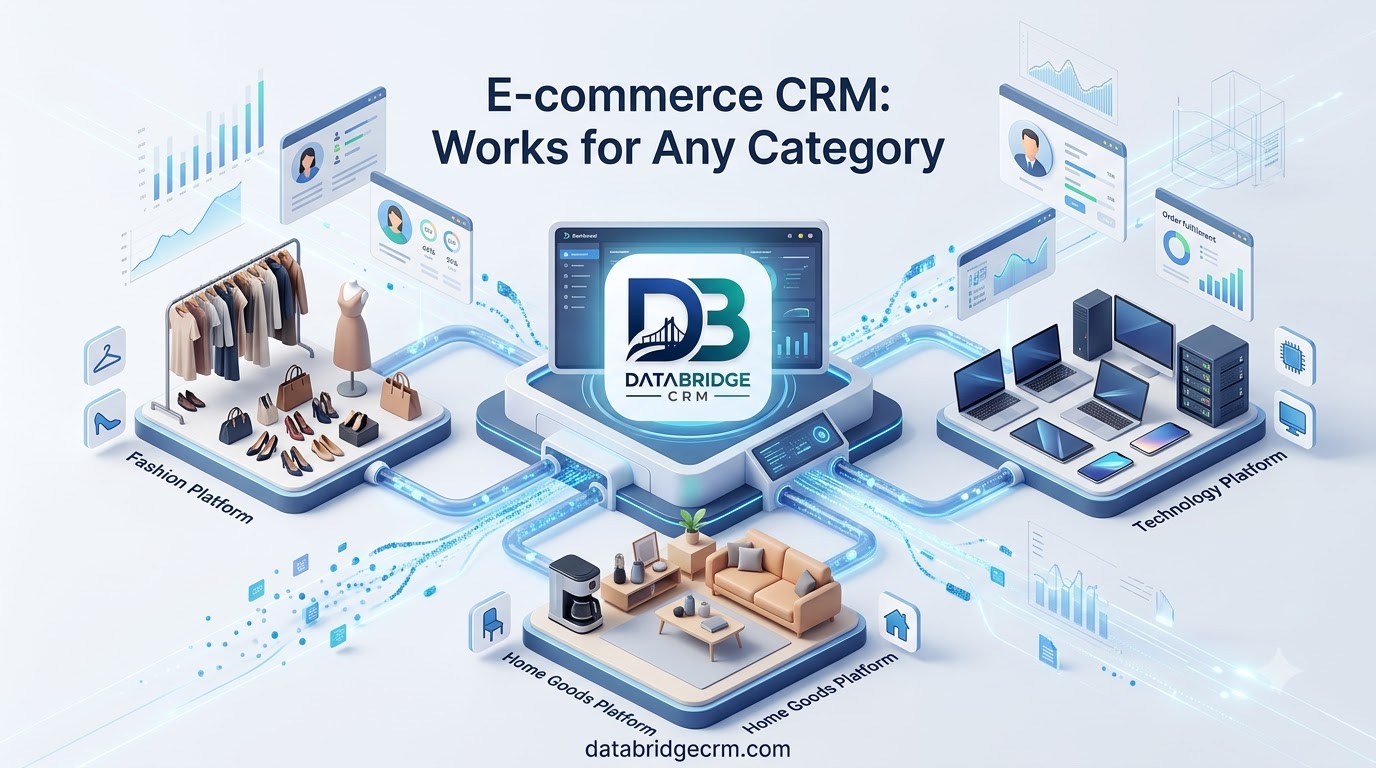
How DataBridgeCRM's E-commerce CRM Works for Any Product Category You Sell
Running an online store means more than processing orders — it means knowing who your customers are, what they've bought before, and who's about to walk away if you don't follow up. DataBridgeCRM's E-commerce CRM is built to do exactly that, whatever category you sell in.
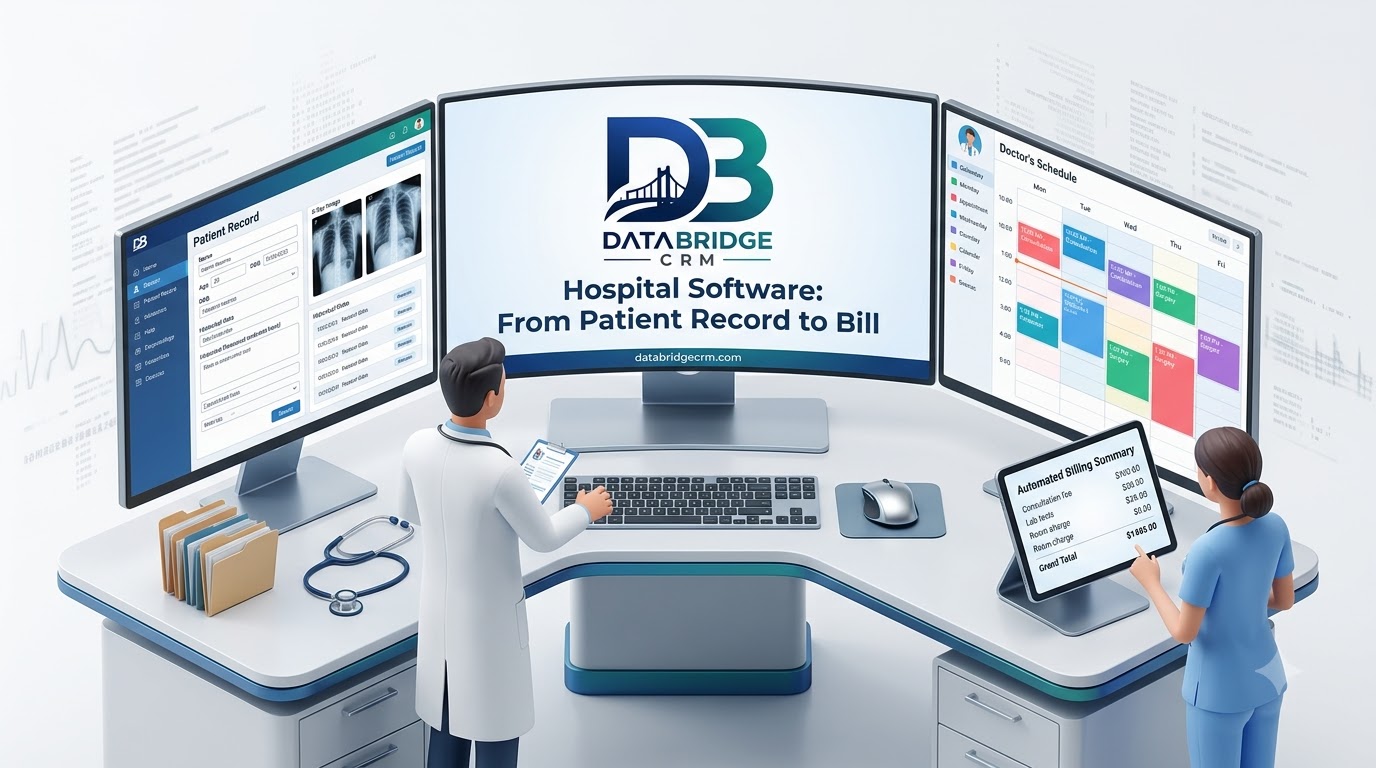
How DataBridgeCRM's Hospital Software Works, From Patient Record to Bill
A hospital runs on records — patient history, appointments, test results, billing — and keeping all of it on paper slows down care and increases the risk of mistakes. DataBridgeCRM's Hospital module brings these pieces into one connected system.
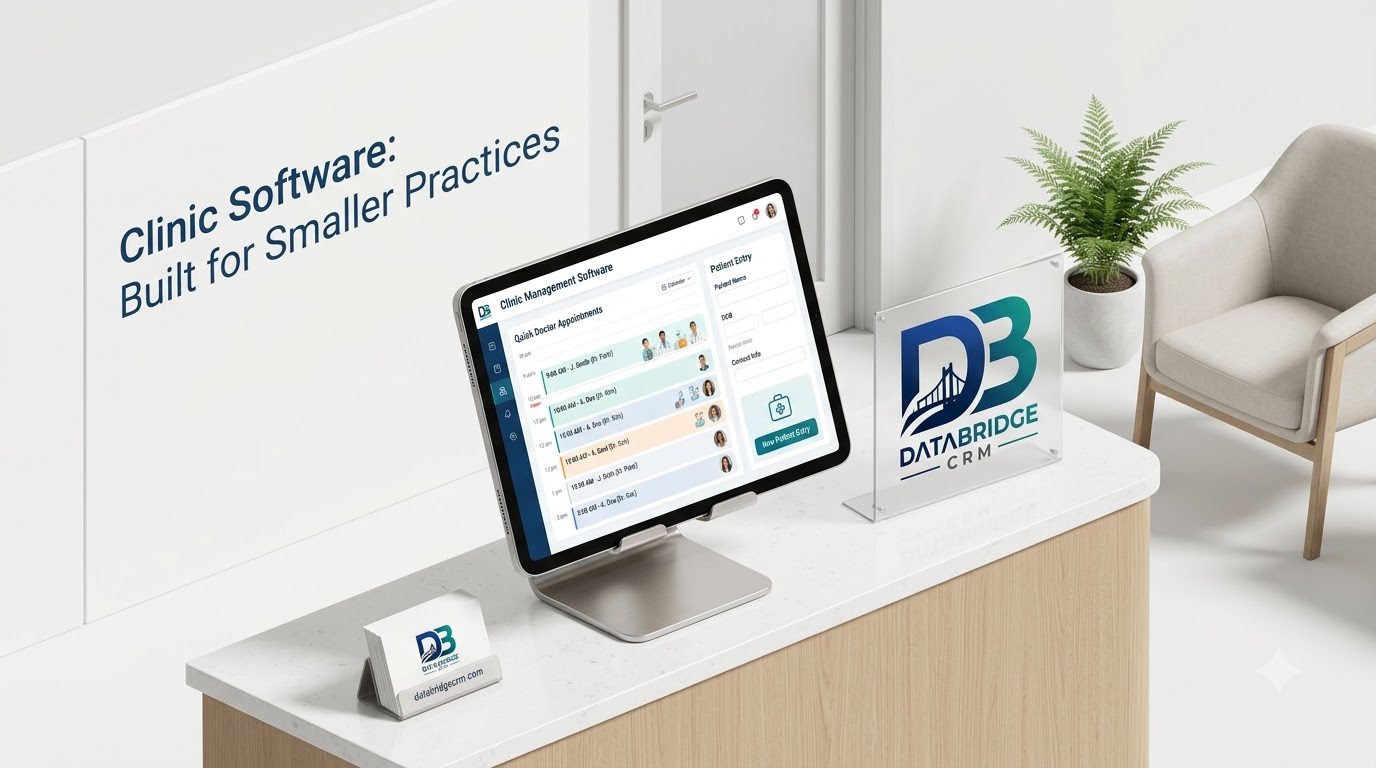
How DataBridgeCRM's Clinic Software Works for Smaller Practices
A single-doctor or small clinic doesn't need the scale of hospital software, but it still needs the same basics done well — organized patient records, smooth scheduling, and billing that doesn't miss a charge. DataBridgeCRM's Clinic module is built with exactly this size of practice in mind.
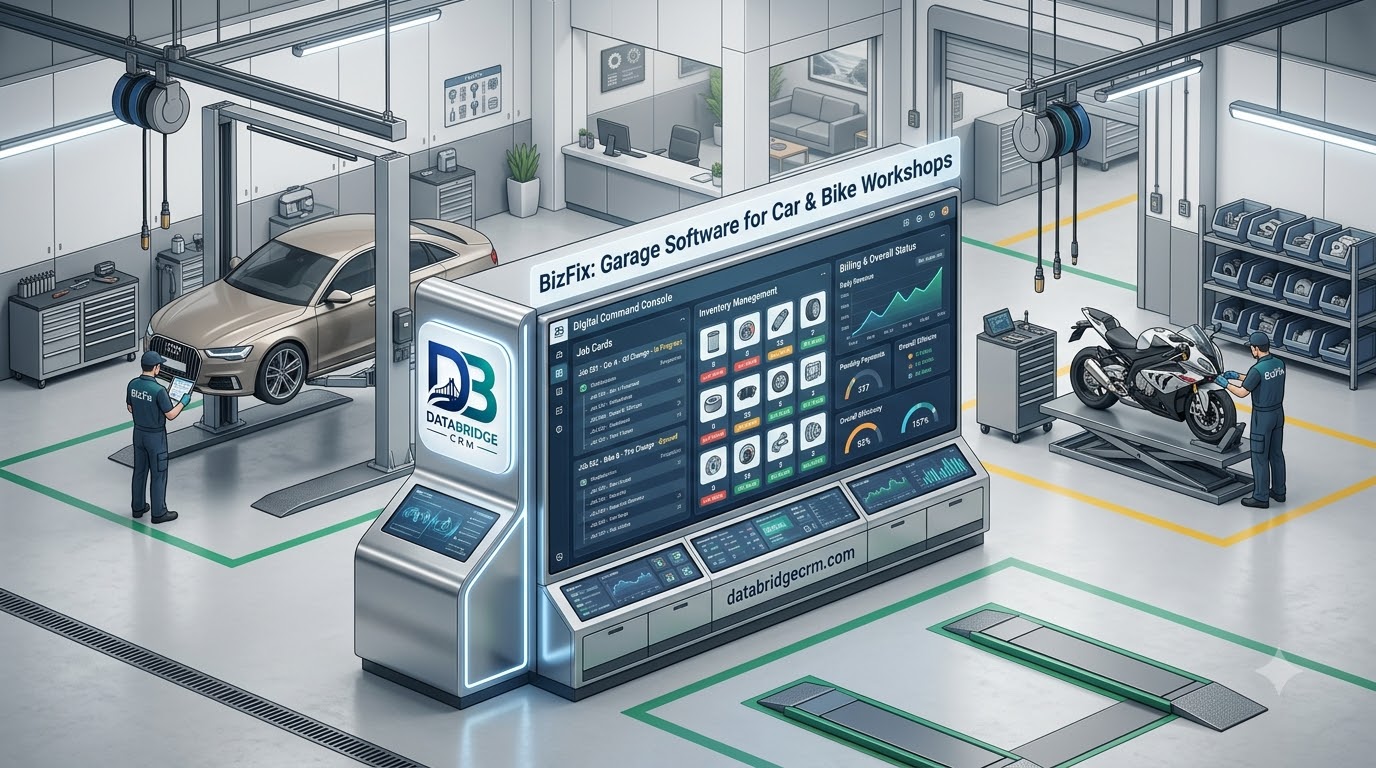
How BizFix Garage Software Works for Car & Bike Workshops
A busy garage juggles multiple vehicles, spare parts, and job histories at once — and a lot of workshops still try to track all of it with handwritten job cards. BizFix, DataBridgeCRM's Garage module, turns that into a simple digital process from the moment a vehicle comes in.
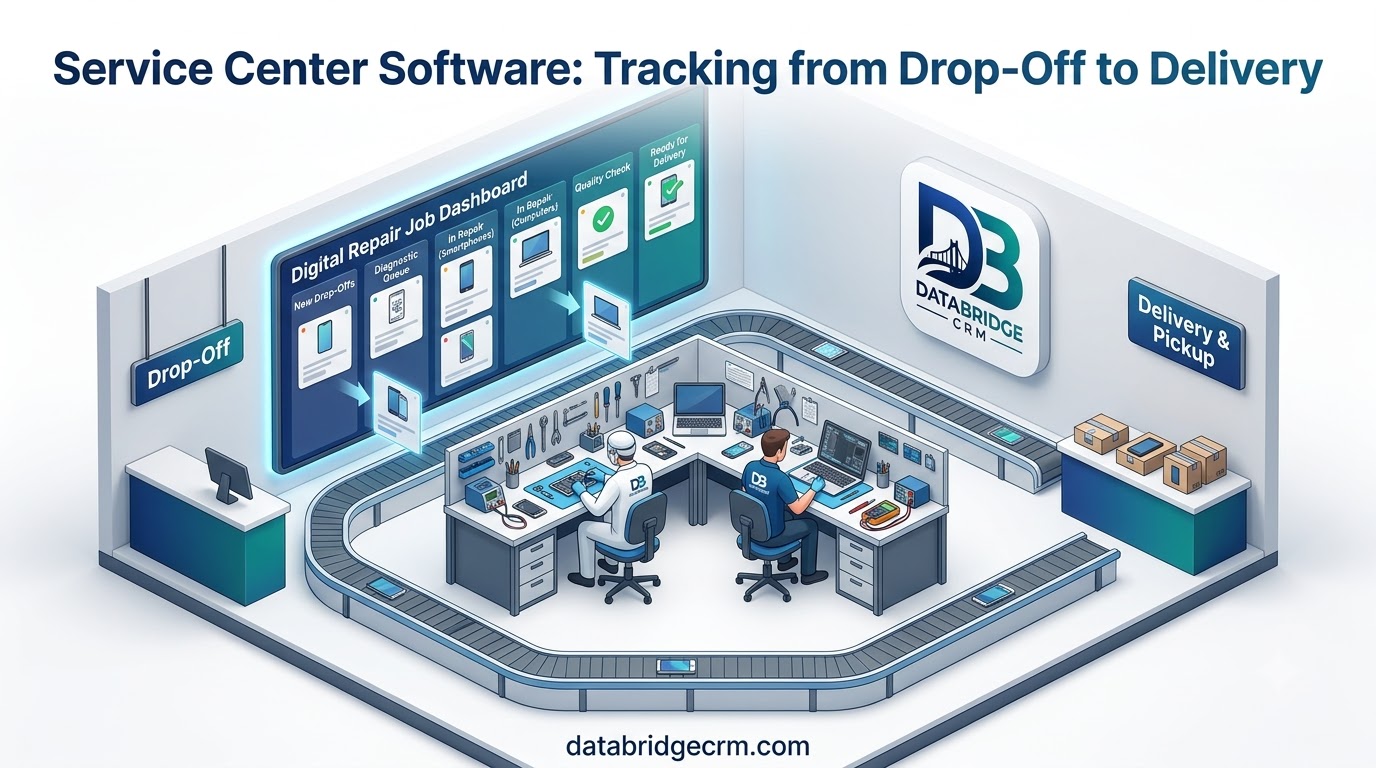
How DataBridgeCRM's Service Center Software Works for Phone, Computer & Electronics Repair Shops
A repair shop handles a constant stream of phones, laptops and gadgets coming in for diagnosis — and losing track of even one device creates a customer dispute that's hard to resolve. DataBridgeCRM's Service Center module keeps every device accounted for from intake to delivery.
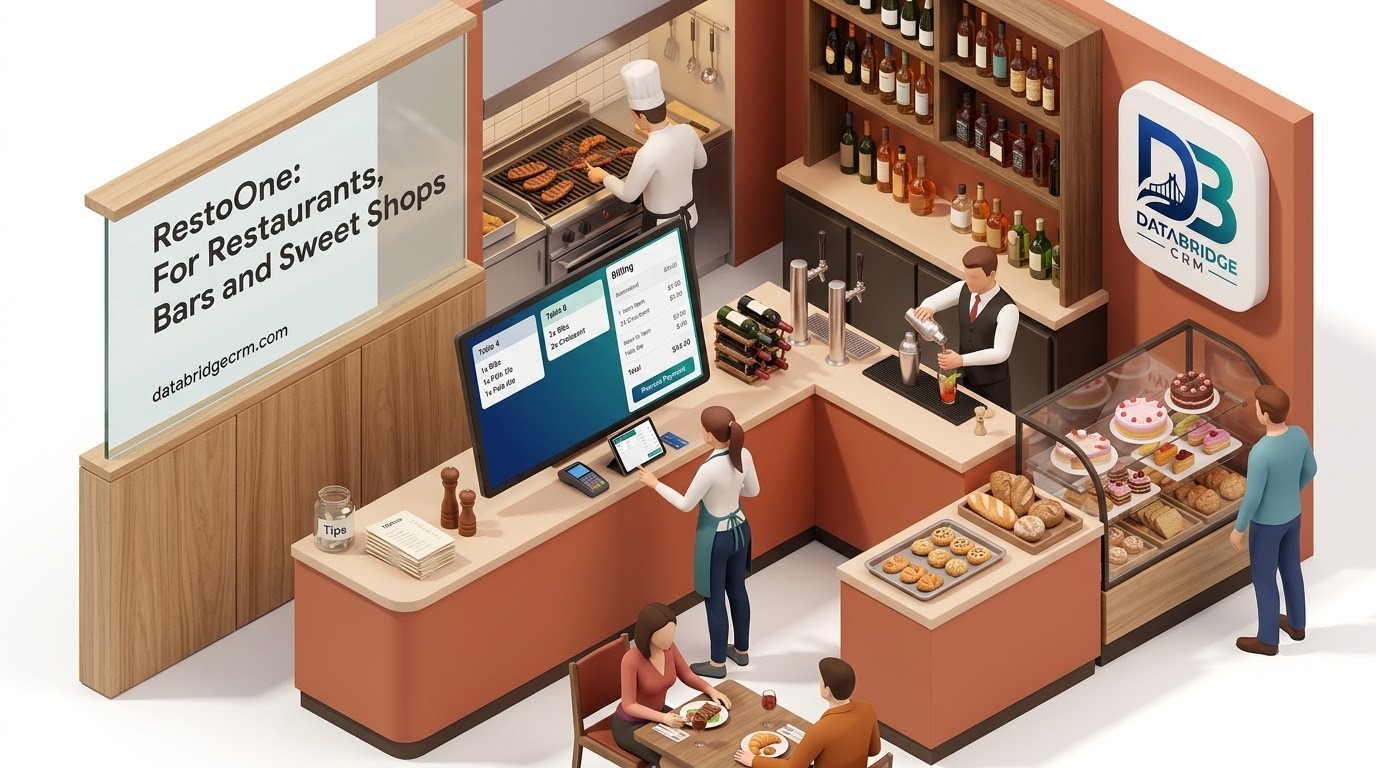
How RestoOne Works for Restaurants, Bars and Sweet Shops
Whether you run a restaurant, a bar, or a sweet shop, the daily challenge is the same — take orders fast, bill accurately, and bring customers back. RestoOne, DataBridgeCRM's Restaurant module, is built to handle all three in one system.
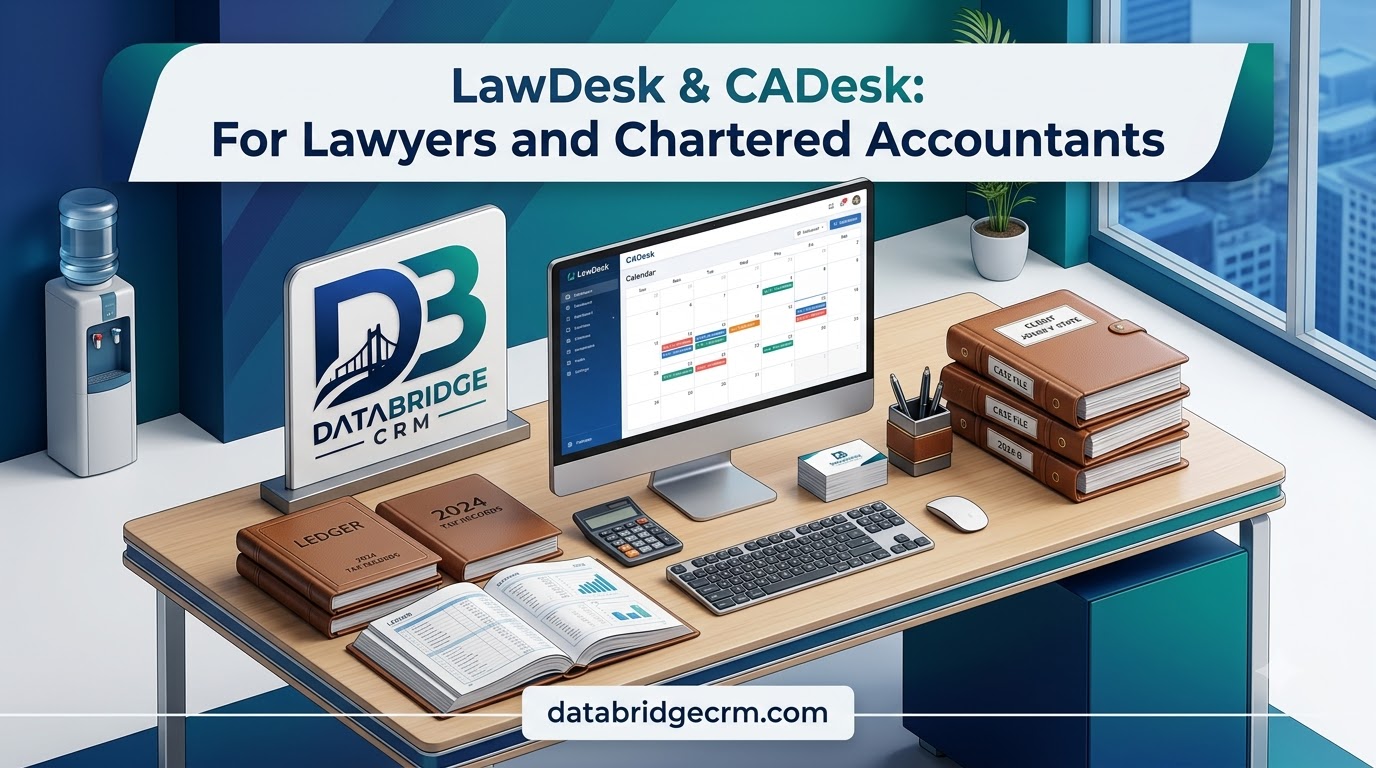
How LawDesk & CADesk Work for Lawyers and Chartered Accountants
Lawyers and chartered accountants both work against the same risk — a missed deadline on a client matter that has real consequences. LawDesk (built for law firms) and CADesk (built for CA practices) are DataBridgeCRM modules designed specifically to prevent that.
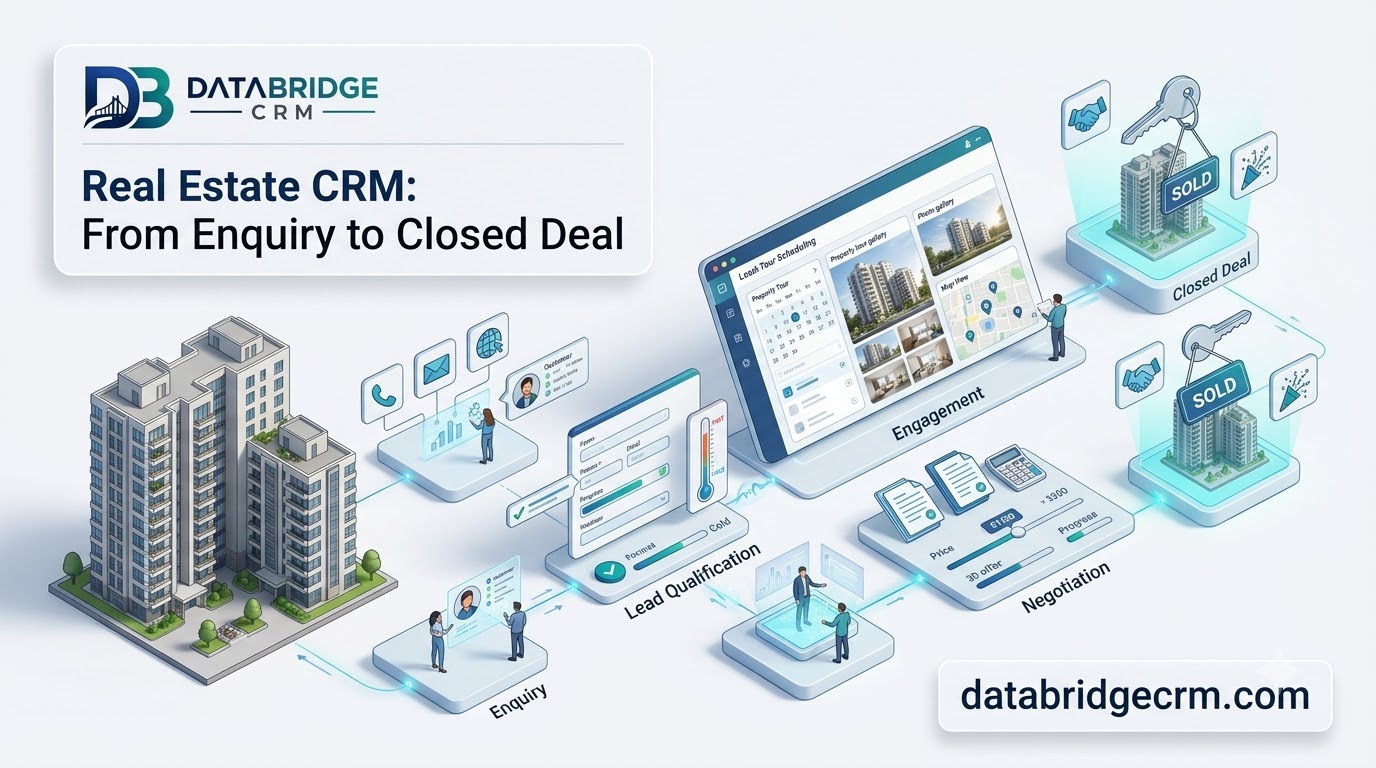
How DataBridgeCRM's Real Estate CRM Works, From First Enquiry to Closed Deal
Real estate leads come in from everywhere — property portals, referrals, walk-ins, phone calls — and the agents who close the most deals are the ones who never let a promising enquiry go cold. DataBridgeCRM's Real Estate CRM is built to make sure that doesn't happen.
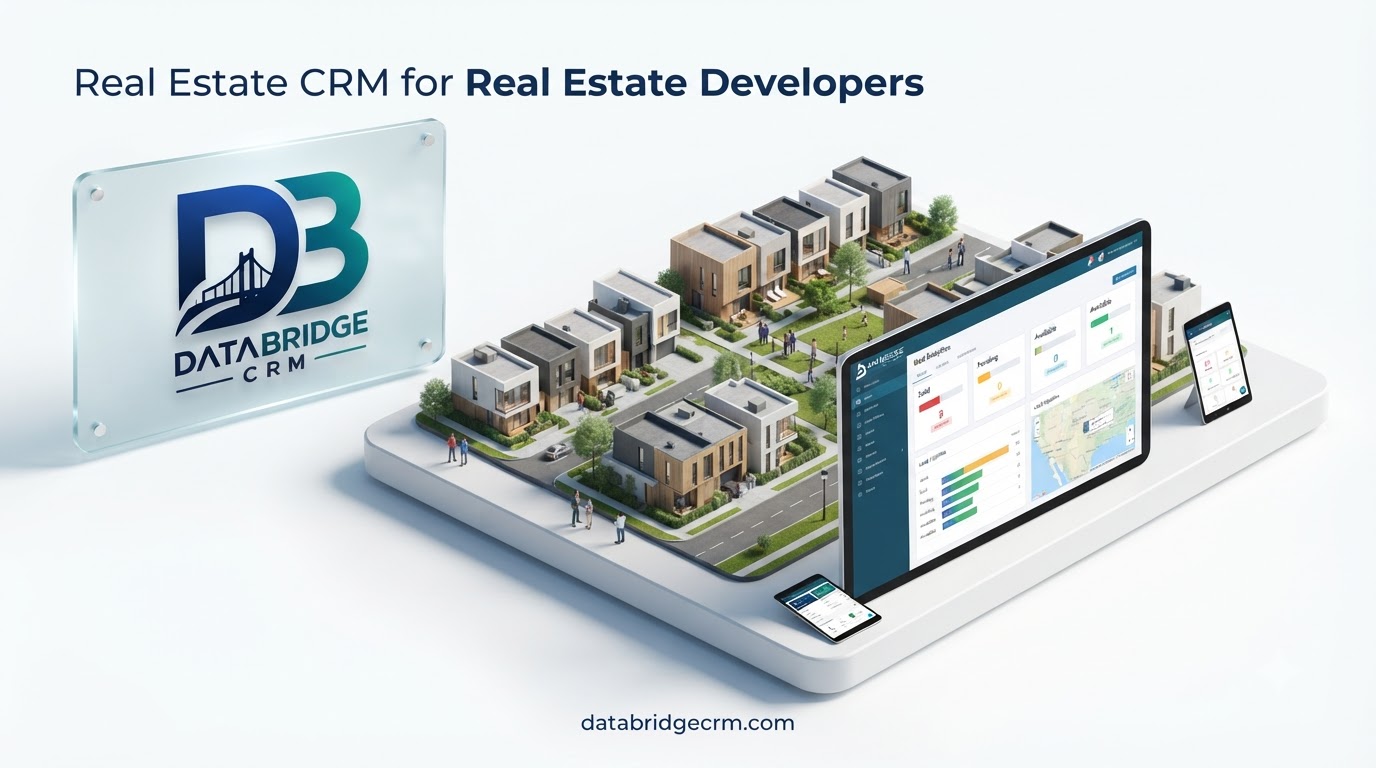
Real Estate CRM for Real Estate Developers: Managing Projects, Units and Buyer Pipelines Together
Real estate developers manage a different kind of complexity than individual agents — multiple ongoing projects, large unit inventories, and buyer pipelines that need to be tracked against specific towers, floors, or unit types. DataBridgeCRM's Real Estate CRM is built to handle this scale.
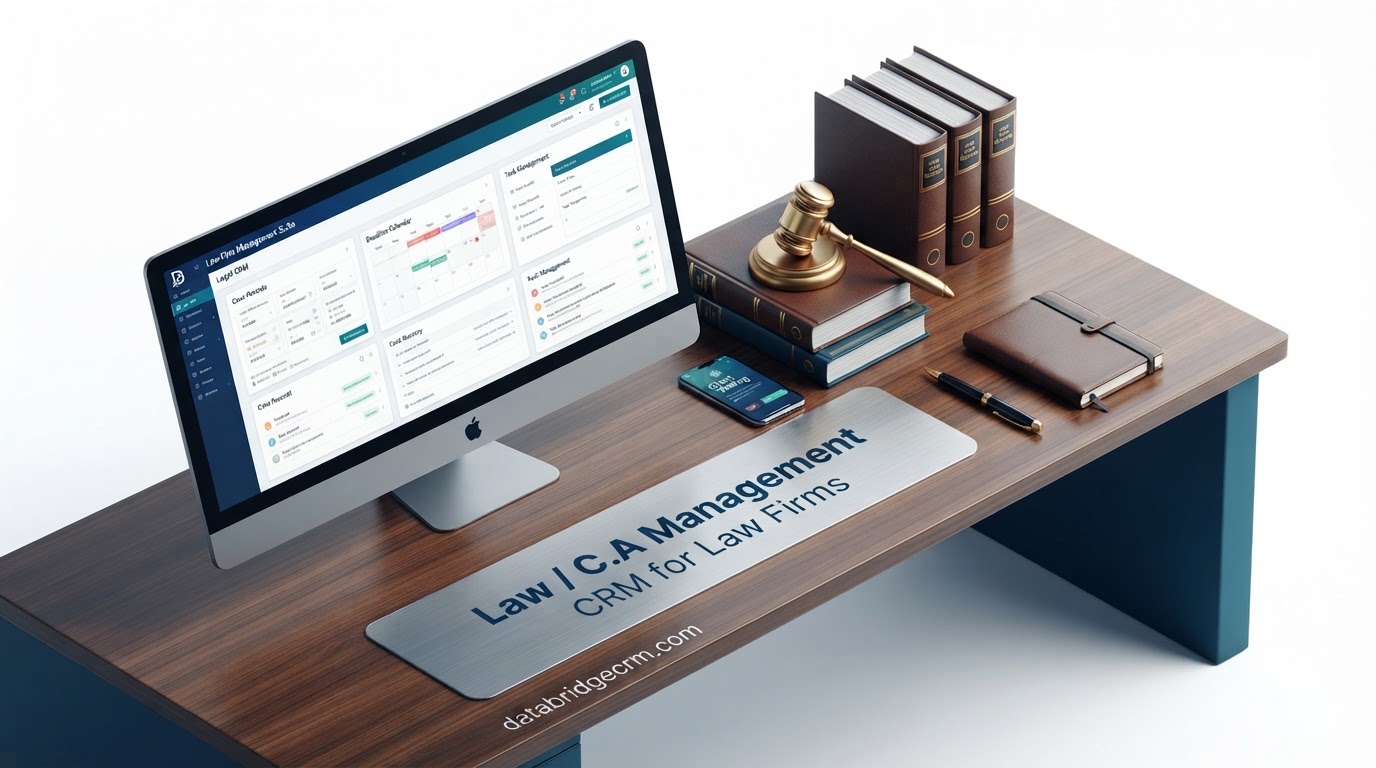
Law/CA Management CRM for Law Firms: Keeping Every Case and Deadline on Track
Law firms juggle multiple active cases at once, each with its own documents, deadlines, and billing — and a missed court date or filing deadline carries real consequences. LawDesk, DataBridgeCRM's module for law firms, is built to keep every case organized and on track.
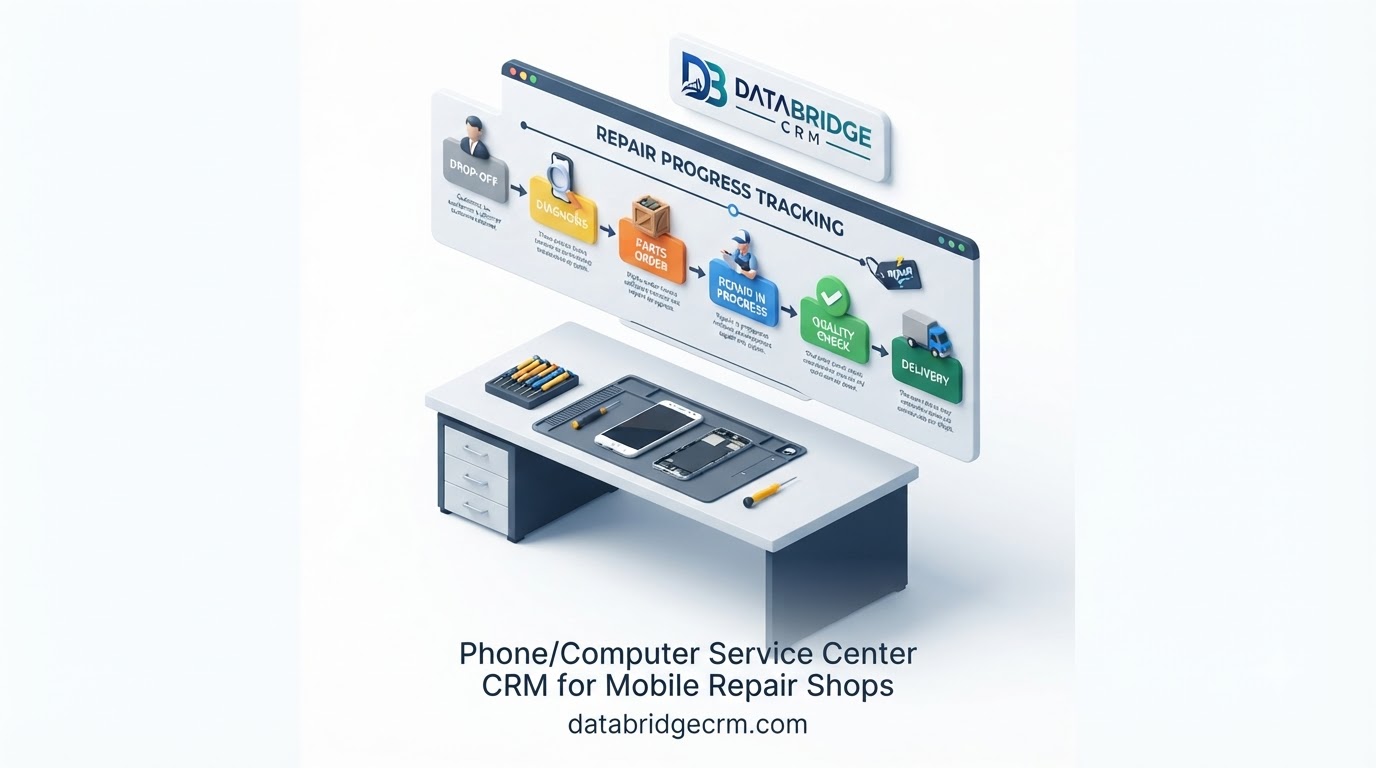
Phone/Computer Service Center CRM for Mobile Repair Shops: Tracking Every Device, Every Time
Mobile repair shops handle a high daily volume of phones coming in for screen replacements, battery issues, and software fixes — and with that volume, losing track of even one device creates a customer dispute that's hard to resolve. DataBridgeCRM's Service Center module is built to prevent exactly that.
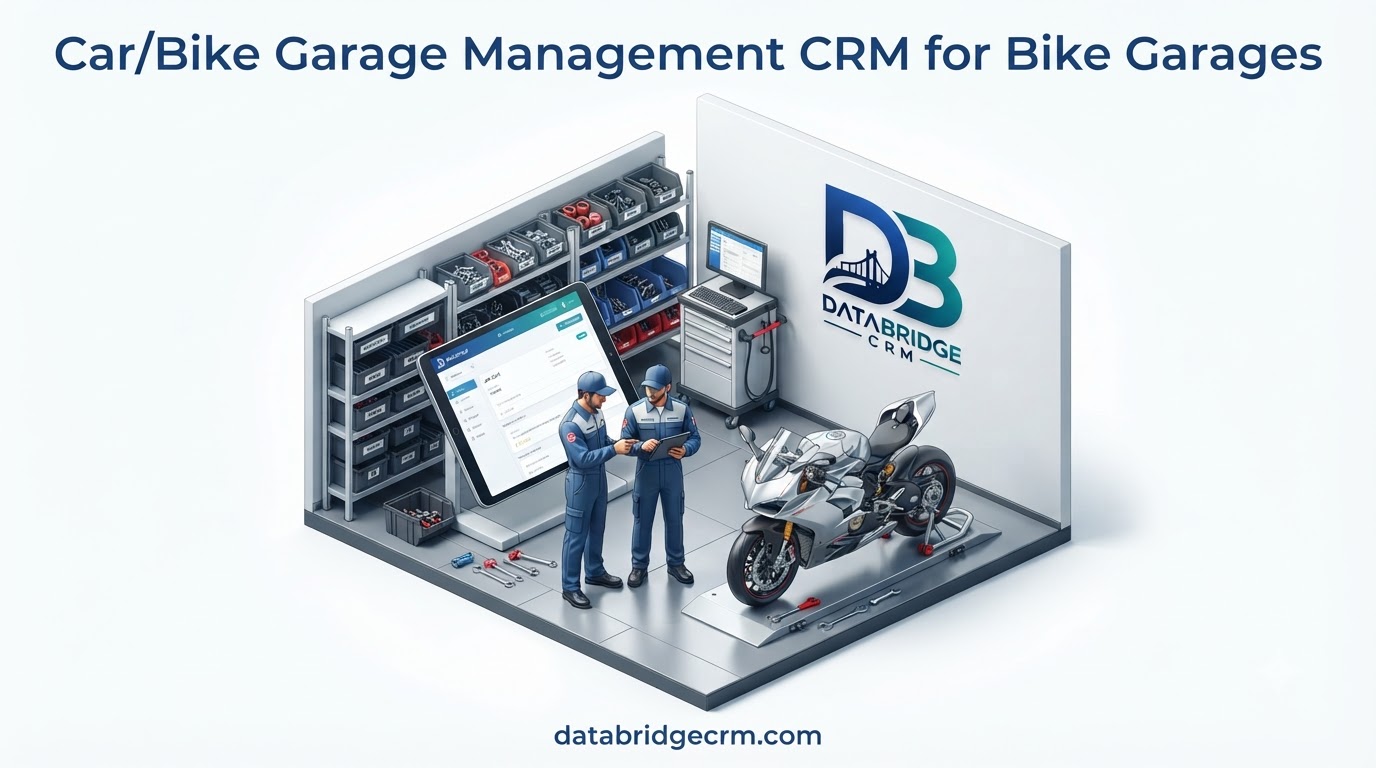
Car/Bike Garage Management CRM for Bike Garages: Built for Faster, High-Volume Two-Wheeler Service
Bike garages typically handle a higher volume of vehicles per day than car workshops, with shorter service times and a need to move fast without losing track of any job. BizFix, DataBridgeCRM's Garage module, adapts to this higher-volume, faster-turnaround environment.
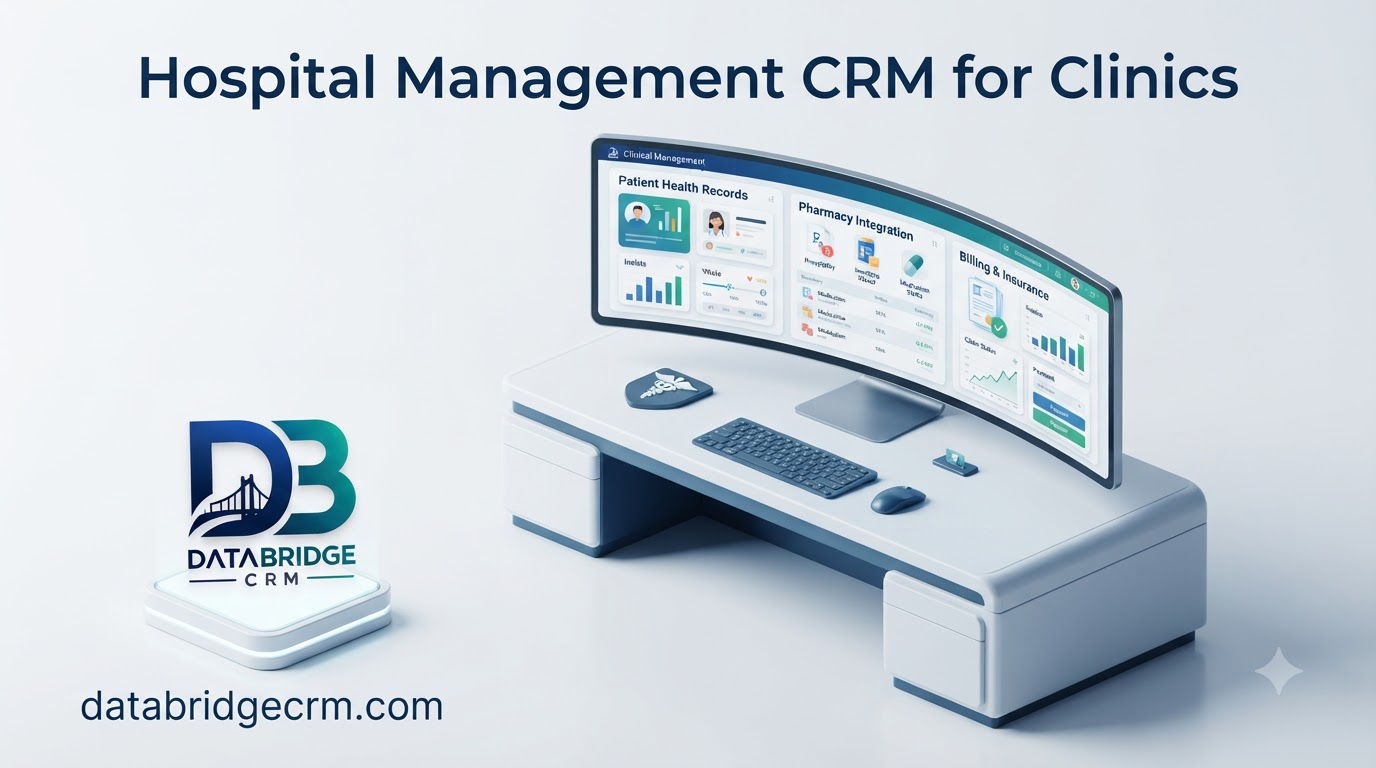
Hospital Management CRM for Clinics: Hospital-Grade Record Keeping, Scaled for Smaller Setups
Some clinics are growing fast enough that they need more structure than a basic appointment book, but aren't yet at hospital scale. DataBridgeCRM's Hospital Management module can be scaled down to bring that same level of record-keeping discipline to a clinic, without the complexity built for a much larger facility.
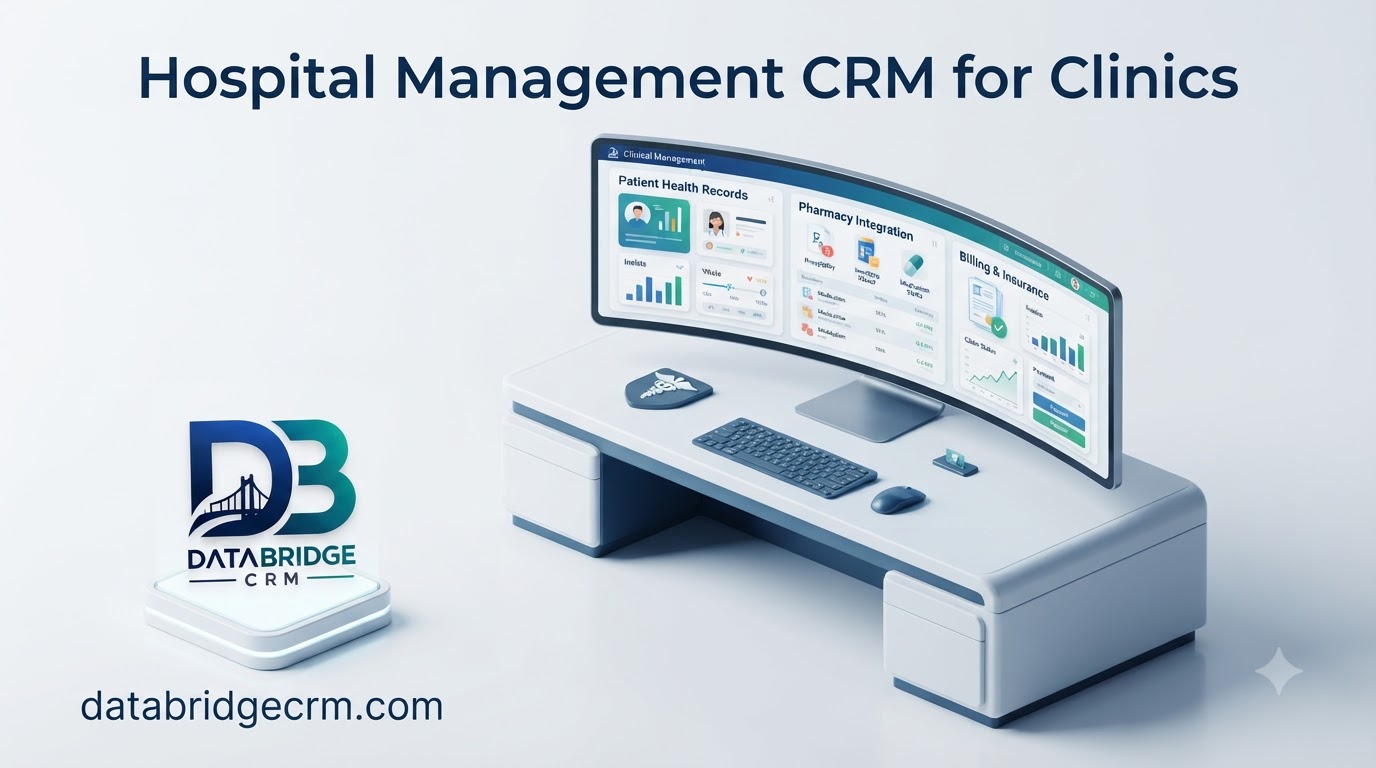
Hospital Management CRM for Clinics: Hospital-Grade Record Keeping, Scaled for Smaller Setups
Some clinics are growing fast enough that they need more structure than a basic appointment book, but aren't yet at hospital scale. DataBridgeCRM's Hospital Management module can be scaled down to bring that same level of record-keeping discipline to a clinic, without the complexity built for a much larger facility.
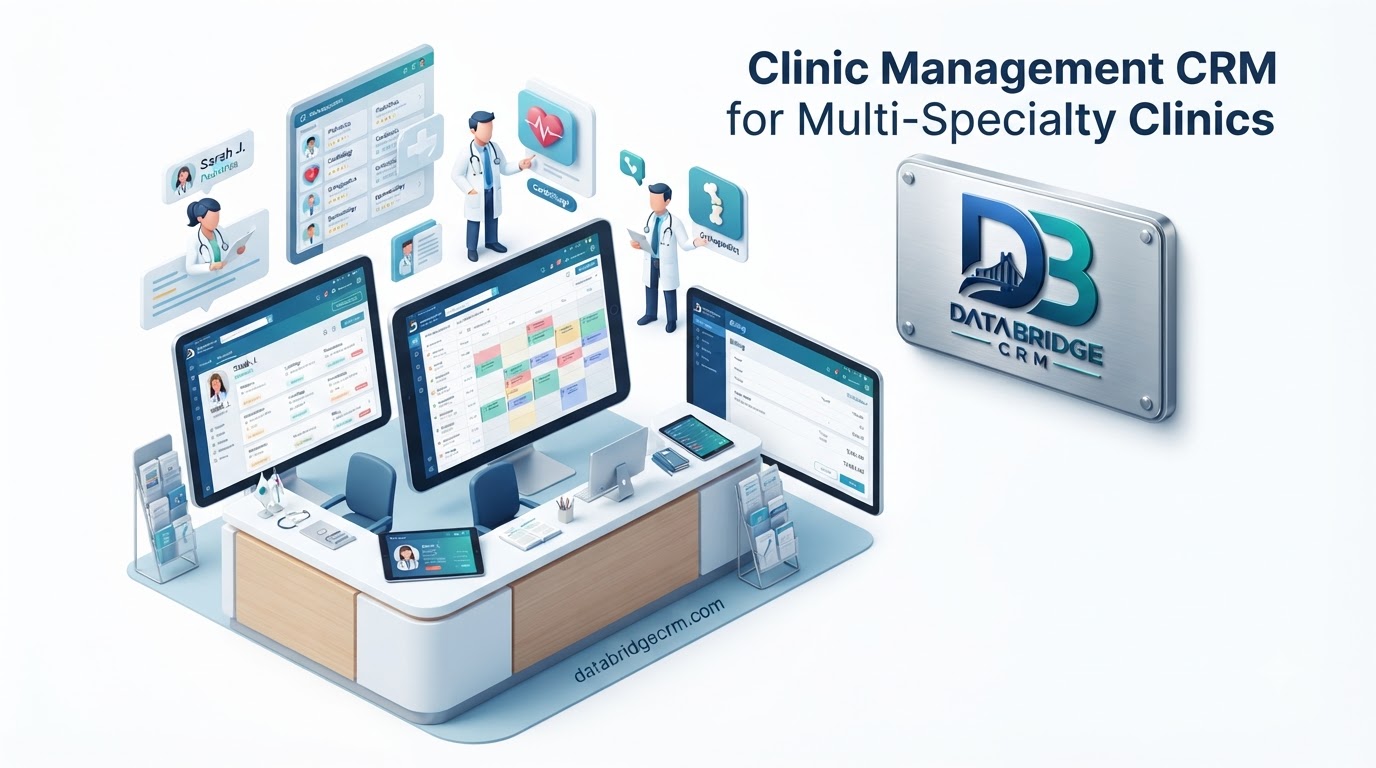
Clinic Management CRM for Multi-Specialty Clinics: Coordinating Multiple Doctors Under One Roof
A multi-specialty clinic brings several doctors and departments together under one roof, which means patient records, appointments and billing have to work across specialties, not just within one doctor's practice. DataBridgeCRM's Clinic module is built to coordinate exactly this kind of shared setup.
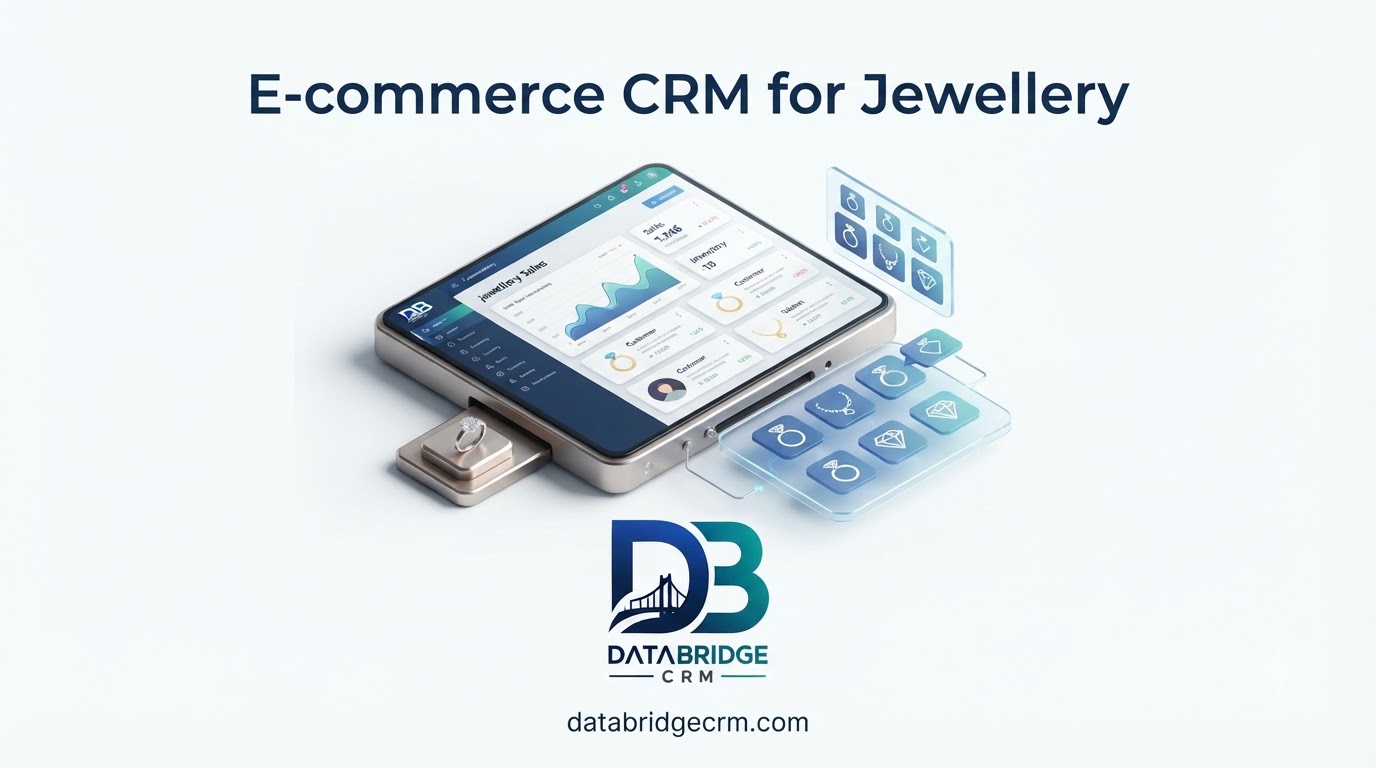
E-commerce CRM for Jewellery: Managing High-Value Customers and Repeat Purchases
Jewellery is not an impulse-buy category — customers research carefully, buy less often, but spend significantly more per purchase, and often return for specific occasions like anniversaries or festivals. DataBridgeCRM's E-commerce CRM module is built to manage this kind of high-value, occasion-driven customer relationship.
Restaurant CRM for Cafés: How DataBridgeCRM Helps Cafés Run Smoother and Sell More
A café runs on a different rhythm than a full-service restaurant — quick orders, a lot of regulars, and razor-thin margins on every cup and plate. A generic restaurant CRM built for large dine-in operations often adds steps a café doesn't need. DataBridgeCRM's Restaurant CRM module adapts to that faster, more casual pace.
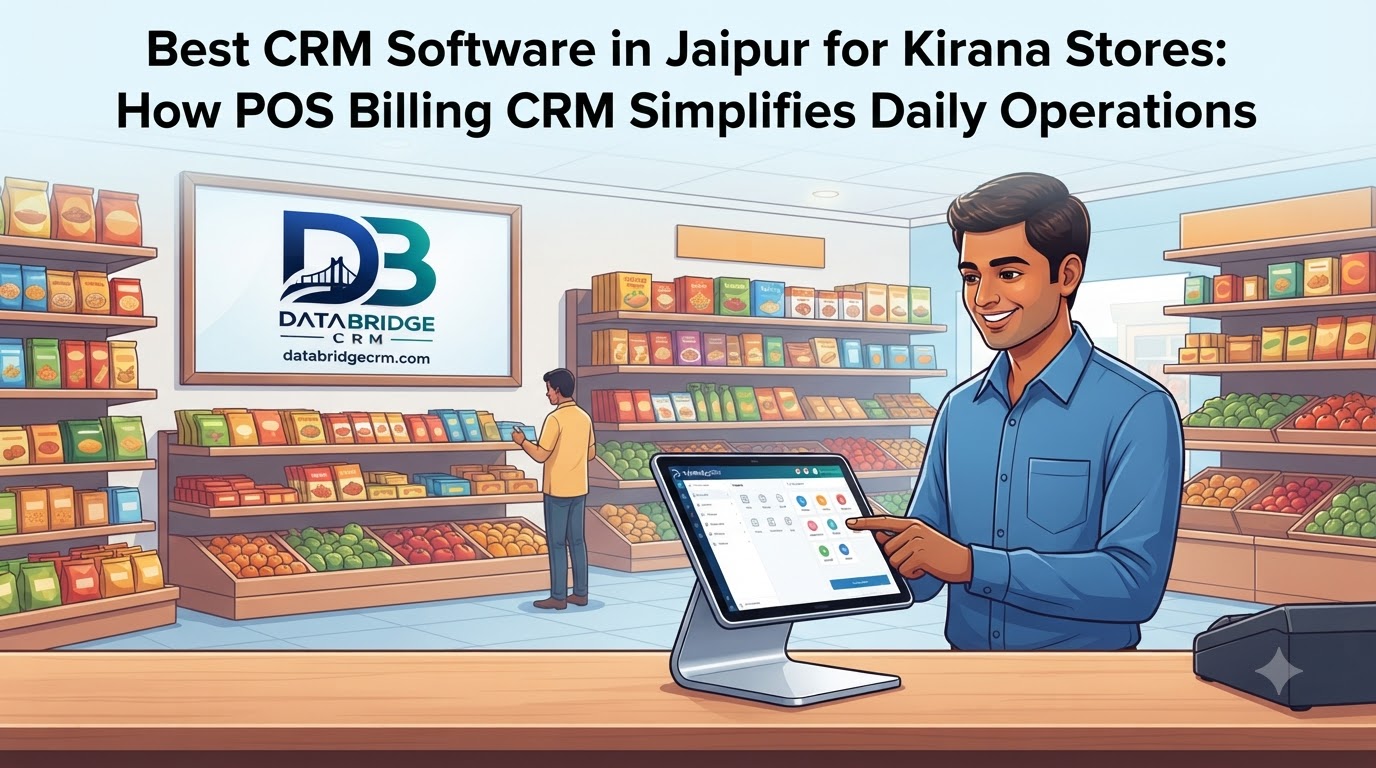
Best CRM Software in Jaipur for Kirana Stores: How POS Billing CRM Simplifies Daily Operations
If you run a kirana store, your day is a constant juggle — billing customers quickly, keeping shelves stocked, tracking credit (khata) for regular customers, and still finding time to bring people back for repeat purchases. This is exactly where a dedicated POS billing CRM system changes how a kirana store runs, and it's why more store owners in Jaipur are searching for the best CRM software in Jaipur built specifically for retail like theirs.
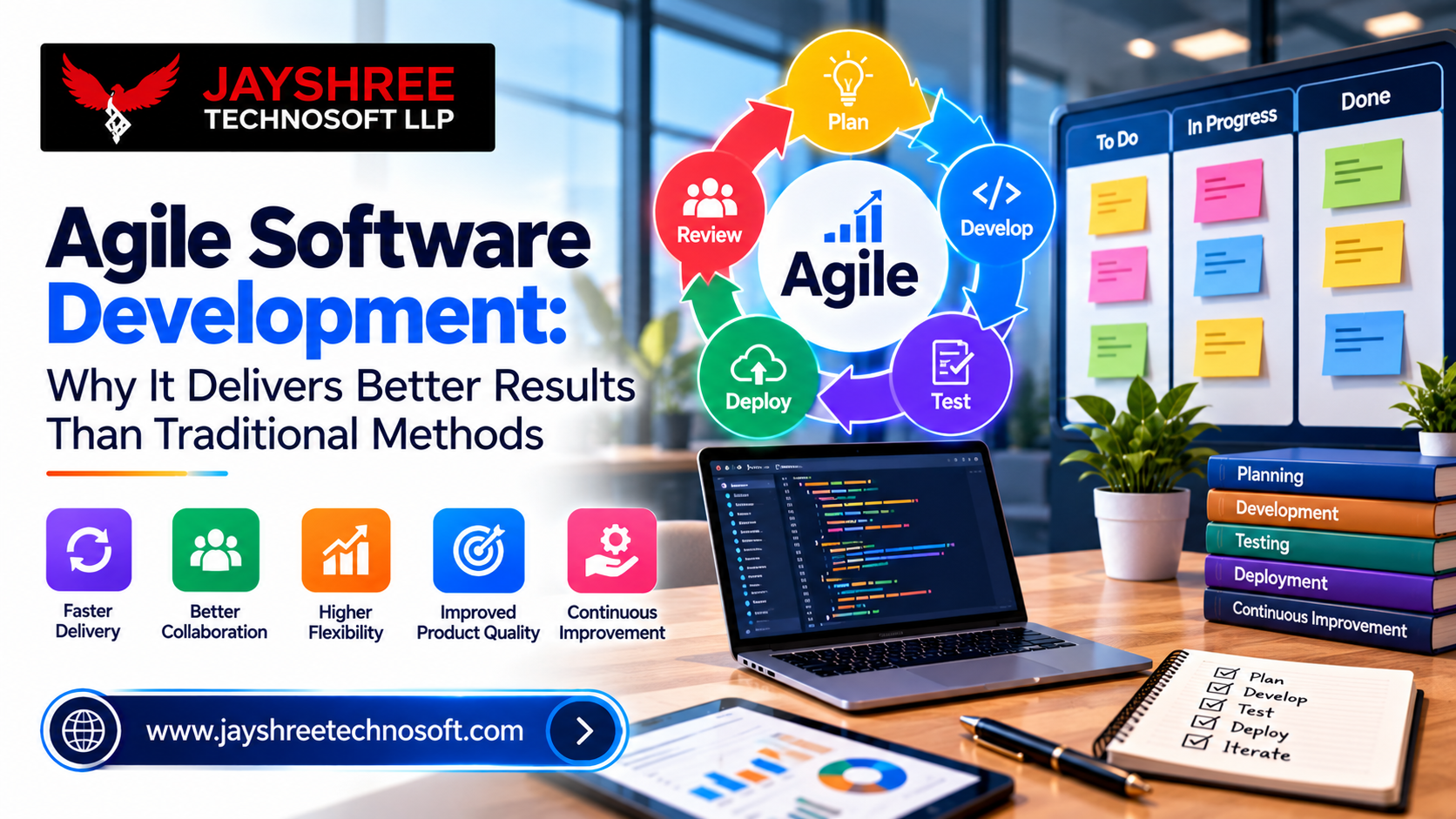
Agile Software Development: Why It Delivers Better Results Than Traditional Methods
Traditional software development often follows a rigid path: gather all requirements upfront, build for months, then deliver a finished product — only to discover it doesn't quite match what the business actually needed. Agile software development fixes this by building, testing, and adjusting in short, iterative cycles instead.
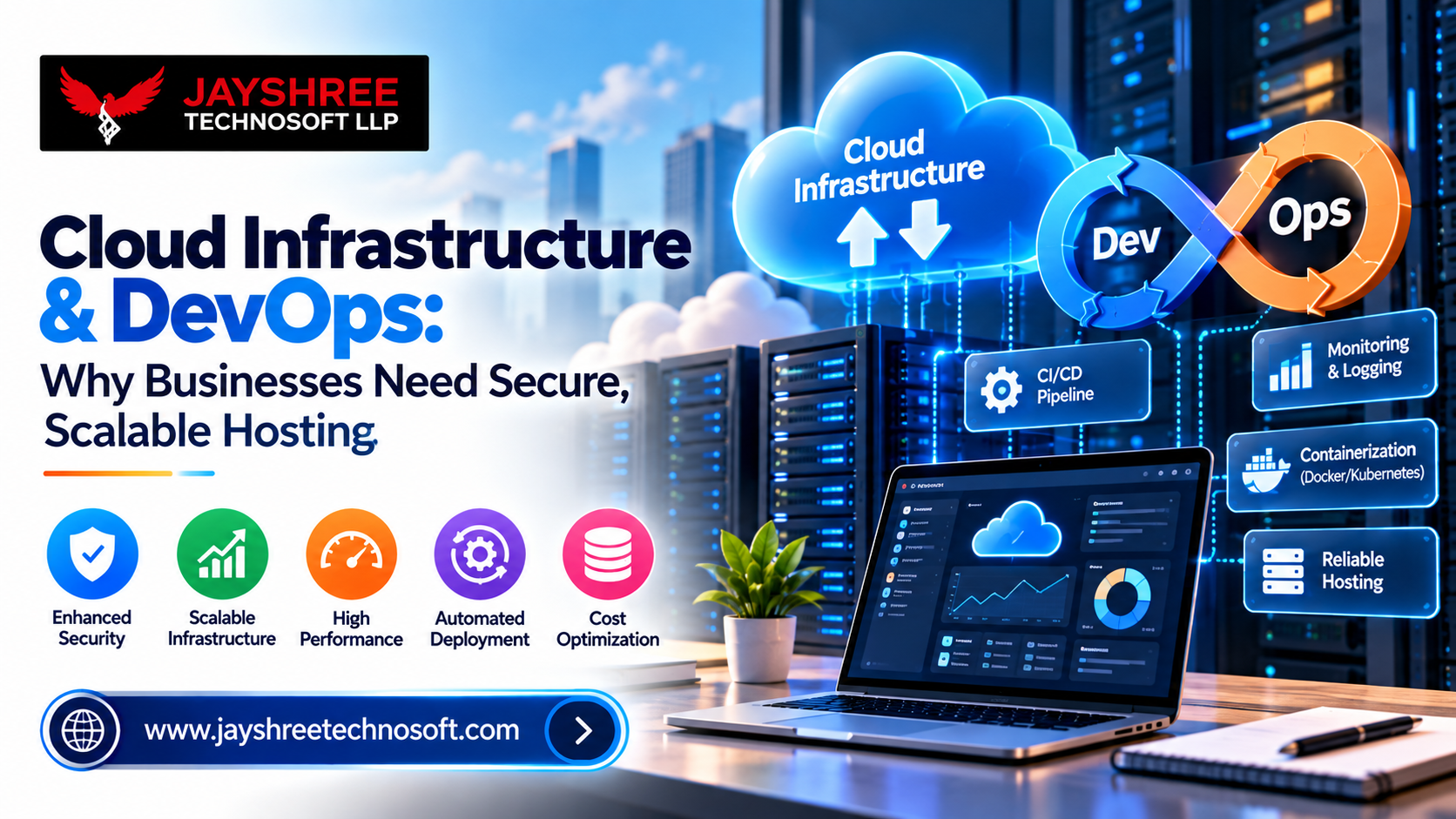
Cloud Infrastructure & DevOps: Why Businesses Need Secure, Scalable Hosting
A great application can still fail its users if the infrastructure behind it isn't built to handle real-world traffic and security demands. Cloud infrastructure and DevOps practices are what keep software running reliably as a business grows, rather than buckling under pressure at the worst possible moment.
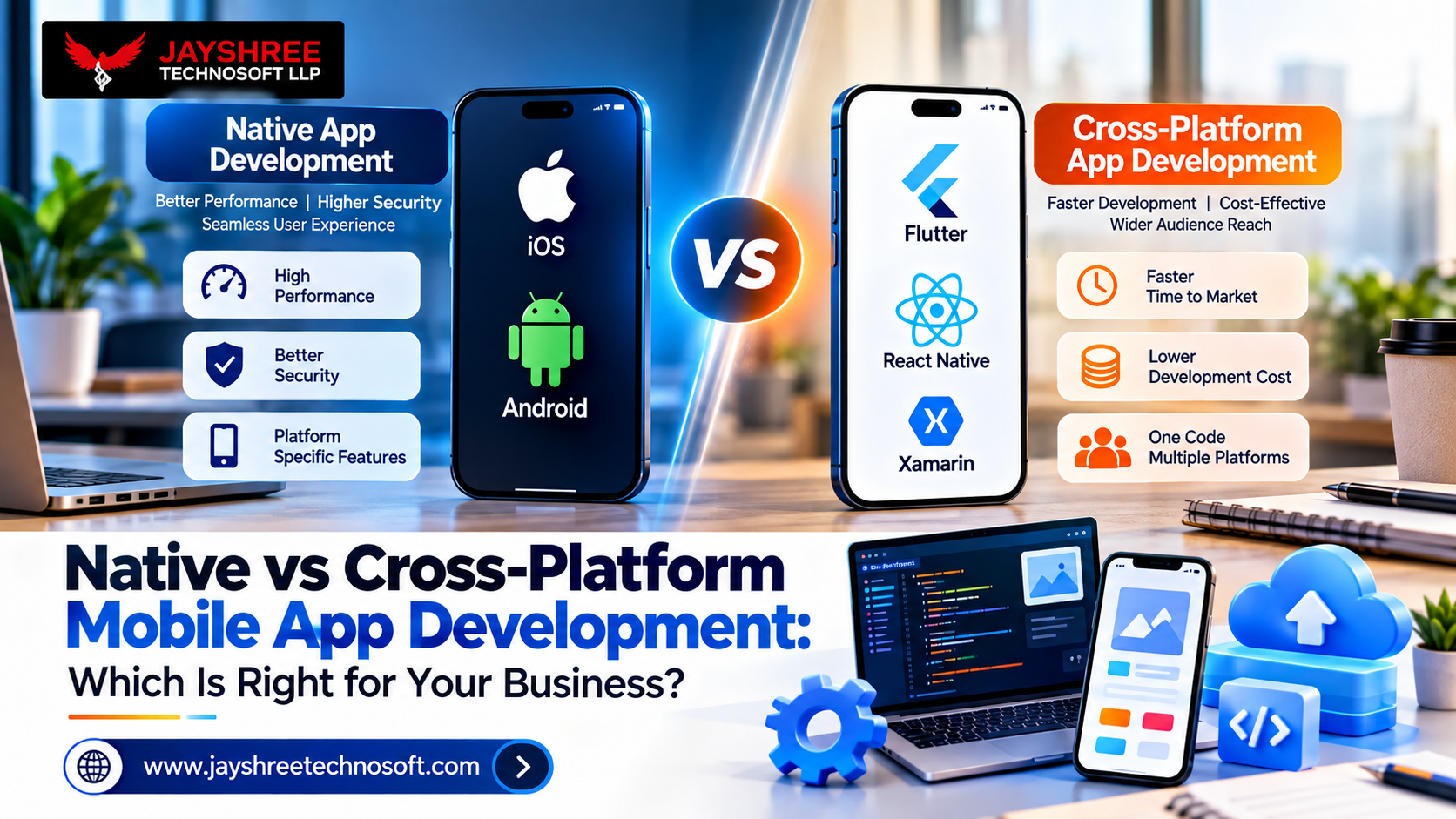
Native vs Cross-Platform Mobile App Development: Which Is Right for Your Business?
One of the first decisions in any mobile app project is also one of the most consequential: should you build separately for iOS and Android, or use a single cross-platform codebase? Native vs cross-platform mobile app development isn't a question with one universal right answer — it depends on your budget, timeline, and long-term goals.
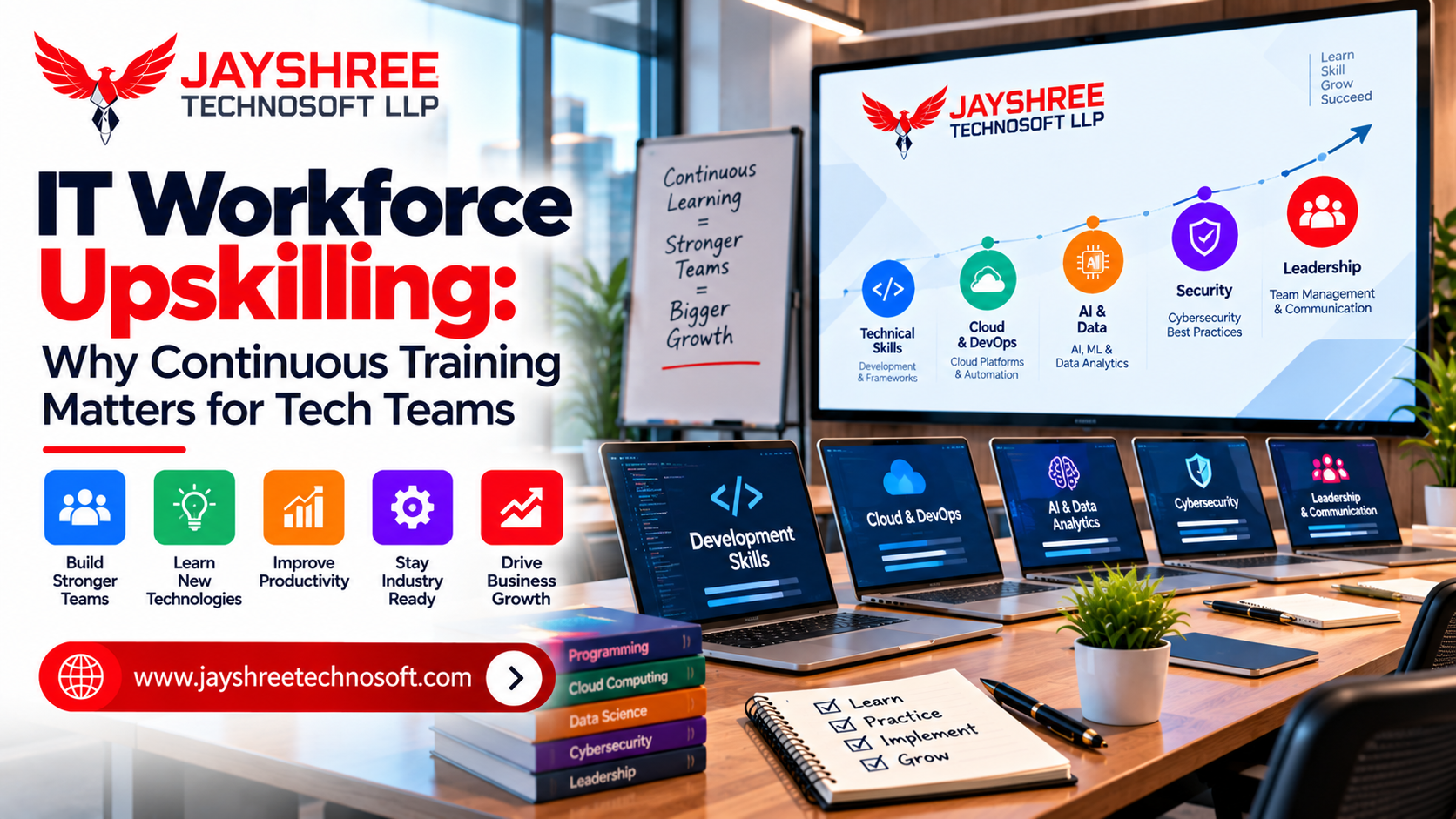
IT Workforce Upskilling: Why Continuous Training Matters for Tech Teams
Technology moves faster than most training programs can keep up with, leaving many IT professionals working with skills that are quickly becoming outdated. IT workforce upskilling isn't a one-time onboarding step — it needs to be a continuous investment for both businesses and individual professionals.
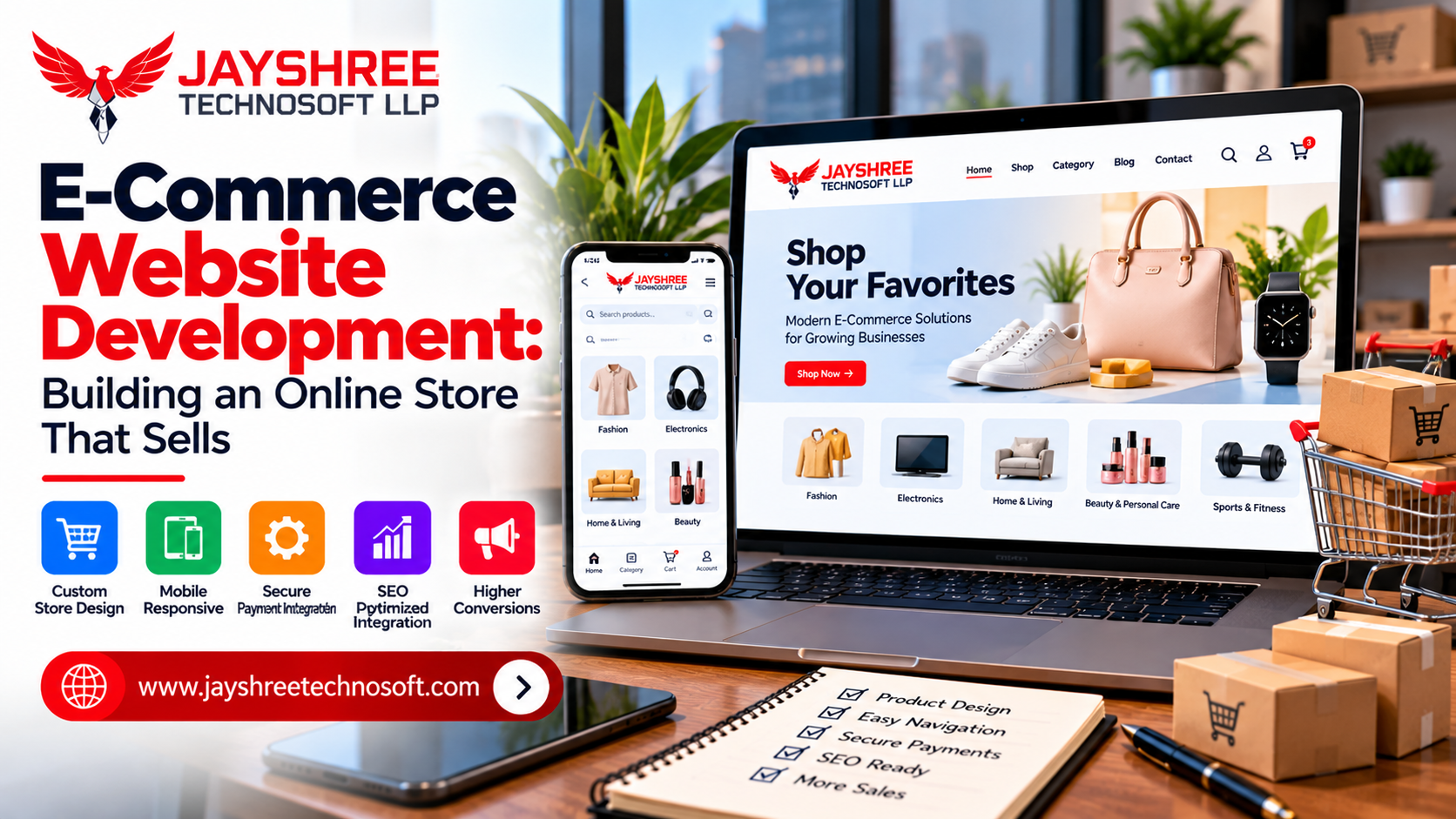
E-Commerce Website Development: Building an Online Store That Sells
Launching an online store is easy; building one that actually converts visitors into paying customers is a different challenge entirely. Real e-commerce website development goes far beyond product listings — it requires a system designed around trust, speed, and a smooth buying experience.

Blockchain Smart Contracts: How They're Changing Business Transactions
Trust and verification have always added friction to business transactions — contracts need lawyers, payments need intermediaries, and records need manual reconciliation. Blockchain smart contracts are changing this by making agreements self-executing, transparent, and far harder to dispute.
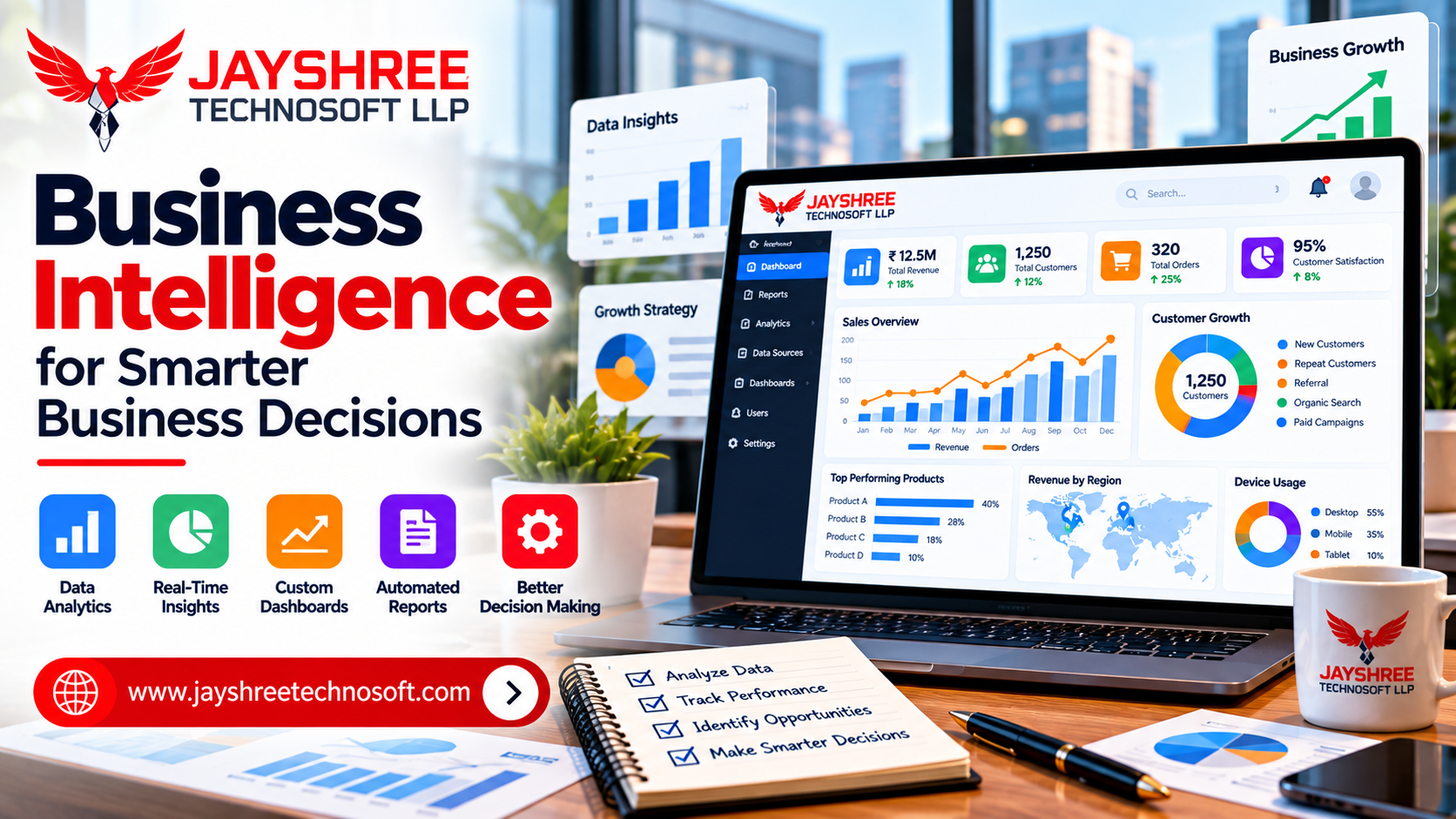
Business Intelligence for Smarter Business Decisions
Many businesses still make major decisions based on instinct or incomplete information — which stock to reorder, which marketing channel to invest in, or which product to prioritize. Business intelligence replaces that guesswork with real data, helping businesses see patterns and opportunities they'd otherwise miss.
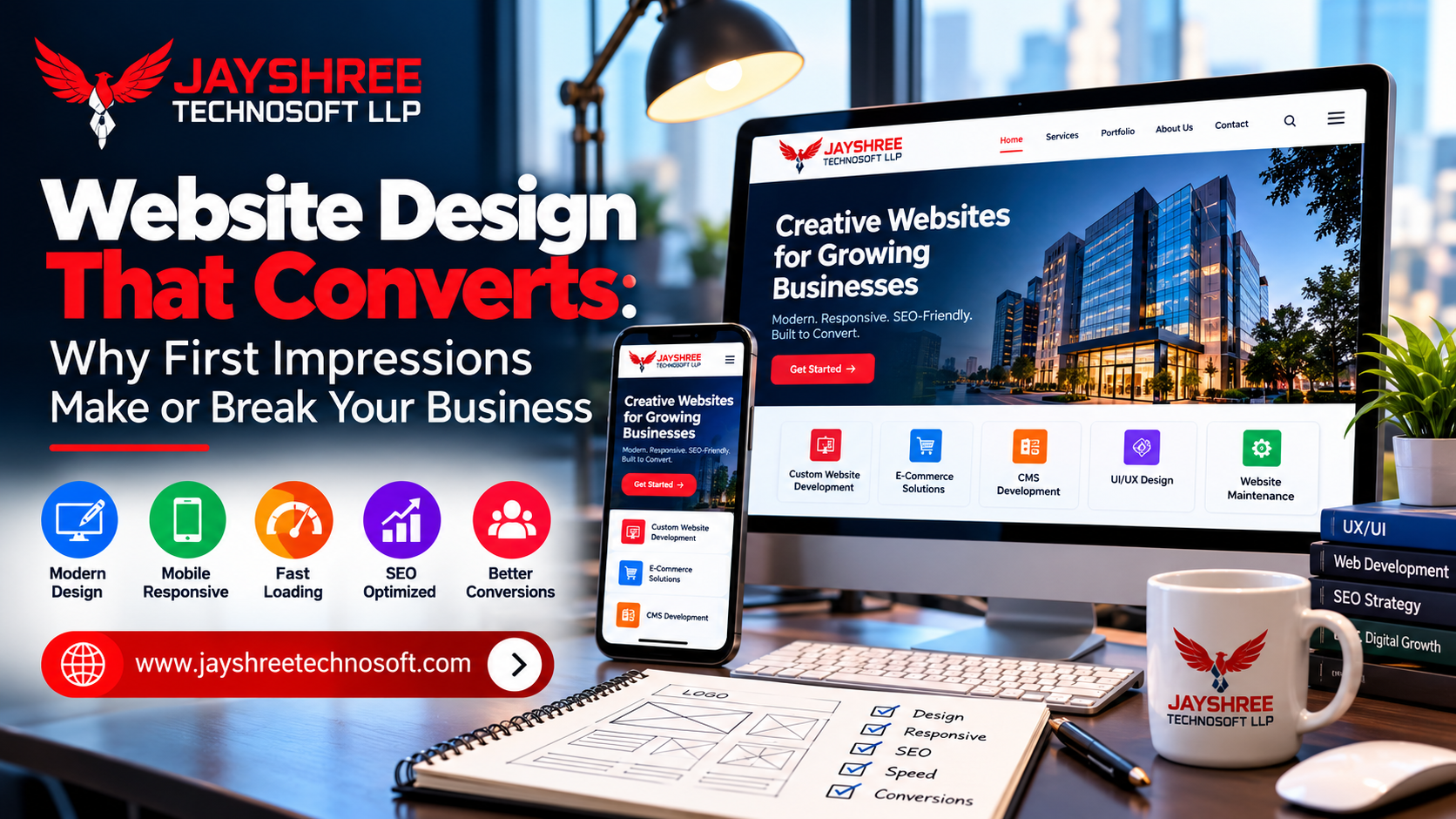
Website Design That Converts: Why First Impressions Make or Break Your Business
Visitors decide whether to trust a website within seconds of landing on it. A cluttered, slow, or confusing site loses potential customers before they even read a single word of content. Website design that converts isn't about looking pretty — it's about turning that first impression into a genuine business result.
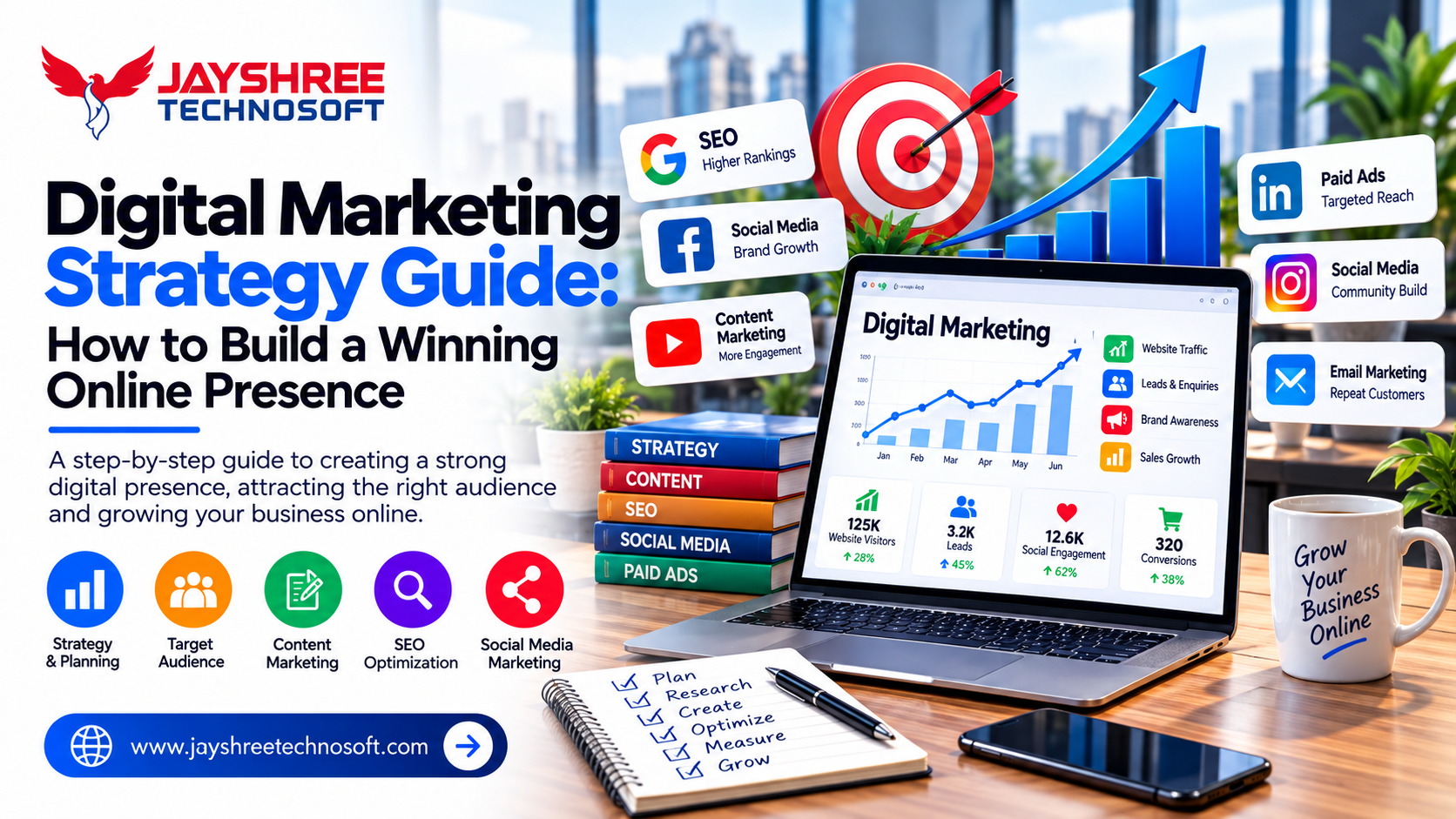
Digital Marketing Strategy Guide: How to Build a Winning Online Presence
Having a website isn't the same as having a digital presence that actually drives business. A well-built digital marketing strategy for business connects SEO, branding, and technology into one coordinated plan — rather than treating each as a separate, disconnected activity.
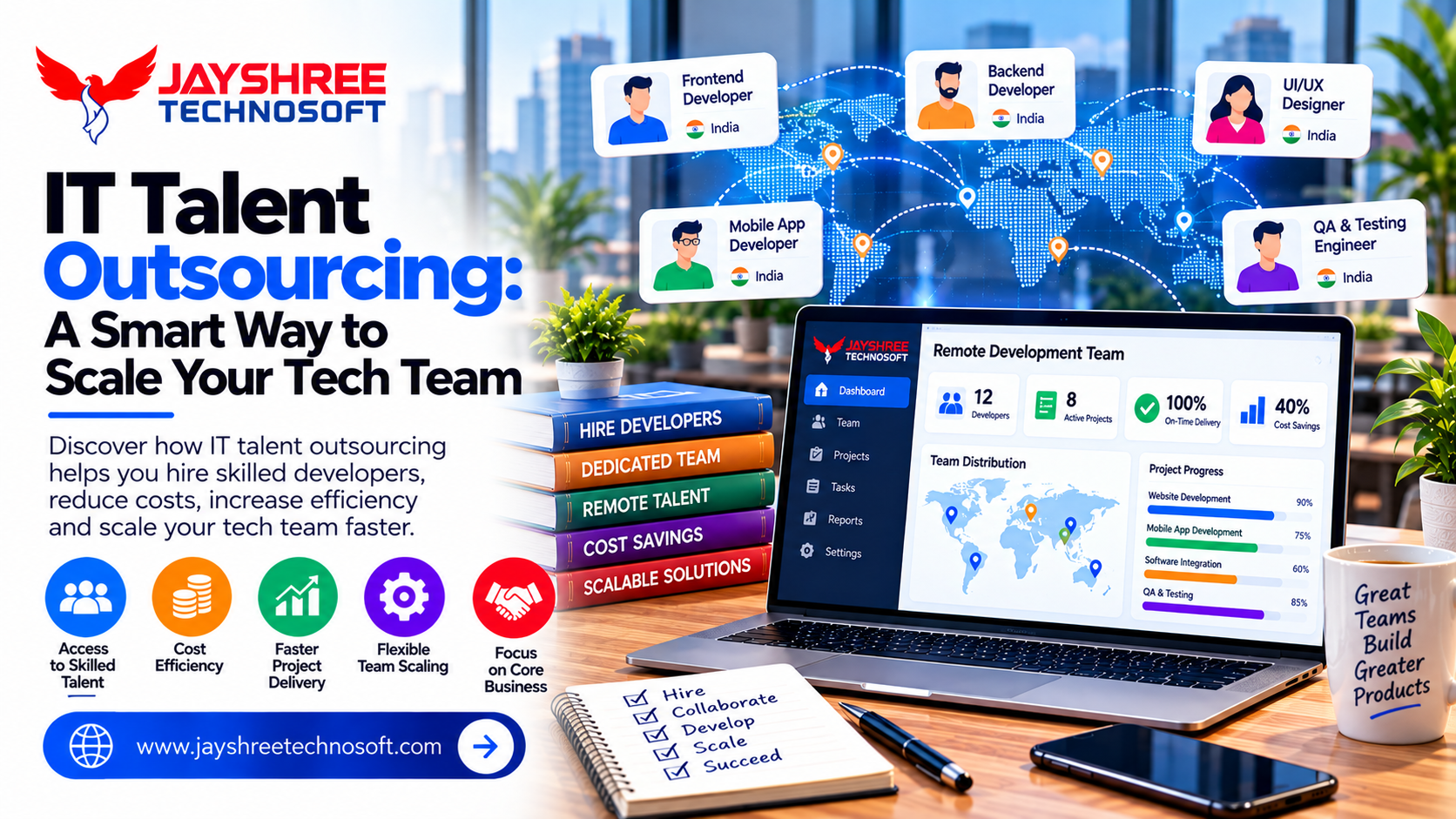
IT Talent Outsourcing: A Smart Way to Scale Your Tech Team
Hiring the right technical talent at the right time is one of the biggest challenges growing businesses face. Long hiring cycles, skill mismatches, and rising salaries make it hard to scale a tech team quickly. This is where IT talent outsourcing offers a faster, more flexible alternative.
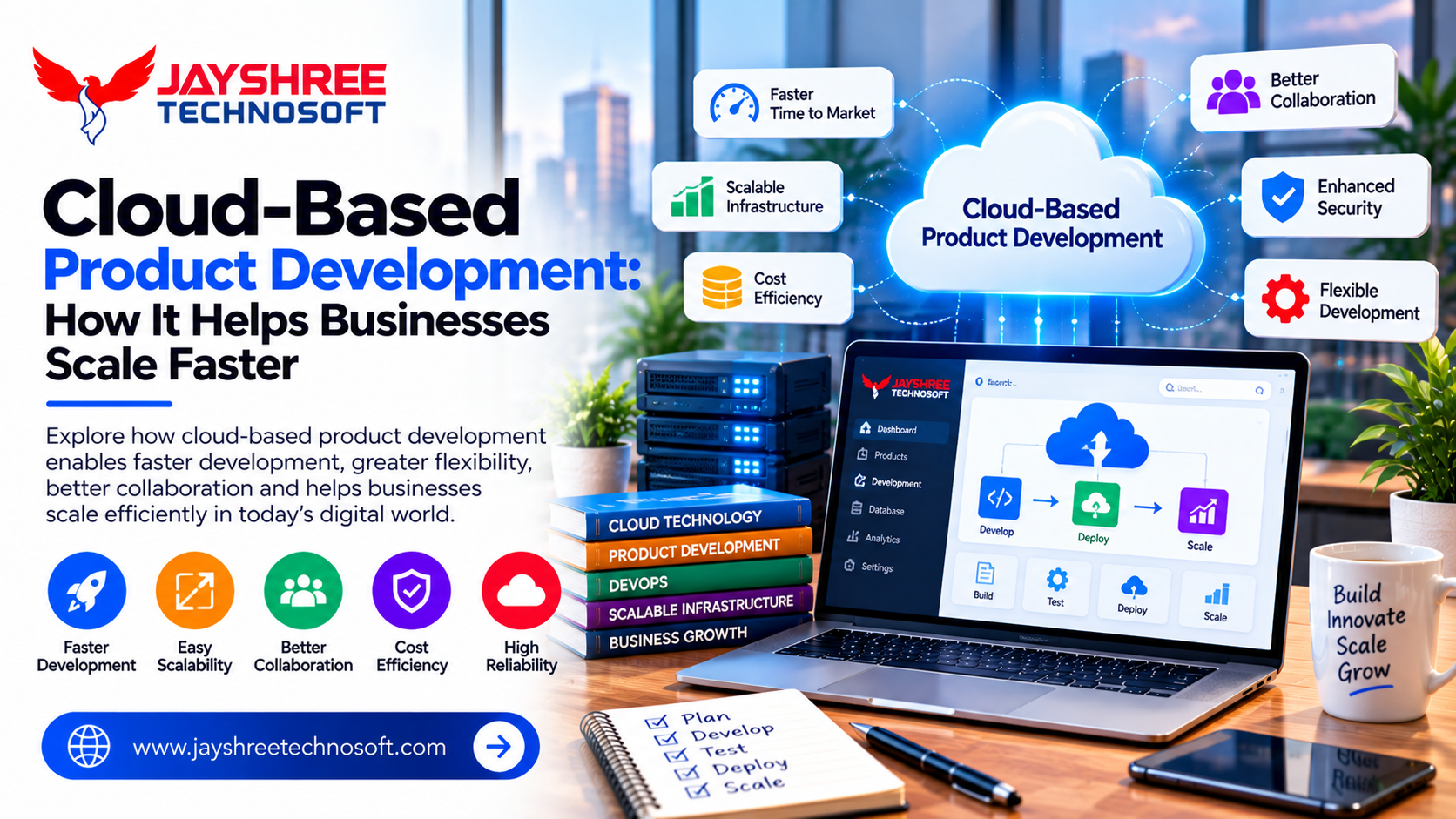
Cloud-Based Product Development: How It Helps Businesses Scale Faster
Building software the right way from the start saves businesses from costly rewrites down the line. Cloud-based product development has become the standard approach for companies that want scalable, reliable, and cost-efficient technical solutions — instead of rigid, on-premise systems that struggle to grow with the business.
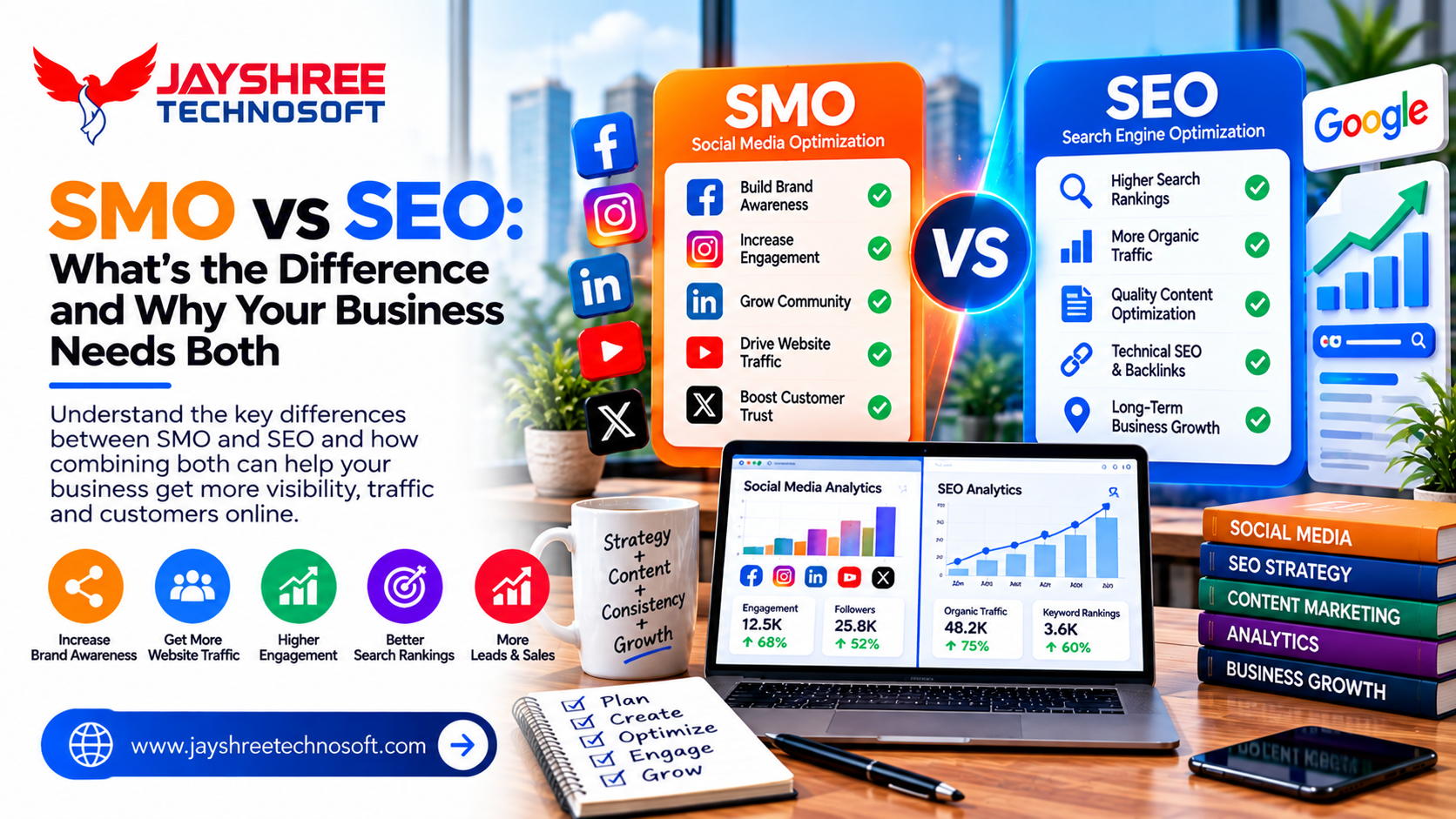
SMO vs SEO: What's the Difference and Why Your Business Needs Both
Business owners often use "SEO" and "SMO" interchangeably, but they serve very different purposes. Understanding SMO vs SEO — and why they work best together — is key to building a complete digital presence rather than relying on just one channel.
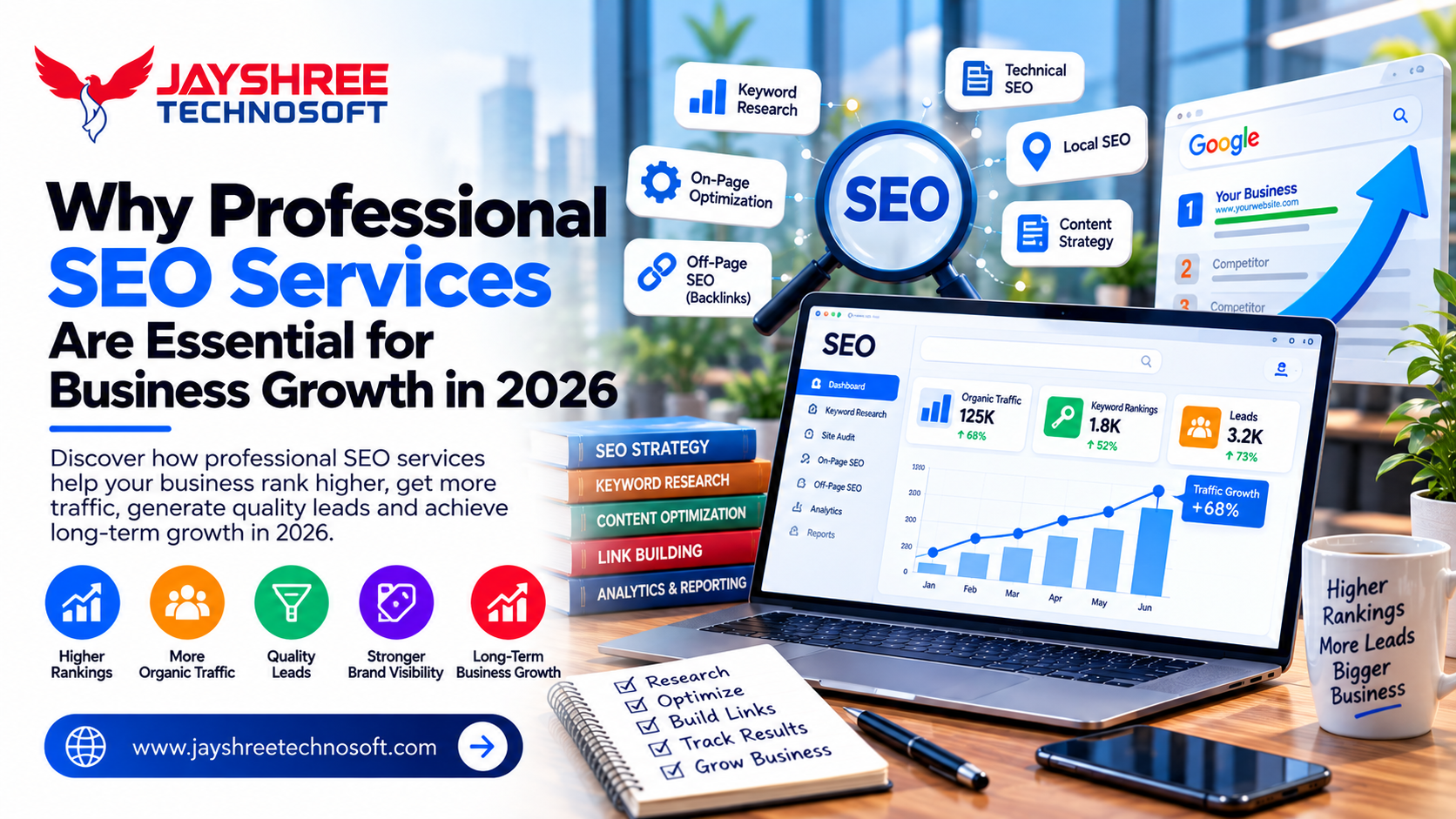
Why Professional SEO Services Are Essential for Business Growth in 2026
Ranking on the first page of Google isn't luck — it's the result of a deliberate, well-executed strategy. As competition online keeps growing, professional SEO services have become one of the most cost-effective ways for businesses to attract customers who are already searching for what they offer.
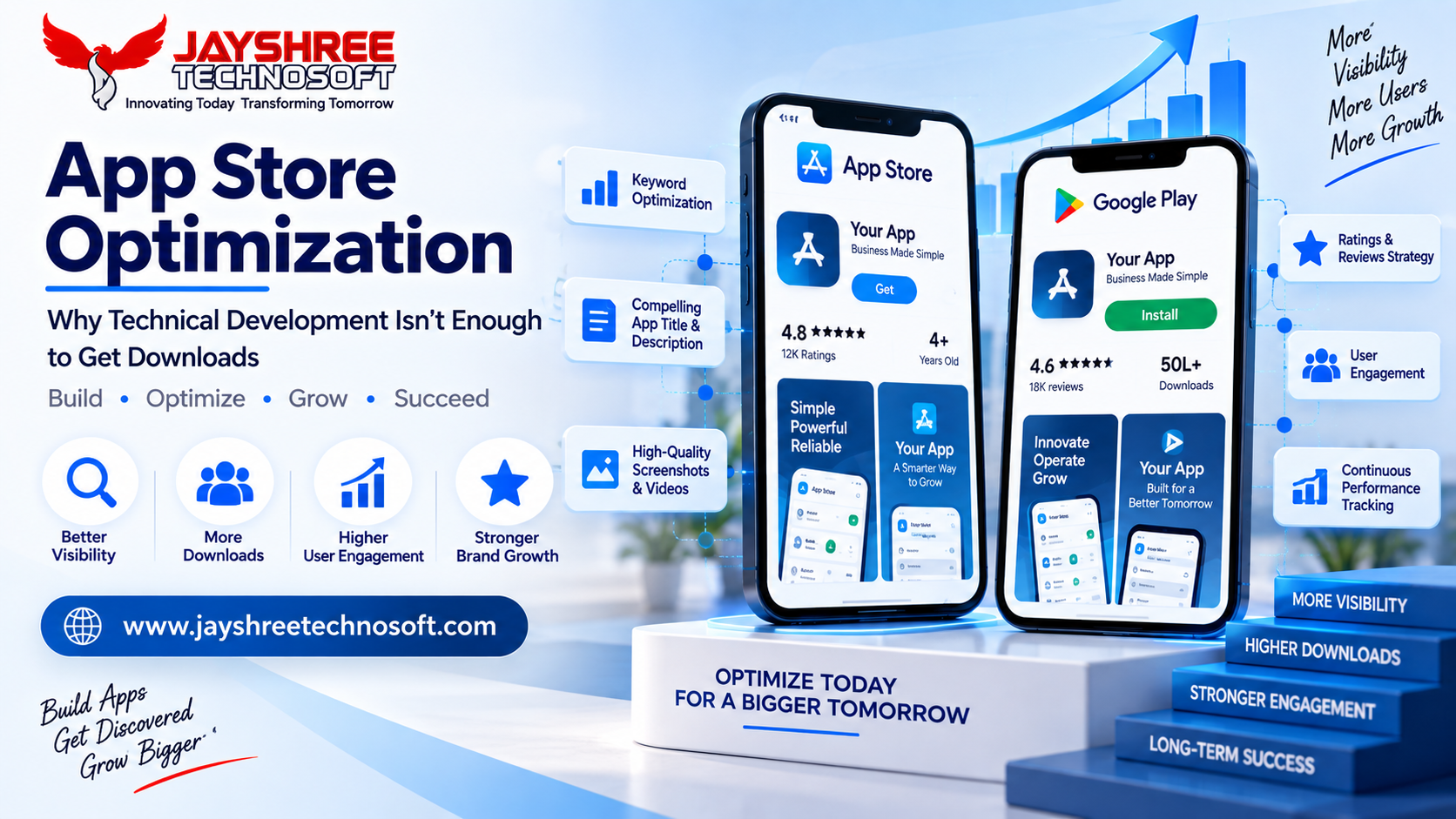
App Store Optimization: Why Technical Development Isn't Enough to Get Downloads
App Store Optimization services to help a well-built app actually get discovered and downloaded in crowded app stores.
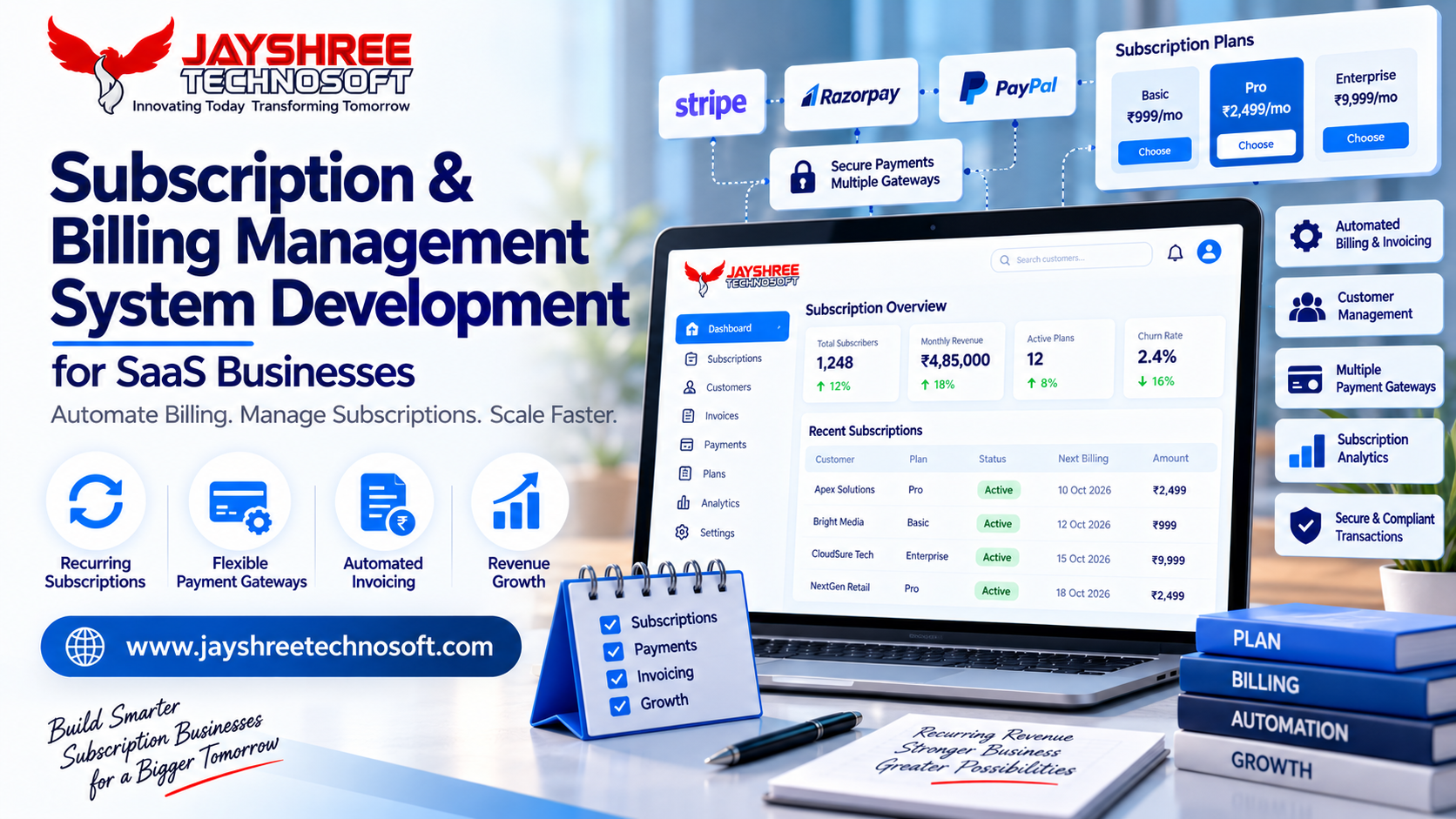
Subscription & Billing Management System Development for SaaS Businesses
Subscription and billing management system development for SaaS businesses — handling plans, upgrades, and recurring revenue correctly.
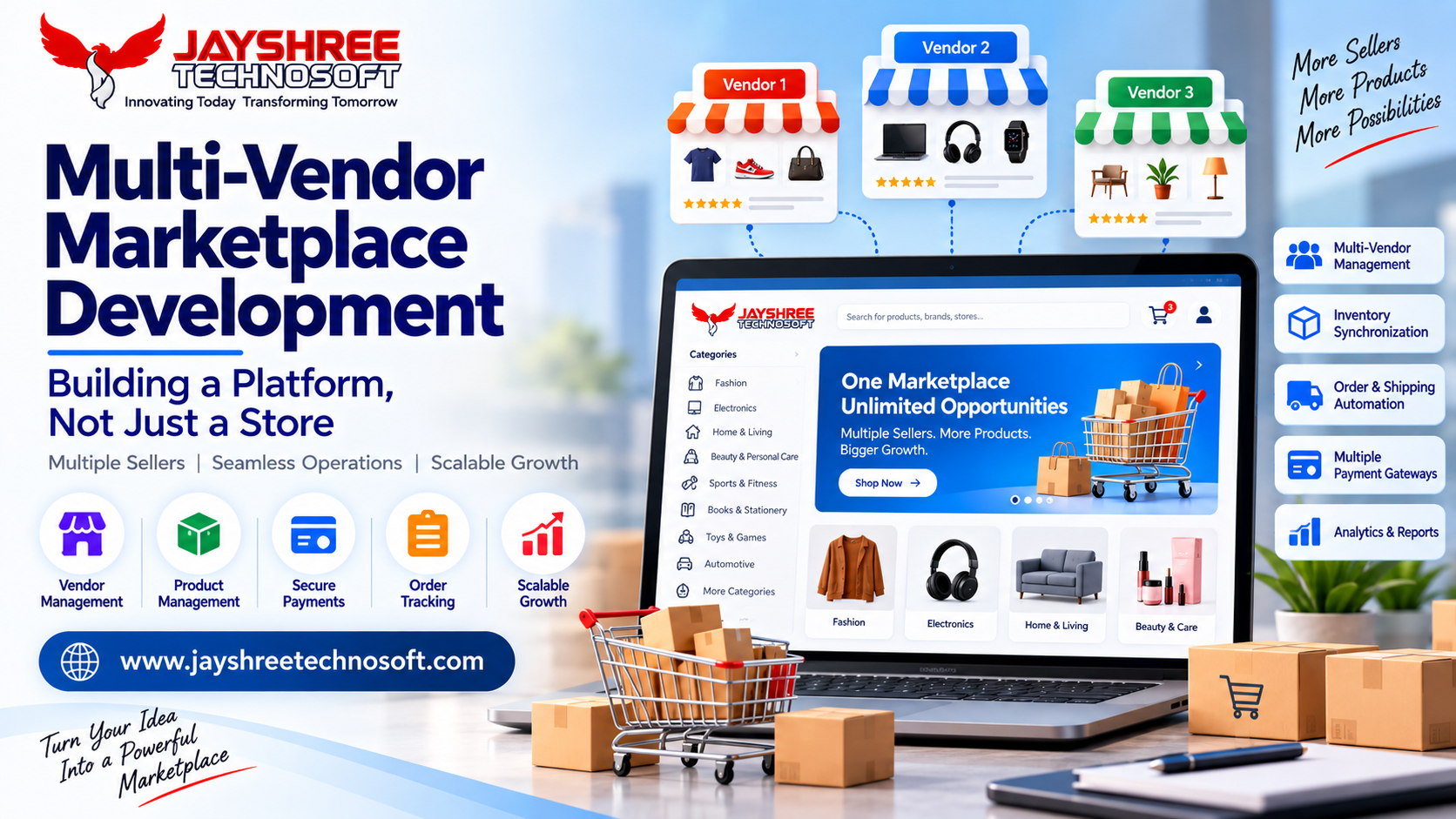
Multi-Vendor Marketplace Development: Building a Platform, Not Just a Store
Multi-vendor marketplace development — what it takes to build a platform connecting multiple sellers with buyers, beyond a standard online store.
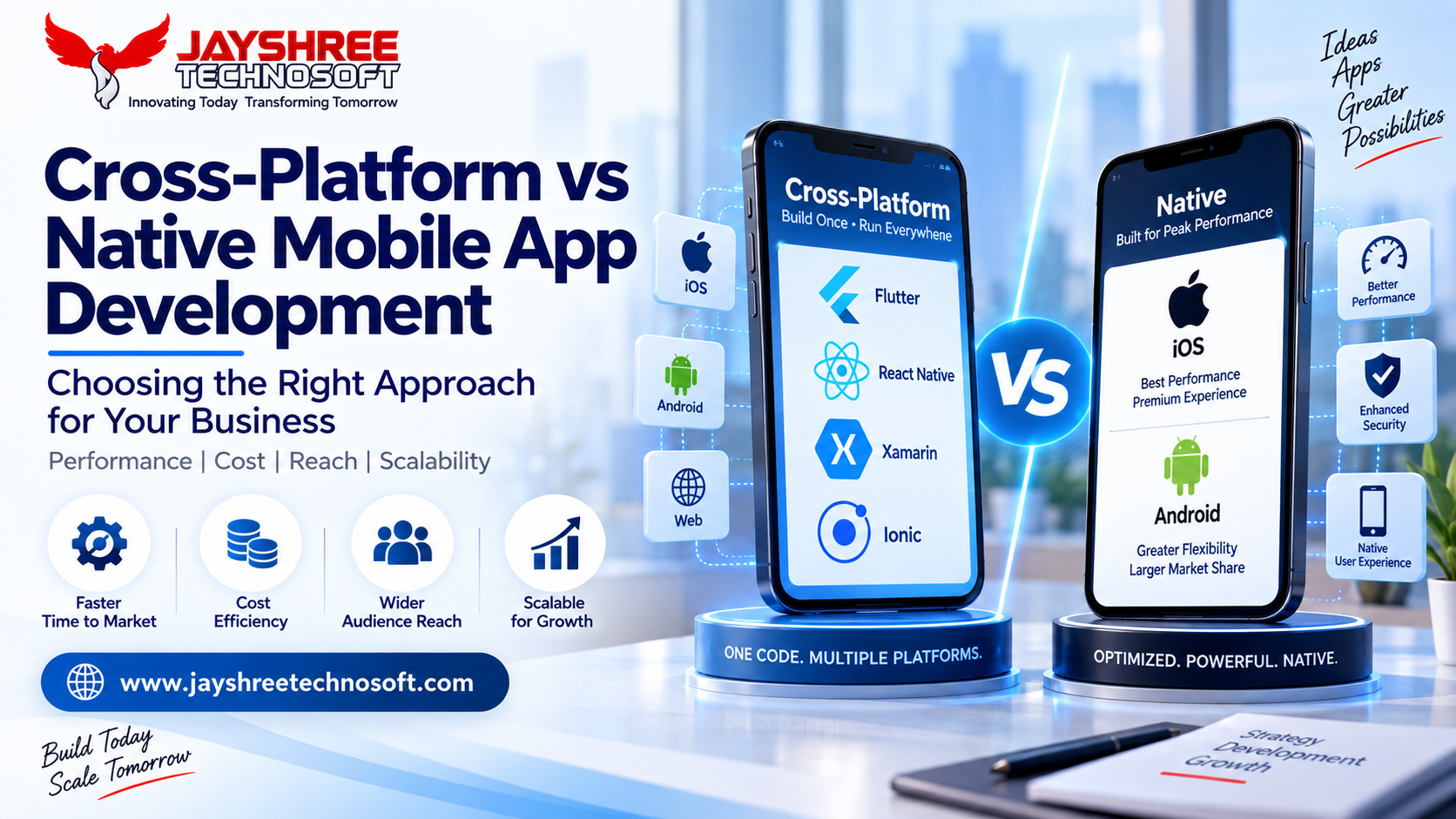
Cross-Platform vs Native Mobile App Development: Choosing the Right Approach
Cross-platform vs native mobile app development — the real trade-offs to weigh before choosing an approach for your app.
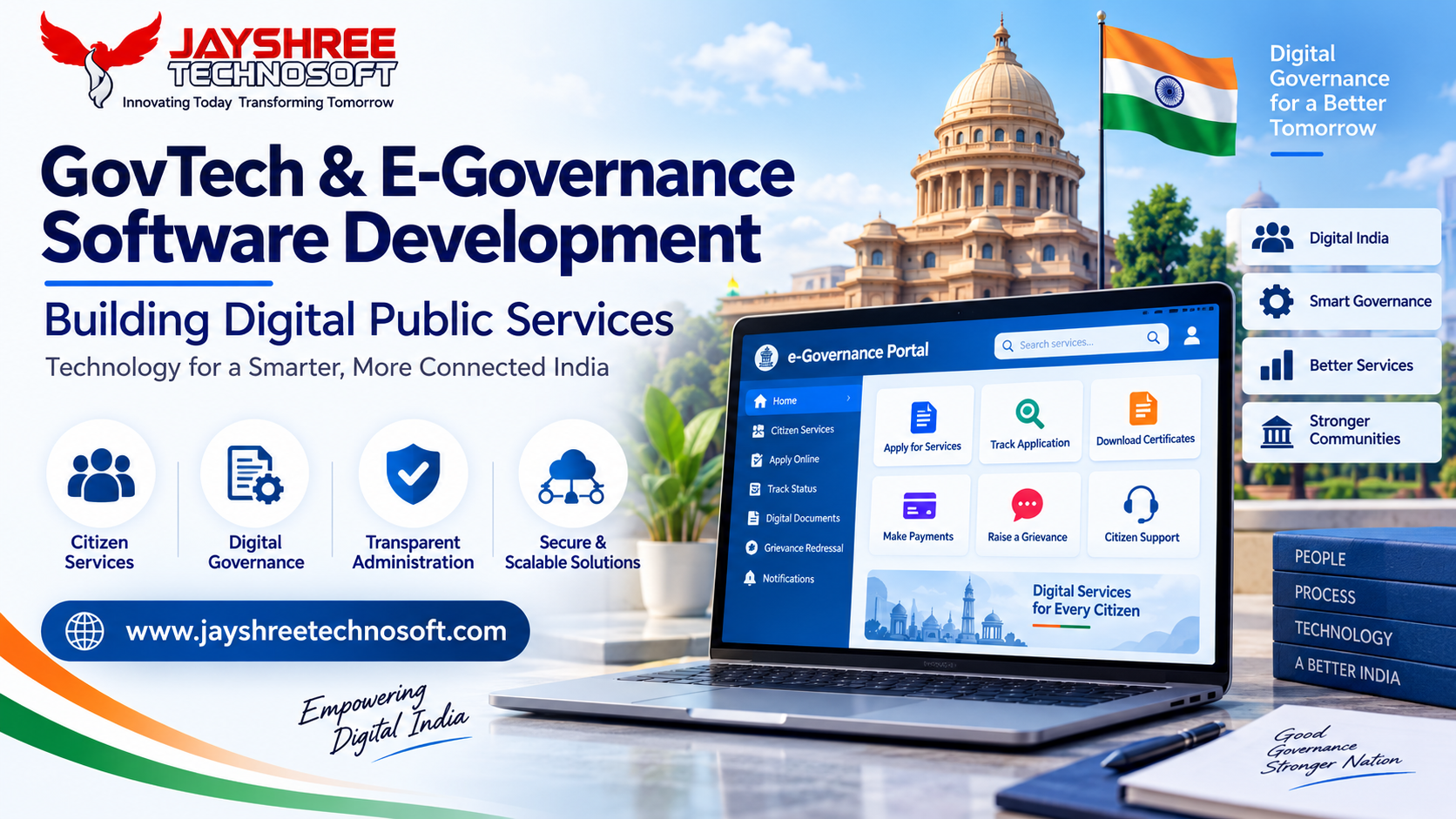
GovTech & E-Governance Software Development: Building Digital Public Services
GovTech and e-governance software development for building secure, scalable digital public service platforms.
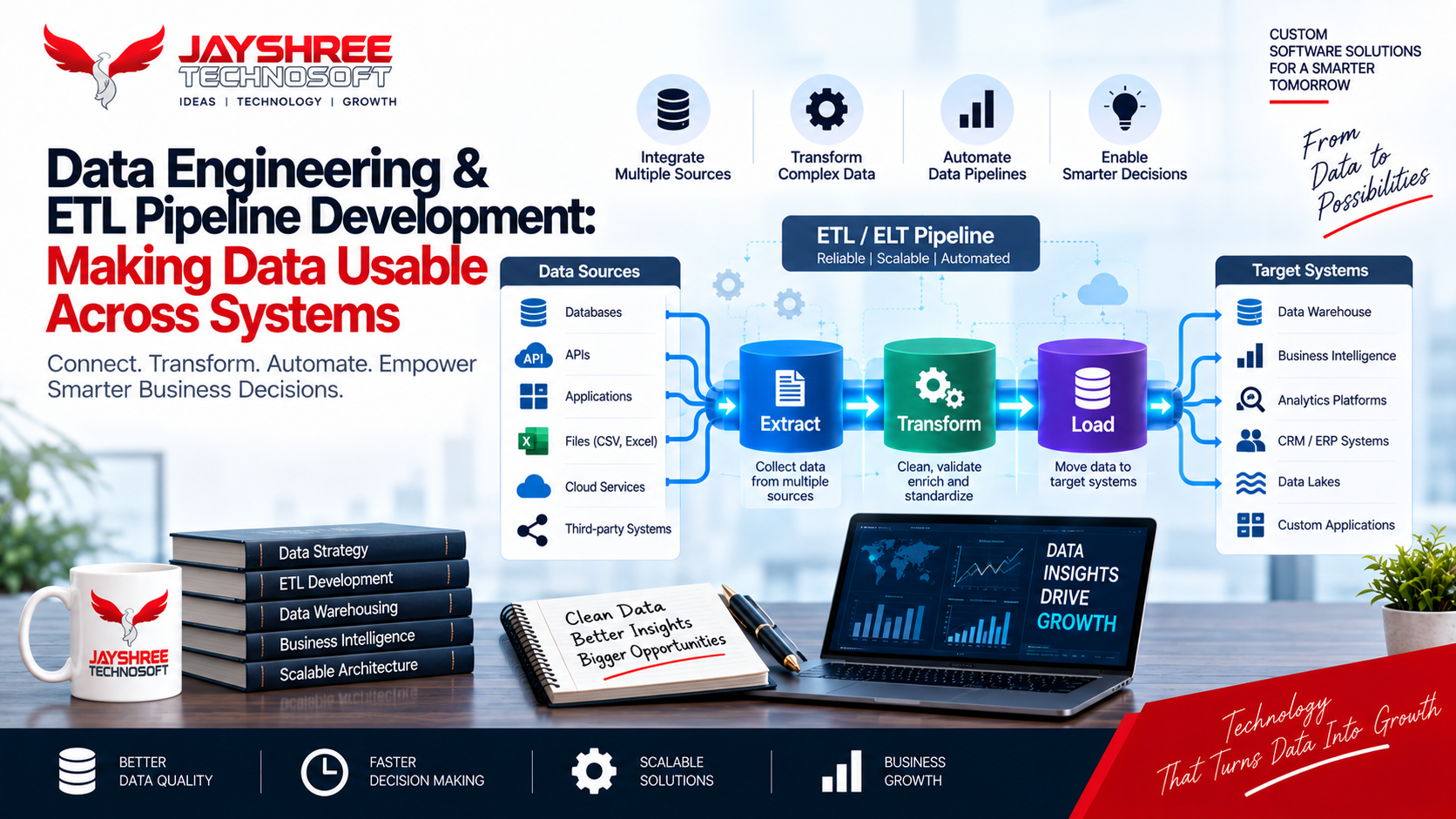
Data Engineering & ETL Pipeline Development: Making Data Usable Across Systems
Data engineering and ETL pipeline development that reliably moves and transforms data between systems, making it usable where it's needed.
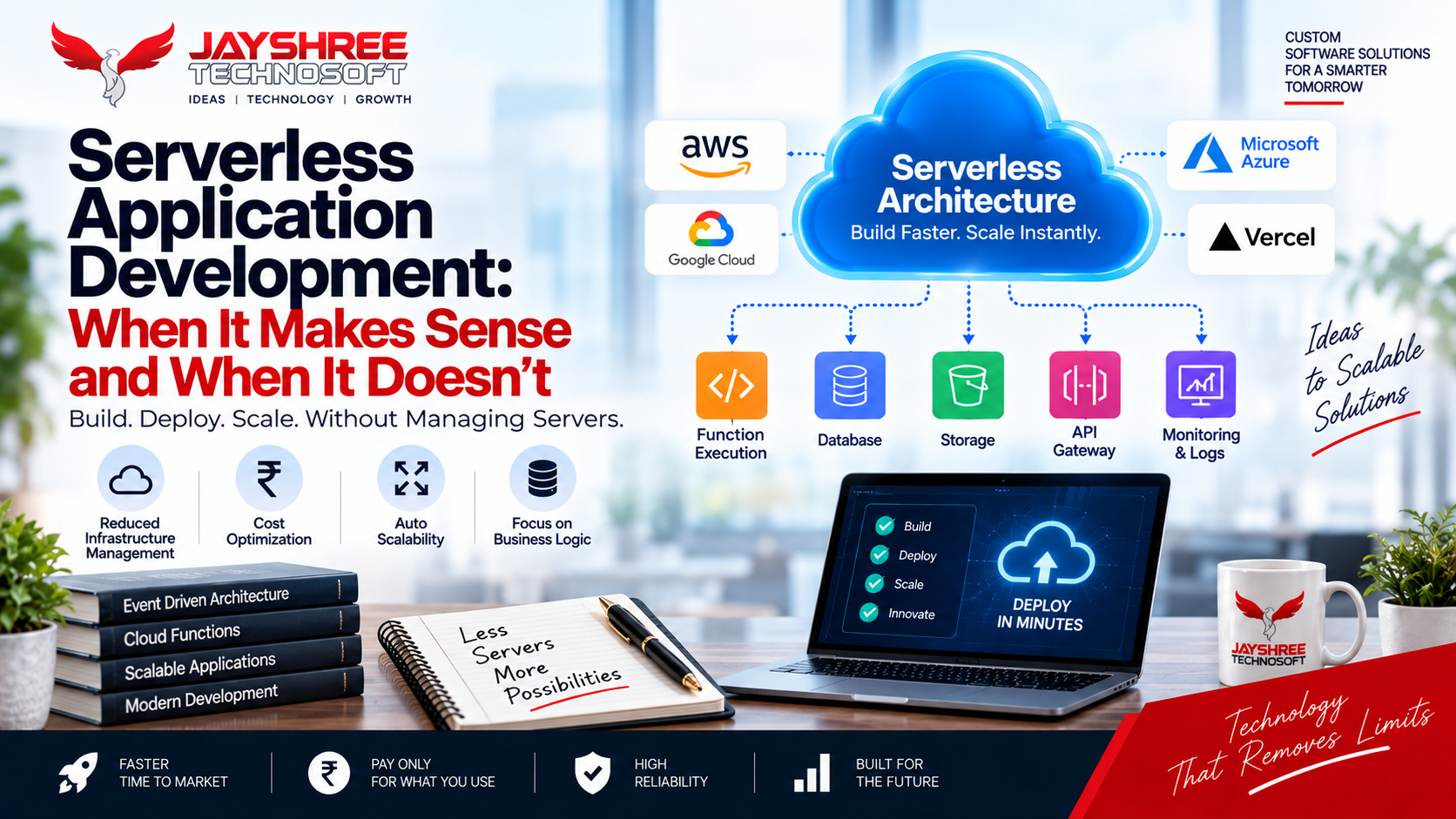
Serverless Application Development: When It Makes Sense and When It Doesn't
Serverless application development explained — the real advantages, the trade-offs, and when it's genuinely the right architecture choice.
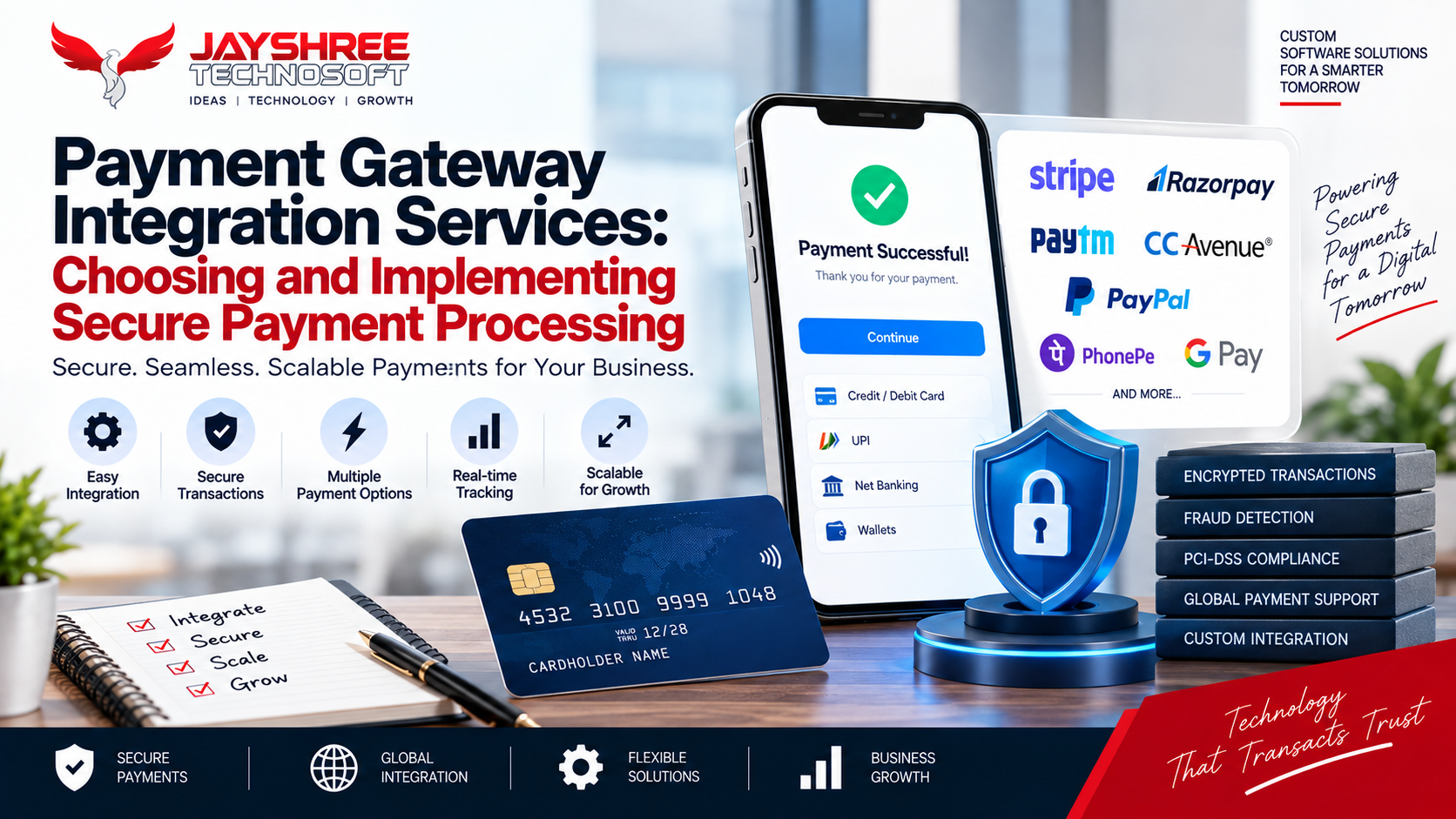
Payment Gateway Integration Services: Choosing and Implementing Secure Payment Processing
Payment gateway integration services — how to choose the right provider and implement secure, reliable payment processing.
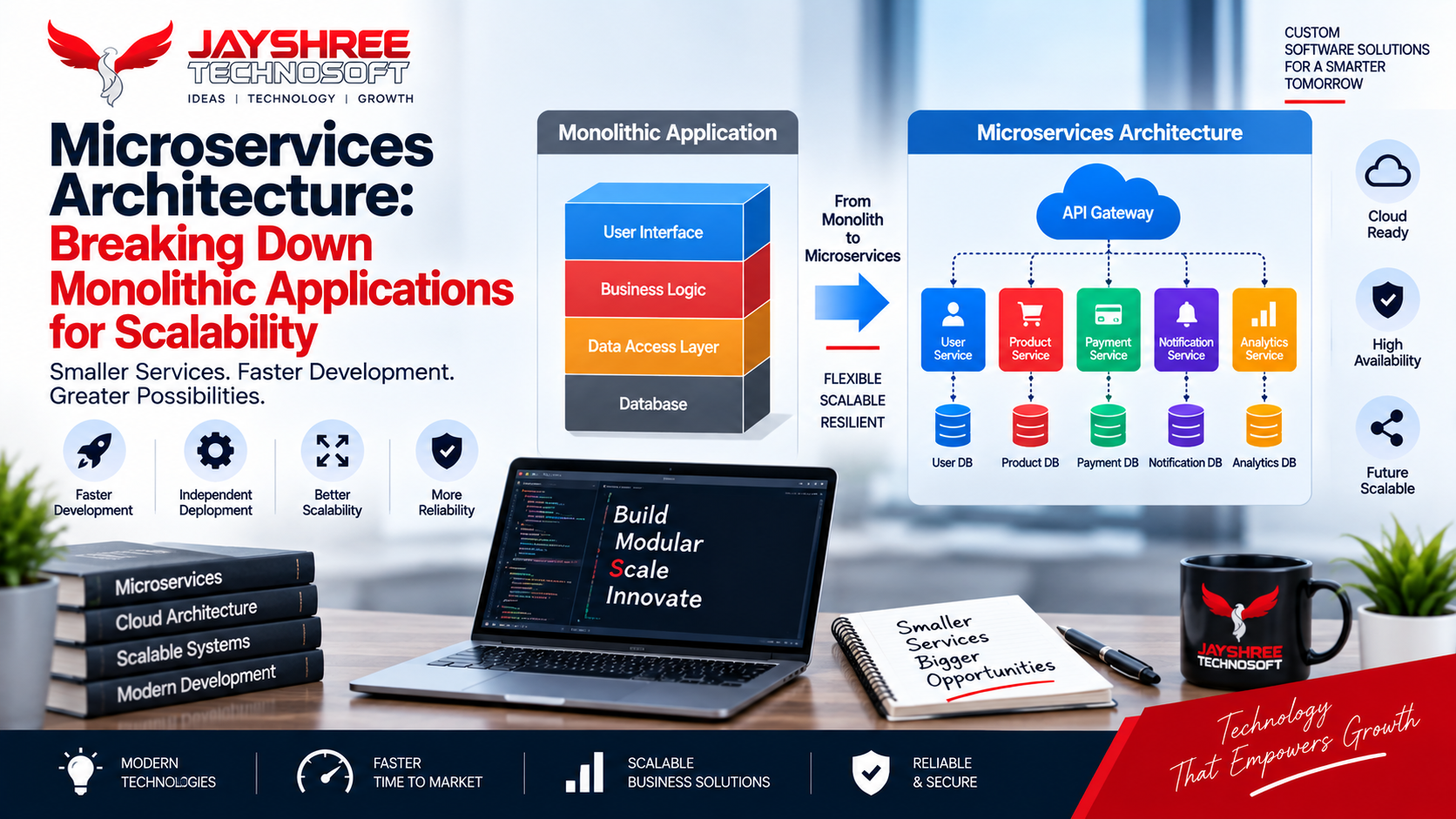
Microservices Architecture: Breaking Down Monolithic Applications for Scalability
When and how to break a monolithic application into microservices — the real trade-offs behind this common architecture decision.
India's DPDP Act Compliance: What It Means for Software Development
What India's DPDP Act means for software development — consent management, data rights, and building compliance into your application.
Custom CRM Development: Why Off-the-Shelf CRMs Sometimes Aren't Enough
When off-the-shelf CRM software falls short and custom CRM development becomes the better long-term investment.
Progressive Web App (PWA) Development: The Middle Ground Between a Website and a Mobile App
Progressive web app development — a faster, cheaper alternative to native apps that still works offline and installs like an app.
Cloud Cost Optimization: Getting More From Your Infrastructure Spend Without Overpaying
Practical cloud cost optimization strategies to reduce AWS, Azure or GCP spend without compromising performance or reliability.
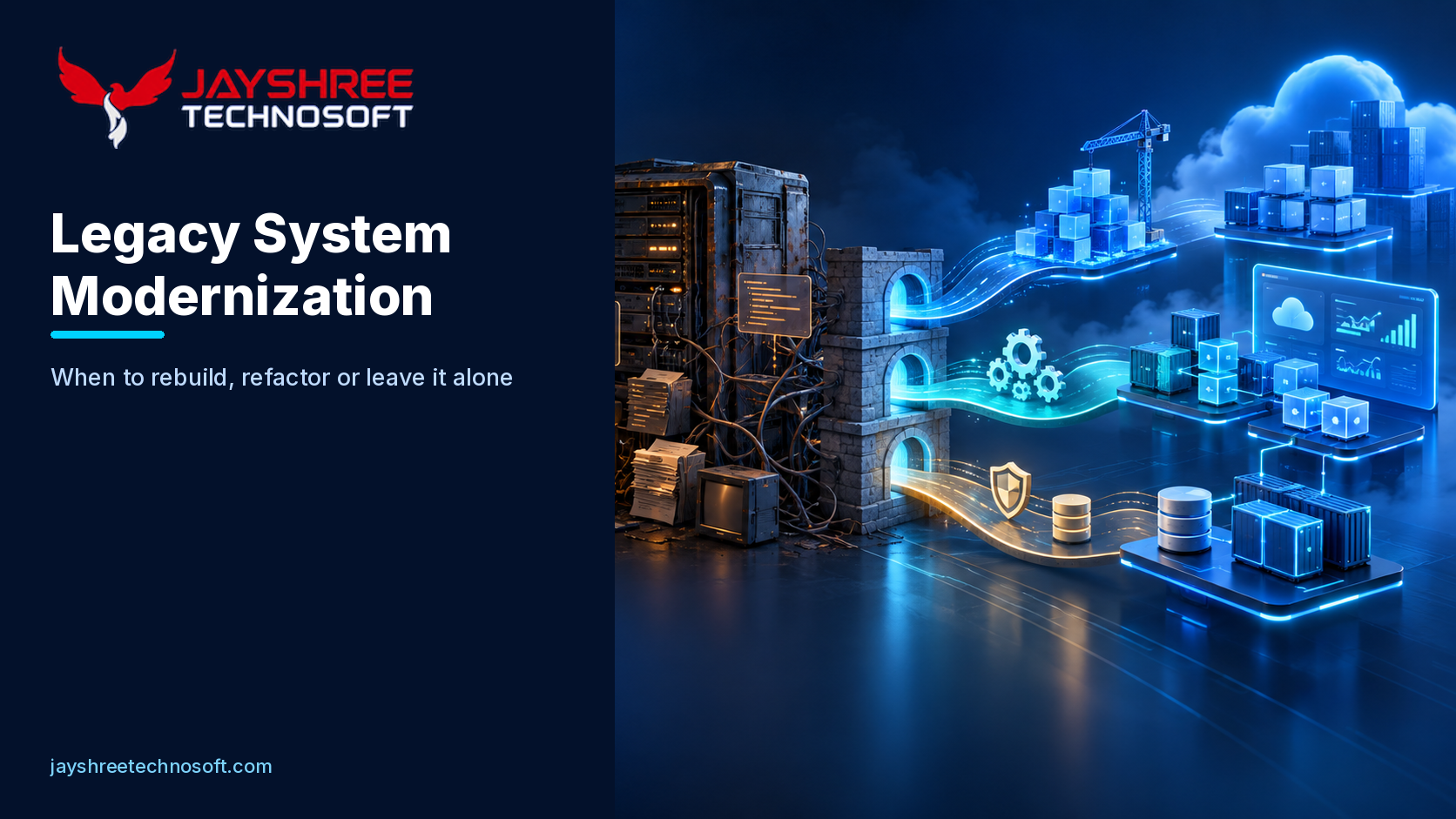
Legacy System Modernization: When to Rebuild, Refactor, or Leave It Alone
A practical guide to legacy system modernization — how to decide between rebuilding, refactoring, or maintaining old software.

Cybersecurity & Penetration Testing Services: Protecting Business Applications Before Attackers Find the Gaps
Cybersecurity and penetration testing services that find vulnerabilities in your web and mobile applications before attackers do.
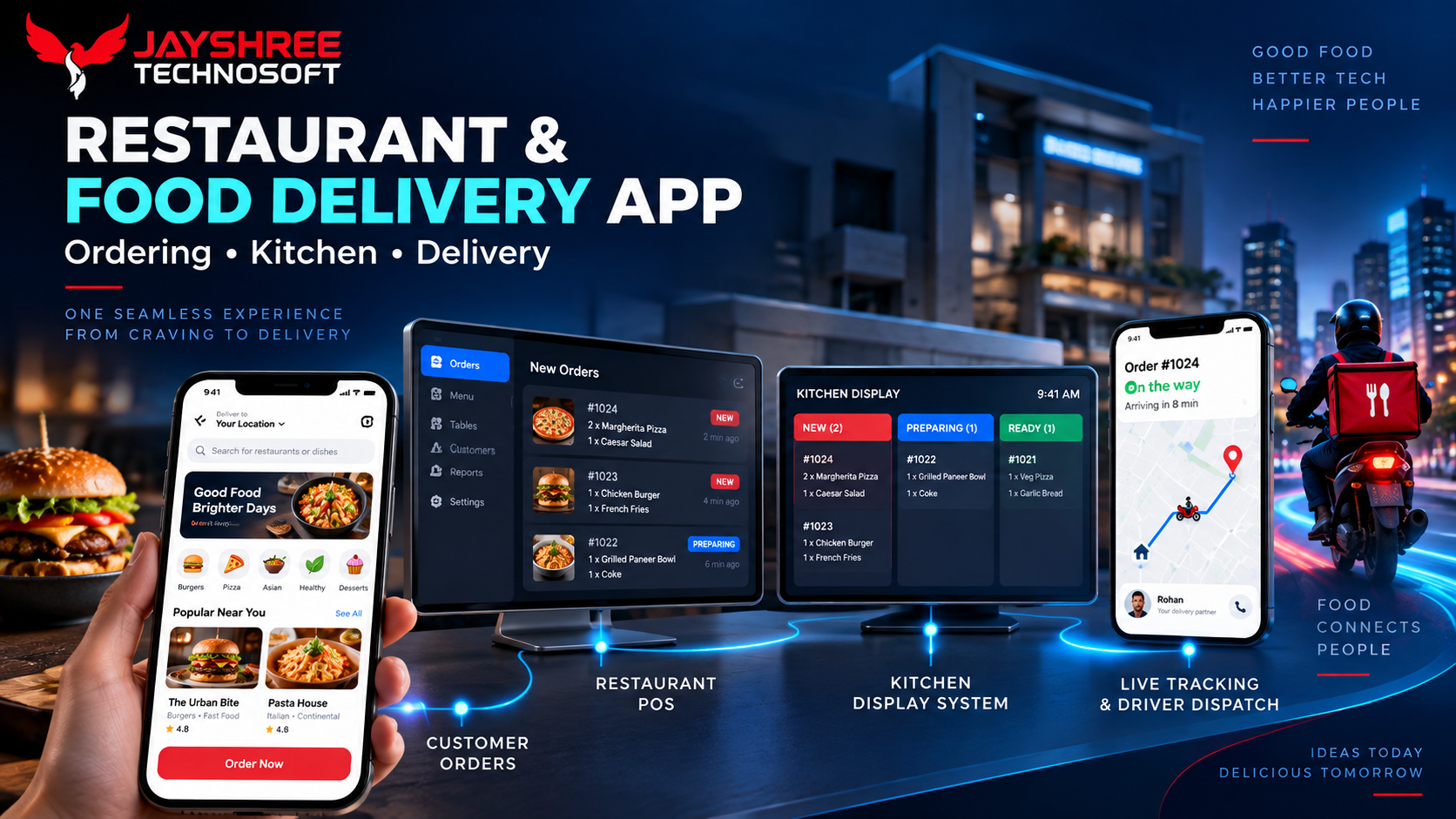
Restaurant & Food Delivery App Development: Ordering, Kitchen Display and Delivery in One System
Restaurant and food delivery app development connecting online ordering, kitchen operations and delivery tracking in one system.
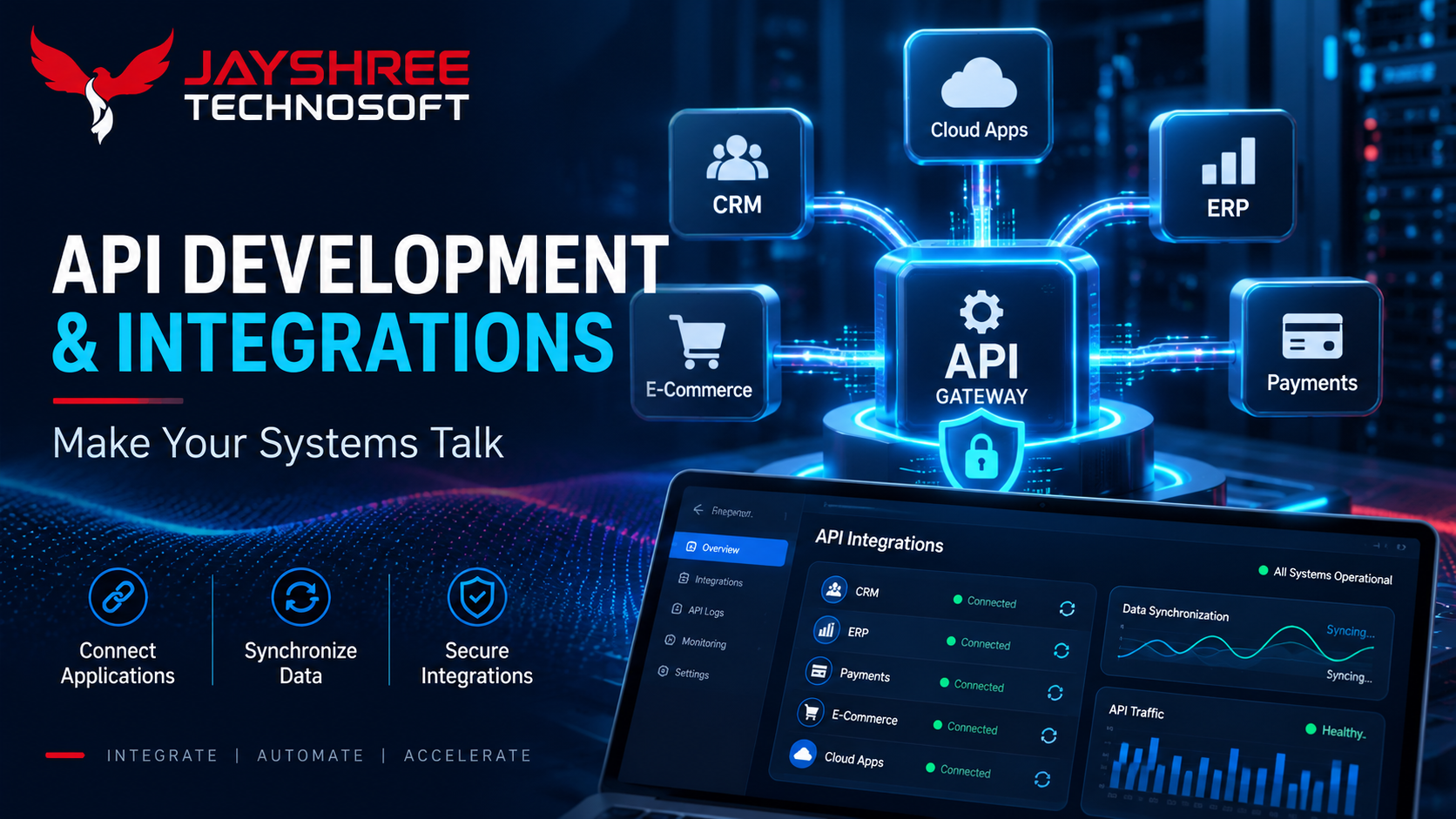
API Development & Third-Party Integrations: Making Your Systems Talk to Each Other
API development and third-party integrations that connect your existing software instead of forcing manual data entry between systems.
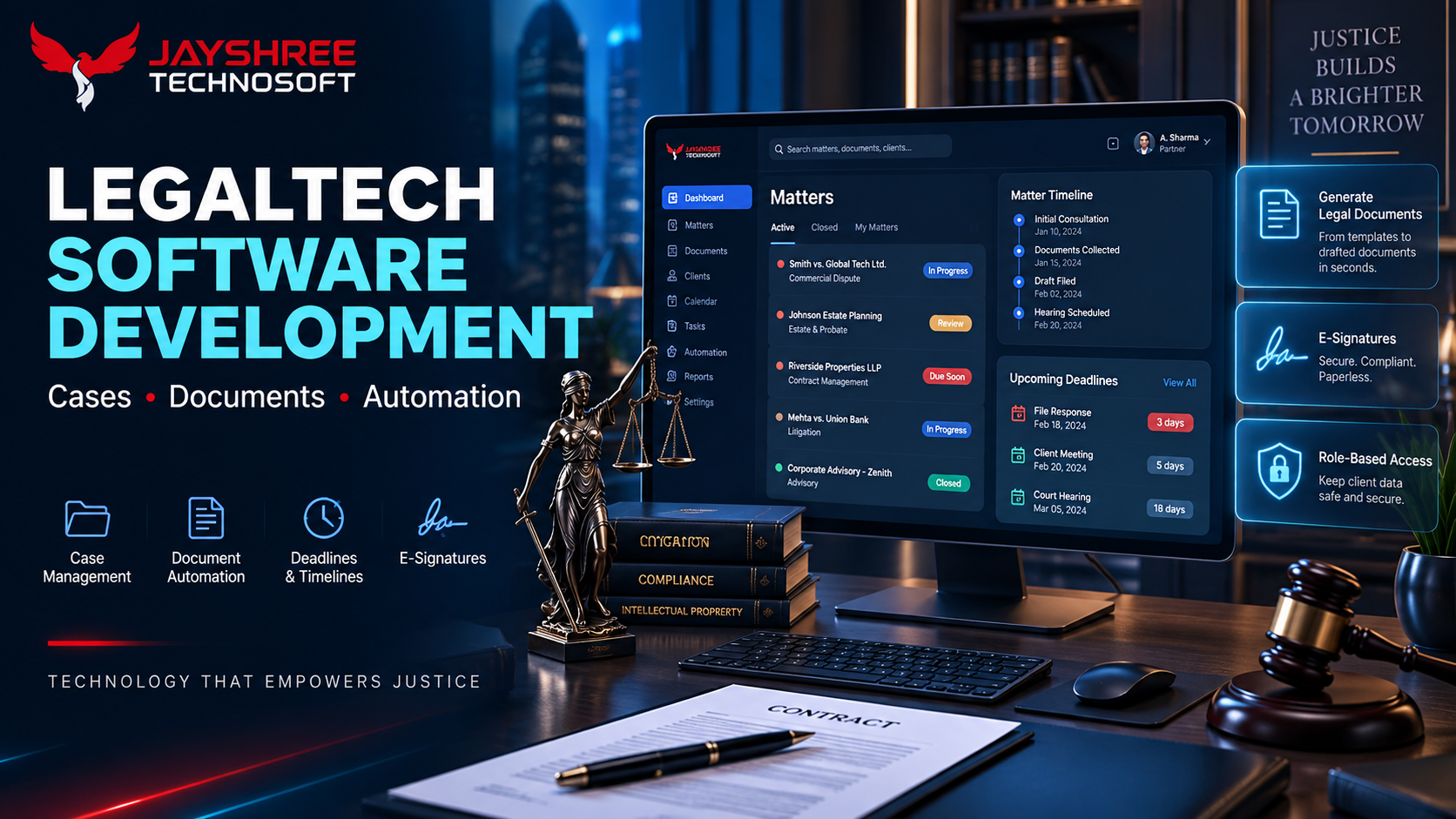
LegalTech Software Development: Case Management and Document Automation for Law Firms
LegalTech software development for case management, document automation and client communication — built for how law firms actually work.
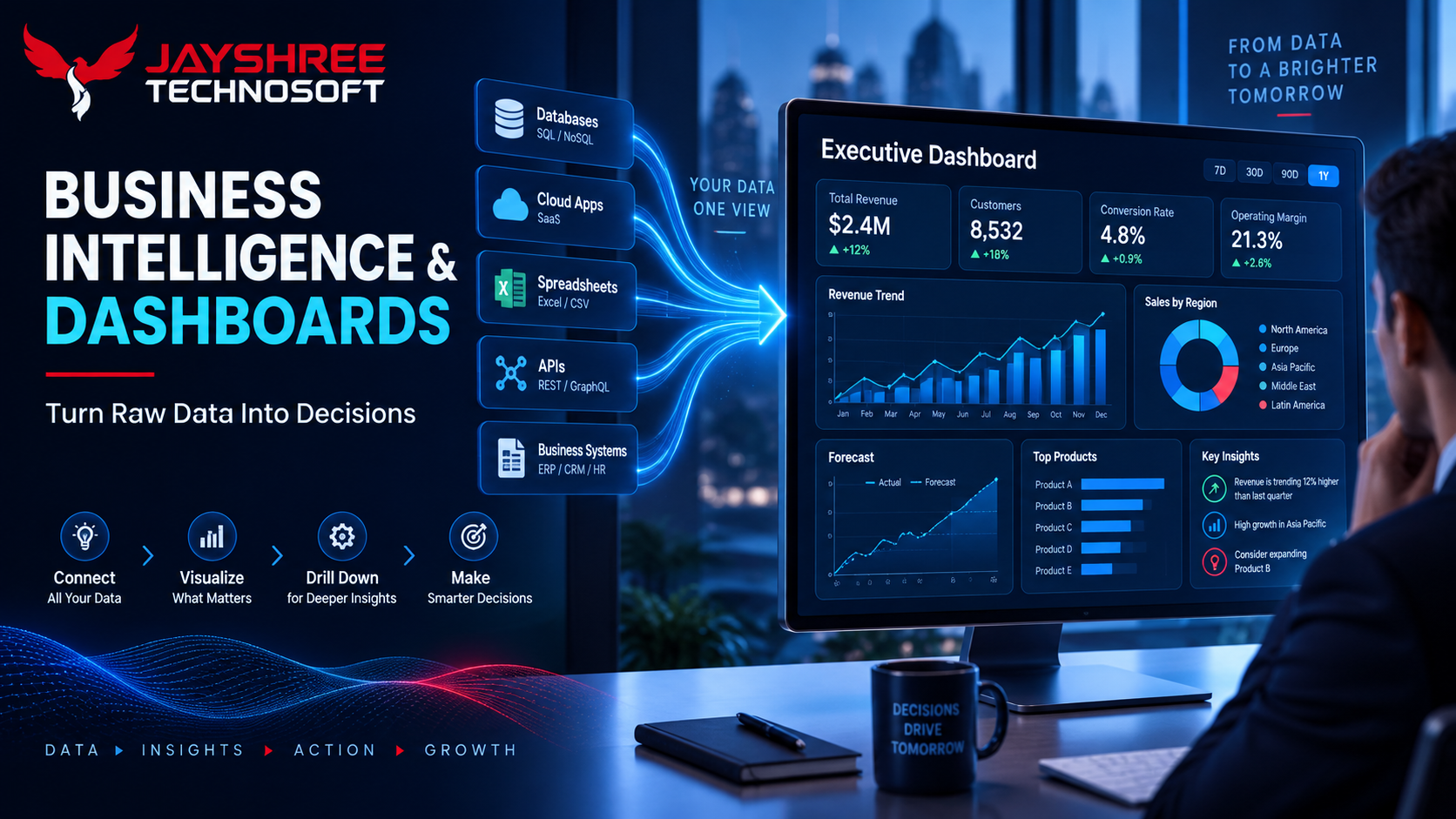
Business Intelligence & Custom Dashboard Development: Turning Raw Data Into Decisions
Custom BI dashboard development that surfaces the numbers your team actually needs to act on — not a wall of charts nobody checks.
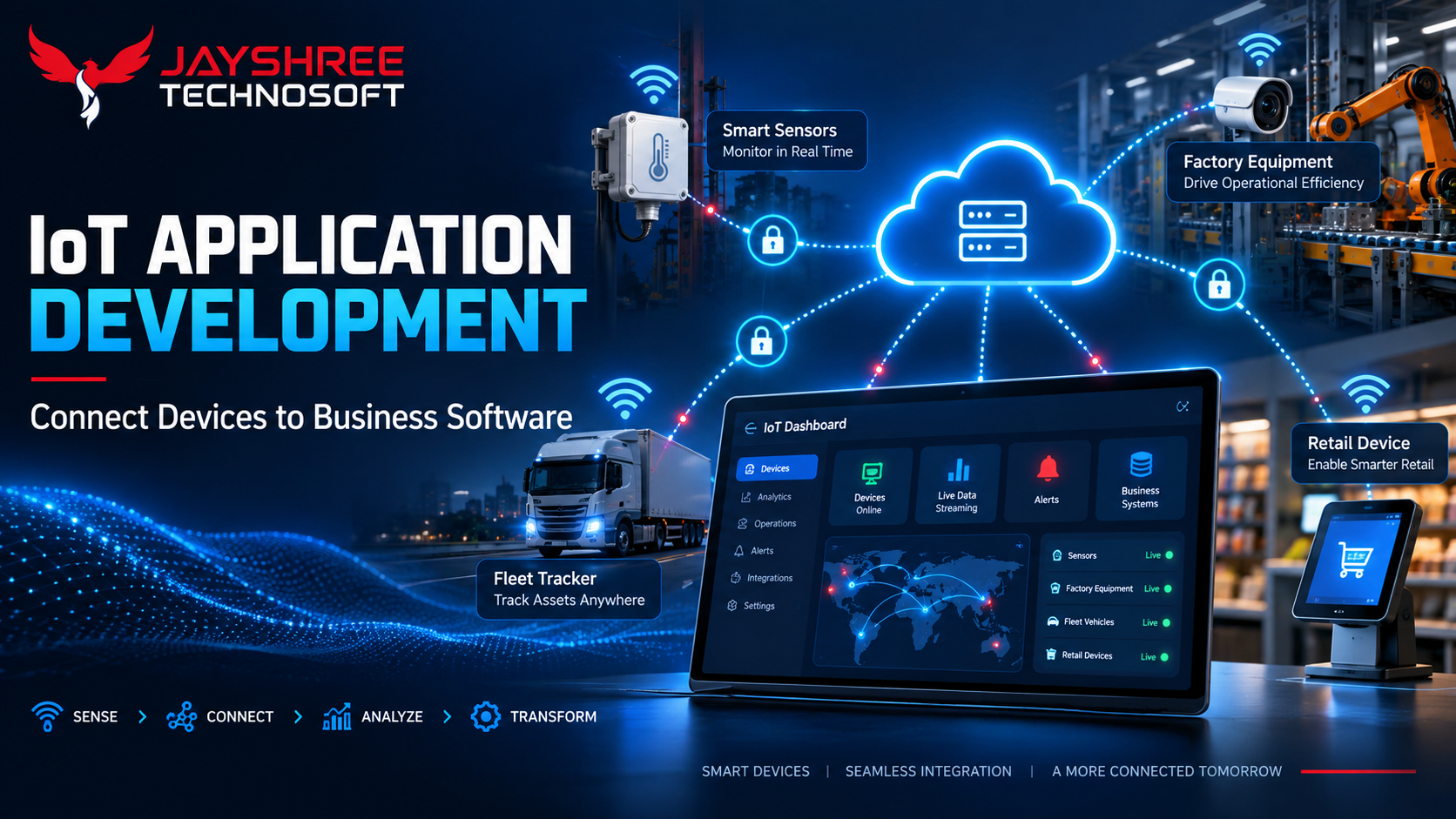
IoT Application Development: Connecting Physical Devices to Business Software
IoT application development that connects sensors and physical devices to real business software — not just a dashboard of numbers.

InsurTech Software Development: Modernizing an Industry Still Running on Paperwork
Insurance remains one of the industries where customers most frequently encounter slow, paperwork-heavy processes — claims that take weeks to process, policy documents buried in physical files, and customer communication that happens mostly through phone calls and mail. InsurTech software development exists to modernize this experience, for both insurers and the customers they serve.

Technical Due Diligence: Finding Out What You're Actually Acquiring
Investors and acquirers evaluating a software company or product often conduct thorough financial and legal due diligence, but sometimes skip an equally important step: a genuine technical assessment of the software itself. A codebase that looks impressive in a demo can hide significant technical debt, security vulnerabilities, or scalability limitations that only surface after the deal closes. Technical due diligence services exist specifically to uncover this before money changes hands.

HRMS & Payroll Software Development: Where Errors Carry Real Legal Risk
Unlike many business software categories where a bug is merely inconvenient, errors in payroll and HR software carry direct legal, financial, and compliance consequences — incorrect tax deductions, missed statutory contributions, or inaccurate leave calculations can create real liability for a business, not just an operational headache. HRMS software development needs to be approached with that level of seriousness.

Voice Assistant & Conversational AI Development: Why Most Voice Features Get Abandoned
Users abandon voice interfaces faster than almost any other interaction method the moment they're misunderstood even once or twice. Unlike a confusing button in a visual interface, a voice assistant that mishears or misinterprets breaks the entire interaction flow immediately, which is exactly why voice assistant development needs a much higher bar for accuracy and natural understanding than most other software features.

AR/VR Application Development: Where It Actually Adds Value Beyond the Novelty
Augmented and virtual reality generate excitement as demonstrations, but plenty of AR/VR projects fail to deliver lasting business value because they were built around the novelty of the technology rather than a genuine problem it solves better than existing tools. A capable AR VR application development company needs to help clients distinguish between a genuinely useful application and an impressive but ultimately forgettable demo.

White-Label & Outsourced Product Development: Extra Capacity Without Extra Hiring
Software agencies, product companies, and even other development firms often hit a common bottleneck: more client demand or product roadmap than their current team can handle, but not quite enough sustained volume to justify hiring and training an entirely new internal team. Outsourced product development exists specifically to solve this — providing extra engineering capacity on demand, without the overhead of permanent hiring.

Warehouse & Inventory Management Software: Ending the Manual Stock Count
A business tracking inventory through spreadsheets or manual counts can function reasonably well at a small scale — but the moment order volume, SKU count, or warehouse size grows past a certain point, this approach becomes a genuine liability: stock discrepancies, delayed order fulfillment, and no real-time visibility into what's actually available. Warehouse management software development exists to solve this before it becomes a recurring operational problem.

OTT & Video Streaming App Development: Why Playback Quality Decides Everything
Viewers have very little patience for buffering, poor video quality, or inconsistent streaming — a platform with great content but unreliable playback loses users just as fast as one with mediocre content. This makes the technical infrastructure behind streaming just as important as the content library itself, which is exactly where an experienced OTT app development company needs to focus.

NFT Marketplace & Web3 Wallet Development: Beyond Just Minting Tokens
Building an NFT marketplace or a Web3 wallet involves considerably more engineering than the "mint a token" pitch suggests. Behind a usable, secure platform sits smart contract logic, wallet integration, transaction handling, and security testing that all need to work reliably — because unlike typical software bugs, mistakes here can directly result in lost funds for users. NFT marketplace development needs to be approached with that level of seriousness.

Chatbot Development Services: Why Most Business Chatbots Frustrate Customers
Plenty of businesses have added a chatbot to their website or WhatsApp, and plenty of customers have had the same frustrating experience — a bot that can't understand a slightly rephrased question, loops back to the same unhelpful menu, or offers no way to reach an actual human when it fails. A poorly built chatbot often does more damage to customer experience than having no chatbot at all. Real chatbot development services need to solve this properly, not just check a box.

Does Your Website Need a Chatbot?
Start with what you're fixing, the cheaper answers first, where chatbots genuinely work and fail, the AI question, and the automation worth more than a chatbot.

Switching Software Vendors Without Breaking Your Business
Is switching actually the answer, the question that should come first, the sequence that avoids disruption, and what to require from the new vendor.

Website Accessibility: More People Than You Think
Who this actually affects beyond disability, the fixes that deliver most, why it matters commercially for tenders, and how to check your current site.

Why Staff Stop Using New Software (And How to Prevent It)
Why resistance is usually rational, what to do before training starts, training that actually works, the first month, and the signals adoption is failing.

Why Your Website Is Slow (And What Actually Fixes It)
Test it honestly first, why images cause most slowness, what speed affects including ad costs, the fix order that makes sense, and keeping it fast.

Software Testing & QA Services: Why Cutting Testing Time Costs More Later
Under deadline pressure, testing is often the first phase businesses try to compress — "we'll catch issues after launch." In practice, a bug found by a paying customer costs far more than the same bug caught before release, in lost trust, support time, and emergency fixes. Real software testing and QA services exist to catch problems while they're still cheap to fix.

AI & Machine Learning Development Services: Separating Real Use Cases From the Buzzword
"AI-powered" has become a label attached to almost every product pitch, regardless of whether machine learning is actually solving a meaningful problem underneath it. For businesses genuinely evaluating AI and machine learning development services, the more useful question isn't "should we add AI" — it's "which specific problem in our business would actually benefit from it."

Cloud Migration & DevOps Services: Why "Lift and Shift" Often Isn't Enough
Moving infrastructure to the cloud sounds like a straightforward upgrade — but businesses that simply copy their existing setup onto cloud servers without rethinking anything often end up paying more, with little of the flexibility or reliability the cloud is supposed to provide. Real cloud migration services involve more than relocation; they involve rearchitecting for how the cloud actually works.

SaaS Product Development Company: The Architecture Decisions That Determine Everything Later
Unlike a typical business website or internal tool, a SaaS product has to serve many different customers, at different scales, on shared infrastructure — while keeping each customer's data completely isolated and secure. Getting this architecture right from the start is far easier than fixing it after thousands of users are already depending on the platform. This is the core challenge a SaaS product development company needs to solve early, not eventually.

MVP Development for Startups: Why "Build Everything First" Is the Wrong Approach
The most common mistake founders make when building their first product isn't a technical one — it's trying to build every feature they've imagined before ever putting the product in front of a real customer. This delays validation, burns through limited runway, and often results in a fully-built product nobody actually wants. MVP development for startups exists specifically to avoid this trap.

Travel & Tourism Booking Software Development | Jayshree Technosoft
Booking friction is the biggest reason travel platforms lose customers. See what a travel and tourism software development company should build.

Automotive Software Development Company | Jayshree Technosoft
From service booking to dealer management, see what automotive businesses actually need from a custom software development partner.

Logistics & Fleet Management Software Development | Jayshree Technosoft
Real-time tracking and route optimization directly affect delivery cost and customer trust. See what logistics software actually needs to handle.

Education Software & LMS Development Company | Jayshree Technosoft
Online learning needs more than video uploads. See what a proper education software and LMS development company should build for real engagement.

Real Estate Software Development Company | Jayshree Technosoft
Property listings, CRM, and virtual tours all need to work together. See what a real estate software development company should actually deliver.

FinTech App Development Company | Wallets, Trading & Payments | Jayshree Technosoft
FinTech apps handle real money and real regulation. See what a FinTech app development company needs to get right from day one.

E-Commerce Website Development Company | Jayshree Technosoft
A slow checkout or a clunky product page loses sales every day. See what an e-commerce website development company should actually deliver.

Healthcare Software Development Company | Telemedicine & EHR | Jayshree Technosoft
Healthcare software has to be secure, compliant, and reliable. See what a healthcare software development company must get right.

SEO & Digital Marketing Services for Businesses | Jayshree Technosoft
A great website with no traffic doesn't grow a business. See what professional SEO and digital marketing services actually need to include.

UI/UX Design Services for Web & Mobile Products | Jayshree Technosoft
Good design isn't decoration — it's what determines whether users stay or leave. See what real UI/UX design services should deliver.

Software Maintenance and Support: What Businesses Get Wrong
What software maintenance should include, the backup question that exposes everything, realistic costs, and what to ask before signing an AMC.

Does Your Website Need a Redesign, or Just a Repair?
Six genuine reasons to redesign, four that aren't good enough, and the redirect mistake that destroys search rankings during rebuilds.

How to Write Software Requirements (Even If You're Not Technical)
A seven-section requirements template in plain language — workflows, exception handling, integrations, and the must-have vs later cut that saves the most money.

Dedicated Developers, Project-Based, or In-House: Which Engagement Model Fits?
Three engagement models compared honestly — when fixed-scope works, when dedicated developers fit, and when you should genuinely hire in-house instead.

Custom Software or Ready-Made Product? An Honest Framework for Deciding
Four questions that decide whether to build custom software or buy a ready-made product — plus the middle path most businesses should consider.

IT Consultancy, Freelancer or In-House Team: Which Does Your Business Need?
A consultancy's honest comparison — when a freelancer is genuinely the better choice, what in-house really requires, and the question that decides it.

Offshore Software Development From Jaipur: An Honest Guide for International Clients
Why tier-2 cities changed offshore outsourcing, honest time-zone realities for US, Europe and Gulf clients, and how to evaluate an Indian development partner.

Digital Transformation for Jaipur Businesses: The Boring Version That Works
Digital transformation without the jargon — the signs you're ready, the three-step sequence that works, and where Jaipur businesses commonly get it wrong.

What Does IT Consultancy Cost? An Honest Pricing Guide for Businesses
Why nobody can quote without asking questions, the five factors that determine cost, what a proper quote must contain, and how to compare proposals fairly.

IT Consultancy in Rajasthan: What Growing Businesses Actually Need
What Rajasthan businesses need from IT consulting — industry-specific challenges for tourism, exports, manufacturing and retail, plus how to start without wasting money.

How to Choose the Best IT Consultancy in Jaipur: 7 Questions That Reveal Everything
Seven questions that reveal what an IT consultancy is really like to work with — plus the red flags worth walking away from. From a Jaipur firm since 2009.