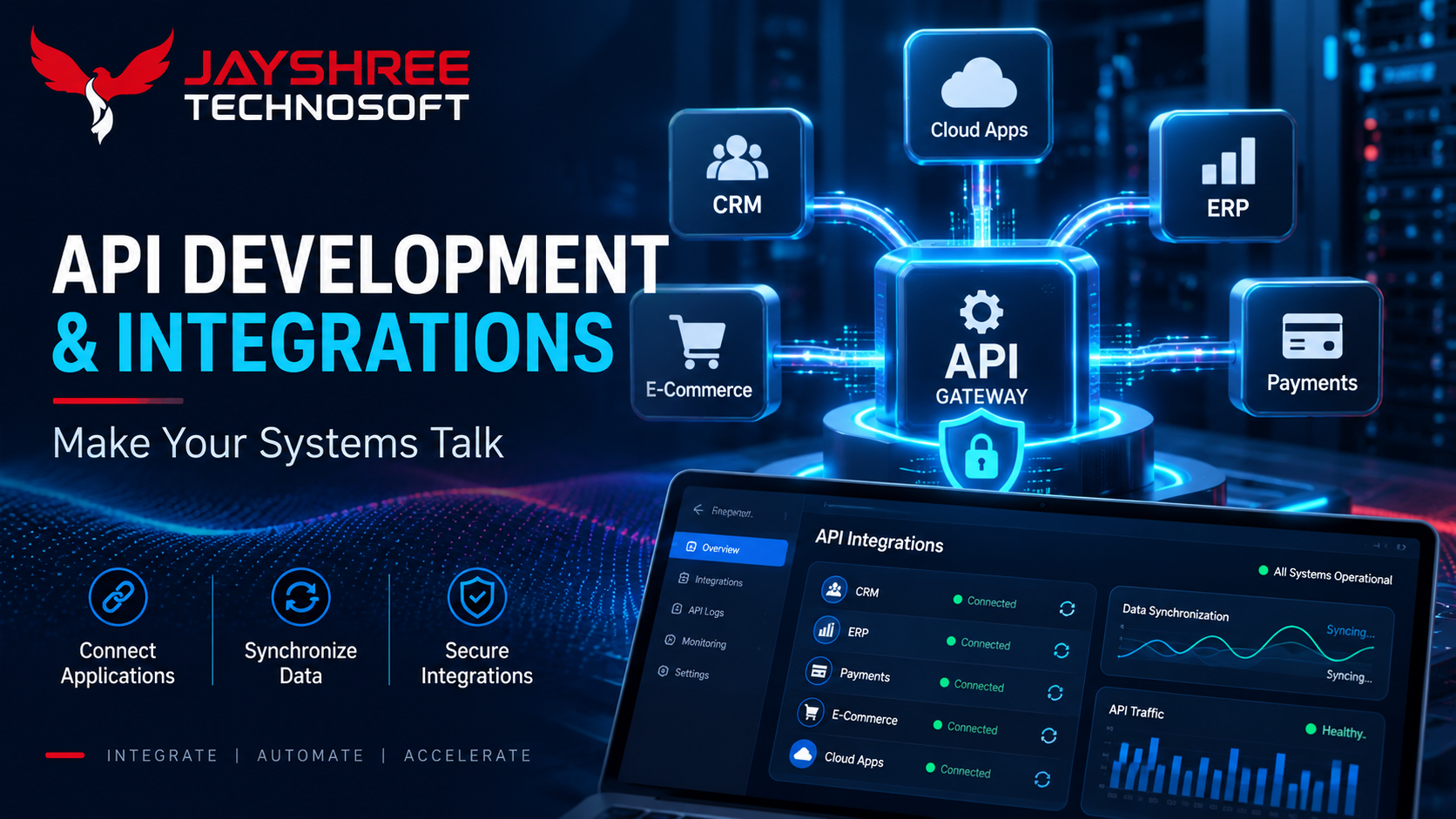
Most businesses run on more than one piece of software — an accounting tool, a CRM, a website, a payment gateway, an inventory system — and the value of each one drops sharply when they don't share data automatically. API development and integration work exists to connect these systems, replacing manual copy-paste work with data that flows automatically between the tools a business already relies on.
The Hidden Cost of Disconnected Systems
When systems don't talk to each other, someone ends up doing the connecting manually — re-entering a customer's details into three different tools, exporting a spreadsheet from one system to import into another, or reconciling numbers that should already match. This isn't just inefficient; it's also where data entry errors and inconsistencies quietly creep in.
What API Development & Integration Work Actually Covers
Connecting Existing Software
Linking a CRM to an accounting system, a website to an inventory platform, or a payment gateway to an order management tool — so a transaction in one system automatically updates the others without manual intervention.
Building APIs for Your Own Software
If your business has its own internal systems or a product other businesses need to connect to, a well-designed API allows partners, customers, or internal tools to interact with your data securely and reliably.
Third-Party Service Integration
Connecting to external services — payment gateways, shipping providers, SMS/WhatsApp APIs, mapping services — that extend what your software can do without building that functionality from scratch.
Legacy System Connectivity
Older systems that weren't built with modern integration in mind often need a custom bridge layer to connect to newer tools, rather than being replaced entirely — a more practical and lower-risk path for many businesses.
Why This Work Requires Real Engineering Discipline
Integration work looks simple on paper — "just connect system A to system B" — but reliable integrations need to handle failure gracefully (what happens when one system is temporarily down), maintain data consistency when the same information changes in two places, and adapt when either connected system updates its own API over time.
Signs Your Business Needs Integration Work
Common signals include staff regularly re-entering the same customer or order data into multiple systems, reports that require manually combining exports from different tools, and delays between when something happens in one system (a sale, a support ticket) and when it's reflected in another.
Why This Often Delivers Faster ROI Than New Software
Building a connection between two systems you already use and trust is frequently faster, cheaper, and lower-risk than replacing either system outright — while still eliminating the manual work that was actually causing the pain.
How Jayshree Technosoft Approaches Integration Projects
Jayshree Technosoft LLP's backend and API development team specializes in connecting existing business systems — whether that means building custom APIs, integrating third-party services, or bridging legacy software with modern tools — so data moves automatically instead of requiring manual reconciliation.
Tired of manually moving data between systems? Talk to the team about what could be connected automatically.
Recent Articles
Custom CRM & Software Solutions for Mobile & Accessories Stores: How Jayshree Technosoft Can Help
Custom CRM & Software Solutions for Property Valuation & Survey Companies: How Jayshree Technosoft Can Help
Custom CRM & Software Solutions for Accounting Firms: How Jayshree Technosoft Can Help