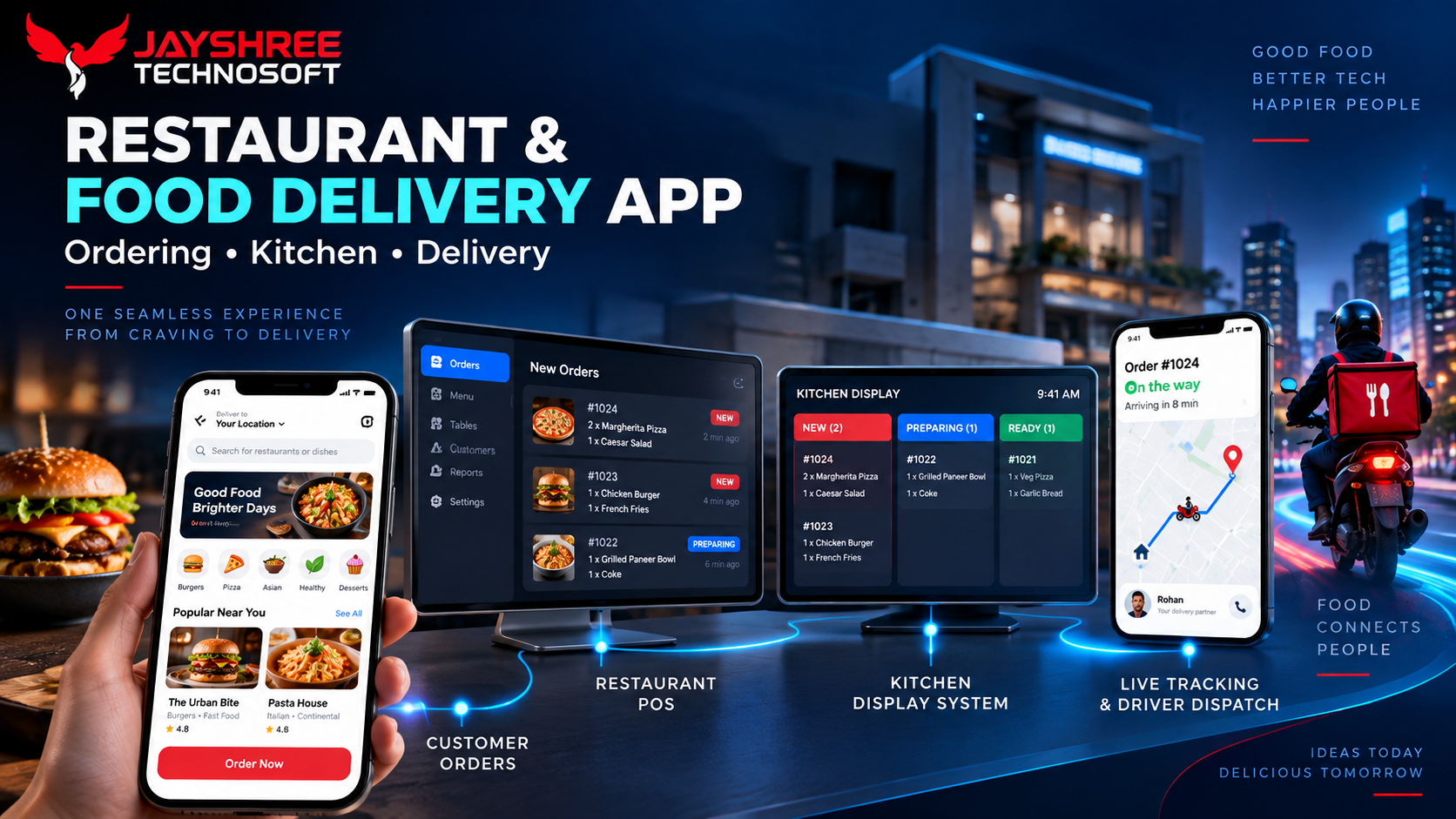
Running a restaurant's digital ordering today usually means juggling several disconnected pieces — a website or app for orders, a separate system (or a printer) relaying those orders to the kitchen, and yet another process for coordinating delivery. Restaurant and food delivery app development exists to connect these into one system, rather than leaving staff to manually bridge the gaps between them.
Where Disconnected Systems Cause Real Problems
Restaurants running ordering, kitchen operations, and delivery as separate, unconnected pieces commonly see orders that don't reach the kitchen promptly, no real-time visibility into order status for either staff or customers, and delivery coordination handled through phone calls or messaging apps rather than a structured system — all of which slow down service during exactly the busy periods when speed matters most.
Core Components of a Connected Restaurant Ordering System
Customer-Facing Ordering App or Website
A smooth ordering experience — browsing the menu, customizing items, and checking out — directly impacts conversion; friction at this stage is one of the most common reasons customers abandon an order.
Kitchen Display System (KDS)
Orders routed directly and instantly to kitchen screens, organized by preparation priority, replacing printed tickets or verbal relay that are prone to delay and error during rush hours.
Order & Delivery Tracking
Real-time status visibility — order received, being prepared, out for delivery — both for restaurant staff managing operations and customers waiting on their order, reducing the "where is my order" calls that eat up staff time.
Delivery Coordination
Whether using in-house delivery riders or integrating with third-party delivery services, assigning and tracking deliveries in the same system as the order itself, rather than as a separate manual handoff.
Restaurant-Side Dashboard
A single view for restaurant owners covering active orders, historical sales data, and performance by item or time slot — useful both for daily operations and for spotting menu or staffing patterns over time.
Why Speed and Reliability Matter More Here Than in Most Apps
A restaurant ordering system that's slow, glitchy, or loses an order during peak hours doesn't just create a bad app review — it directly costs the restaurant a sale and, often, a repeat customer. The technical bar for reliability under load is genuinely higher here than for many other business app categories, precisely because failures happen most during the busiest, highest-revenue moments.
Building for Multiple Order Sources
Many restaurants take orders through their own app, a website, phone calls, and third-party delivery platforms simultaneously. A well-built system consolidates all of these into a single kitchen and operations view, rather than requiring staff to check four different screens or devices during a dinner rush.
How Jayshree Technosoft Approaches Restaurant App Projects
Jayshree Technosoft LLP builds restaurant ordering systems that connect the customer-facing app, kitchen display, and delivery coordination into a single operational flow — designed specifically to hold up reliably during peak order volume, not just perform well in a calm demo environment.
Building or upgrading a restaurant ordering system? Start a conversation about your requirements.
Recent Articles
Custom CRM & Software Solutions for Mobile & Accessories Stores: How Jayshree Technosoft Can Help
Custom CRM & Software Solutions for Property Valuation & Survey Companies: How Jayshree Technosoft Can Help
Custom CRM & Software Solutions for Accounting Firms: How Jayshree Technosoft Can Help