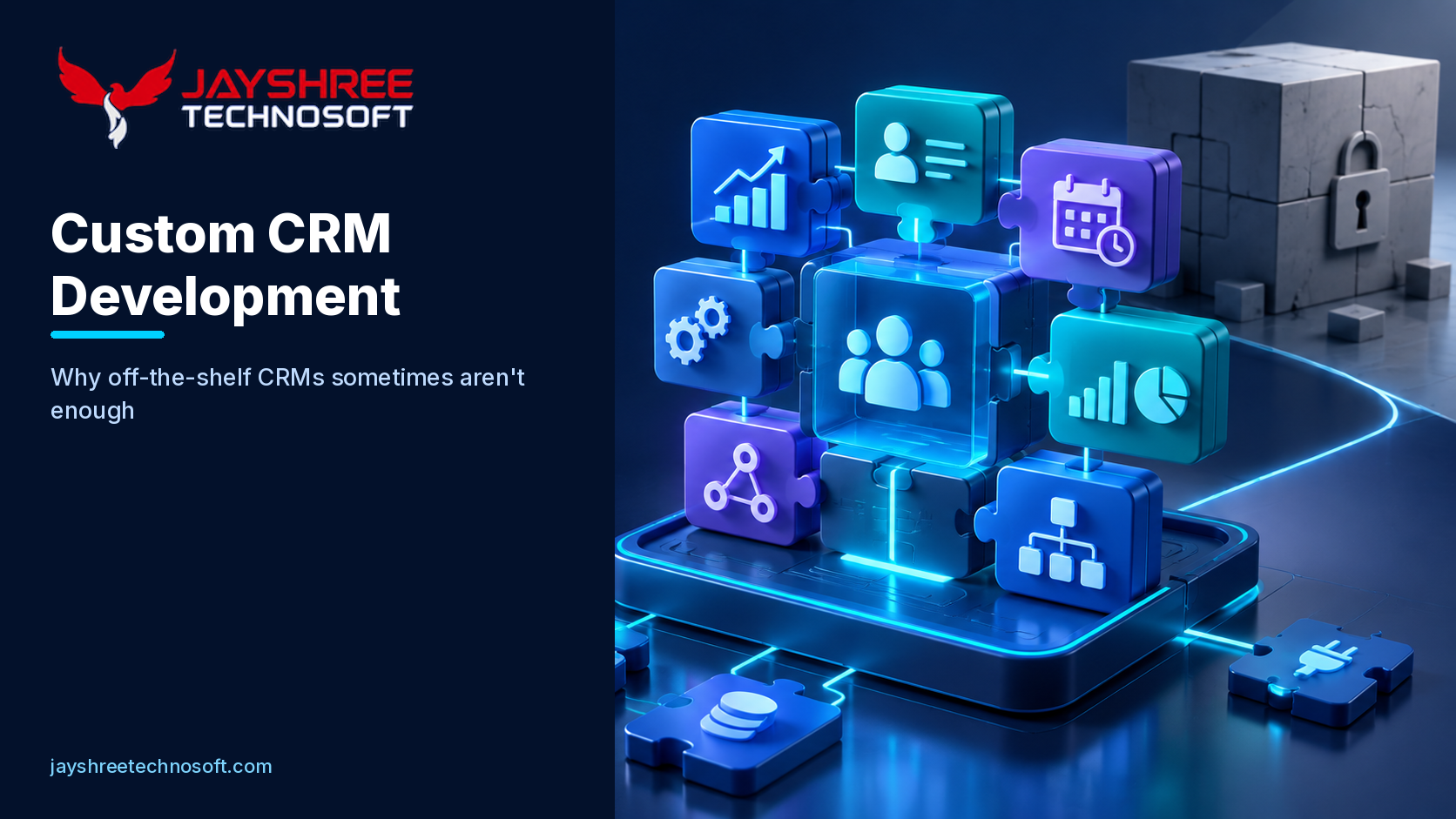
Most businesses start their CRM journey with an off-the-shelf tool — reasonable, since generic CRMs are cheaper and faster to get running. But as a business's processes mature and become more specific, some outgrow what an off-the-shelf tool can flexibly accommodate, reaching a point where custom CRM development becomes worth serious consideration.
Why Off-the-Shelf CRMs Work Well Initially
Generic CRM platforms are built to serve a wide range of businesses out of the box — fast to set up, reasonably priced, and sufficient for standard sales pipeline and contact management needs. For many businesses, especially early on, this is entirely sufficient and a custom build would be unnecessary overhead.
Signs a Business Has Outgrown Off-the-Shelf CRM
Constant Workarounds
When a sales or operations team is regularly working around the CRM's limitations — using spreadsheets alongside it, or manually tracking things the CRM wasn't built to handle — the tool has stopped fitting the actual workflow.
Expensive, Limited Customization
Off-the-shelf CRMs often allow customization, but only within boundaries set by the vendor — deeper changes require expensive add-ons, complex configuration, or simply aren't possible at all.
Growing Per-User Costs at Scale
Per-seat pricing that made sense with a small team can become a significant recurring cost as a business scales its sales or support team, sometimes exceeding what a custom-built alternative would cost over the same period.
Integration Limitations
When a business's operations depend on tight integration between the CRM and several other specific internal systems, generic CRMs' standard integrations sometimes fall short of what's actually needed.
What Custom CRM Development Actually Offers
A custom-built CRM is designed around a business's specific sales process, data structure, and reporting needs from the outset — rather than a generic structure the business has to adapt to. This typically means workflows that match exactly how the sales or service team actually operates, reporting built around the specific metrics that matter to that business, and integration designed precisely for the other systems the business already relies on.
The Real Trade-Off to Weigh
Custom CRM development requires a larger upfront investment and a longer initial build timeline compared to simply subscribing to an off-the-shelf tool. The decision comes down to whether the ongoing cost and friction of working around an ill-fitting generic CRM, over several years, would exceed the upfront cost of building something that fits precisely — a calculation that depends heavily on how far a business's actual workflow has diverged from what standard CRMs assume.
A Middle Path Worth Considering
Not every business needs to choose between a fully generic CRM and a fully custom build from scratch. In some cases, extending an existing CRM platform with custom modules or deeper integrations addresses the specific gap without the cost of building an entire system from the ground up.
How Jayshree Technosoft Approaches Custom CRM Projects
Jayshree Technosoft LLP evaluates whether a client's needs are genuinely better served by a custom-built CRM, a heavily customized extension of an existing platform, or simply configuring an off-the-shelf tool more effectively — rather than defaulting to a full custom build when a simpler option would serve the business just as well.
Wondering whether your business has outgrown its current CRM? Talk to the team about what actually fits your workflow.
Recent Articles
Custom CRM & Software Solutions for Mobile & Accessories Stores: How Jayshree Technosoft Can Help
Custom CRM & Software Solutions for Property Valuation & Survey Companies: How Jayshree Technosoft Can Help
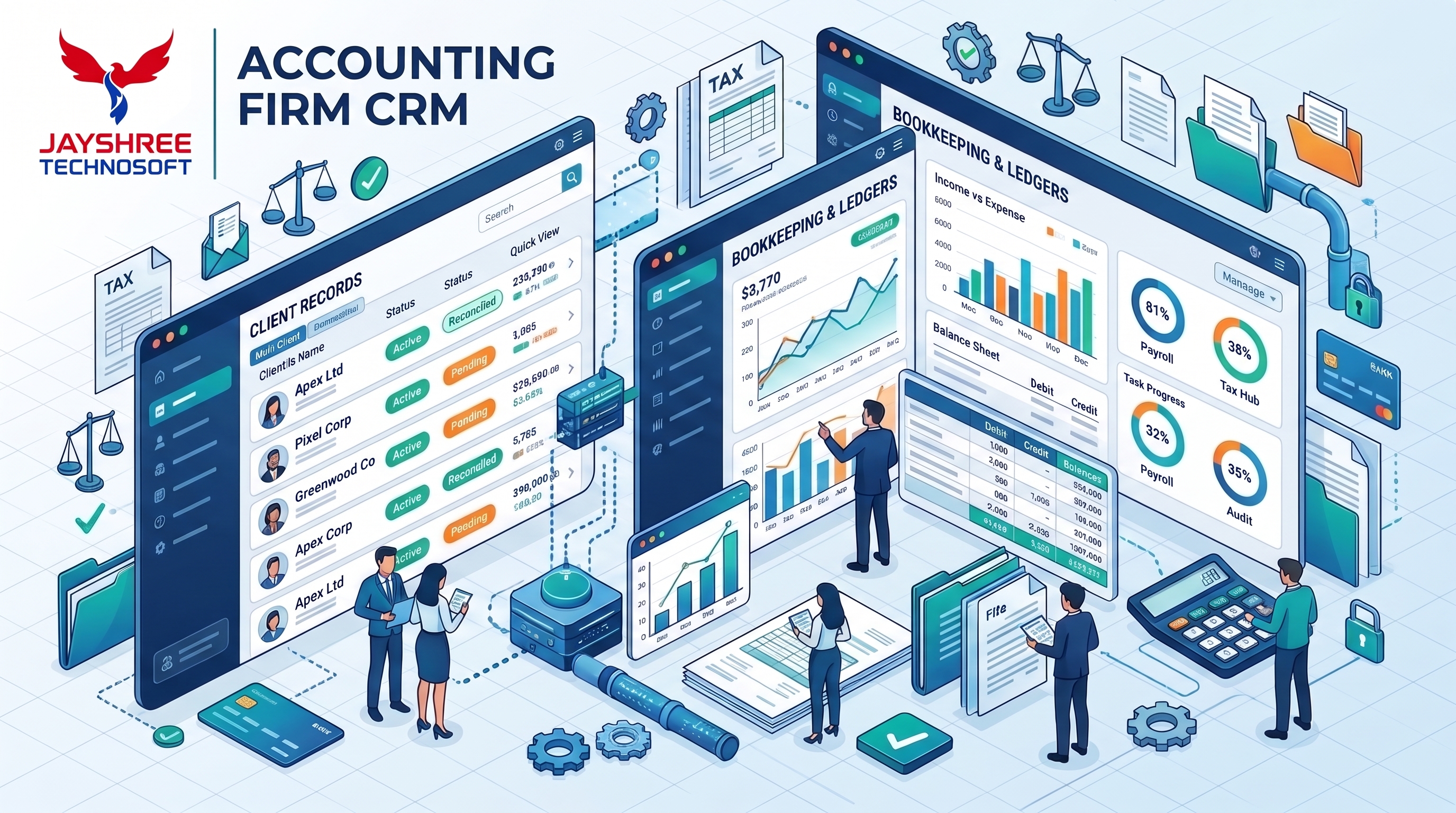
Custom CRM & Software Solutions for Accounting Firms: How Jayshree Technosoft Can Help