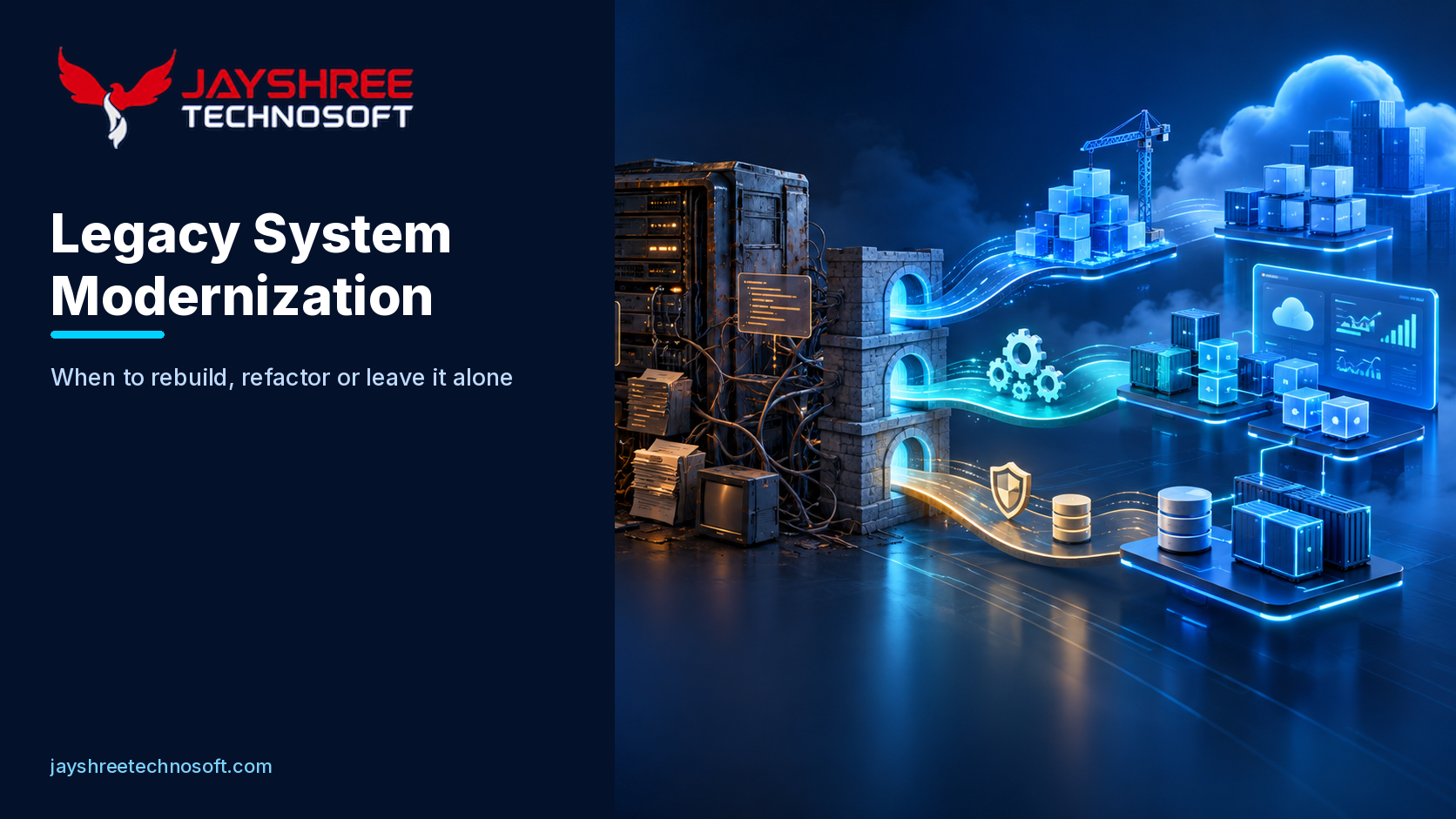
Every business running software for more than a few years eventually faces the same question: the system works, mostly, but it's getting harder to maintain, slower to update, and increasingly risky to touch. Legacy system modernization is about answering that question deliberately — rebuild, refactor, or leave it alone — rather than either ignoring the problem or jumping straight to an expensive full rebuild by default.
Why Legacy Systems Become a Growing Risk Over Time
Older software often runs on outdated technology that's harder to find skilled developers for, has accumulated years of undocumented changes and workarounds that make even small updates risky, and increasingly struggles to integrate with modern tools and services that the rest of the business now relies on.
Three Paths Forward, and When Each Makes Sense
Leave It Alone (For Now)
If a system is stable, still meets business needs, and isn't blocking growth or integration with other tools, the lowest-risk option is often to leave it running as-is, with monitoring in place, rather than triggering unnecessary risk and cost through premature modernization.
Refactor
When the core logic and structure of a system are still sound, but the codebase has become difficult to maintain or extend, refactoring — improving the internal structure without changing external behavior — can extend a system's useful life significantly at a fraction of a full rebuild's cost.
Rebuild
When the underlying technology is genuinely obsolete, the system can no longer scale or integrate with what the business needs, or the cost of maintaining it has become disproportionate to its value, a full rebuild — using modern architecture and technology — becomes the more sensible long-term investment, despite the higher upfront cost.
How to Actually Make This Decision
The right choice depends less on how old a system is and more on three practical questions: How much is this system currently costing in maintenance, workarounds, and lost opportunities? How much business risk exists in touching it (a rarely-updated but critical system carries more risk than an actively maintained one)? And what does the business actually need this system to do in the next two to three years that it can't do today?
The Risk of Doing Nothing
The most expensive path is often not choosing any of the three deliberately — continuing to patch and work around an aging system indefinitely, until a critical failure or an urgent business need forces a rushed, poorly planned modernization under pressure, rather than a considered one.
A Phased Approach Reduces Risk
Rather than a single, high-risk "big bang" rebuild, modernization often works better as a phased process — migrating or rebuilding one module or function at a time, validating each step, and maintaining business continuity throughout rather than risking a disruptive all-at-once cutover.
How Jayshree Technosoft Approaches Modernization Projects
Jayshree Technosoft LLP evaluates legacy systems on their actual technical and business merits before recommending a path forward — favoring targeted refactoring or phased modernization where it genuinely serves the business better than a costly full rebuild, and reserving full rebuilds for cases where the underlying technology or architecture has become a genuine constraint on the business.
Sitting on an aging system you're unsure what to do with? Get an assessment from the team.
Recent Articles

Custom CRM & Software Solutions for Mobile & Accessories Stores: How Jayshree Technosoft Can Help
Custom CRM & Software Solutions for Property Valuation & Survey Companies: How Jayshree Technosoft Can Help
Custom CRM & Software Solutions for Accounting Firms: How Jayshree Technosoft Can Help