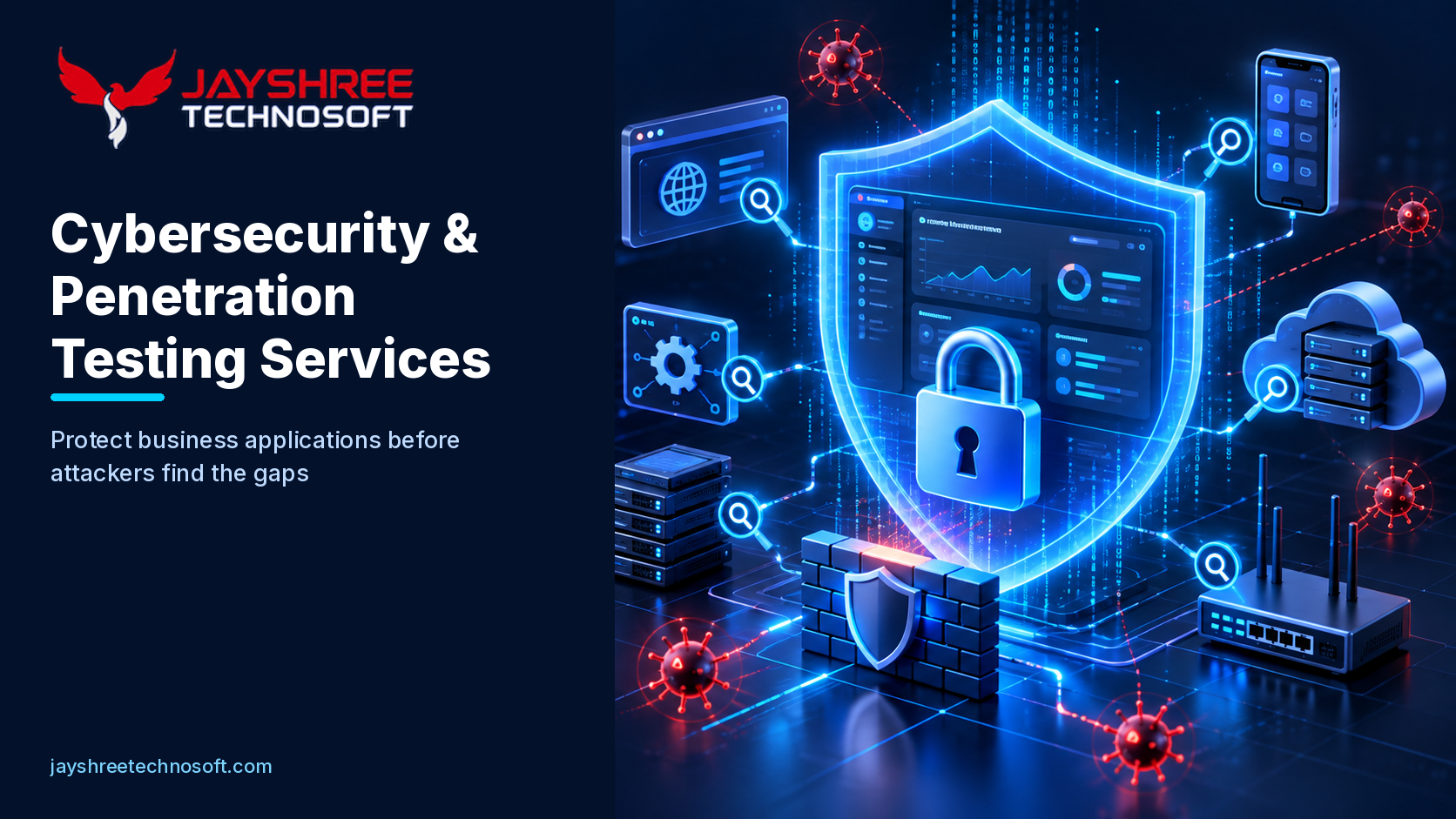
Most businesses only think seriously about application security after something has already gone wrong — a breach, a data leak, or a customer complaint about suspicious activity. Penetration testing and cybersecurity services exist to flip that timing, finding and fixing vulnerabilities before they're exploited, rather than responding after the damage is done.
Why "We Haven't Been Hacked Yet" Isn't Reassuring
Businesses often assume that because no breach has happened, their systems are secure. In reality, this usually means either an attacker hasn't found the vulnerability yet, or a breach has occurred without being detected — both far less comforting than they sound. Security testing exists precisely to close this gap between assumed safety and actual safety.
What Penetration Testing Actually Involves
Penetration testing simulates real-world attacks against a business's applications and infrastructure, under controlled conditions, to identify exploitable weaknesses before a malicious actor does. This typically covers:
Web Application Testing
Checking for common but serious vulnerabilities — injection flaws, broken authentication, cross-site scripting — that could allow an attacker to access data or functionality they shouldn't be able to reach.
API Security Testing
As more businesses expose APIs to partners, mobile apps, and third-party integrations, testing for authentication bypass, data exposure, and rate-limiting gaps becomes just as important as testing the user-facing application.
Infrastructure & Cloud Security Testing
Assessing network configuration, cloud permissions, and server hardening to catch misconfigurations — a common and often overlooked source of real-world breaches — before they're exploited.
Mobile Application Security
Testing mobile apps for insecure data storage, weak authentication, and communication vulnerabilities specific to mobile environments.
Why This Matters More for Certain Industries
Businesses handling sensitive data — healthcare records, financial transactions, customer payment information — carry both higher breach risk and higher regulatory consequences if a breach occurs. For these industries, security testing isn't just good practice; it's often a baseline expectation from clients, partners, and regulators.
What a Good Security Assessment Delivers
Beyond simply listing vulnerabilities, a useful penetration test should provide a clear, prioritized report — distinguishing critical issues that need immediate attention from lower-risk findings — along with concrete remediation guidance a development team can actually act on, not just a technical list that requires further interpretation.
Building Security Into Development, Not Just Testing After
The most cost-effective approach to security isn't relying solely on periodic penetration tests after development is complete — it's building secure coding practices into the development process itself, catching vulnerabilities earlier when they're far cheaper and easier to fix than after deployment.
How Jayshree Technosoft Approaches Security
Jayshree Technosoft LLP incorporates security review as part of its development and QA process across web, mobile, and cloud projects, and offers dedicated security assessment services for businesses looking to evaluate existing applications — helping identify and close gaps before they become incidents.
Concerned about your application's security posture? Talk to the team about a security assessment.
Recent Articles

Custom CRM & Software Solutions for Mobile & Accessories Stores: How Jayshree Technosoft Can Help

Custom CRM & Software Solutions for Property Valuation & Survey Companies: How Jayshree Technosoft Can Help

Custom CRM & Software Solutions for Accounting Firms: How Jayshree Technosoft Can Help