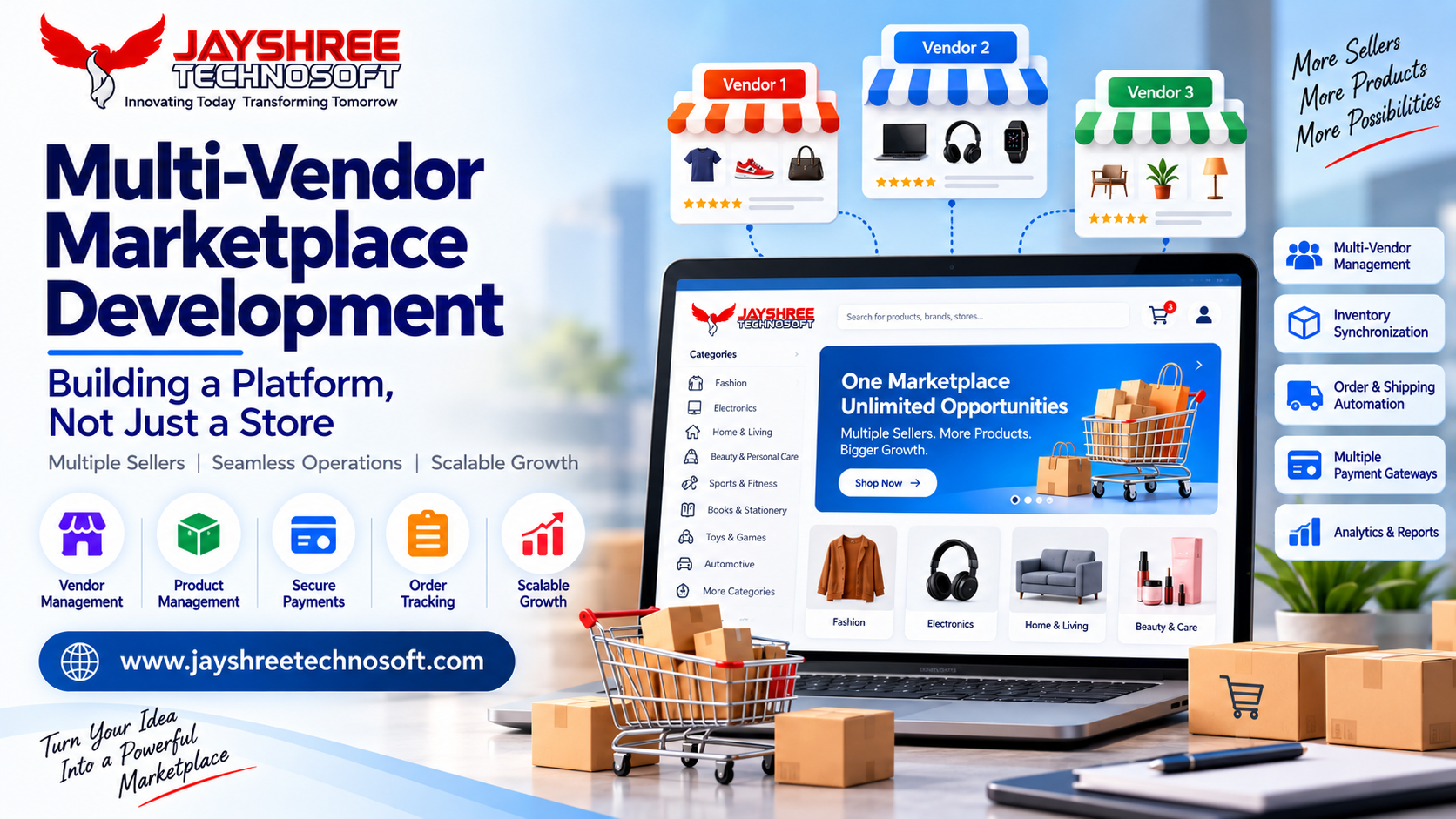
A single-seller e-commerce store and a multi-vendor marketplace look similar on the surface — both let customers browse and buy products online — but the underlying technical and business complexity is fundamentally different. A marketplace has to manage multiple independent sellers, each with their own inventory, pricing, and fulfillment, coordinated through a single, trustworthy customer-facing platform.
Why Marketplaces Are Technically More Complex Than a Single-Seller Store
Beyond standard e-commerce functionality, a marketplace needs to handle vendor onboarding and verification, split transactions and payouts across multiple sellers from a single customer order, vendor-specific inventory and order management, and dispute resolution and quality control across sellers the platform doesn't directly control.
Core Components of Marketplace Platform Development
Vendor Onboarding and Management
A structured process for sellers to register, get verified, and manage their own product listings, inventory, and orders — ideally through a self-service vendor dashboard rather than requiring manual platform-operator involvement for every seller action.
Multi-Party Payment Splitting
When a customer's single order includes items from multiple vendors, or even a single vendor's item, the platform needs to reliably calculate and distribute payments — vendor payout, platform commission, applicable taxes — accurately and on a predictable schedule.
Unified Search and Discovery Across Vendors
Customers expect to search and browse as if shopping a single store, even though inventory is spread across many independent vendors — requiring a unified product catalog and search experience that abstracts away the underlying multi-vendor complexity.
Order Management Across Multiple Fulfillment Sources
A single customer order might need to be split and routed to different vendors for fulfillment, each with their own shipping and delivery timeline — requiring order management logic significantly more complex than a single-seller store.
Trust and Quality Control Mechanisms
Since the platform doesn't directly control each vendor's product quality or service, reviews, ratings, and dispute resolution processes become essential infrastructure for maintaining customer trust across a marketplace with many independent sellers.
Why Getting the Vendor Experience Right Matters as Much as the Buyer Experience
A marketplace's success depends on attracting and retaining quality vendors just as much as attracting buyers — a clunky, difficult vendor onboarding or management experience drives sellers toward competing platforms, undermining the marketplace's product selection and, ultimately, its value to buyers.
Scalability Considerations From the Start
Successful marketplaces often need to handle rapid growth in both vendor count and transaction volume — architecture decisions made early, around how vendor data, inventory, and payment processing scale, have significant long-term consequences that are expensive to fix after a platform has already grown substantially.
How Jayshree Technosoft Approaches Marketplace Development
Jayshree Technosoft LLP builds multi-vendor marketplace platforms with vendor management, payment splitting, and scalable architecture treated as core requirements from the outset — not features bolted onto a standard e-commerce build after the fact.
Building a marketplace connecting multiple sellers and buyers? Talk to the team about your platform.
Recent Articles
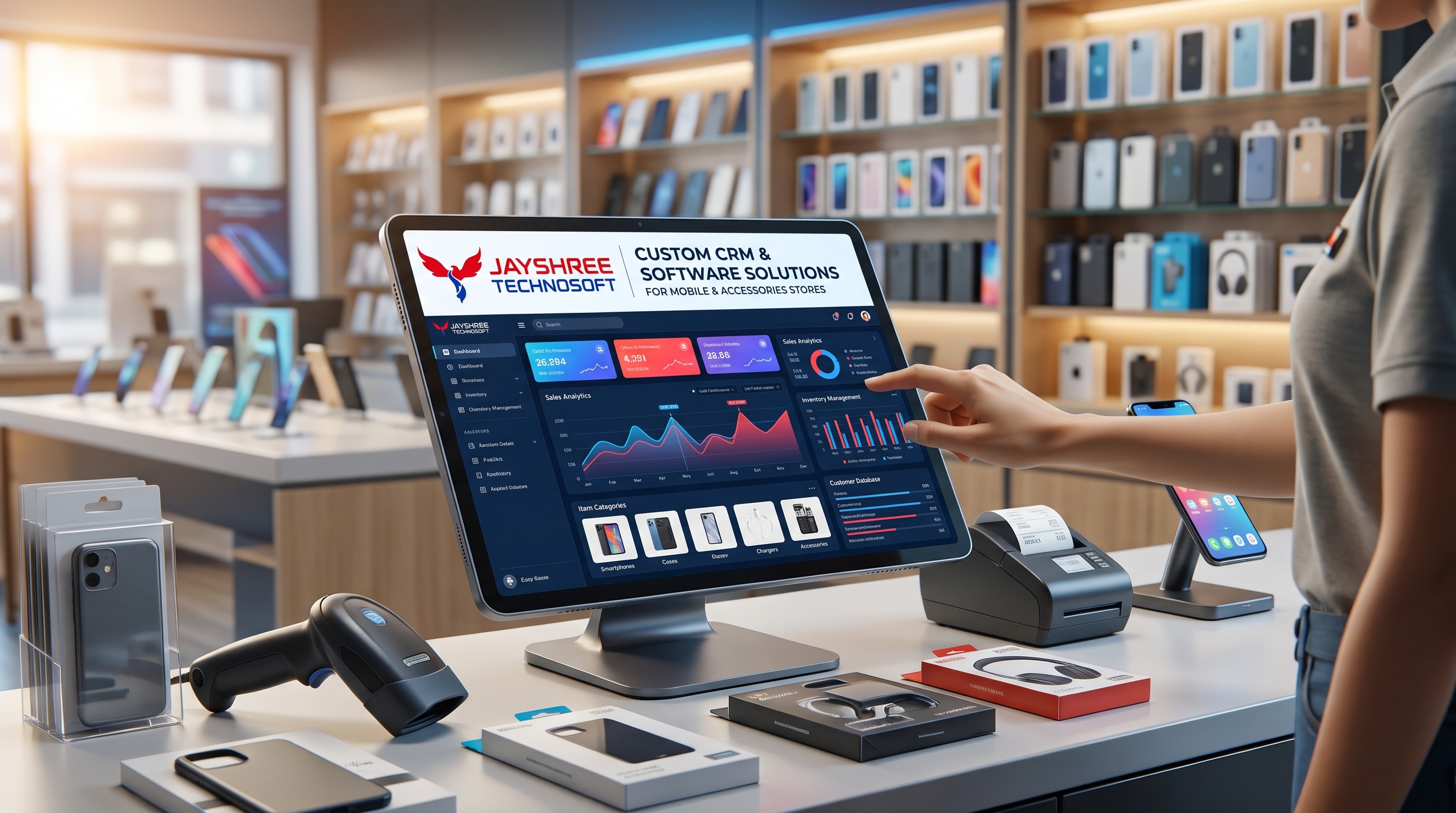
Custom CRM & Software Solutions for Mobile & Accessories Stores: How Jayshree Technosoft Can Help

Custom CRM & Software Solutions for Property Valuation & Survey Companies: How Jayshree Technosoft Can Help
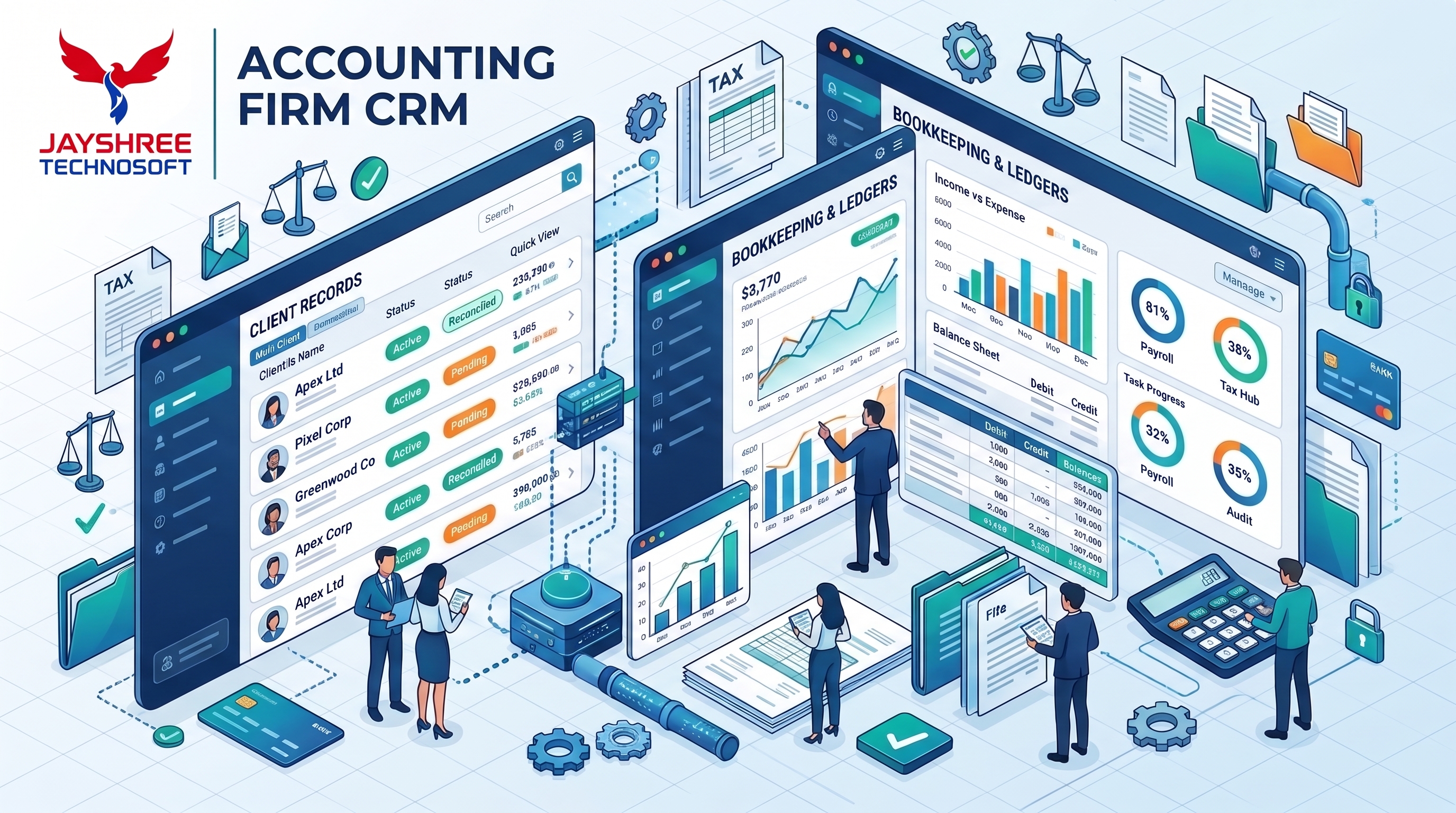
Custom CRM & Software Solutions for Accounting Firms: How Jayshree Technosoft Can Help