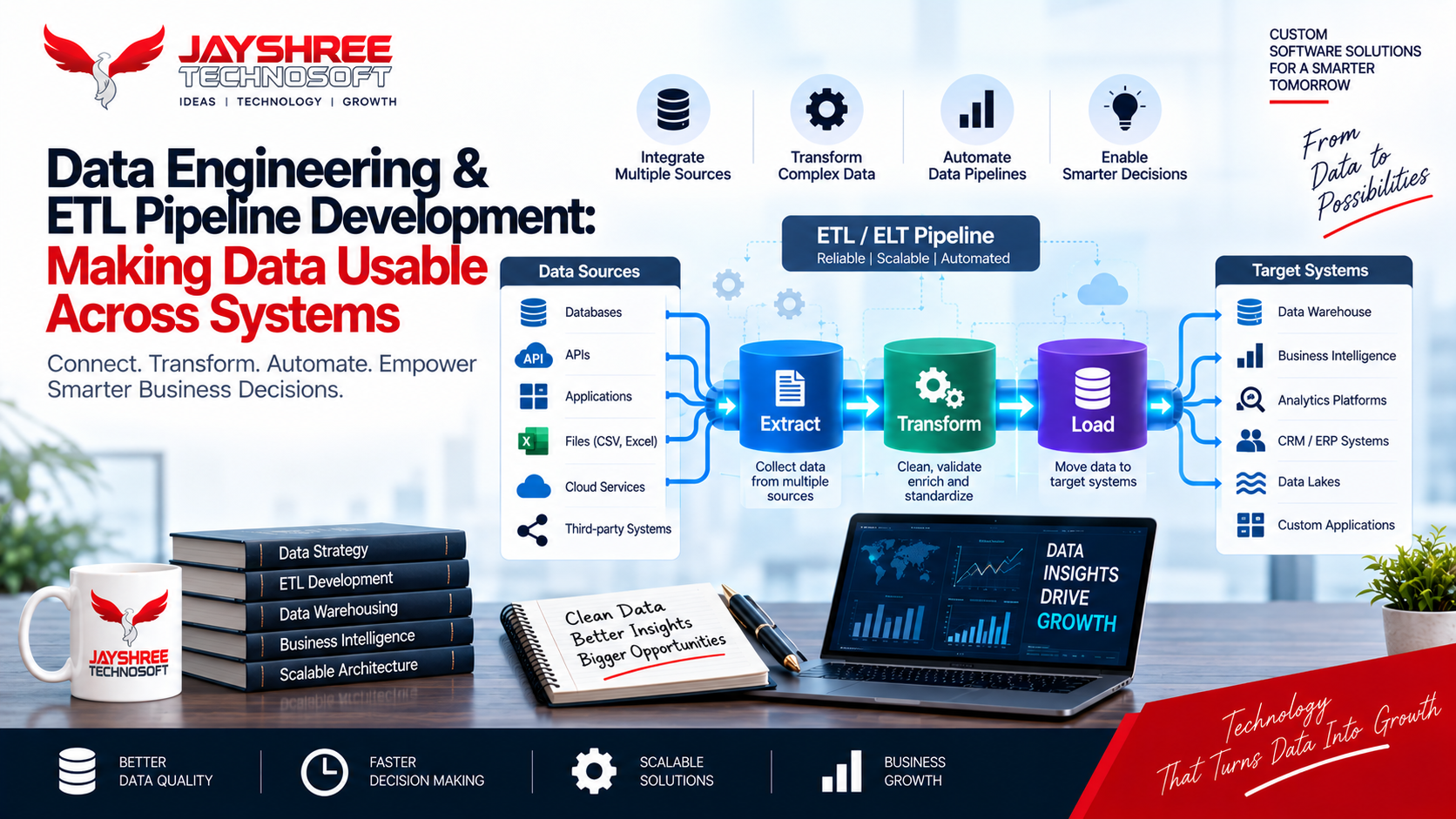
Most businesses generate data across several separate systems — a CRM, an e-commerce platform, accounting software, marketing tools — but that data only becomes genuinely useful when it can be reliably moved, cleaned, and combined into a form that other systems or analytics tools can actually use. Data engineering and ETL (Extract, Transform, Load) pipeline development exists to build and maintain exactly this connective infrastructure.
Why Raw Data Alone Isn't Enough
Data sitting in its original source system, in its original format, is often not directly usable elsewhere — formats differ between systems, data needs cleaning and validation, and information from multiple sources often needs to be combined to answer any meaningful business question. ETL pipelines exist to handle this transformation reliably and repeatedly, rather than requiring manual data wrangling every time it's needed.
What ETL Pipeline Development Actually Involves
Extraction
Reliably pulling data out of source systems — databases, APIs, files, third-party platforms — handling the different formats and access methods each source requires.
Transformation
Cleaning, validating, and reshaping data into a consistent, usable format — resolving inconsistencies, handling missing or malformed data, and combining data from multiple sources into a coherent structure.
Loading
Delivering the transformed data into its destination — a data warehouse, an analytics platform, another application — in a way that's reliable and performant, even as data volume grows over time.
Why Building This Well Requires Real Engineering Discipline
A pipeline that works fine with a small initial dataset can break down entirely as data volume grows, or when a source system changes its data format without warning. Well-built data pipelines need to handle these realities: graceful failure handling when a source system is temporarily unavailable, monitoring that flags when something in the pipeline breaks rather than silently producing bad data, and a design that scales as data volume grows rather than needing a full rebuild.
Where This Work Delivers Real Business Value
Powering Business Intelligence and Reporting
Reliable, clean data pipelines are the foundation any meaningful BI dashboard or reporting system depends on — a beautifully designed dashboard built on unreliable or poorly transformed data ultimately produces misleading numbers.
Enabling System Integrations
When two business systems need to share data — a CRM and an accounting platform, for example — a properly built pipeline keeps that data synchronized reliably, rather than requiring manual export and import.
Supporting Machine Learning and Analytics
Any meaningful data analysis or machine learning initiative depends on a foundation of clean, well-structured data — work that data engineering exists to provide, often representing the majority of effort in any serious analytics project.
Why This Is Often Underestimated in Project Planning
Businesses planning an analytics or integration project often focus primarily on the visible end result — a dashboard, a report, an AI feature — while underestimating how much of the actual engineering effort goes into the unglamorous but essential work of reliably moving and cleaning the underlying data.
How Jayshree Technosoft Approaches Data Engineering Projects
Jayshree Technosoft LLP builds ETL pipelines and data infrastructure designed for reliability and scale from the outset — treating pipeline monitoring, error handling, and data quality validation as core requirements rather than optional extras added only after a pipeline has already failed in production.
Need to connect or make sense of data across multiple systems? Talk to the team about your data engineering needs.
Recent Articles

Custom CRM & Software Solutions for Mobile & Accessories Stores: How Jayshree Technosoft Can Help

Custom CRM & Software Solutions for Property Valuation & Survey Companies: How Jayshree Technosoft Can Help
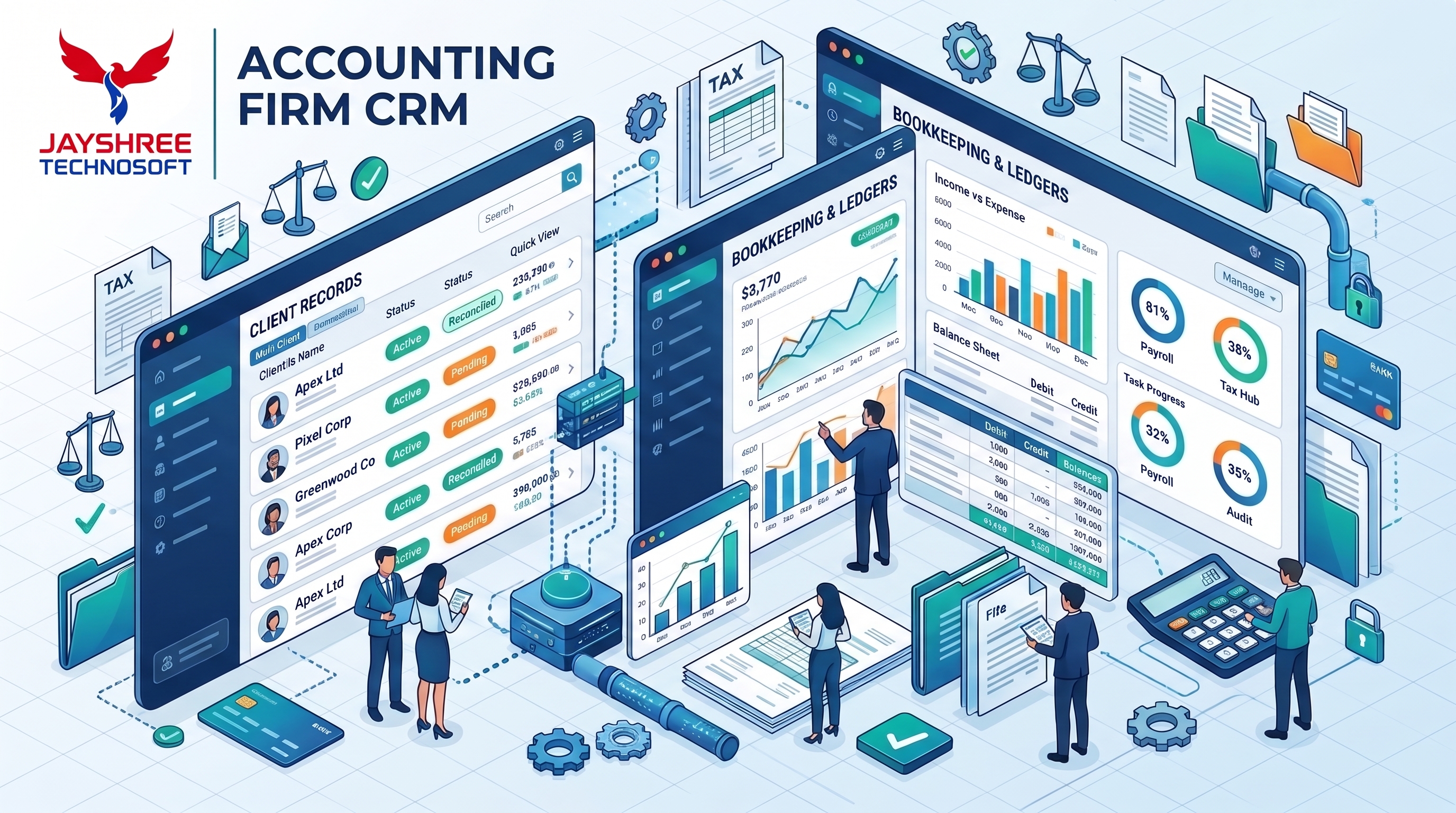
Custom CRM & Software Solutions for Accounting Firms: How Jayshree Technosoft Can Help