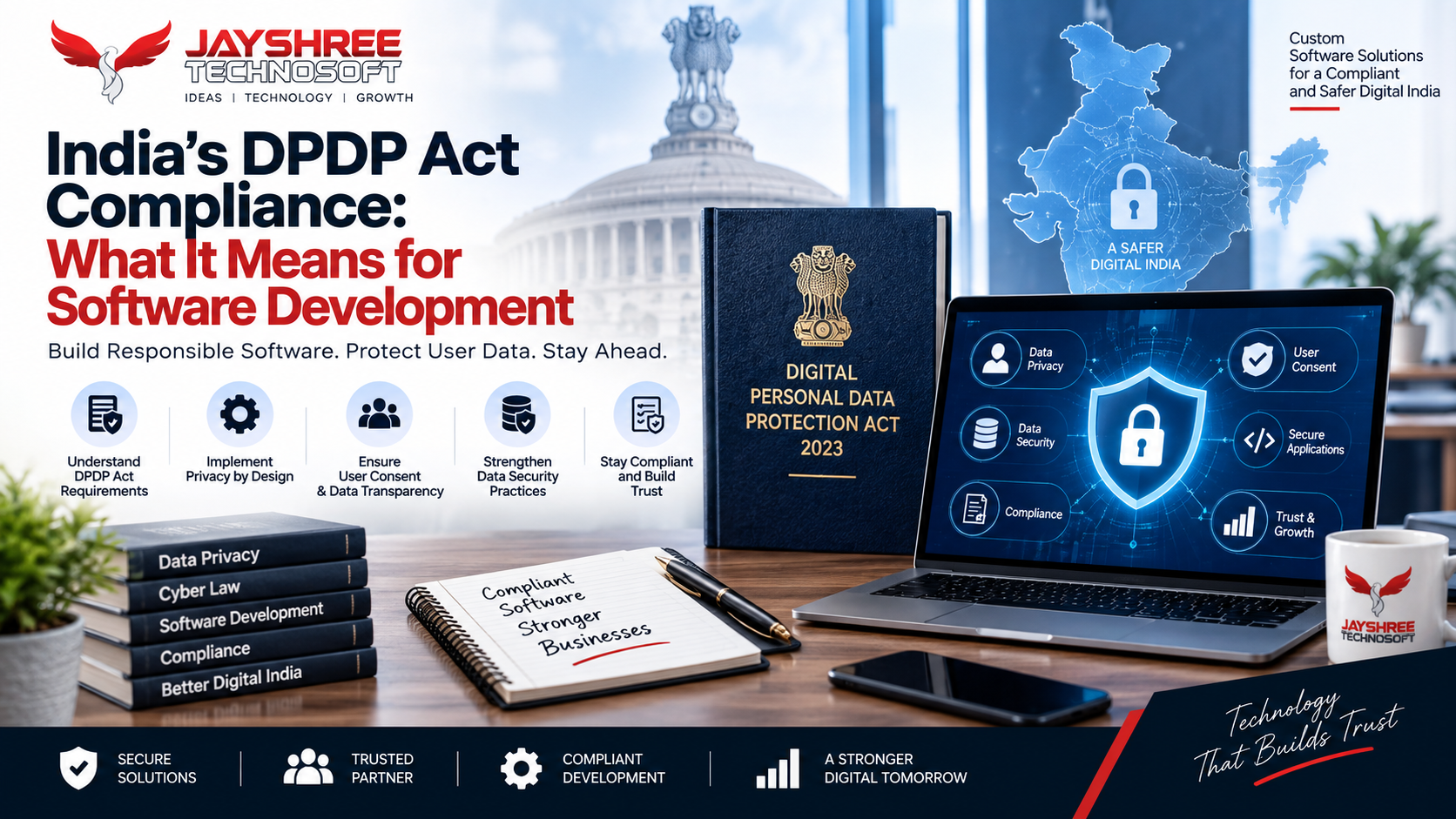
India's Digital Personal Data Protection Act, 2023 has moved from being a future concern to an active compliance reality, with rules now notified and a firm deadline for full enforcement. For any business whose software collects or processes personal data of Indian users, this isn't a legal footnote — it directly shapes how applications need to be architected, from consent handling down to how data is stored and deleted.
Why This Matters for Software Development Specifically
Unlike a purely legal compliance exercise, DPDP compliance has real technical requirements baked into it — consent has to be captured and tracked in a specific way, users need a functional mechanism to request access to or deletion of their data, and breach detection and notification processes need to actually work, not just exist on paper. This means compliance isn't something that can be bolted onto a finished application; it has to be part of how the system is designed.
Core Technical Requirements the Act Introduces
Verifiable, Granular Consent
Consent needs to be specific, informed, and as easy to withdraw as it was to give — which means applications need a proper consent management layer, not a single "accept all" checkbox buried in a signup flow.
Data Subject Rights Handling
Users need a functional way to request access to, correction of, or deletion of their personal data — which requires applications to be built with the ability to actually locate, export, and remove a specific individual's data across every system it touches, not just the primary database.
Data Retention and Minimization
Systems need to be designed to retain personal data only as long as necessary for its stated purpose, which often requires re-thinking default "keep everything indefinitely" data storage patterns that many applications default to.
Breach Detection and Notification Readiness
Applications handling personal data need monitoring and logging in place that can actually detect a breach and support the notification timelines the law requires — something that has to be architected in, not assembled after an incident has already occurred.
Data Localization Considerations
Depending on the nature of the data and business, certain categories of data may need to be stored within India, which has direct implications for cloud infrastructure and hosting decisions made early in a project.
Why Retrofitting Compliance Is Harder Than Building It In
Applications built without these requirements in mind typically store data in ways that make later compliance difficult — personal data scattered across systems without a clear map of where it lives, no built-in mechanism for granular consent tracking, and logging that wasn't designed with audit requirements in mind. Adding compliance after the fact is almost always more expensive and disruptive than designing for it from the start.
What This Means for Businesses Building or Updating Software
Any business building new software that handles Indian users' personal data — or maintaining existing software that does — needs to treat DPDP compliance as a core architectural requirement, not a legal checklist to address separately from development. This applies across sectors, from fintech and healthcare to e-commerce and SaaS platforms.
How Jayshree Technosoft Approaches DPDP-Ready Development
Jayshree Technosoft LLP builds consent management, data subject rights handling, and appropriate data retention practices into application architecture from the discovery phase — for both new builds and compliance-focused updates to existing systems — rather than treating regulatory compliance as a separate, later-stage concern.
Need to assess whether your application is DPDP-ready? Talk to the team about a compliance review.
Recent Articles

Custom CRM & Software Solutions for Mobile & Accessories Stores: How Jayshree Technosoft Can Help
Custom CRM & Software Solutions for Property Valuation & Survey Companies: How Jayshree Technosoft Can Help
Custom CRM & Software Solutions for Accounting Firms: How Jayshree Technosoft Can Help