A guest finds your hotel online, likes the photos and wants to book. Then the process slows down. They have to message, wait for a reply, confirm availability and transfer an advance. By the time you answer, they have booked somewhere else.
A good booking engine fixes that moment. It shows real availability, calculates the right price and takes the booking without waiting for anyone to reply. This guide explains how hotel booking engine development works, what to plan, and where custom development makes sense.
What a Booking Engine Actually Does
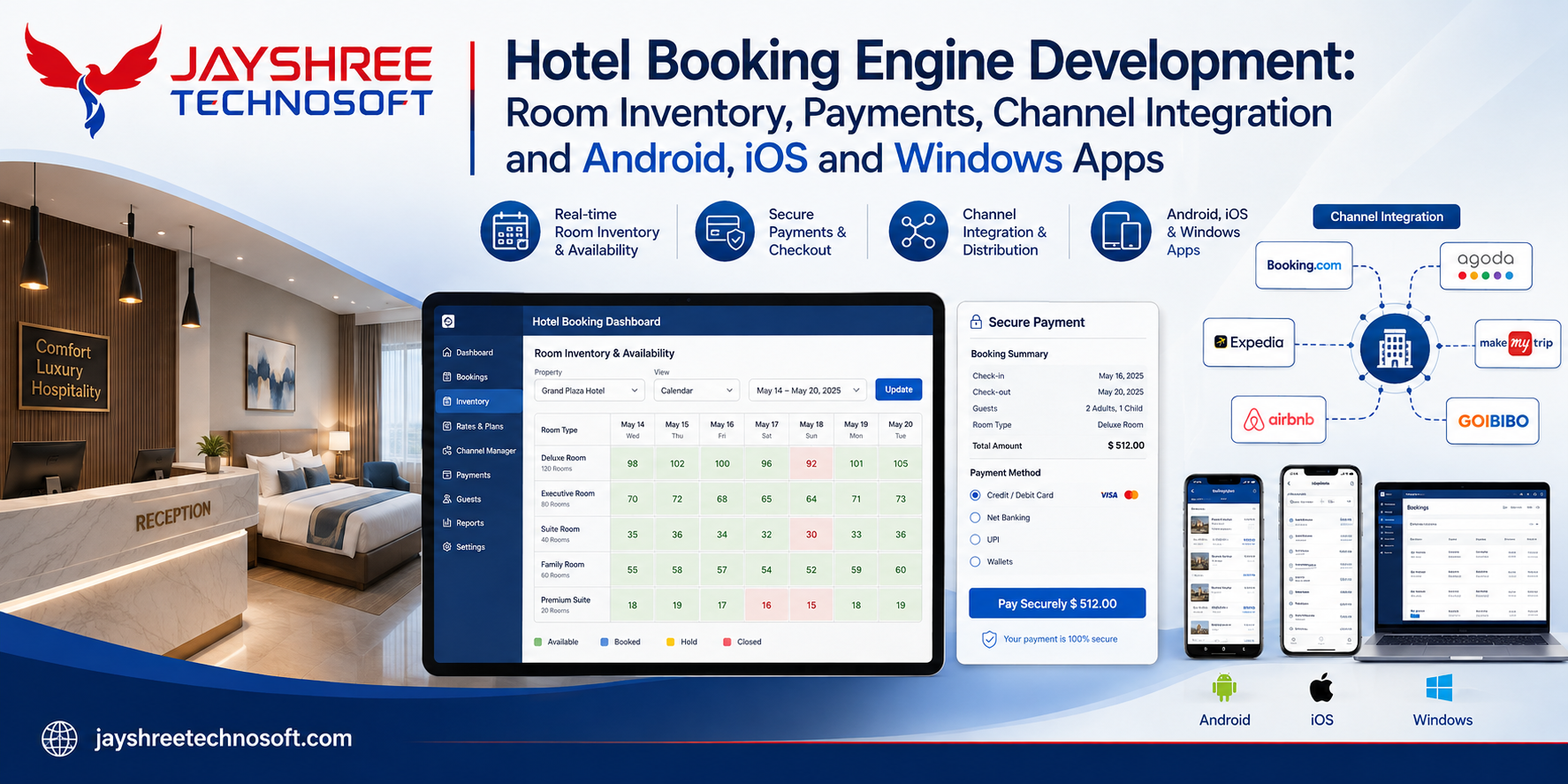
A booking engine is the part of a hotel's website or app where guests check dates, choose rooms and complete a booking. Behind that simple experience, several things must work together:
- Real-time room availability
- Rates, offers and taxes applied correctly
- Guest details captured accurately
- Payment or advance collection
- Confirmation to the guest and the front desk
- Updates to the property's records
If any link in the chain is weak, guests lose trust and staff lose time.
Ready-Made or Custom Booking Engine?
Many properties are well served by ready-made booking tools. Custom development becomes worth exploring when:
- You have unusual room types, packages or pricing rules
- You operate several properties or brands with shared inventory logic
- You want booking tightly linked with your own front-desk, billing or CRM software
- You need a specific guest experience that standard tools cannot offer
- You want long-term control over data and features
If your needs are standard, a ready-made product may be quicker and cheaper. A responsible developer should be willing to say so.
Core Parts of a Hotel Booking Engine
Room inventory and availability
The system must know how many rooms of each type exist and which are free for each date, including blocked rooms and maintenance.
Rates, offers and taxes
Seasonal rates, weekday and weekend pricing, packages, discounts and applicable taxes must be applied accurately and transparently.
Booking flow
Date selection, room choice, guest details, add-ons and confirmation should be short and clear, especially on mobile phones.
Payments and refunds
Advance or full payment, confirmation of payment, cancellation rules and refund handling all need careful design. Payment partner integration and compliance requirements should be confirmed during scoping.
Notifications
Guests and staff should receive clear confirmations and updates through the channels you choose.
Admin panel
Staff need tools to manage rates, block rooms, edit bookings and view reports without calling a developer.
Reports
Bookings by date, source and room type help managers plan prices and promotions.
The Overbooking Problem
The biggest risk with any booking system is double-selling a room. It can happen when:
- A booking arrives from the website while a phone booking is still being entered
- Availability is not updated promptly across channels
- Two staff members edit the same booking at once
A well-designed system uses clear rules for locking inventory during a booking and updating it right after, and it makes manual overrides visible and traceable.
Channel Manager Integration: Know the Limits
Many hotels also sell through online travel agents. Keeping availability and rates in sync across channels is usually done with a channel manager. Integration depends on what the third-party platforms and channel managers allow, which may involve partnership, certification or fees.
Before you plan a custom connection, ask:
- Which channels do we actually sell through?
- Will we integrate with an existing channel manager instead of building our own?
- What do those partners require for access?
- Who is responsible for ongoing maintenance when partner interfaces change?
These questions affect scope and timeline, so settle them early.
Choosing Between Android, iOS and Windows
Different people use different devices around a booking engine.
Web (mobile and desktop browsers) is the usual front door for guests, because they will not install an app just to book once.
Android and iOS apps can make sense for repeat guests, loyalty programs or properties with a strong direct guest base. They can also serve staff for quick room checks and booking updates.
Windows often suits the front desk and back office, where staff manage reservations, rates and reports on larger screens.
Decide which roles genuinely need which device on day one. A phased plan, starting with a strong web booking flow and a staff admin panel, is often wiser than building every platform at once.
Native, cross-platform or web-based?
- Native apps can use device features closely, with more effort per platform.
- Cross-platform approaches share much code between Android and iOS, which can lower effort, though some features may need extra work.
- Web-based interfaces simplify updates and reach every device but depend on connectivity and browser capabilities.
The right mix depends on your guests, staff and budget, and should be decided in discovery.
Technical Considerations to Plan Early
Performance. Availability checks should feel quick, even in peak periods.
Security. Guest details and payment-related data require careful handling, access control and compliance with the standards that apply.
Integrations. Payment partners, channel managers, accounting tools and messaging services each add effort and should be scoped separately.
Data migration. Existing bookings and guest records may need cleaning before moving.
Scalability. A system built for one property should be able to extend to more properties or room types without a rebuild.
Accessibility and language. Clear text, readable fonts and, where useful, regional language support improve the guest experience.
Practical Examples
A boutique hotel may want a polished booking flow with packages, add-ons and a simple admin panel that the front desk can handle.
A resort may need room types with different views, meal plans and activity add-ons, along with deposit rules.
A multi-property group may want shared guest records and a common booking experience with property-wise inventory.
A homestay network may need a light booking flow, a calendar that owners can update from phones and simple payment collection.
Benefits for Different Business Sizes
Small properties can begin with a focused booking flow and a calendar before adding extras.
Mid-sized hotels gain from better control of rates, offers and reports, and from links with front-desk and billing tools.
Groups and chains benefit from central rules, shared guest data and consistent experience across properties.
How the Development Process Usually Works
- Discovery: study your rooms, rates, channels, devices and pain points.
- Scope and roadmap: define modules, integrations and phases.
- Design: plan the guest booking flow and staff screens with real users in mind.
- Build and test: develop in stages and test availability logic, taxes, payments and edge cases such as cancellations.
- Launch and training: start with a pilot, train staff and monitor early bookings closely.
- Support and improvement: rates, policies and channels change, so plan for ongoing updates.
How Jayshree Technosoft Can Help
Jayshree Technosoft LLP is a Jaipur-based IT services and software development company offering custom software development, web and mobile application development, ERP and CRM development and business process automation. For a hospitality business, that means a conversation that starts with your rooms, rates and devices, and not a fixed product.
If you are considering a booking engine, guest app or staff admin tool across web, Android, iOS and Windows, bring your current booking process, channels and integration needs. Technology choices, timelines and costs depend on scope and should be confirmed with the team.
Questions to Ask a Development Partner
- Have they built booking or reservation systems, and can they explain how they prevent double booking?
- How do they handle payments, cancellations and refunds?
- How will they approach channel integrations and partner requirements?
- Who owns the source code and data?
- What support is offered after launch?
- Can the system connect to your front-desk or billing software?
Conclusion
A booking engine is the point where interest turns into a stay. When it is clear, fast and accurate, guests book with confidence and staff spend less time on back-and-forth messages. If standard tools no longer match your rooms, rates or process, a carefully scoped custom build can be worth exploring.
Start with the booking flow that matters most, plan integrations honestly and choose a partner who asks questions before writing code.
Planning a hotel booking engine or guest app? Talk to Jayshree Technosoft about your requirements.
FAQs
1. What is a hotel booking engine? It is the part of a hotel's website or app that shows availability and rates and lets guests complete a booking online.
2. Should a hotel build a custom booking engine? Consider it for unusual pricing or packages, multiple properties or tight integration with your own systems. Ready-made tools suit standard needs.
3. Can a custom booking engine connect to online travel agents? Often through a channel manager, depending on partner requirements and access. This should be confirmed during scoping.
4. How is double booking prevented? By clear inventory rules, prompt availability updates and visible, traceable overrides. Testing with realistic scenarios is essential.
5. How do I start a project with Jayshree Technosoft? Contact the team through its website and share your rooms, rates, channels, devices and required integrations.
#JayshreeTechnosoft #HotelTech #BookingEngine #CustomSoftware #SoftwareDevelopmentIndia
hotel booking system development, hotel booking app development, custom hotel booking website, room inventory software, rate and availability management, payment gateway integration for hotels, channel manager integration, hotel software development, resort booking software, guest booking portal
Recent Articles
Property Management Software Development for Hotels: What to Plan Before You Build
Restaurant Software Development: What to Plan Before You Build Android, iOS and Windows Apps
Custom POS Software Development for Retail Businesses: Features, Platforms and Planning